Reviewed · TOURS
Café Wandering: An Excursion through Budapest’s Belle Epoque
Budapest’s Belle Époque cafés are interesting because they turn architecture into something you can actually feel, smell, and read in the details. You’re not just looking at buildings. You’re learning how public life, art, and ideas moved through these rooms.
I really like the focus on 19th and early 20th-century Hungarian design, plus the chance to spend time inside Café Gerbeaud, a cornerstone of Imperial Budapest café culture. That pairing makes the walk feel like a guided “slow look” at the city.
One thing to consider: the tour price covers the guided walk, but refreshments, cakes, and coffees are not included, so you’ll want a small extra budget if you plan to stop and order.
Key highlights you will feel immediately
- Café Gerbeaud at Vörösmarty tér with over 100 years of café life and Imperial-era social energy
- A tram ride toward the Danube that connects café culture to the Habsburg power center
- Central Cafe and Restaurant 1887 as a prime example of “serious” dignified Habsburg coffeehouse culture
- Museum Cafe wall decoration and Asian design motifs for visual detective work with an art historian’s guidance
- Kazinczy Street Synagogue as an art nouveau finale after the café stops
Why Budapest’s Belle Époque cafés feel like a time machine
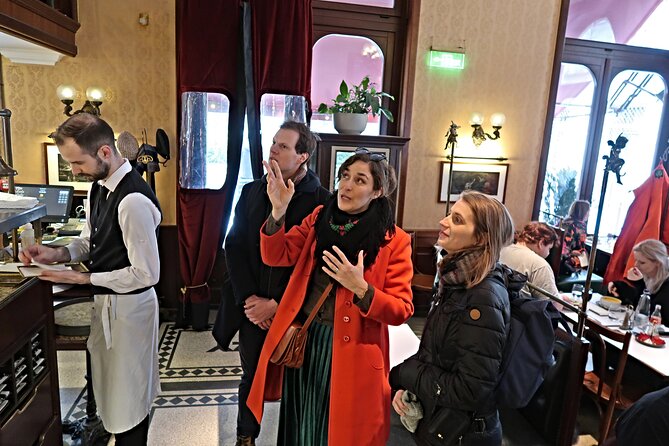
This is a café tour with an art-historian lens, and that matters. Budapest has a lot of architecture, but many tours rush it like a checklist. Here, the buildings are treated like documents. You learn how designers mixed styles, how interiors signaled status, and how café rooms shaped conversations.
The route is also built around the idea that cafés were public stages. You’ll see grand spaces where artists, writers, and intellectuals gathered. The point is not that everyone was sipping coffee all day. The point is that these rooms helped ideas spread, and their decoration recorded that ambition.
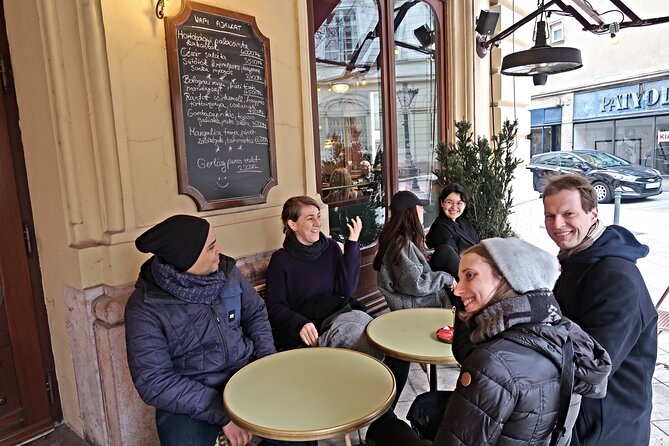
You’ll be in a small group limited to 8, guided live in English. And the guide lineup is impressive, with backgrounds that can include professors, doctoral students, historians, journalists, art critics, and published authors. In one recent small group, the guide Kota was praised for clarity and presentation, which tells you they take the teaching part seriously.
What else people book in Budapest on the same trip:
- Budapest: City Highlights Sightseeing Cruise
★ 4.6 · 43,981 reviews - Budapest: Unlimited Prosecco, Beer and Aperol Spritz Cruise
★ 4.8 · 37,304 reviews - Budapest: Széchenyi Spa Day Ticket with Optional Upgrades
★ 4.3 · 23,911 reviews
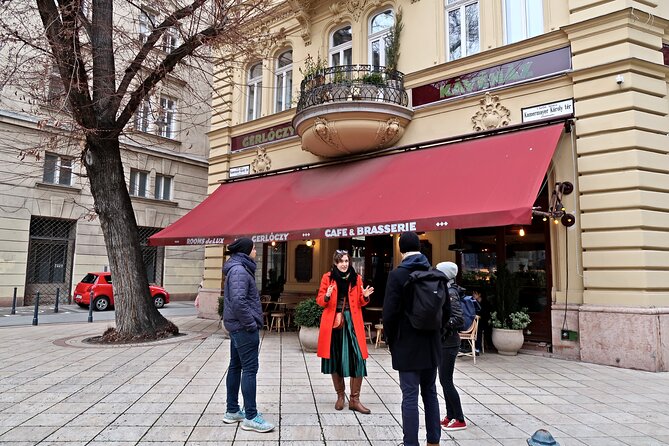
Starting at Café Gerbeaud on Vörösmarty tér
The tour begins at Café Gerbeaud, right by Vörösmarty tér (meet at Budapest Vörösmarty tér 7-8, 1051). This is a good place to start because it anchors you in the city center, where Budapest’s Belle Époque ambition is easiest to spot.
At Gerbeaud, you get the story behind why cafés became cultural magnets in late 19th-century Budapest. The interior is described as exquisitely detailed, and it’s more than 100 years old. That’s not trivia for trivia’s sake. When you learn that it served as a social hub for both visitors and locals, the room changes. You stop thinking of it as a café you enter, and start thinking of it as a stage where people watched art, politics, and new ideas move in real time.
Practical tip: arrive a little early so you can settle your eyes on the interior before your guide starts connecting design to history. It pays off when you later compare what you saw here to other cafés on the route.
Tram time along the Danube to Central Cafe and Restaurant 1887
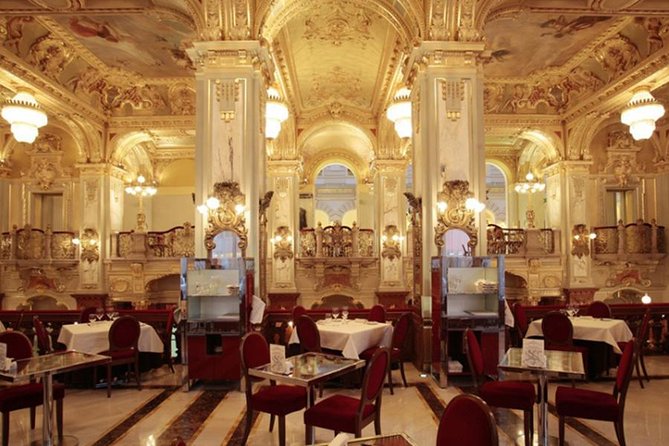
After Gerbeaud, you’ll take the tram along the Danube to Central Cafe and Restaurant 1887. Even if you know the Danube is a major geographic anchor, riding that short stretch links the café story to Budapest’s growth engine. The river was a corridor for people, trade, and influence.
Central Cafe and Restaurant 1887 is where the tour leans into the “peak Habsburg Empire” mood. It’s described as dignified, and positioned as a highlight of café house culture during the 19th century when economic and cultural power were at full strength.
This stop is less about one single wow detail and more about atmosphere. You’ll notice how the decor and service style communicate a certain confidence, even if you just observe the space rather than ordering. You also get help reading the room through your guide’s commentary, so you’re not just looking for pretty walls. You’re learning how “serious” café culture worked as a social system.
Practical tip: if you’re the type who loves architecture photos, this is a great moment to shoot wide and close-up shots. The comparison matters later.
Café Astoria: the classic European coffee-house grandeur stop
Next comes Café Astoria, an over-a-century-old classic European-style coffee house. The tour frames Astoria as a place that evokes grandeur, and once you’re inside, the guide’s art-historian approach helps you slow down and notice why.
What I like about this stop is that it feels like a bridge. You see Budapest’s local identity, but you also get the sense of the wider European coffee-house tradition. It helps you understand that cafés weren’t just Hungarian. They were part of a larger Central European culture of interiors, elegance, and public conversation.
If you’re tempted to rush to the next stop, resist. Spend a few extra minutes reading the room. A tour like this goes fastest when everyone checks out mentally. Don’t do that. Let the interior details reset your attention for the next comparisons.
A different sort of Budapest afternoon:
- Budapest: Nighttime or Daytime Sightseeing Cruise
★ 4.2 · 21,062 reviews - Budapest: By Night Sightseeing Cruise with Welcome Drink
★ 4.3 · 15,533 reviews - Budapest: St. Stephen’s Basilica Entry with Options
★ 4.6 · 12,322 reviews - Budapest: 1-Hour Evening Sightseeing Cruise with Drink
★ 4.5 · 9,421 reviews
Museum Cafe, lavish walls, and the art of Asian motifs
One of the most intriguing parts of the tour is the attention to design language, especially at Museum Cafe, known for lavish walls. This is the stop where the “visual detective” work becomes real.
You’ll examine Asian motifs and elements used by designers. That’s not only decorative. It reflects how European designers absorbed and reinterpreted global influences, then packaged them into spaces that signaled education, taste, and worldly curiosity.
This is also where having an art historian guide is worth the price. Without guidance, you might notice decoration and move on. With guidance, you start to see patterns: why certain shapes show up, how motifs are blended, and how the café interior becomes a kind of cultural statement.
Practical tip: bring a phone with enough storage. If you’re going to study motifs later, you’ll want both reference shots and close-up shots.
Művész Coffee House and the artist-café angle
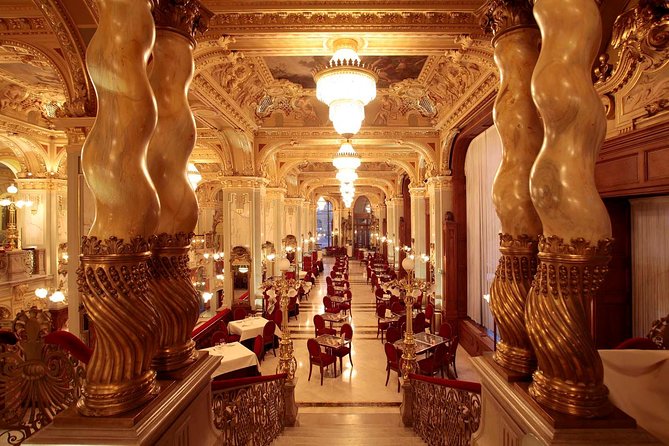
The tour also includes Művész Coffee House, which is presented as an Artist Cafe. Even when the guide doesn’t turn every stop into a dramatic story, the point of naming it this way is smart. It sets expectations: you’re meant to treat the space like a meeting point for creative minds, not only a place for dessert.
This stop works well if you like connecting art to setting. You see how interior design can suggest identity. It’s easy to say “artists liked cafés.” It’s more useful to learn what cafés offered them, like a public room for private thought, and a social environment where people could meet without being trapped at someone’s home.
If you order something, keep it simple. You’re here to observe, not to win a pastry contest.
New York Palace Café and the guided look that sharpens your eye
New York Palace Café is included as a guided tour stop. This matters because New York Palace is the kind of place where you can easily get distracted by wow-factor details. A guided look helps you separate spectacle from meaning.
This is also an opportunity to compare. After Gerbeaud and Central, you’ve trained your eyes to notice style cues. After Astoria, you’re looking for European coffee-house signals. Now, at New York Palace, you can test your instincts: which design choices feel consistent with the Belle Époque mood, and which feel like another twist on the same idea?
If you like architecture, this stop is a strong payoff because it rewards your attention. If you dislike guided tours, this is the one to treat as optional energy. Even standing for a few minutes, you’ll likely pick up something you missed earlier.
Urania Café on Rakoczi Street and the film-theater connection
Another stop is Urania Café on Rakoczi street. The tour adds an important extra layer here: Urania houses the oldest film theater in the city, and it’s known for lectures by prominent intellectuals before large audiences.
That combination is a big deal because it links café culture to broader public life. It’s not just about writers meeting over coffee. It’s about ideas being presented in an auditorium-like setting, then spilling back into conversation.
I like this stop because it expands the story beyond interiors. The tour isn’t trapped in decoration. It also shows how Budapest’s cultural scene functioned as a whole: cafés, lectures, and public gatherings feeding one another.
Practical tip: if your timing is tight, keep your energy steady. This is one of those moments where you may feel like “I know the city already,” but the film-theater detail forces you to rethink the cultural timeline.
Kazinczy Street Synagogue: art nouveau as the grand finale
The tour ends at the Kazinczy Street Synagogue, described as fascinating and art nouveau. This is a smart ending. After several café interiors, the synagogue gives your eyes a new kind of geometry and ornament, while still rewarding the same skill you practiced earlier: reading design as meaning.
The finish also avoids the common problem of café tours, where everything ends in a sugar rush. Here, the last stop has a stronger visual and emotional weight. You leave with a bigger sense of how Budapest’s Belle Époque imagination expressed itself across different kinds of architecture.
If you take one habit from this tour, make it this: when you see decorative work, ask what it was trying to communicate. That question will make the rest of your Budapest walking more satisfying.
Price, value, and how to get the most from a 3-hour walk
The tour costs $123 per person for a 3-hour guided experience with an art historian guide, in a small group of up to 8. That price is not “budget café hopping,” so value comes from your priorities.
Here’s the fair way to judge it:
- If you care about architecture, design motifs, and interpreting interiors, you’re paying for trained guidance, not just access to cafés.
- If you like history explained in plain language, the guide backgrounds suggest you’ll get more than surface storytelling.
- If you mainly want a casual coffee stop with chat and photos, the paid portion can feel heavy once you realize refreshments are not included.
So, what should you budget beyond the tour price? The tour does not include the cost of coffees, cakes, or refreshments you choose at the cafés. I’d plan on at least one drink or snack so the experience feels complete, but keep it flexible. You do not need to over-order to enjoy the atmosphere.
Also, the tour is in English and you check availability to see starting times. That matters because a lot of Budapest day planning depends on when you want to start your sightseeing.
Who this Budapest Belle Époque café walk is best for
This tour is a great match if you:
- want a guided look at Hungarian architecture from the 19th and early 20th centuries
- love café culture but also want the cultural context behind it
- enjoy art-historian style explanations of interiors, motifs, and design choices
- prefer smaller groups, not a crowd shuffle
It may be less ideal if you:
- dislike walking in short bursts, plus tram time, over a 3-hour period
- only want food and photos and are not interested in the meaning behind the details
- hate paying extra once you are on site for coffee and cake
Should you book Café Wandering in Budapest?
I’d book this if your idea of a great Budapest morning or afternoon includes learning to read interiors, not just taking pictures. The combination of Café Gerbeaud, Central Cafe and Restaurant 1887, Café Astoria, design-focused stops like Museum Cafe, and the art nouveau finish at Kazinczy Street Synagogue makes the 3 hours feel purposeful.
If you’re on the fence, choose it when you have at least a bit of curiosity about how culture and design shaped everyday public life. If you’re only chasing one specific café or one specific monument, you might save money by picking that single highlight. But if you want a connected story, this is the kind of guided walk that pays off every time you look at another building after.
FAQ
How long is the Café Wandering tour?
It lasts 3 hours.
Where does the tour start?
It starts at Café Gerbeaud, Budapest Vörösmarty tér 7-8 1051.
Is the tour offered in English?
Yes, the live guide leads in English.
How big is the group?
The group is small, limited to 8 participants.
What is included in the price?
A 3-hour guided walk plus an art historian guide.
What is not included?
Cost of refreshments, cakes, and coffees selected at the cafés visited.
Do I need to pay right away?
You can reserve now and pay later.
Is there free cancellation?
Yes, you can cancel up to 24 hours in advance for a full refund.
Newest reviews from Budapest
- Buda Castle Private Walking Tour: A Kingdom of Many Nations★ 5.0 · 9 reviews
- Budapest Walking Tour: Explore Top Sights & Hidden Gems★ 4.5 · 9 reviews
- See the Hungarian Sea: Lake Balaton★ 4.5 · 9 reviews
- Transylvania Tour from Budapest to Bucharest: 4 days★ 5.0 · 10 reviews
- Luxurious, private day cruise with a waterlimousine to Szentendre★ 4.0 · 10 reviews
- Private Tour Around Budapest★ 5.0 · 10 reviews
- Born Under The Red Star – Communist tour with Coffee in a Retro Bar★ 5.0 · 10 reviews
- Live virtual walking tour in the Buda Castle quarter★ 5.0 · 10 reviews
Tours, compared.
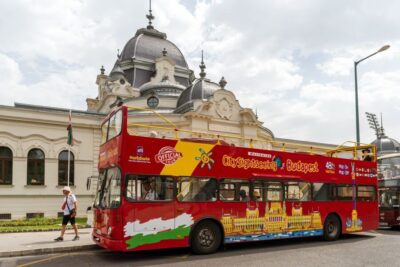
City Sightseeing Hop-On Hop-Off Bus Tour & Extras
Read our review →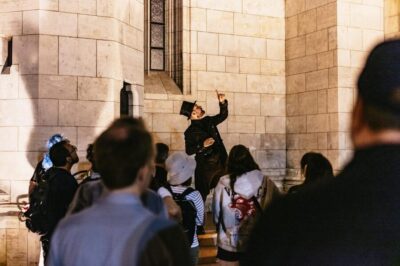
Buda Castle District Vampires and Myths Night Tour
Read our review →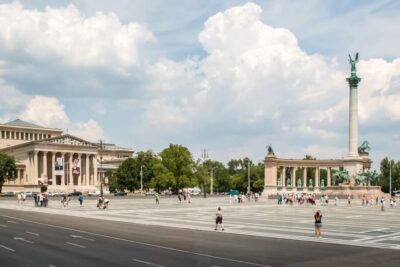
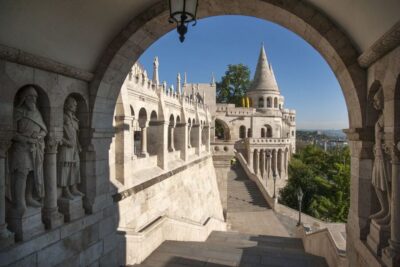
Budapest City Landmarks Walking Tour in 2 Hours
Read our review →