
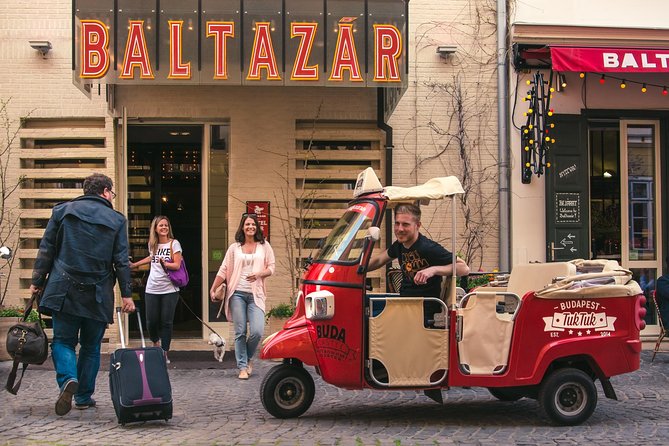
Reviewed · TUK-TUKS
Budapest Private Tuk Tuk Half-Day Tour
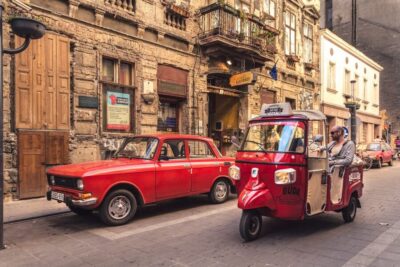
Budapest by tuk-tuk is interesting for one simple reason, it gets you close to the action without the slow slog of crossing the city on foot. I especially like the way this tour stitches together iconic landmarks on both sides of the Danube, and the fact that it’s private, so your guide can shape the stops to your pace. The main thing to consider is that your schedule can flex, and tuk-tuk rides can feel bumpy, so if you have a bad back you should think it through.
This is the kind of half-day tour that helps you get your bearings fast. It’s also a smart move for first-timers who want more than a few photos, you’ll see big sights, but you’ll also get the small context that makes them make sense when you return on your own.
Key points to know before you go
- Private guide, real flexibility so you can spend more time where you care most
- Buda and Pest in one loop with views and landmarks on both sides of the river
- A fast overview day that sets up your next meals, walks, and museums
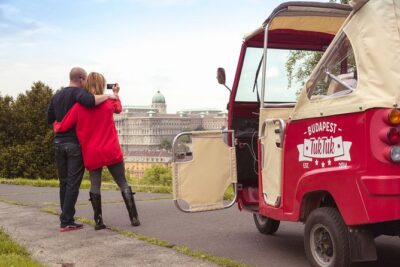
- Photo-friendly routes with guides who actively help you capture the moment (Zoltar and Greg are especially noted for great pics)
- Comfort tools in winter like blankets, which multiple guests mentioned as a lifesaver
Entering The Big Budapest Moments in Four Hours
Budapest is famous for drama. The river curves, the buildings fight for attention, and the viewpoints feel staged for postcards. This half-day tuk-tuk tour works because it gives you that “wow” factor early, without forcing you to choose between Buda Castle views and Pest boulevard grandeur.
In practice, you’re not just being transported. You’re being oriented. You’ll see where everything connects, how the neighborhoods stack up, and why the Danube is the spine of the city. That matters because Budapest can feel sprawling. After a good orientation day, you stop guessing and start exploring.
You also get a guide who can explain what you’re looking at in plain language. In the feedback I saw, guides like Zoltar, Greg, Paul, Peter, and Norbert stood out for humor, stories, and photo help. That mix is what turns a “drive-by” tour into something you actually remember.
More tuk-tuk tours in Budapest:
- Private Budapest TukTuk Tour: Custom Route, Hotel Pickup
★ 5.0 · 1,307 reviews - Budapest: Sightseeing Tour by Electric Tuktuk
★ 5.0 · 146 reviews - Budapest: Scenic Tuk Tuk Tour
★ 4.9 · 143 reviews
Price and Logistics: What $178.98 Buys You
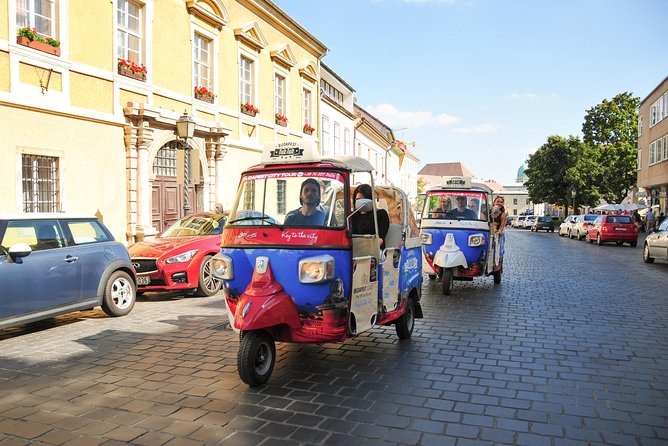
At $178.98 per person for about 4 hours, this isn’t a budget “hop-on bus” kind of deal. It’s closer to paying for convenience plus attention. What you’re paying for is a private tuk-tuk experience with pickup and drop-off in the downtown zone, an English-speaking guide, and the ability to cover a lot of ground without exhausting yourself.
Two money-saving reality checks help:
- Entry tickets are not included. When you see major sights like the basilica, Parliament, and Castle District churches, plan on viewing mostly from outside or deciding on your own later.
- Food and drinks are not included. If you want to add a langos stop or coffee break, you’ll do it on your own schedule.
What makes the price more reasonable is the private format. If you’re traveling as a small group, the per-person cost can start to feel like a good trade for not dealing with transit, crowds, or finding parking while you’re trying to see a lot.
Pickup, Timing, and How the Private Guide Shapes Your Route
A private tour only works if it feels easy. This one includes free pickup and drop-off in the wider downtown area. You also choose from departure times during the day, and you’ll get a mobile ticket.
One timing note to respect: the advertised time may shift, with a maximum change of up to 1.5 hours. That’s not unusual in a city with traffic and security checks, but it does mean you should avoid stacking tight reservations right after the tour.
Your guide starts by learning what you care about. Several people mentioned that their driver asked questions and adjusted the route. That’s huge, because Budapest has dozens of “must-sees,” and four hours is still four hours. If you have a short list, tell your guide at the start. If you don’t, you’ll still cover a lot, but you may miss one personal priority.
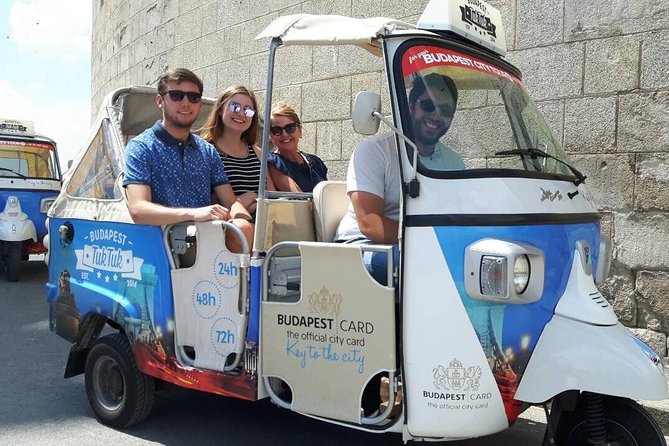
Comfort detail that matters: one tuk-tuk is comfortable for about 2-3 people. If your group has an odd number, you may need to split between two tuk-tuks. In winter, blankets were specifically mentioned by guests, so dress in layers even if the weather looks manageable at street level.
St. Stephen’s Basilica, Andrássy Avenue, and the Opera Street Showstopper
A classic way to begin in Budapest is with the city’s grand religious and boulevard scenes, and your route often hits that first wave of major landmarks.
A different sort of Budapest afternoon:
- Budapest: City Highlights Sightseeing Cruise
★ 4.6 · 43,981 reviews - Budapest: Unlimited Prosecco, Beer and Aperol Spritz Cruise
★ 4.8 · 37,304 reviews - Budapest: Széchenyi Spa Day Ticket with Optional Upgrades
★ 4.3 · 23,911 reviews - Budapest: Nighttime or Daytime Sightseeing Cruise
★ 4.2 · 21,062 reviews
St. Stephen’s Basilica
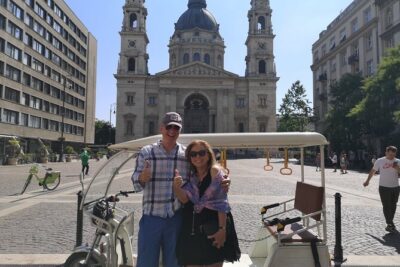
St. Stephen’s Basilica is named for Stephen, the first king of Hungary, and it’s known for a major reliquary tied to his right hand tradition. Even if you don’t go inside, seeing its scale helps you understand why it’s a constant reference point in Budapest.
If you like architecture with meaning, this stop gives you that. It also helps you orient to the wider central area because it sits in the visual center of a lot of city routes.
Andrássy Avenue
Andrássy Avenue is a boulevard dating back to 1872, famous for Neo-Renaissance mansions and townhouses. It’s also a UNESCO World Heritage Site. From a tuk-tuk, you get the feel of the street without getting stuck walking uphill from one sight to another.
This is one of those streets where knowing what you’re seeing makes the scenery click. Your guide can point out how the buildings and street design signal the city’s ambition.
Hungarian State Opera House
The Hungarian State Opera House on Andrássy út is Neo-Renaissance, originally called the Hungarian Royal Opera House, designed by Miklós Ybl. It’s one of those facades you can appreciate even from the curb.
If you want the quick win of seeing Budapest’s “prestige side,” this is it.
Heroes’ Square to Széchenyi Baths: Big Symbols and Thermal Reality
Next, you move into a section of the city where monuments do the talking.
Heroes’ Square
Heroes’ Square is one of Budapest’s main squares, dominated by the statue complex of the Seven chieftains of the Magyars, plus other key national figures. There’s also the Memorial Stone of Heroes, often confused with the Tomb of the Unknown Soldier.
This is a great stop early in the day because it gives you context for Hungarian national identity. It also puts you in a prime position to understand how the city arranges itself.
Széchenyi Medicinal Bath
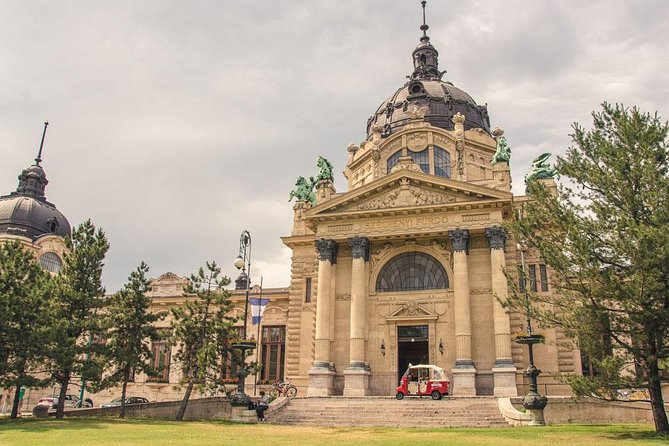
Széchenyi is the largest medicinal bath in Europe, with water supplied by two thermal springs around 74°C and 77°C. Even if you don’t enter, passing by helps you “place” Budapest’s thermal culture in real life, not just as a brochure idea.
This stop works well because baths are part of Budapest’s everyday rhythm. A good guide can also explain why the springs are such a big deal. It’s one of those facts that makes the city feel more grounded.
Jewish Quarter Stops: Dohány Synagogue and the City’s Memory
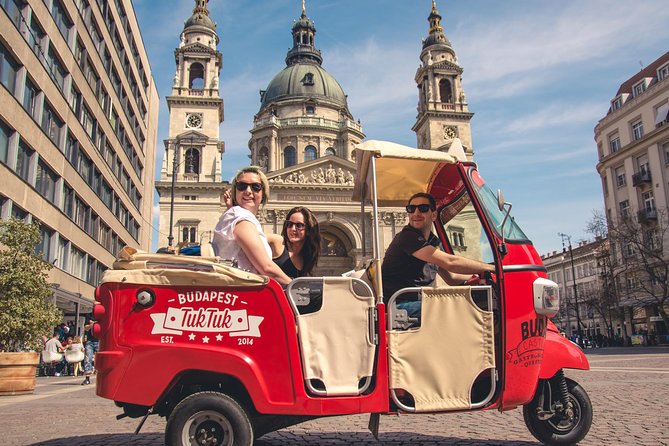
Budapest’s Jewish Quarter area is heavy in history, and the tour handles it best when you slow down for a minute rather than treating it like a quick photo set.
The Dohány Street Synagogue
The Great Synagogue, also called the Dohány Street Synagogue, is the largest synagogue in Europe and seats about 3,000 people. It’s a center of Neolog Judaism.
Seeing it from the outside still hits hard. The size alone tells you this wasn’t a small community story, it was a major city chapter.
Short walks through the neighborhood feel
Your route can also pass through streets in District VII that have been home to religious centers for Orthodox Jews since the 19th century. This is where the city’s layers show. You’re not just ticking off landmarks, you’re glimpsing the neighborhood texture.
Kálvin tér and the Central Market Hall
Kálvin tér is a major city intersection named after John Calvin due to the large Reformed Church nearby. It’s practical to see because it shows you where people actually move through the city day-to-day.
Then you may reach the Great Market Hall, also called Nagyvásárcsarnok. It’s Budapest’s largest indoor market. Even a quick look can help you later when you want real local food without hunting.
Crossing the Danube: Bridges, a Thermals Stop, and a Serious Memorial
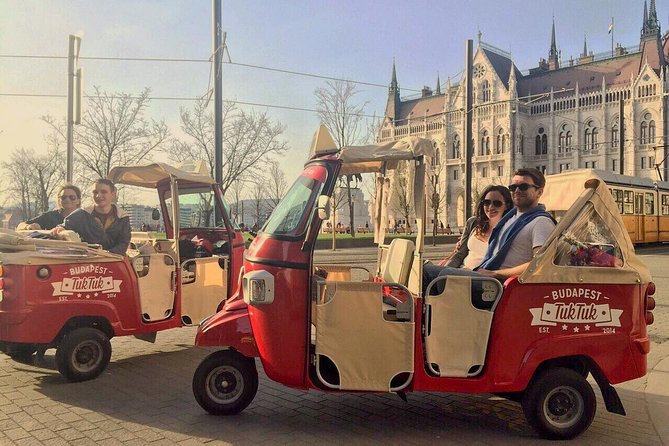
After enough grand sights, the tour crosses into a more dramatic river narrative.
Liberty Bridge and the Danube connection
Liberty Bridge links Buda and Pest across the Danube and was originally named Franz Joseph Bridge. It’s a good “reset” stop because the view puts the city in one frame. You start to see the Danube as the connector it really is.
Gellért Baths area
You’ll also get a view of the Gellért Thermal Baths and Swimming Pool area on the Buda side. This is another Budapest signature, and it adds variety since it’s different from Széchenyi in feel and location.
Even without entry, it’s a useful mental anchor: Budapest doesn’t treat baths like tourist extras. They’re part of the city’s culture.
Citadella and the Liberty Statue
Gellért Hill brings you to Citadella, a fortification on the hilltop, and then to the Liberty Statue commemorating those who sacrificed their lives for Hungary’s independence, freedom, and prosperity.
These stops are valuable because they turn views into understanding. You’re looking down at a city that has been contested, defended, and rebuilt. That context makes the photos more meaningful.
Garden of Philosophy viewpoints
The Garden of Philosophy is smaller, with fewer tourists, and it’s known for the themed sculpture group where Jesus Christ and Buddha meet. It’s a strange and thoughtful stop, in a good way, and it usually pairs nicely with a viewpoint pause.
Castle Hill and Fisherman’s Bastion: The View That Ends the Buda Side
Now you move into the Castle District zone, where the scenery is built for looking up.
Castle Hill and Castle Garden
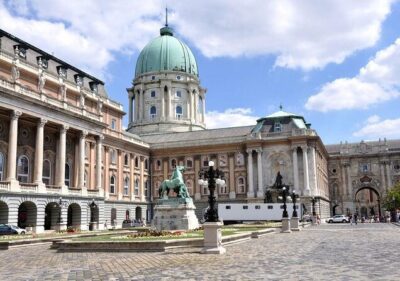
Castle Hill is a UNESCO World Heritage Site with medieval monuments and museums, plus a network of caves formed by thermal springs underneath. You might not tour everything inside, but the high ground is the point. It changes your perspective on the entire city.
Castle Garden is described as Budapest’s unique jewelry box where art and nature meet. Even just seeing the architecture from the route helps you understand why this area feels like its own world.
Fisherman’s Bastion
Fisherman’s Bastion, also called Halászbástya, is a terrace in neo-Gothic and neo-Romanesque style near Matthias Church, designed and built between 1895 and 1902. It’s the kind of place people remember because the views are clear and the setting is photogenic.
Admission is not included, so plan on admiring from the outside or adding your own ticket if you decide it’s worth it once you’re there.
Matthias Church
Matthias Church is a Roman Catholic church in front of Fisherman’s Bastion. It’s associated with traditions about earlier construction, though the tour likely keeps things outside-focused since admission is not included.
Still, it’s an important stop because it completes the Castle District feeling: grand terrace, church backdrop, river below.
The Danube Finale: Shoes on the Danube Bank and the Parliament Building
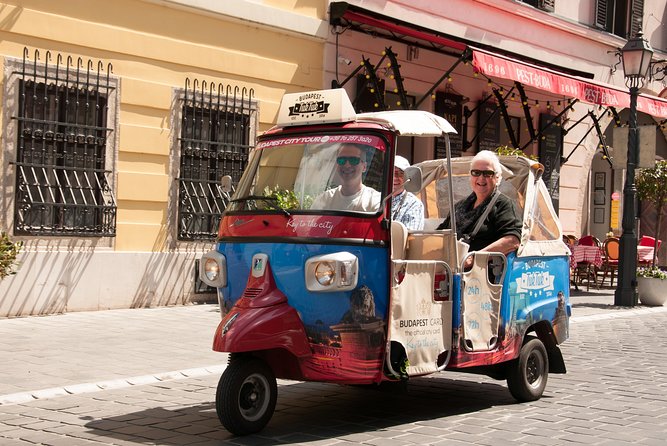
The ending stretch brings you back toward the river and into Budapest’s biggest political landmark.
Shoes on the Danube Bank
The Shoes on the Danube Bank is a memorial on the Danube’s east bank honoring Jews killed by Arrow Cross militiamen during World War II. It’s one of those places where I think you should actually pause. The design is simple, but the context is heavy.
This stop can be emotional. If your group is the type that likes fast photos, do yourself a favor and spend an extra minute reading what’s there.
Hungarian Parliament Building
The Hungarian Parliament Building is the seat of the National Assembly. It’s a major landmark and popular tourist destination. Internal visits are not included, so you’re mostly there for the exterior and the sense of scale.
Even from a distance, it’s easy to understand why Parliament is a centerpiece sight in Budapest.
One Potential Weak Link: When the Tour Feels Rushed
Most feedback is glowing, and many guides are praised for being helpful, friendly, and willing to tailor the route. Zoltar and Greg are repeatedly highlighted for stories and great photo moments. Norbert gets credit for pairing the tour with a night river cruise idea. Paul and Peter come up for strong historical context, humor, and attention to questions. Robi and Martin are noted for accommodating seniors with mobility issues by adjusting pace.
But one less-than-stellar account is important to learn from. A family reported that a second driver cut the time short and skipped major attractions, ending around two hours instead of four. The fix here is simple: at the start of your tour, list your must-sees and confirm your priorities. If you feel your time is shrinking, say something right away. A private guide can only help if you stay clear on what you need.
Also consider ride comfort. One review mentioned they couldn’t hear the driver and that the tuk-tuk jarred, especially if you have a bad back. If that’s a concern for you, ask your guide how to position for comfort, and be ready to take it slow at uneven spots.
Adding the Optional Danube Cruise for a Perfect Pairing
If you select the Danube sightseeing cruise option, you add the one perspective you cannot fully get from the streets. Budapest’s best angles show up from the water, especially around evening light.
One review specifically recommended adding a night river cruise after the tuk-tuk, calling it magical. Even if you don’t do it at night, the cruise is a strong complement because it turns your half-day orientation into a longer visual story.
Who This Tour Suits Best (and Who Might Want Another Plan)
This tour is a good fit if:
- You’re on a first trip and want the main sights without over-planning
- You want a private guide who can answer questions and adjust pace
- Your group includes seniors or people who prefer less walking
- You like photo stops and short explanations that make landmarks click
It may be less ideal if:
- You need frequent quiet time, because the tuk-tuk ride can be lively
- You have a bad back and know you don’t do well with vehicle vibration
- You want strict internal visits at every landmark, since entry tickets are not included
Should You Book This Budapest Private Tuk-Tuk Half-Day Tour?
I’d book it if you want a smart orientation day that hits Budapest’s biggest hits in one half-day, with the comfort of pickup and a guide who actually talks to you, not just through you. The standout guides in the feedback, like Zoltar, Greg, Paul, Peter, and Norbert, show what this format can do when the driver is strong: humor, clear explanations, and real help with photos.
I would think twice or at least plan carefully if you are sensitive to bumpy rides or you’re counting on internal visits everywhere. Still, even with those cautions, the route’s mix of Castle District views, major boulevard architecture, Jewish Quarter context, and river memorials makes it a strong way to spend four hours.
If you book, do two things: tell your guide your top must-sees at the start, and wear clothes for quick weather changes. Budapest can go from calm to chilly fast, and comfort makes the difference between rushing and enjoying.
FAQ
How long is the Budapest Private Tuk Tuk Half-Day Tour?
It runs for about 4 hours.
Do you get pickup and drop-off?
Yes. Free pickup and free drop-off are offered in the wider downtown area.
Is the tour private and in English?
Yes, it is a private tour/activity only for your group, and the guide is offered in English.
Are entry tickets included for the sights?
No. Entry tickets are not included.
Are food and drinks included?
No. Food and drinks are not included.
Is there an optional Danube sightseeing cruise?
Yes. A Danube sightseeing cruise is included if you select that option.
Can the tour time change?
Yes. The advertised time may be subject to change, with a maximum change of up to 1.5 hours.
What happens if the tour is canceled due to poor weather?
If it’s canceled due to poor weather, you will be offered an alternative date or a full refund.
How many people fit in one tuk-tuk?
One tuk-tuk is comfortable for 2-3 people. If your group has an odd number, you can specify if you want one traveler seated in another tuk-tuk.
Newest reviews from Budapest
- Buda Castle Private Walking Tour: A Kingdom of Many Nations★ 5.0 · 9 reviews
- Budapest Walking Tour: Explore Top Sights & Hidden Gems★ 4.5 · 9 reviews
- See the Hungarian Sea: Lake Balaton★ 4.5 · 9 reviews
- Transylvania Tour from Budapest to Bucharest: 4 days★ 5.0 · 10 reviews
- Luxurious, private day cruise with a waterlimousine to Szentendre★ 4.0 · 10 reviews
- Private Tour Around Budapest★ 5.0 · 10 reviews
- Born Under The Red Star – Communist tour with Coffee in a Retro Bar★ 5.0 · 10 reviews
- Live virtual walking tour in the Buda Castle quarter★ 5.0 · 10 reviews
Tuk-Tuks, compared.

Private Budapest TukTuk Tour: Custom Route, Hotel Pickup
Read our review →
Private Sightseeing Tour using Electric Tuk Tuk Ride in Budapest
Read our review →
Budapest Private Tuk Tuk Tour with Wine Tasting and Cheese Platter
Read our review →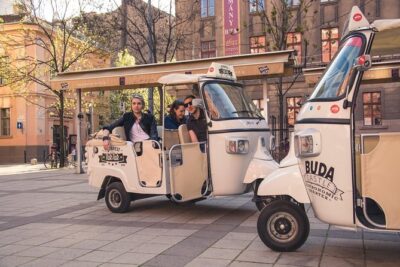
Budapest TukTuk Private Tour with Goulash Soup in the Downtown
Read our review →Browse the lists this tour appears in