
Reviewed · CYCLING TOURS
Budapest: Guided Downtown Electric Bike Tour
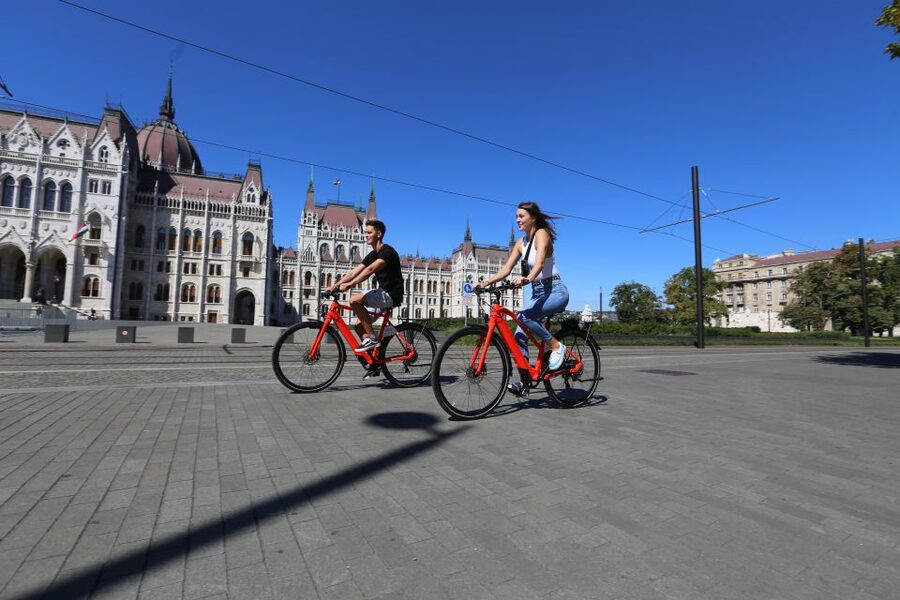
This tour works because Budapest is made for wheels. You start on Andrássy Avenue, glide through bike lanes and side streets, then use electric assist to get up Castle Hill without turning the whole trip into a leg workout. I love the way it strings together major sights with real local context, and I love that the pace gives you photo stops plus short moments to look around. One consideration: you still have to pedal, so comfortable shoes matter, and the route is not for people who can’t comfortably ride a bike.
You’ll meet at Bike & Relax in the Jewish Quarter, then roll through the city on well kept e-bikes from my-esel or Kalkhoff. Guides (often in English, French, or German) are the secret ingredient, with stories timed to what you’re seeing. Since you do not enter any landmarks, this is best as a high value overview, not your only plan for churches, synagogues, or museums.
Quick hits before you go
- Andrássy Avenue start with Opera House views and big city energy
- Electric assist on Castle Hill makes the steep parts feel manageable
- Danube viewpoints including the Buda side and stops near famous landmarks
- Pass by major historic sites without getting stuck in lineups
- Small group size (up to 10) helps the guide keep your pace and questions on track
Starting at Bike & Relax: e-bike fit, rules, and what your ride feels like
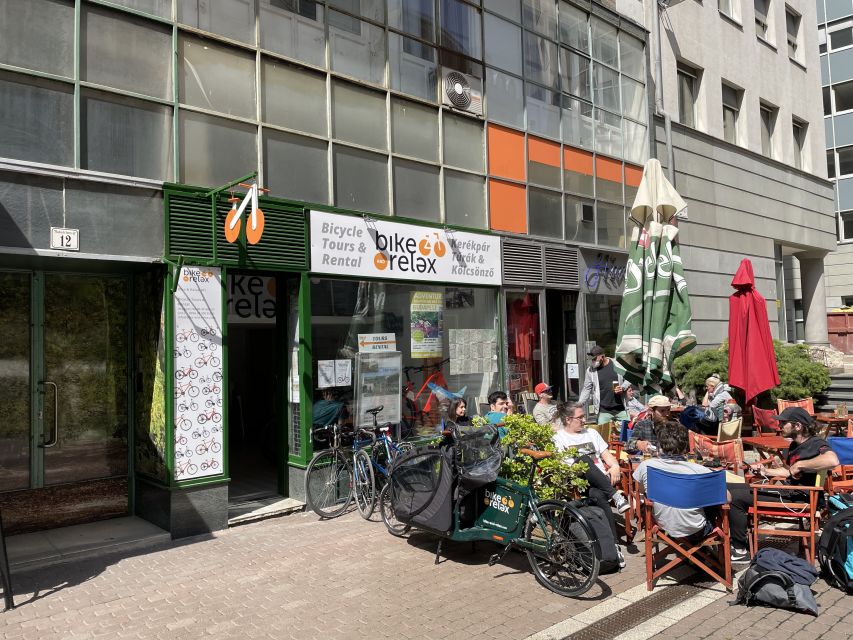
You’ll begin at Bike & Relax in the heart of the Jewish Quarter, the link area between Madách tér Square and Gozsdu udvar court. Look for Café Hivatal next to the shop, and know that the shop is close to Gozsdu udvar court and Deák Ferenc tér (Deák ter). If you’re using transit, Deák Ferenc tér station (M1, M2, M3) plus trams 47, 48, 49 makes life easy.
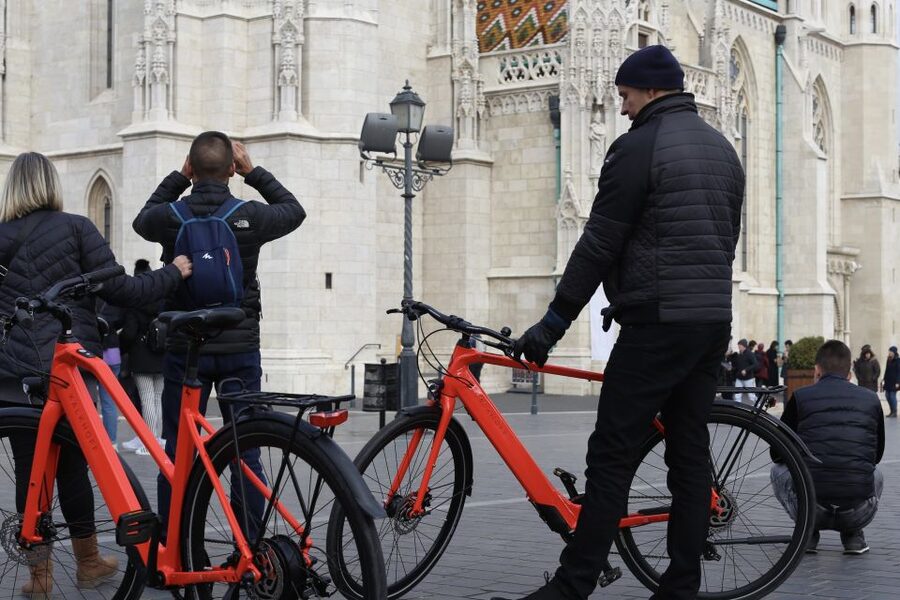
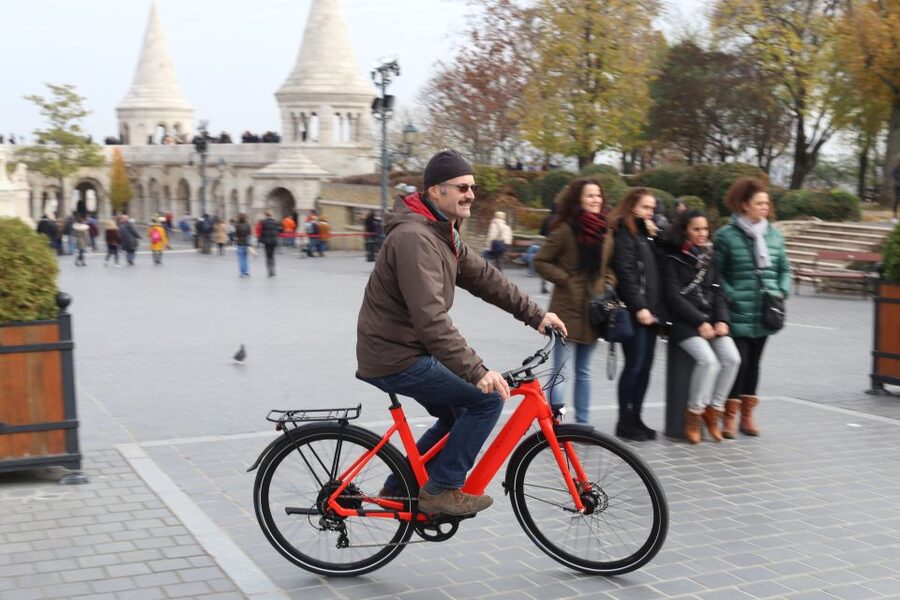
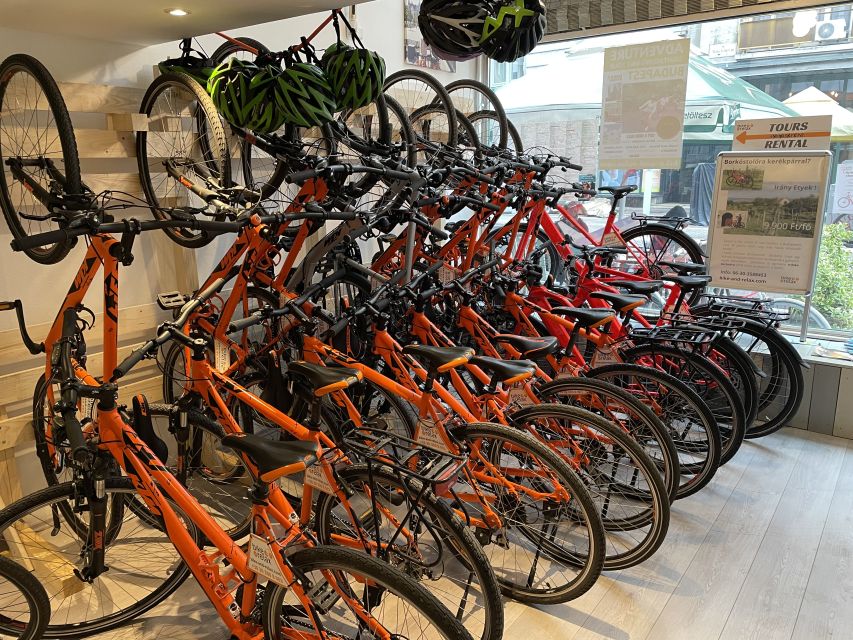
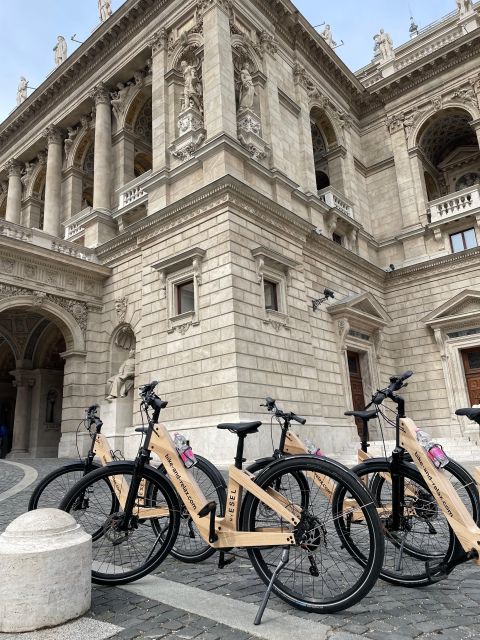
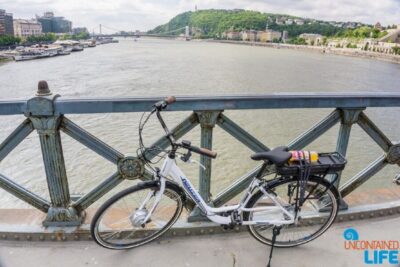
Your e-bikes come from my-esel (wooden frame models) or Kalkhoff Berleen e-bikes. This matters because the bike quality is part of the comfort equation, and the electric support is what turns hills into a non event. Still, remember an e-bike is not a scooter. You pedal with assistance, so you need basic bike skills and the confidence to ride in a city environment.
A few practical details to plan for:
- Helmets are optional, but you can grab one if you like extra safety.
- The bikes have open chains that may touch your clothes, so avoid baggy sleeves or loose fabrics that could get caught.
- Luggage or large bags are not allowed, so travel light.
You’ll also want to consider seat comfort. Most people keep mentioning how easy the bikes are, including the climb to the Castle area, but one review mentioned the seat was not the most comfortable. If you have sensitive hips, wear padded shorts if you own them, and think about swapping into a more comfortable pace when the guide stops.
Finally, know who this tour is not for. It’s not suitable for children under 13, pregnant travelers, people with mobility impairments, anyone who can’t ride a bike, people under 5 ft 1 in (155 cm), people under 5 ft 2 in (160 cm) per the listed constraints (this listing gives two close thresholds, so err on the safe side and pick a height that clearly fits), and people over 243 lbs (110 kg).
More e-bike tours in Budapest:
- Budapest: E-Bike Guided Tour and Castle Hill
★ 4.9 · 241 reviews - Budapest: Guided Bike & E-bike Tour with a Goulash
★ 4.8 · 220 reviews - Budapest E-bike Tour
★ 5.0 · 125 reviews
Andrássy Avenue to Heroes’ Square: Budapest’s showpiece, on two wheels
The tour’s energy kicks off along Andrássy Avenue, a world famous boulevard where architecture sets expectations fast. You’ll cruise the full length of the avenue, with photo stops timed for the views you’re going to want later. The Hungarian State Opera House is one of the highlights here, and it’s the kind of landmark where even a quick pause feels worthwhile because the street scale is so impressive.
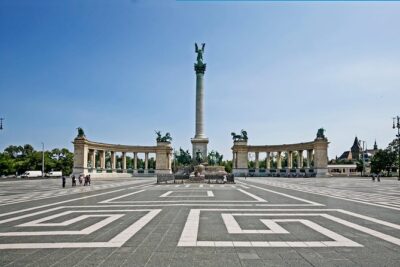
From there, you roll toward Heroes’ Square. This is a place you feel as much as you see, with the broad open space that makes your camera work overtime. The guide’s job is to connect the visuals to what they mean historically and culturally, so the stop feels less like a checklist and more like understanding why the city built things the way it did.
I like this section because it’s the easiest mental reset of the whole trip. You start with wide avenues and clear “big Budapest” landmarks, then later you transition into more layered neighborhoods and memorial sites. It’s also a good chance to learn the bike rhythm early so the rest of the ride feels smooth.
Jewish Quarter, House of Terror, and Heroes’ Square photos without the museum fatigue
Next you’ll move through the Jewish Quarter area, and then on to the House of Terror for a photo stop. The point here is not entering a building, it’s getting oriented. The guide stories tend to land differently when you’re standing outside a site and looking at the surrounding streets, because the city context becomes part of the message.
This portion is also a good reality check for timing. You’re seeing a heavy topic from the outside, while still staying in motion and keeping your overall schedule efficient. If you prefer your history with context but without sitting through indoor exhibitions, this works well.
At this stage, I’d set expectations like this: you’ll gather enough understanding to know what you want to return for on your own. Then you can choose deeper visits to synagogues, memorials, and museums later during your stay.
City Park and Vajdahunyad Castle: thermal-bath sightseeing with a fairy-tale twist
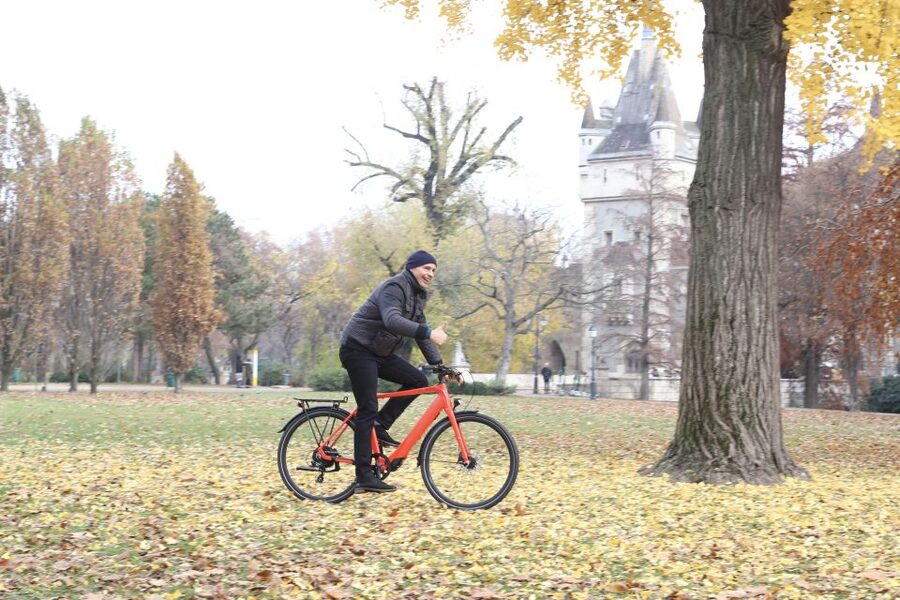
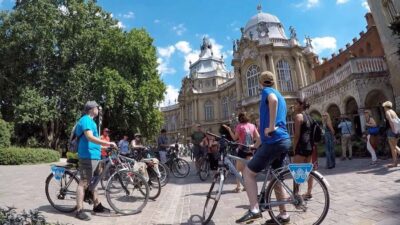
After Heroes’ Square, you head into City Park. One of the most charming moments is the “fake castle” feeling of Vajdahunyad Castle, a spot you’ll see from the street and during your stops. It’s the kind of place that looks like it belongs in a storybook, and then you realize you’re in the middle of a real urban park with big institutional landmarks nearby.
Széchenyi Thermal Bath is another key stop area. The tour doesn’t go inside, but seeing it from outside (and hearing the guide’s explanation) gives you a sense of how important bathing culture is in Budapest. Even if you plan to do a bath visit later, this stop gives you a shortcut: it helps you identify what’s closest to your interests and what you might want to experience at a specific time of day.
This is also where you may notice how well the route balances riding with short walks. You’re not stuck grinding the pedals the whole time, and the city’s bike lanes and side streets help you keep momentum.
More rides around Budapest:
- Budapest: Grand Sightseeing Bike Tour
★ 4.8 · 984 reviews - Budapest Highlights Bike Tour
★ 5.0 · 770 reviews - Budapest: Guided City Discovery Bike Tour
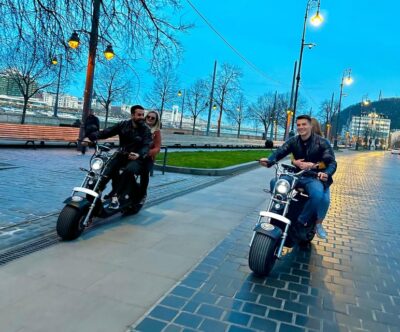
★ 4.7 · 702 reviews - Budapest: Monster Bike Roller Guided City Tour
★ 5.0 · 538 reviews
Back along Andrássy Avenue: Opera to the Basilica and that classic Pest skyline
The ride brings you back toward central stretches of Pest, passing the Liszt Ferenc Academy of Music and returning to your “grand boulevard” route moments. This repetition is not a waste. It helps you connect how one street links multiple districts, and it makes your later navigation simpler.
St. Stephen’s Basilica is a major photo stop. This church is the biggest in Budapest, and even from outside you’ll get that “wow, that’s the one” feeling. You’ll also get quick orientation to the surrounding streets, which matters because the inner-city layout is a bit of a maze on foot.
From here, you’ll move toward the financial district and Liberty Square. The guide talks about the area’s bloody history and a disputed Holocaust memorial. I appreciate that the tour doesn’t avoid complexity. It’s quick, but it’s not vague, and it sets you up to respect the site rather than treat it like a photo backdrop.
Parliament, Danube views, and the Shoes: where the ride turns emotional
As you continue, the Hungarian Parliament Building comes into view. From street level, it’s one of those landmarks that looks different depending on the exact angle you catch. Photo stops here help you frame your own return visit if you want better sightlines later.
Then you reach the Danube River for a breathtaking view of the Buda side of the city. This is where the e-bike pays off in a different way. Instead of saving energy for just getting around, you can arrive at the viewpoints with enough energy to stand, look, and take pictures without feeling wrecked.
You’ll also pass the Monument of the Shoes. Small but important note: direct access cannot always be granted. That’s realistic for a city dealing with crowds and changing conditions, so the best mindset is to treat it as a viewpoint and passage moment, not a guarantee of stepping right up to the sculpture.
Crossing the Chain Bridge is another highlight. You’ll cross a newly renovated bridge that is closed for private cars. That means you’re not sharing the bridge with private vehicle traffic. It feels more like a pedestrian friendly crossing even though you’re traveling by bike, and it gives you a calmer route to reposition yourself for the climb to Castle Hill.
Castle Hill the easy way: e-assist energy for Matthias and Fisherman’s Bastion
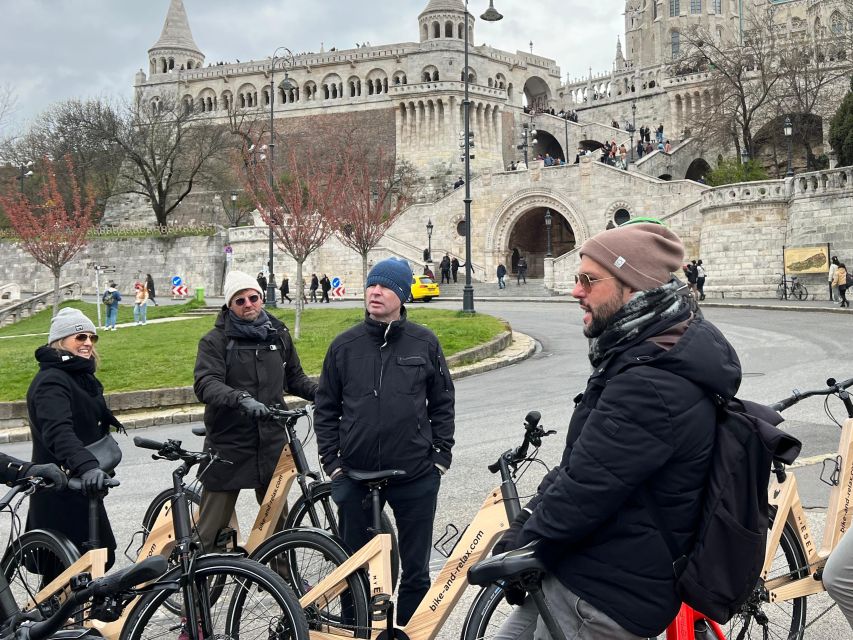
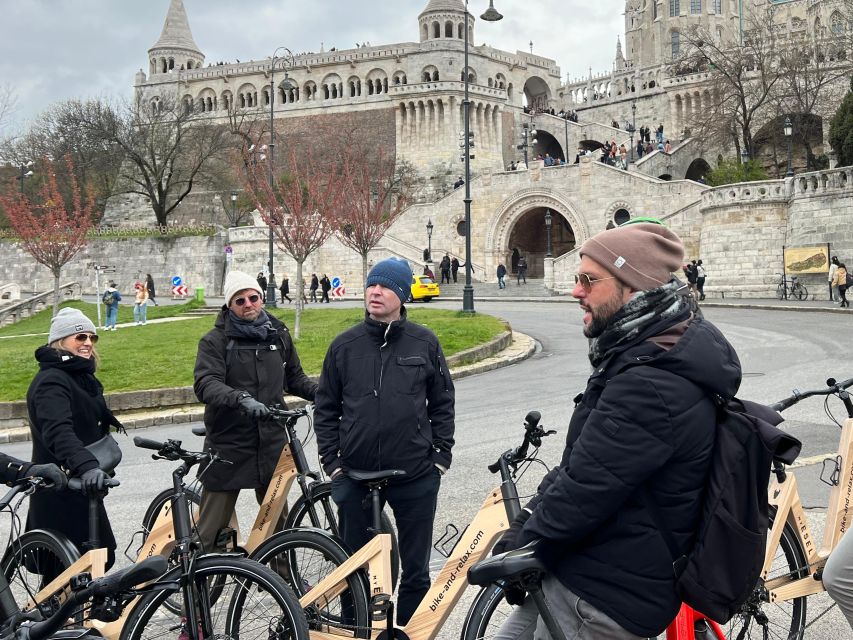
Now for the part most people talk about after the tour: the climb to Castle Hill. This is where the electric assist shows its strength. Even if you’re not an athlete, you can keep moving without feeling like you’re dragging yourself up the grade.
From the top area, you’ll see Matthias Church and Fisherman’s Bastion. These two stops work together. Matthias adds a grounded, historic church feel, while Fisherman’s Bastion is the look-where-you-are viewpoint with that dramatic “Budapest postcard” energy.
One of the best things a guide can do on this part is keep you from rushing. Several guides in recent trips were praised for pacing the ride and not pushing people along. You want time to compose photos and to actually look out over the Danube rather than just grabbing a quick shot and moving.
After the Castle area, you return toward the Danube bank and pass Rudas Thermal Bath. Again, you’re not entering, but seeing it along the river gives you a stronger sense of how Budapest’s bathing culture threads through the city’s geography.
Gellért Hill, Gellért Baths, Liberty Bridge, and Central Market Hall: the ride ends in real-life Budapest
Next comes Gellért Hill and the famous Gellért Thermal Bath area. Even from outside, the setting and the street presence matter. You’re seeing how the city’s thermal culture is not just a tourist activity, it’s built into the physical identity of the river hills.
Then you cross back to Pest via Liberty Bridge, described as the most popular bridge in Budapest. This crossing is one of those moments where you feel the city’s layout, because you see how Buda’s elevations connect down into Pest’s busier centers.
Your final stretch brings you to Central Market Hall. This is a place where your senses tend to wake up, even if you don’t enter as part of the tour. Seeing it from the outside and hearing the context helps you understand why food markets matter in Budapest.
After that, you’ll pass the Hungarian National Museum area and then finish at the Dohány Street Synagogue. The tour ends back where you started at Bike & Relax. The full arc from grand avenues to river hills to market and synagogue makes the tour feel like more than one long ride. It’s a guided map you can later unfold into separate day trips.
Guides, group size, and why the stories actually help you
This is a small group tour with a limit of 10 participants. In practice, that matters because the guide can keep an eye on everyone’s speed, remind you about upcoming turns, and answer questions without losing the rhythm.
Across recent experiences, guides named Ollie and Oliver, along with Thomas, Katy, Balint, Karolo, Karoly, Katalin, and Valen, were praised for storytelling and humor, and for pacing that fit different fitness levels. If you’re the type who likes to take notes, you’ll likely feel like you left with clear mental hooks. If you’re more the “just show me the interesting stuff” type, the humor and timing help you stay engaged.
I also like that this tour is practical about weather. One review mentioned rain ponchos were provided, and water was handed out before riding. It’s not an adventure where you get left to fend for yourself. Even though it’s an outdoor route, it’s run with day to day conditions in mind.
Price and value: is $63 worth your time for a 3.5-hour overview?
At $63 per person for about 3.5 hours, you’re paying for two things: guided interpretation and an e-bike that gets you efficiently across neighborhoods that are harder to string together by foot. If you’re short on time, this kind of tour is usually the best “first Budapest move,” because it gives you direction.
I think the value is strongest if you meet one of these needs:
- You want a fast orientation tour before committing to bigger museum or church visits.
- You want to cover major landmarks without spending your vacation time in lines or with transit transfers.
- You want to handle hills with less strain, while still doing enough biking to feel connected to the city.
The price also becomes more reasonable if you think about what you would otherwise spend on transport plus individual private guides for multiple districts. Here, you get one guided thread across the city.
Here’s what you should not expect for this cost: you won’t go inside the landmarks you see. That’s not a flaw, it’s a trade. This tour is built for an overview, so plan to use it to decide what to revisit.
Who should book, and who should skip this e-bike tour?
Book this if you:
- Can ride a bike comfortably and want a guided, low-stress way to see a lot of Budapest.
- Appreciate context on the street level, especially around major civic and memorial sites.
- Want to make Castle Hill feasible without turning it into a punishing workout.
- Like a small group with a guide who can keep things moving but not frantic.
Skip this if you:
- Need step-free or mobility-access options, because it’s not listed as suitable for people with mobility impairments.
- Are traveling with kids under 13, or if you’re outside the height and weight limits.
- Don’t feel comfortable with riding in city conditions.
- Are looking for an indoor museum day, because the tour does not include entering landmarks.
Also keep your expectations grounded if you’re very sensitive to seat comfort, and plan your clothing with the open chain detail in mind.
Should you book Budapest’s Guided Downtown Electric Bike Tour?
I’d book it if you want the fast, high coverage version of Budapest done by someone who can explain what you’re seeing in real time. The e-bike makes the hardest climb manageable, and the route links “big sight” moments with the city’s deeper themes, like Liberty Square and the Holocaust memorial context, without turning your day into a series of long waits.
If you’re the kind of traveler who enjoys deciding what to do next after getting your bearings, this tour is a smart early move. If your dream day is all indoor visits and quiet time inside specific buildings, you’ll probably want a different plan, and use this only as a supplement.
FAQ
How long is the Budapest Guided Downtown Electric Bike Tour?
The tour lasts about 3.5 hours, and it can vary depending on day conditions.
Where do I meet for the tour?
Meet at Bike & Relax in the Jewish district, near Café Hivatal beside the shop, around the corner of Gozsdu udvar court and close to Deák ter Square.
Are the bikes provided, and do I need to pedal?
Yes. You get an e-bike rental. Electric support helps while you still have to pedal.
Is this a large group tour?
No. It is a small group tour limited to 10 participants.
Do we enter the landmarks we see?
No. You will not enter any of the listed landmarks during the tour.
What languages are the guides?
The live tour guides are available in German, French, and English.
Newest reviews from Budapest
- Private Tour Around Budapest★ 5.0 · 10 reviews
- Born Under The Red Star – Communist tour with Coffee in a Retro Bar★ 5.0 · 10 reviews
- Live virtual walking tour in the Buda Castle quarter★ 5.0 · 10 reviews
- Taste Budapest – Fat Boy Foodies Walk★ 4.5 · 10 reviews
- Wine & Food Tasting Cruise on the Danube★ 3.5 · 10 reviews
- Private Transfer from Budapest to Prague with 2 hours for sightseeing★ 4.5 · 10 reviews
- The Real Saw | Escape Room by PÁNiQ SZOBA★ 4.1 · 10 reviews
- City Park True Crime of Hungary and Night Walk Tour in Budapest★ 5.0 · 10 reviews
Cycling Tours, compared.

Browse the lists this tour appears in