
A Budapest food tour is interesting when it does more than feed you. This one stitches major sights into a 3-hour bite-and-walk route, starting at the Hungarian State Opera and ending near West Station. I like that you get 10+ tastings of Hungarian classics, but the pace does include a fair amount of walking, so comfy shoes matter.
What I really like is the human side of the experience, the stories and food context from the guide. In the way the tour is described, you’re meant to visit places locals actually choose, then connect each dish to Hungary’s day-to-day habits, not just food trivia.
Key Points To Know Before You Go
- Small group, max 12: You’ll get more time for questions and for your guide to react to what you like.
- Landmarks meet lunch logic: You start at the Opera and see major sights while food stops keep the walk from feeling like sightseeing duty.
- 10+ tastings plus wine: Expect a full-food experience with coffee and Hungarian wine, plus water.
- Hungarian street food is in the mix: Lángos is a highlight, and it’s the kind of dish you rarely find at home.
- You end near Nyugati Station: If you plan trains or late plans, the location is handy.
A 3-Hour Bite-and-Walk Plan That Actually Makes Sense
This tour works because it keeps the focus on food while still letting you see Budapest’s center. You meet at Andrássy út, then the walking route takes you through big recognizable stops that help you understand where you are in the city. If it’s your first day, it’s a smart way to get your bearings fast, since you’ll cover key areas while your stomach stays involved.
I also like that the tour keeps the format simple. It’s about a short sequence of stops, each with a purpose, and each feeding into the next. Guides for this route are often singled out in real accounts for mixing history with food culture, plus an easygoing vibe. Names like George and Zoltan come up often, and the common thread is that they can handle lots of questions without making you feel rushed.
The group limit matters too. With a maximum of 12 people, you should feel less like a number and more like part of a small class. That tends to make tasting conversations better, especially if you want to ask what to order next time.
More street food walks in Budapest:
- Budapest: Guided Street Food Tour with Sweet Wine
★ 4.9 · 149 reviews - Budapest Street Food Tour with Local Snacks, Dessert and Beer
★ 5.0 · 121 reviews - Budapest Ruin Bars Evening Walking Tour with Drinks & Street Food
★ 5.0 · 104 reviews
Price and Value: What $118.51 Buys You in Real Food
At $118.51 per person, you’re paying for more than a snack tour. You’re paying for a timed route, a guide, and a sequence of tastings that includes food plus Hungarian wine and water. The included list also covers coffee, bread, and a “secret dish,” which is exactly the kind of detail that turns a standard walk into a meal.
The biggest value factor here is quantity. The tour is built around 10+ tastings, and the menu spans sweet, savory, and classic comfort dishes. You’re not just grazing, you’re eating a structured set of bites, which is why many people recommend showing up hungry. If you plan your day around the tour, you may find you can push your next meal later with fewer regrets.
One more practical value point is what you get included beyond food. You get a mobile ticket, the tour is offered in English, and it includes entry-adjacent time at major sights like the Opera meeting point. Hotel pickup is not included, so you do the straightforward job of getting to the meeting point, then letting the guide handle the rest.
Finally, the tour’s popularity is easy to spot. On average, it’s booked about 49 days in advance, which is a hint to lock in your date early if your schedule is tight.
Your Walk Route: From the Opera to the Basilica and Parliament
The tour begins at Budapest, Andrássy út 22, right by the Hungarian State Opera. The meeting time at the Opera is quick, about 15 minutes, and the admission ticket is noted as free. Even if you don’t go deep into opera culture, it’s a strong start because Andrássy Avenue is one of the city’s big visual statements, and you’ll feel instantly grounded in central Budapest.
From there, the route continues to a major religious landmark: the Roman Catholic Basilica dedicated to Stephen, Hungary’s first king. The big draw here is the reliquary tradition tied to Stephen’s supposed right hand. Even if you’re not a religious-history person, it’s one of those places that forces you to slow down for a moment, because the meaning is built into the building.
Next, you’ll pass through a public square in Lipótváros, one of the classic districts for civic buildings and grand streets. Squares are useful on a food tour because they break up the walking rhythm. They also give your guide a place to point out the “why here” behind the route, instead of just saying turn left and keep going.
The final landmark stop centers on the Hungarian Parliament building. It’s a magnet for photos, but in this kind of tour it also acts like a finish line for the sightseeing portion of the walk. By the time you reach it, your tastings have already done the job of keeping the energy up, so the sight stop feels like a reward, not an interruption.
What You’ll Eat and Drink: Hungarian Classics in 10+ Tastings
This is a tasting tour, not a sit-down meal. The included food list reads like a best-of Hungary starter pack, with both sweet and savory bites.
You should expect sweet pastry and coffee time. The menu calls out strudel, plus bread and coffee. Strudel is one of those desserts that’s both comforting and clear, buttery pastry with fruit or filling, and it’s a good way to balance the more savory dishes you’ll hit later.
You’ll also get Hungarian street food in the form of láńgós, described in the list as crispy. Lángos is basically fried comfort, often topped in ways that range from simple to salty-sour. On a food tour, it’s a smart choice because it tastes like something locals actually grab and share, not something purely touristy.
For savory dishes, the tour includes a mix of vegetables and meats. You’ll get tangy pickled vegetables paired with Hungarian sausages, and you’ll see local cheeses in the lineup as well. Those bites help you understand how Hungarian meals often balance heavy flavors with acidity and salt.
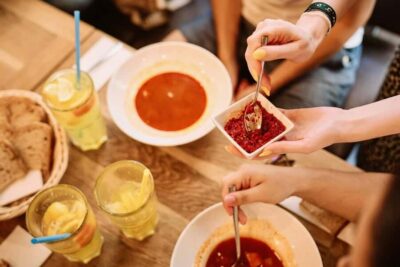
Then there’s the comfort-food centerpiece: gulyás soup. It’s a dish that carries both warmth and spice, and it gives you the “why Hungary tastes the way it does” moment. If you’ve only had goulash as a restaurant stew somewhere else, this is one of the ways a tour like this can reset your expectations.
Bread is also included, which matters more than it sounds. Fresh bread helps you slow down, taste between bites, and not feel like you’re rushing from one stop to the next.
The list also mentions a secret dish. That’s not just marketing wording. It’s usually the kind of item that turns into a memorable last-course moment, especially because you’re not expecting it.
Drinks round it out with red or white Hungarian wine and water. One review account also mentions a palinka shot and a stop connected to a speakeasy-style moment, which suggests some groups get an extra spirit-leaning surprise. Since the menu can change based on availability and other conditions, treat that as a possible bonus, not a promise.
Other Budapest bookings worth a look
- Budapest: Unlimited Prosecco, Beer and Aperol Spritz Cruise
★ 4.8 · 37,304 reviews - Budapest: Unlimited Prosecco, Beer & Aperol Spritz Cruise
★ 4.5 · 3,371 reviews - Budapest Food Walking Tour: Eat, Sip & Explore Like a Local
★ 4.8 · 1,027 reviews - Budapest: Wine, Cheese, and Charcuterie Tasting
★ 4.9 · 647 reviews
How the Small-Group Guide Changes the Whole Experience
This is capped at 12 travelers, and that changes the feel fast. You’re not stuck listening to one-way explanations while holding your phone up for every bite. You’ll have time to ask what you’re tasting, why it matters, and what locals do with it.
Guide style is a big reason this tour scores so highly. In real accounts, guides like George and Zoltan are praised for being patient with questions and for weaving history into food without sounding like a lecture. Names like Angela, Kitti, and Gabor also show up as strong guides, and the recurring pattern is clear: they make the city story personal, then connect it back to what’s on the table.
If you’re the type who likes practical tips, this format can be especially useful. You’ll learn what to order next time, what to pair, and what to try even if you’re unsure. That’s the real value of a guided tastings tour, you leave with a mental shortcut for your next meal.
Group size also affects pacing in a good way. Even when the route includes major landmarks, the guide can adjust on the fly. That matters when weather or locations change, since the itinerary and menu can be adjusted based on what’s available.
Pacing and Practical Tips: How to Eat, Walk, and Not Feel Rushed
This tour includes walking, and the guidance is consistent: wear comfortable shoes. The route is short enough for most people, but it’s not a sit-on-a-bus tour where you barely move. Plan for legs and feet, especially if you’re traveling with anything achy or if you’re not used to city walking.
Food quantity is the other big practical factor. The tastings are meant to be filling, and multiple accounts stress that you should come ready to eat and not plan a heavy breakfast. A simple approach is to eat something light before you go, then let the tour handle the rest of your day’s food rhythm.
Timing is also worth thinking about. The tour lasts about 3 hours, and that means you’ll likely hit several stops without long sit-down breaks. If you want maximum savoring time, I’d pace yourself while still tasting everything. One slow bite plus a sip of wine can do more for your enjoyment than trying to rush through every place.
Another small tip is to bring a question list. If you’re curious about anything from Hungarian food culture to political and social context, ask. The tour is designed around commentary, and the small-group size gives you room for back-and-forth.
Potential Downsides: When Food Wins, Sights Take a Back Seat
A food tour like this is never going to be a pure sightseeing day. You’ll see major landmarks like the Opera, Basilica, a Lipótváros square, and Parliament, but the heart of the experience is eating. If your priority is museums, long monument stops, or a dense list of sights, you might want to pair this with another focused walk afterward.
One more consideration is the mix of restaurant types. Some accounts note that a couple of stops can be at well-known Hungarian chains rather than only family-run places. The way it’s described, the goal is balance, showing both long-standing local favorites and everyday spots locals actually visit. If you’re chasing only tiny, mom-and-pop locations, this may feel like a compromise.
Finally, there’s always some flexibility. The itinerary and menu can change based on availability, weather, and other circumstances. That flexibility is usually what keeps your tour running smoothly, but it means you should stay flexible too.
Should You Book This Budapest Food Tour?
If you want an efficient Budapest orientation plus a serious sampler of Hungarian flavors, I think this is a strong pick. It’s especially good for first-timers, food lovers, and anyone who likes history when it’s connected to everyday life. The included wine, the 10+ tastings, and the structured route starting at the Opera make it feel like value, not just a walk with snacks.
I’d also book it if you like guides who talk as they walk, since multiple accounts highlight guides such as George and Zoltan for patient, entertaining explanations. And the small group cap of 12 is a genuine quality boost, not a marketing line.
Skip it only if you hate walking, or if you need a full sightseeing itinerary more than food. Otherwise, plan to eat light before you go, wear comfortable shoes, and treat it like your first Hungarian meal in the city, because that’s exactly what it’s designed to be.
FAQ
How long is the Budapest Centre Food Tour?
It runs for about 3 hours.
How many tastings and what food is included?
The tour includes 10+ tastings, with items such as strudel, crispy Hungarian lángos, pickled vegetables, Hungarian sausages, local cheeses, gulyás soup, bread, coffee, a secret dish, and red or white Hungarian wine plus water.
Where do we meet and where does the tour end?
You meet at Budapest, Andrássy út 22, 1061 Hungary. The tour ends at Budapest, Báthory utca 23-1054, 1054 Hungary.
Is hotel pickup and drop-off included?
No, hotel pickup and drop-off are not included.
Is there a lot of walking, and what should I wear?
Yes, the tour involves a fair amount of walking. Wear comfortable shoes.
Does the tour offer dietary options?
If you have dietary requirements, contact the tour provider in advance so they can cater for you as best as possible.
Can I get a full refund if I cancel?
Yes. Free cancellation is offered, and you can cancel up to 24 hours in advance for a full refund.
Newest reviews from Budapest
- Private Tour Around Budapest★ 5.0 · 10 reviews
- Born Under The Red Star – Communist tour with Coffee in a Retro Bar★ 5.0 · 10 reviews
- Live virtual walking tour in the Buda Castle quarter★ 5.0 · 10 reviews
- Taste Budapest – Fat Boy Foodies Walk★ 4.5 · 10 reviews
- Wine & Food Tasting Cruise on the Danube★ 3.5 · 10 reviews
- Private Transfer from Budapest to Prague with 2 hours for sightseeing★ 4.5 · 10 reviews
- The Real Saw | Escape Room by PÁNiQ SZOBA★ 4.1 · 10 reviews
- City Park True Crime of Hungary and Night Walk Tour in Budapest★ 5.0 · 10 reviews
Street Food Tours, compared.
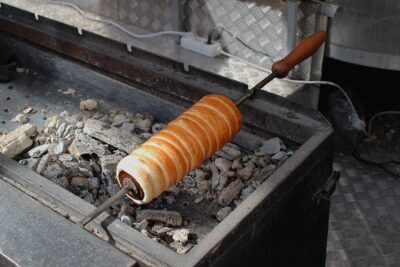
Budapest Street Food Tour with Local Snacks, Dessert and Beer
Read our review →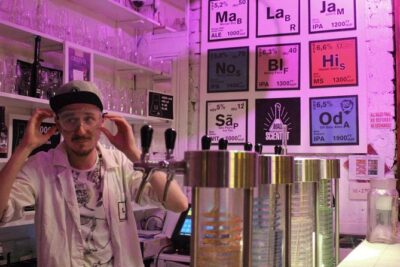
Budapest Ruin Bars Evening Walking Tour with Drinks & Street Food
Read our review →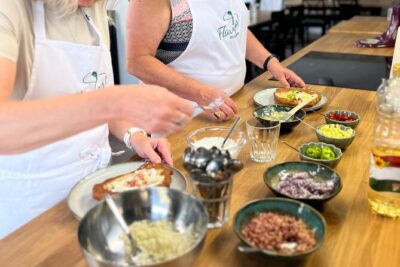
Hungarian Langos Making Class: The No. 1 Street Food in Hungary
Read our review →Budapest Private Centre Food Tour with 10+ Tastings & Street Food
Read our review →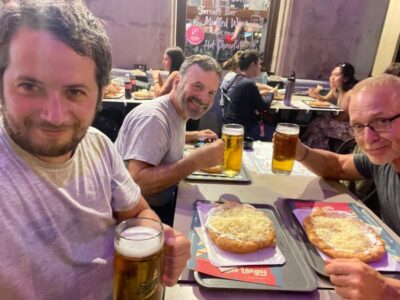
Budapest Bites: A street food adventure (3 iconic dishes)
Read our review →
Private Budapest Street Food Tour with Snacks Dessert and Beer
Read our review →Browse the lists this tour appears in