
Reviewed · BUDA CASTLE
Budapest: Buda Castle District Walking Tour with a Historian
Budapest’s Buda Castle District is one of those places where the stones feel like they remember everything. This walking tour is built to make sense of what you’re seeing, so the Royal Palace area, Matthias Church, and the viewpoints at Fisherman’s Bastion stop feeling like random photo spots and start feeling connected.
I like that the guide approach is story-first, and you end up with a clear line from the Middle Ages through World War II. I also like that the tour includes the Matthias Church visit with entrance and live commentary, so you’re not just looking, you’re understanding, with guides like Petra, Gábor, and Judit repeatedly praised for turning facts into real scenes.
One thing to plan for: it’s mostly outside, and weather can change the feel of the day. A few people even flagged sound as a challenge in busy areas, so if it’s crowded, I suggest positioning yourself closer to the guide and staying flexible if conditions shift.
Key highlights you should know before you go
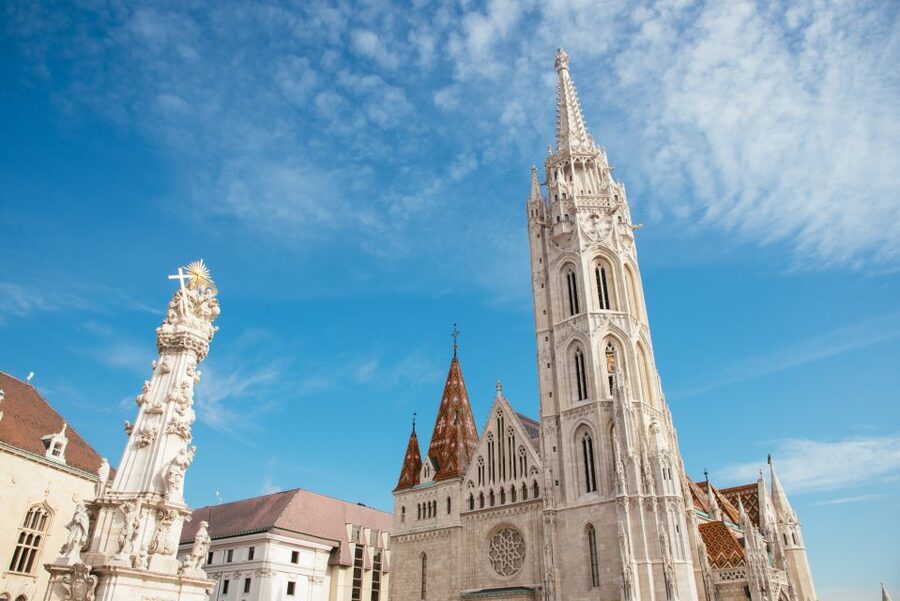
- Matthias Church with live commentary, plus your ticket handled, so you can focus on the details
- Guides who connect timelines, with multiple named guides (Petra, Monica, Gábor, Barika, Judit) praised for storytelling
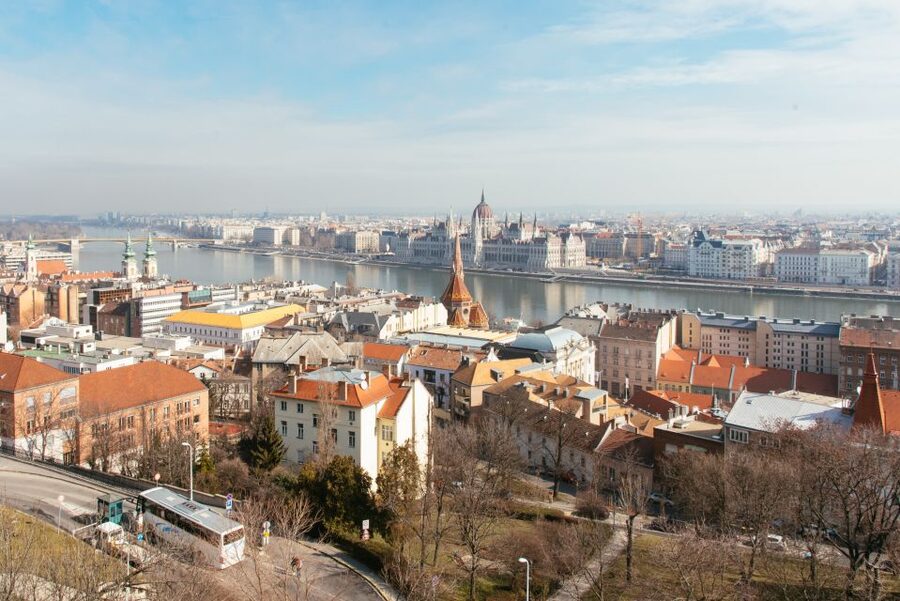
- Fisherman’s Bastion viewpoint time, including a focused photo stop for Parliament and Pest-side views
- A walk that threads through major Castle Hill landmarks, from the Royal Palace zone to Savoyai Terrace
- Coffee stop as a built-in reset, not an afterthought, so you can regroup without rushing
- Mostly outdoor pace, meaning an umbrella or rain layer is smart even if skies look fine
Entering the Buda Castle core, the part of Budapest that feels oldest
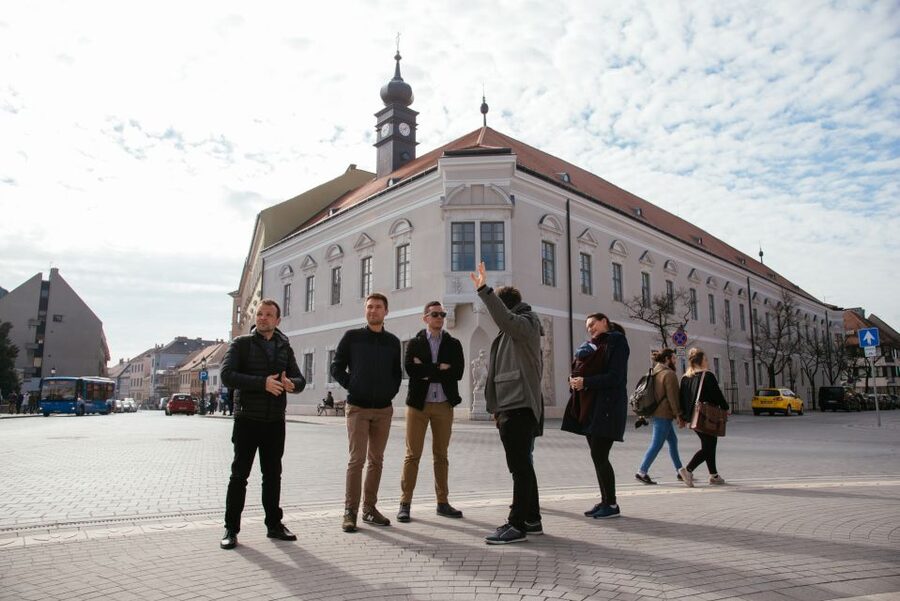
This tour starts in the historical heart of Buda, right at Szentháromság tér, in front of the Holy Trinity column. That matters because the Castle District is not just one landmark. It’s a whole neighborhood of layers, stairs, terraces, and changing viewpoints, and you’ll cover it with a guide who explains why each turn feels different.
The route is paced for walking but not for marathon legs. You’ll move through winding areas around the castle grounds and get brief windows into the big buildings and viewpoints that most people see only from the outside. Then, the guide ties those snapshots together with the human story: who lived here, why power shifted, and how the city’s identity formed across centuries.
One of the most practical perks is that you get a guided sense of orientation. Buda Castle can be confusing on your own because it’s half palace, half district, and half viewpoint complex. With this kind of historian-led walk, you stop asking Where am I? and start asking What changed here, and why?
More of the Castle District:
- Budapest: Buda Castle Cave Tour
★ 4.7 · 5,677 reviews - Budapest: Buda Castle District Vampires and Myths Night Tour
★ 4.6 · 3,830 reviews - Budapest: Buda Castle Walk with Saint Stephen’s Hall
★ 4.5 · 3,012 reviews
Matthias Church is where the tour turns from pretty to meaningful
The biggest structured stop is Matthias Church, with a guided visit of about 45 minutes. Your ticket is included, and you also get live commentary, which is the difference between skimming a stunning interior and actually noticing what you’re looking at.
This church is often described as the most beautiful in Budapest, and the point of the tour is to help you see why. Expect your guide to explain the building’s historical context and to point out architectural details you would likely miss if you just followed other peoples’ photo lines.
If you enjoy church interiors, you’ll probably love how the tour slows down here. People in recent groups specifically mentioned things like the church’s interior beauty and even the experience of organ music when it happened during the visit. Even if organ playing is not guaranteed every day, Matthias Church is still one of those interiors where commentary gives you something to hold onto as you look around.
Practical tip: go in with a mindset of close-up viewing. This is not the stop where you rush for the one perfect shot and sprint on. It’s the stop where you’re meant to notice, so hold your camera, or at least alternate between photos and listening.
Fisherman’s Bastion, the Parliament view, and how to time your photos
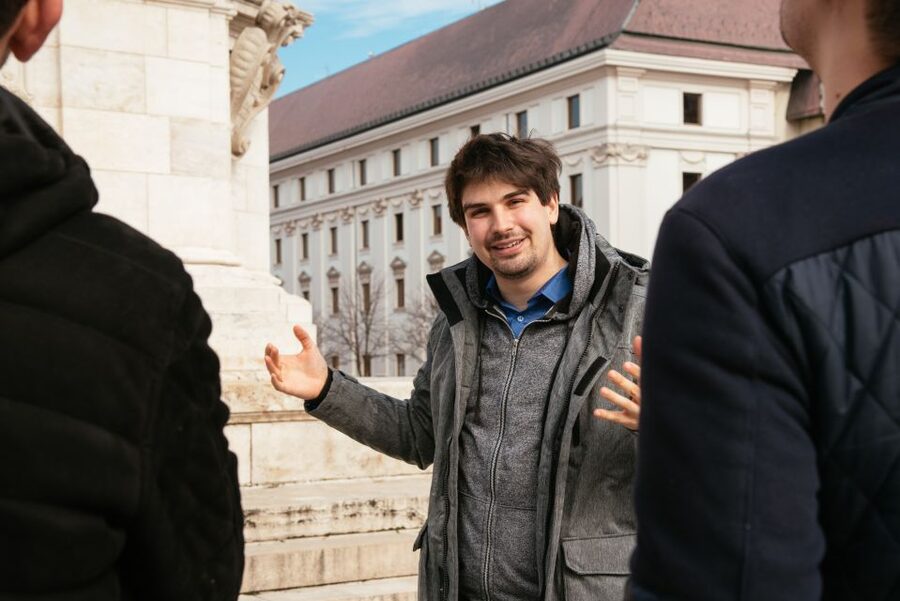
After Matthias Church, you’ll head to Fisherman’s Bastion for about a 15-minute photo stop. This is the classic Castle District lookout where the city opens up toward Parliament and Pest. The value of having a guide isn’t that they invent the view, it’s that they help you understand what you’re seeing from this specific angle.
From here, you learn how the river and city layout frame Hungarian history. The guide’s storytelling gives meaning to the skyline, turning your photos from Postcard Mode into You can place this in time Mode.
The drawback of this stop is pure reality: it’s a high-demand viewpoint. If you’re sensitive to crowds or fog, you might feel the pressure of squeezing in. One tip that helps is to treat the photo stop as a sequence, not one single moment. Get your wide shot first, then wait for a small gap in crowds, and finally grab the angles that show the best city layers.
If you visit on a less-than-clear day, don’t panic. Even when visibility is softened, the guide can still steer your attention toward composition and key landmarks, and you’ll still walk away with usable photos.
From András Hadik to the ramparts, the Castle grounds as a story highway
Your next stops keep you moving around the Castle Hill story geography. You’ll see the Equestrian Statue of András Hadik with about 15 minutes for sightseeing. It’s a short stop, but it’s smart because it gives you an anchor for understanding how historical figures are memorialized in the space.
Then you’ll spend about 30 minutes at Buda Castle itself. This part is where the tour does something that a lot of one-off sightseeing walks don’t: it explains what you’re looking at in terms of centuries of use. You’re not just standing near walls; you’re learning how this area shifted roles and meanings.
From there, you’ll pause near the Budapest Castle Hill Funicular for about 15 minutes of sightseeing. You’re not stuck on a long ride here, but the stop helps you understand the vertical logic of the district. It’s a practical way to connect Castle Hill with the rest of the city, and it also prepares you if you decide to return later and do it on your own.
Then comes the Fountain of King Matthias, another short sightseeing stop of around 15 minutes. It may seem like a quick photo moment, but with a guide’s context, it becomes part of the same narrative thread: who these symbols are for, and how they connect to the idea of Hungarian kingship and identity.
Other Budapest bookings worth a look
- Budapest: Buda Castle District Walking Tour
★ 4.6 · 2,108 reviews - Budapest City Landmarks Walking Tour in 2 Hours
★ 5.0 · 2,048 reviews - 3-Hour Orientation Walking Tour of Buda and Pest
★ 4.8 · 1,834 reviews - Budapest: 3-Hour Grand City Tour and Castle Walk
★ 4.3 · 1,437 reviews
Savoyai Terrace: where the view opens and the guide tightens the story
The tour’s later highlight is Savoyai Terrace. You’ll have photo stop plus guided commentary, with about 15 minutes dedicated to this area. If Matthias Church gives you detail, Savoyai Terrace gives you perspective.
Think of it like a viewpoint intermission where the guide reconnects the dots. From the terrace area, you can take in the wider city feel and then understand how Buda’s elevated position shaped everything from defense to status. The pacing here usually works well because it breaks up the earlier stop density, and it helps you reset your eyes after interior viewing at Matthias.
This is also a good moment to ask questions. A few people noted that smaller group dynamics made it easier to bring up curiosities without feeling rushed. If your guide offers humor and quick answers, lean into it. These Q and A moments often produce the most memorable bits, like why certain buildings ended up where they did or what specific historic shifts meant for daily life in Buda.
Coffee stop and pacing: small moments that make the walk feel less exhausting
A coffee stop is included, described as delicious, and it’s a welcome feature after a sequence of walking and viewpoints. This matters more than it sounds because Castle Hill walking can add up fast, especially if you’re climbing stairs between stops.
That break also lets you talk with your guide in a lower-pressure setting. In past groups, people appreciated that guides didn’t just rattle off facts, they offered practical advice for what to do next in the city. If you want lunch recommendations or want to plan how to connect your Castle District visit to the rest of your day, this is often the time to ask.
One small caution: if you’re visiting when it’s foggy, rainy, or simply busy, keep your expectations flexible. The tour is designed to keep moving, but the feel of a viewpoint changes in real weather, and that can affect both photos and how long you want to linger.
Price and value: what $63 buys you in real terms
At $63 per person for a 2.5-hour walk, the value comes from three things you don’t get on a self-guided stroll.
First, you’re paying for a professional guide who is specifically focused on history, not just crowd navigation. Multiple guides were praised for storytelling skills and for answering questions, including names like Petra, Monica, Gábor, Barika, and Judit. That matters because Buda Castle’s layout is easier to enjoy when you know what you’re looking at.
Second, your ticketing at Matthias Church is handled. That includes entrance ticket and live commentary, plus you skip the ticket line. Even if you’re fine buying tickets yourself, skipping the line is time saved at the exact moment you want to be inside, looking carefully.
Third, you get a built-in pacing tool: the route plus viewpoints plus coffee. Self-guided tours often turn into, See everything, never sit down, then scramble for a café later. Here, that reset is included.
If you’re on a tight schedule and you want the Castle District highlights without feeling lost, this is one of the more cost-efficient ways to do it because you’re not spending your energy researching on the spot. You’re spending it absorbing, asking, and looking.
Who should book this tour (and who might want a different plan)
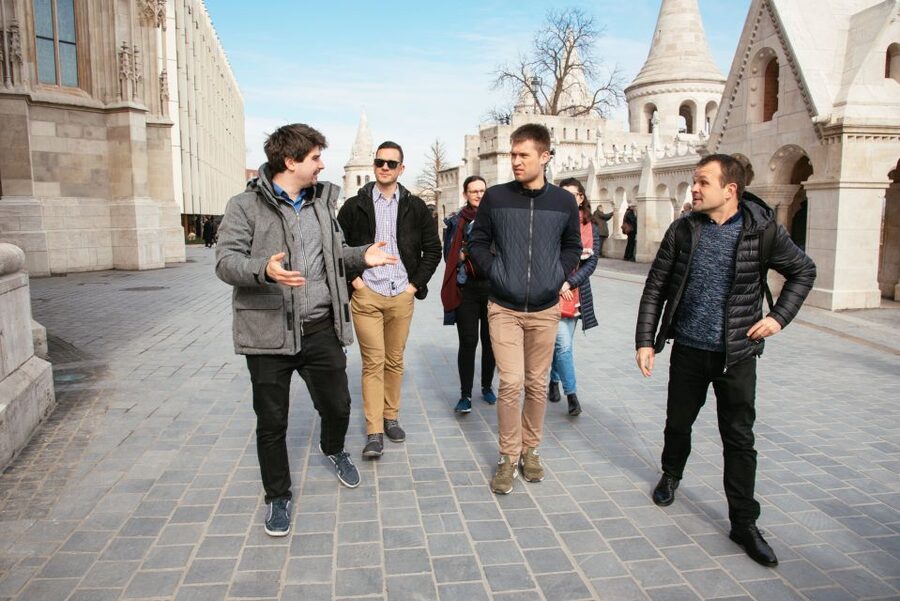
This tour is best for you if you like history that has a beginning, middle, and end, and you want a route that keeps you oriented. It also suits you if you appreciate architecture and church interiors, because Matthias Church is a structured, commentary-led highlight.
It may be less ideal if you want total freedom to wander slowly for hours on your own. The tour has a set flow, and while you can ask questions, you’re still following a guided route through multiple landmarks.
Because the walk is mostly outside, it’s also worth considering your weather tolerance. Bring an umbrella or rain jacket if there’s rain in the forecast. If it’s heavy rain, the plan is adjusted to include more indoor locations, which helps you avoid getting soaked while still seeing the core sites.
If you’re visiting Budapest for the first time and want one high-value cultural walk on day one or day two, this is a strong choice. It also pairs well with later self-guided exploring once you know what the Castle District is trying to tell you.
Should you book Budapest Explorers Buda Castle with a historian?
I’d book it if you want your Castle Hill visit to feel guided by meaning, not just views. The combination of Matthias Church with live commentary, skip-the-line entry, and a historian-led narrative through the district is what makes the price feel fair.
I’d hold off or consider a different approach if you’re mostly here for unstructured wandering, or if you’re very sensitive to outdoor walking and crowd noise. In those cases, you could still enjoy Buda Castle on your own, but you would miss the specific storytelling that helps everything click.
If you do book, bring an umbrella just in case, show up at Szentháromság tér near the Holy Trinity column, and treat the day like a walking history lesson with great viewpoint stops. You’ll likely leave with a clearer mental map of Budapest, and that makes the rest of your trip smoother.
FAQ
How long is the Budapest Buda Castle District walking tour?
The tour lasts about 2.5 hours.
Where does the tour meet?
The meeting point is in front of the Holy Trinity column on Szentháromság tér.
Is the tour in English?
Yes, the live tour guide speaks English.
Does this tour include Matthias Church tickets?
Yes. The tour includes an entrance ticket and live commentary in Matthias Church, and it also lets you skip the ticket line.
How much time is spent at Matthias Church and Fisherman’s Bastion?
Matthias Church is a guided visit of about 45 minutes, and Fisherman’s Bastion includes a photo stop of about 15 minutes.
Is the tour mostly outdoors, and what should I bring for rain?
The walk is mostly outside, so bring an umbrella or rain jacket if rain is possible.
If there is heavy rain, will the plan change?
Yes. In case of heavy rain, the itinerary is modified to include more indoor locations.
Newest reviews from Budapest
- Private Tour Around Budapest★ 5.0 · 10 reviews
- Born Under The Red Star – Communist tour with Coffee in a Retro Bar★ 5.0 · 10 reviews
- Live virtual walking tour in the Buda Castle quarter★ 5.0 · 10 reviews
- Taste Budapest – Fat Boy Foodies Walk★ 4.5 · 10 reviews
- Wine & Food Tasting Cruise on the Danube★ 3.5 · 10 reviews
- Private Transfer from Budapest to Prague with 2 hours for sightseeing★ 4.5 · 10 reviews
- The Real Saw | Escape Room by PÁNiQ SZOBA★ 4.1 · 10 reviews
- City Park True Crime of Hungary and Night Walk Tour in Budapest★ 5.0 · 10 reviews
Buda Castle, compared.
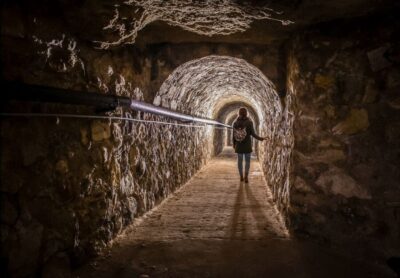
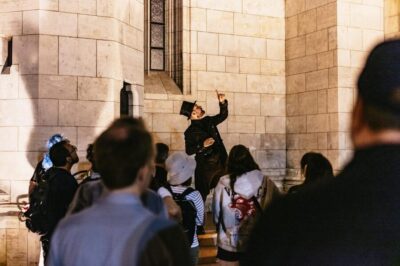
Buda Castle District Vampires and Myths Night Tour
Read our review →
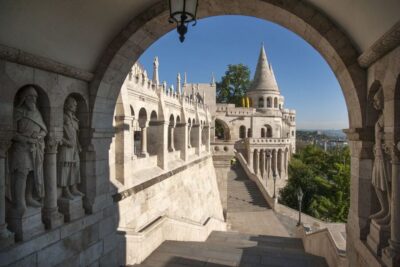
Buda Castle District Dark History, Legends and Vampire Night Tour
Read our review →

Walking tour in the Buda Castle incl. Fisherman’s Bastion
Read our review →
Official Buda Castle Electric Hop-On Hop-Off Bus
Read our review →Browse the lists this tour appears in