
Reviewed · CITY TOURS
Budapest: City Center Walking Tour
Budapest’s Pest city center is packed with big architecture, harder-to-find context, and photo stops you can actually walk between without waiting for buses. I especially like how this tour gives you a clear, well-paced introduction to the key sights on the river and around the Parliament area, plus the stories that connect them.
Two things I really enjoyed: you get close to the monumental Saint Stephen’s Basilica dome and colonnade, and you also get the wider Danube views from the Duna Corso promenade, including bridges and the Castle of Buda across the river. A possible drawback to keep in mind is simple, this is a rain-or-shine walk, and it is still a lot of outdoor ground to cover in about two hours.
If you want an efficient first look at Budapest’s inner streets and monuments, this is one of those tours that helps you get your bearings fast. You will come away knowing what you just saw, and more importantly, how to navigate the city afterward.
Key highlights to know before you go
- Marcius 15 Square to the Great Blessed Lady cathedral, a strong Gothic start point
- Duna Corso riverside views, perfect for seeing Danube bridges and the Buda Castle skyline
- St Stephen’s Basilica, with its dramatic dome and colonnade moment
- Parliament area storytelling, including Nazi occupation and Communist oppression context
- Kossuth Square finish, right where the Hungarian Parliament building dominates the view
- Flex add-on after the tour, like the Shoes on the Danube Bank monument or a riverside stroll
Marcius 15 Square and the Great Blessed Lady cathedral
This tour starts in the heart of Pest, with a first stop at Marcius 15 Square. From there, you’ll see the Gothic Medieval cathedral of the Great Blessed Lady, which sets the tone right away. It is a good way to begin because you are not just scanning postcards, you are learning what kind of city you are walking through, one shaped by centuries of style and political change.
What I like about this start is that it gives you a frame for everything after. When you understand that Budapest’s “center” is a layered mix of eras, you notice more details as you go. It also makes it easier to take photos, because you know what you are actually looking at instead of just snapping quickly and moving on.
Other Budapest bookings worth a look
- Budapest: Buda Castle Walk with Saint Stephen’s Hall
★ 4.5 · 3,012 reviews - Budapest: Buda Castle District Walking Tour
★ 4.6 · 2,108 reviews - Budapest City Landmarks Walking Tour in 2 Hours
★ 5.0 · 2,048 reviews
The Duna Corso promenade, Danube views, and Buda Castle in your line of sight
Next comes one of the best parts for sightlines: walking along the Duna Corso river promenade. This is where you get the classic Budapest perspective, Danube in front of you, the bridges stretching out, and the Castle of Buda sitting across the water. On a clear day, it feels like the city is arranging itself for your camera.
Even if the weather is gray, this section still works because the buildings hold their shape and the river keeps everything readable. And because you are walking, you can pause whenever you want instead of just rushing through views from a window.
A small practical note: along major river areas, you can get busy. You will still have room to enjoy it, but if you are sensitive to crowds, plan your photo time early in your walk when the group is still moving together.
Pesti Vigadó and Vorosmarty Square: theater, dessert-land energy, and landmarks you’d miss
As you continue through the center, you pass the Pesti Vigadó, a standout building often described as a dance or performance palace. You do not have to be into classical music to appreciate it. It is one of those structures that makes you stop and look up because it feels more “ceremonial” than everyday.
Then you reach Vörösmarty Square, where you can see the historical Gerbeaud Cafe. I like that this kind of stop is included because it grounds the walk in real city life, not only monuments. Yes, it is historic, but it is also part of what makes the center feel like a living place.
This is also a section where your guide’s storytelling matters. A good guide helps you spot why a building is famous and what role it played in the city’s identity, not just the year it was built.
Elizabeth Park and Budapest Eye: a relaxed break in the middle of the loop
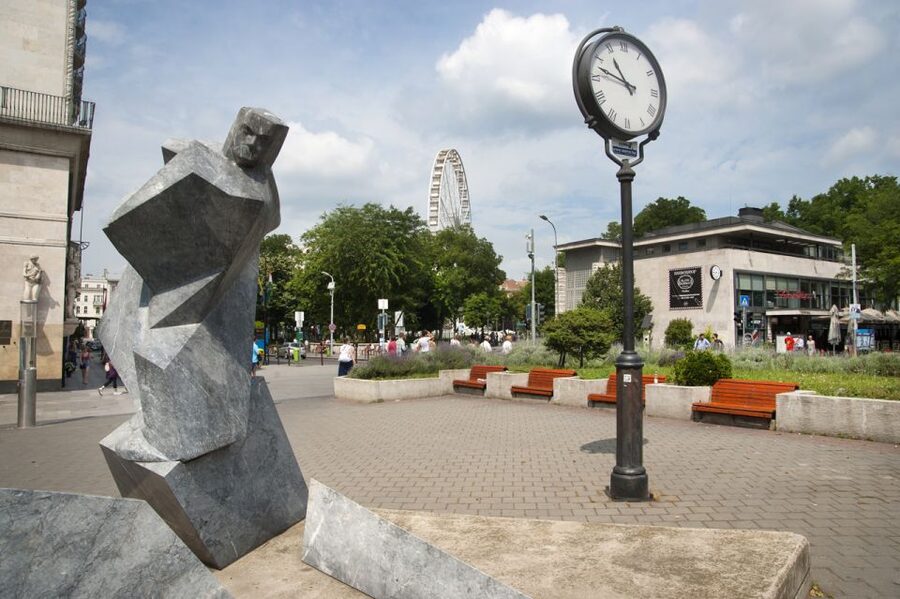
After moving through major squares and streets, you’ll head into Elizabeth Park. This stop is a nice breather because you are no longer only surrounded by stone and political symbolism. It feels calmer, more park-like, and a bit more like you are strolling like a local.
The highlight here is Budapest Eye, the large Ferris wheel. Even if you do not ride it, you get a clear sense of scale, and it is an easy visual landmark for orienting yourself later.
In two hours, this “breathing” segment is valuable. It keeps the tour from turning into nonstop monuments. You get a moment to reset your legs and your brain before you hit one of the biggest religious landmarks in the city.
A different sort of Budapest afternoon:
- Budapest: City Highlights Sightseeing Cruise
★ 4.6 · 43,981 reviews - Budapest: Unlimited Prosecco, Beer and Aperol Spritz Cruise
★ 4.8 · 37,304 reviews - Budapest: Széchenyi Spa Day Ticket with Optional Upgrades
★ 4.3 · 23,911 reviews - Budapest: Nighttime or Daytime Sightseeing Cruise
★ 4.2 · 21,062 reviews
St Stephen’s Basilica: the dome moment you’ll remember
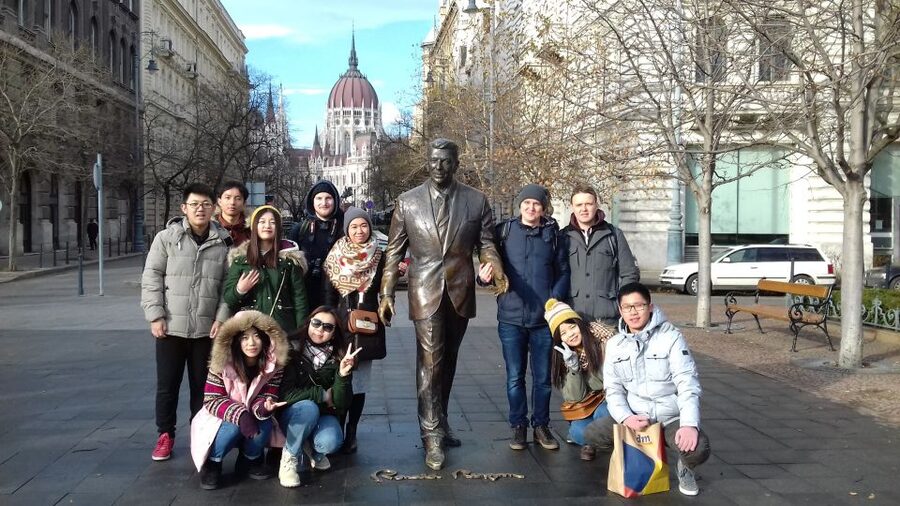
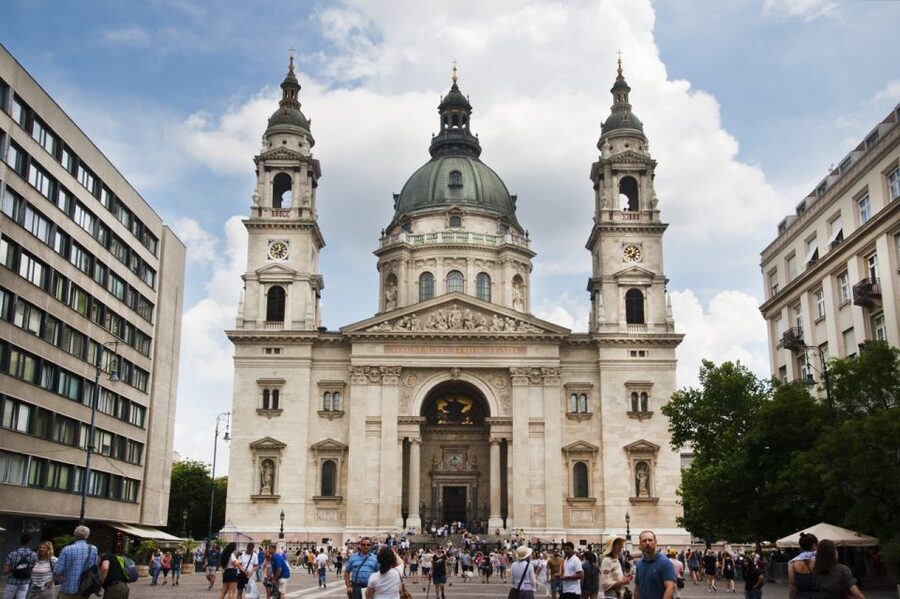
Then the tour hits a true blockbuster: St Stephen’s Basilica. You get the monumental dome and the colonnade that frame the building’s grand presence. This is the stop where most people instinctively slow down, because the architecture is designed to be seen with your head tilted up.
The practical benefit is that you learn how the basilica fits into Budapest’s identity. It is not just a pretty church. It is a statement, and your guide will help connect that symbolism to the city’s wider story.
If you are traveling with teens or friends who normally tune out history, this is one of the easiest places to win them over. It is visually dramatic, and it naturally creates that “wait, look at this” energy.
Pest pedestrian streets and Mr. Safe, the smile stop
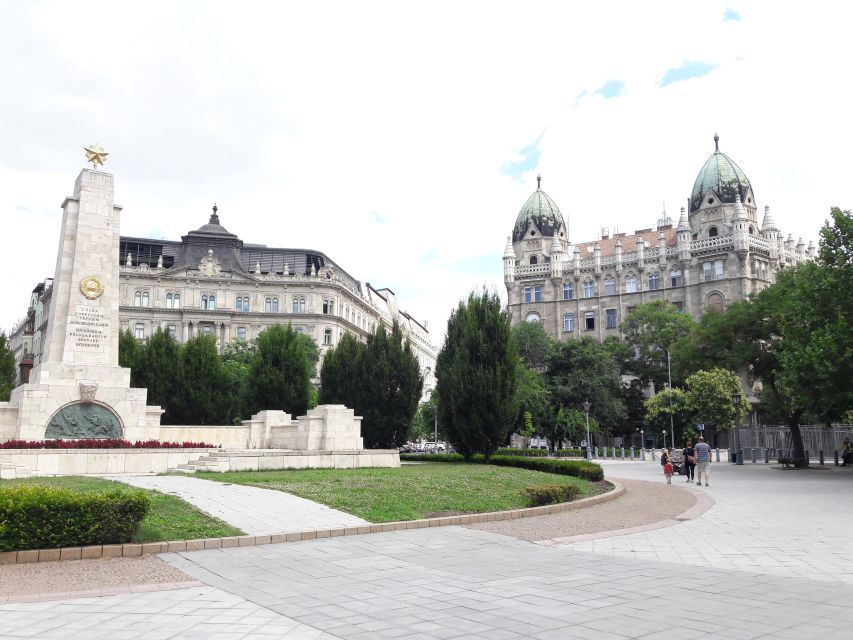
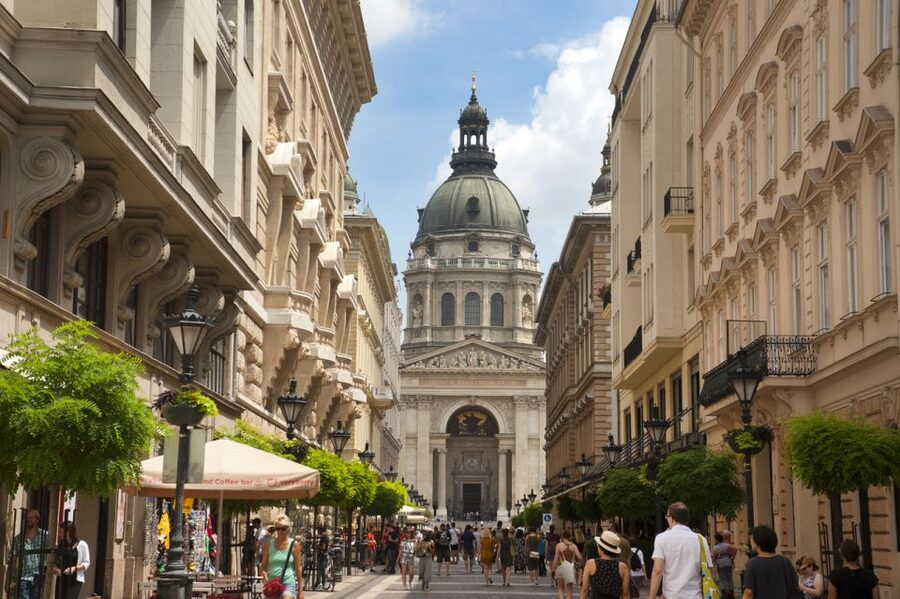
After the basilica, you continue through traditional pedestrian streets of the city. This is where the tour starts to feel less like a checklist and more like an actual walk through neighborhoods.
One fun moment is the statue of Mr. Safe, a cute figure designed to make you smile. I love these small stops because they keep the walk human. Not every moment has to be heavy or monumental, and a guide who adds lightness helps you keep enjoying the city instead of just consuming it.
If you like to notice details, pedestrian streets are perfect. You can scan shopfronts, street rhythm, and building proportions while still keeping up with the group.
Liberty Square and the real weight of 20th-century Budapest
One of the tour’s most important segments is Liberty Square. Here, your guide will explain Budapest’s traumatic past as a center of Nazi occupation and Communist oppression. This is not a casual history stop, and the tour treats it with seriousness.
I appreciate that this kind of context is included in a walking tour of a city center. It helps you understand why certain spaces feel the way they do, why memorials exist, and why the city’s identity is shaped by events that are still present in public memory.
A consideration: if you prefer lighter tours, this might feel heavy. But if you want to truly understand Budapest, it is exactly what you should hear while standing near these places, not later from a random article.
Kossuth Square and Hungarian Parliament: dictatorship and the 1956 revolution
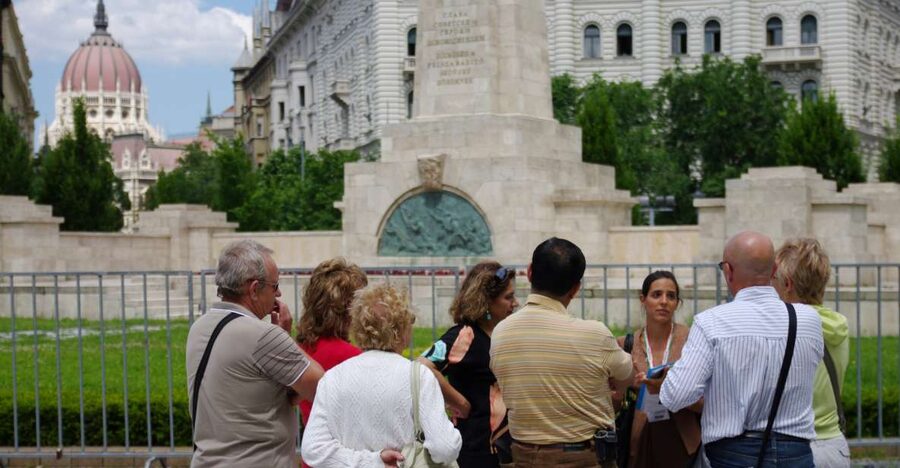
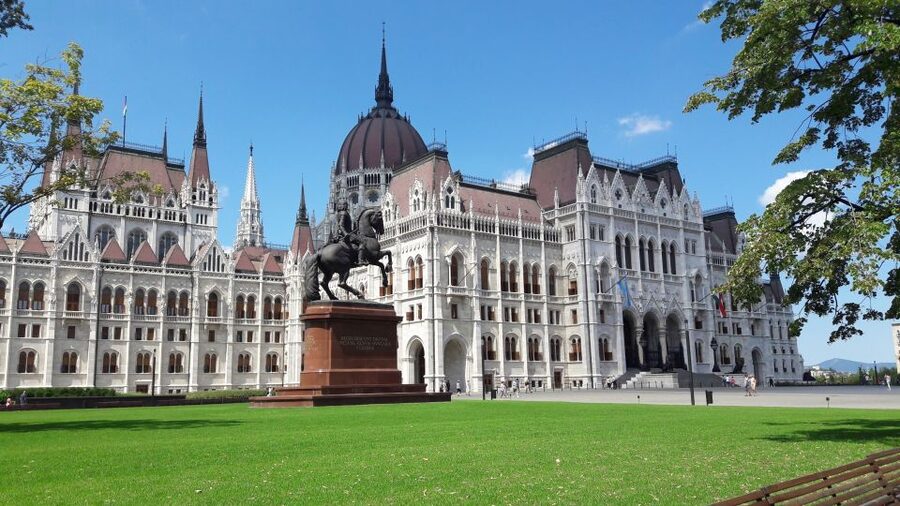
The tour finishes at Kossuth Square, with views around the majestic Hungarian Parliament building. This is where the city’s political center becomes impossible to ignore. Your guide shares stories about dictatorship and the 1956 revolution, connecting the architecture to what happened to the people living under these regimes.
Even if you already know a little about 20th-century Hungary, I think this kind of on-the-ground storytelling makes the events feel sharper. You can stand with the group, look at the building’s scale, and mentally place the historical narrative into something physical.
If you love photography, this is also your golden window. Parliament Square gives you strong angles and wide framing. And because the tour ends here, you can decide if you want to keep exploring at your own pace right after you’ve heard the main story.
After the tour: Shoes on the Danube Bank and a riverside walk
After the walk, you can pay a visit to the Shoes on the Danube Bank monument. This is the kind of memorial that works best when your emotions and context have been prepared by the tour, which is exactly what this itinerary does with its mid-walk history stops.
You can also simply stroll along the banks of the river. At this point, you already understand what you are seeing, the bridges, the river layout, and how the city centers connect across the water.
If you are tired, do not force it. A short riverside walk is often enough. The goal is to leave with a calm final image of Budapest, not to power through one more stop just to check a box.
Price and value: is $14 for 2 hours worth it?
For $14 per person and a 2-hour duration, the value is strong, especially if it is your first time in Budapest. You are not paying for entry tickets, because entrance fees are not included. But you are paying for the guide’s time and the “why this matters” context, which is what most independent travelers struggle to generate quickly on their own.
This tour also saves you a type of travel friction: instead of using crowded tourist buses, you walk at a human pace between closely packed highlights. That matters when you want photos, bathroom breaks, and time to actually look up at buildings.
One more value point is the emphasis on Q and A. In the past, guides like Bea, Lena, Monika, Dominic, and Flora have stood out for being engaging and answering questions well. Some guides even add memorable touches, like singing a traditional Hungarian song during the walk. That kind of personality can turn a history-heavy tour into something you remember, not just something you “did.”
Group size, pace, and how to choose the right expectations
This is a small group tour, and that helps. In one group size example, it involved about 16 people, which still feels manageable because the guide can keep the pace controlled and keep everyone oriented.
Most guides are also equipped to communicate clearly on the move. I liked hearing that some use a microphone so people can follow along even in busier areas.
The one caution is pace. One wheelchair user review noted the walk might be a bit faster than ideal for some mobility needs. This does not mean the tour is inaccessible, because it is listed as wheelchair accessible, but if you need a very slow pace, it is smart to ask your operator about group pacing before you go.
Rain, comfort, and the small choices that make or break the walk
Because it runs rain or shine, bring a plan. A light rain layer is usually better than heavy poncho bulk that restricts movement. Comfortable shoes matter here, because this is an outdoor walking tour with multiple major stops.
Also, use the tour timing to your advantage. If your weather is unpredictable, you can take more indoor-ish breaks around major squares and keep your outdoor photo moments focused on the best angles, like Parliament views and the basilica dome.
Lastly, do not be shy about asking questions. One of the best things you can do on any guided walk is treat it like a conversation, not a lecture. If your guide is like the ones you’ll likely meet, you’ll get direct answers and practical pointers for what to do next.
Who should book this Budapest Pest city-center tour?
You’ll love it if you want:
- A first-time introduction to Pest’s major sights and how they connect
- A mix of architecture and 20th-century context around Liberty Square and Parliament
- An easy way to start planning your next steps without getting stuck “guessing” your way around
It might not be your best fit if you:
- Want a fully relaxed, low-walking experience
- Dislike history segments that cover Nazi occupation and Communist oppression
- Prefer a tour that stays mostly light and purely scenic
Should you book this Budapest: City Center Walking Tour?
My take: if you are in Budapest for a short time, this is a smart use of two hours. It hits the big visual anchors, Saint Stephen’s Basilica and the Hungarian Parliament area, and it also gives you the context that makes the memorial spots and monuments feel grounded rather than random.
For the price of $14, you are buying more than movement through the city. You are buying orientation, better street-level understanding, and a guide who can turn landmarks into a story you can actually remember.
If you book, go with one goal: look up more than you look ahead. Let the guide set the rhythm, and save your extra wandering for the moment the tour ends near Kossuth Square and the Danube calls you back.
FAQ
How much does the Budapest City Center Walking Tour cost?
The price is $14 per person.
How long is the tour?
The tour lasts 2 hours.
Is the tour only in certain weather?
It runs rain or shine.
What language is the tour guide?
The tour is offered with a live English guide.
Is the tour wheelchair accessible?
Yes, this tour is wheelchair accessible.
Are entrance fees included?
No, entrance fees are not included.
Can I cancel and get a refund?
You can cancel up to 24 hours in advance for a full refund.
Where does the tour meet?
The meeting point may vary depending on the option booked.
Newest reviews from Budapest
- Buda Castle Private Walking Tour: A Kingdom of Many Nations★ 5.0 · 9 reviews
- Budapest Walking Tour: Explore Top Sights & Hidden Gems★ 4.5 · 9 reviews
- See the Hungarian Sea: Lake Balaton★ 4.5 · 9 reviews
- Transylvania Tour from Budapest to Bucharest: 4 days★ 5.0 · 10 reviews
- Luxurious, private day cruise with a waterlimousine to Szentendre★ 4.0 · 10 reviews
- Private Tour Around Budapest★ 5.0 · 10 reviews
- Born Under The Red Star – Communist tour with Coffee in a Retro Bar★ 5.0 · 10 reviews
- Live virtual walking tour in the Buda Castle quarter★ 5.0 · 10 reviews
City Tours, compared.
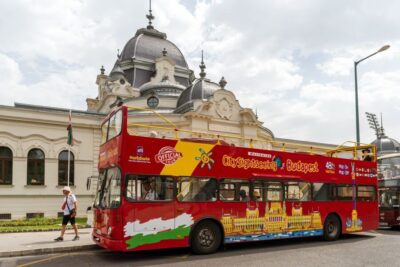
City Sightseeing Hop-On Hop-Off Bus Tour & Extras
Read our review →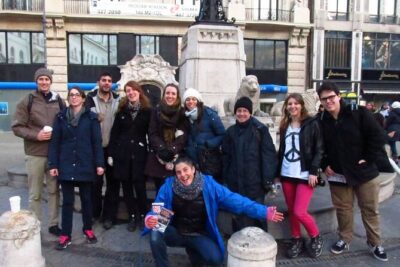
Budapest City Landmarks Walking Tour in 2 Hours
Read our review →



Hungarian Chimney Cake Workshop in the City Center
Read our review →
Browse the lists this tour appears in