
Reviewed · HISTORICAL TOURS
Budapest Historical Sightseeing – Free Walking Tour
What makes this Budapest tour especially interesting is how it stitches together heavy Communist-era stories with the streets you actually walk today. You get an easy orientation on the Pest side, then you start seeing the Danube landmarks as part of one big city story. I like that it is tip-based value without pretending history is light reading.
Two things I really love about this experience: the route is built for first-timers, and the guide keeps the context practical as you move. A possible drawback is that it is a real walking tour. If you cannot comfortably cover about 3 miles, you will feel it.
How the Tour Feels in Real Life
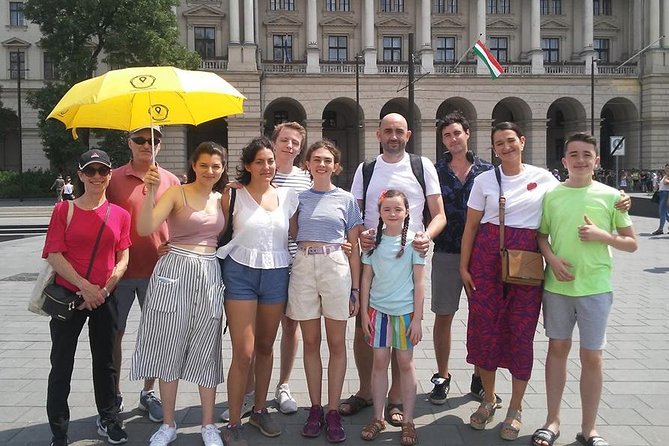
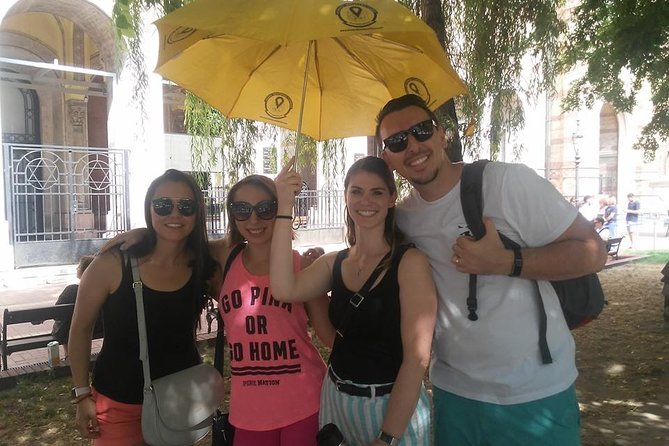
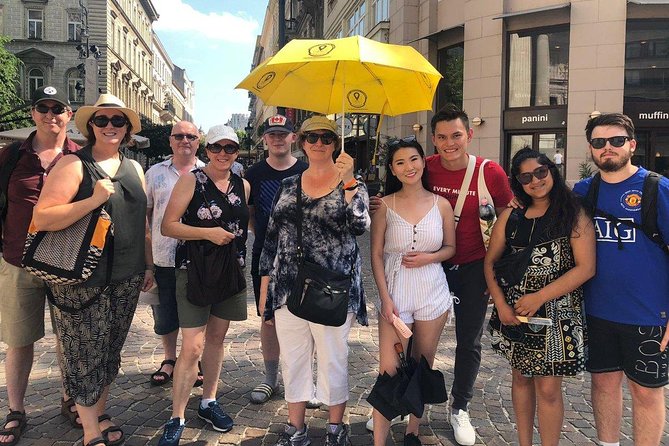
The guide meets you at Kálvin tér (12-13), and guides are dressed in yellow, so you are not wandering around guessing. You are usually outside for long stretches, including stops by major squares and monuments, so weather matters. The good news is that the pacing is designed for learning while still keeping you on schedule, and the route ends at Széchenyi Lánchíd (Chain Bridge), where it is simple to keep exploring.
What Makes It Worth Your Time (Quick Hits)
- Yellow-clad guides make meeting up fast and stress-free
- Communist-era stops like Szabadság tér give you clear context you can actually use
- Memorial moments such as the Shoes on the Danube Bank are brief but unforgettable
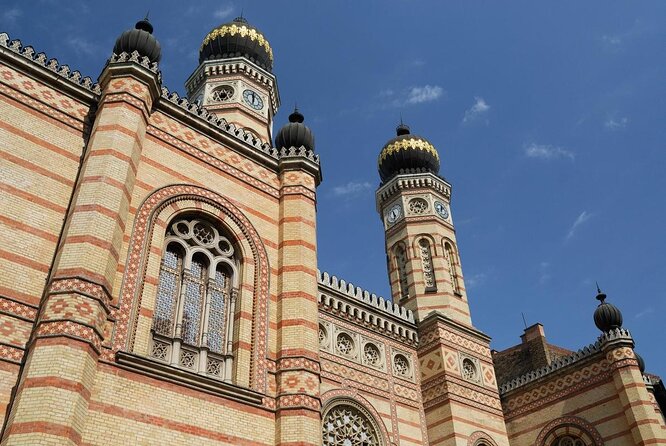
- Jewish Quarter story arc connects community, wartime ghetto history, and today’s cultural scene
- Big-sight views: Parliament and Fisherman’s Bastion seen from the Pest side
- Budget friendly model: small booking price, guide work covered by tips
More history walks in Budapest:
- Budapest: Historic Cruise with Welcome Drink
★ 4.7 · 6,512 reviews - Buda Castle District Dark History, Legends and Vampire Night Tour
★ 4.5 · 1,240 reviews - BloodThirsty Hungary: Walking tour & Dark Historical Stories
★ 4.9 · 633 reviews
Price and What You Really Get for It
This is sold as a free walking tour, but there is a small per-person booking cost listed (around $3.63). That small amount matters for you because it helps the tour run smoothly, without locking you into a pricey ticket. The real currency is your time plus a tip for your guide.
For the price, you are buying three things: city orientation, historical context, and on-the-ground suggestions for what to do next. In reviews, guides like Peter and Victoria get singled out for clear explanations and a good sense of humor, plus practical tips for getting around and finding places to eat or drink. You can treat this as your first-day foundation, then build the rest of your trip on top.
Just be honest with yourself about expectations. This is not a museum ticket marathon, and you are not going inside every major building. If you want galleries, audio guides, and long indoor time, you will still need other activities. But if you want to understand Budapest fast, this tour is designed for that job.
Where You Start at Kálvin tér, and Why the Meeting Spot Helps
The tour starts at OTP Bank Budapest, Kálvin tér 12-13, 1085. Your guide meets you at Kálvin tér 12 Kalvin ter, and they wear yellow, so spotting them is straightforward. This matters because Budapest can feel big and confusing when you arrive, especially if you are juggling trams, buses, and metro lines.
Kálvin Square is also the kind of place you can duck into if the weather turns. You get a short stop experience there, enough to set the tone and tell you what you are looking at, without wasting your day. The guide also explains the connection to John Calvin, which is a neat reminder that Budapest’s history is not just one era, it is many eras stacked.
One logistics detail I like: the tour ends at Lánchíd near the Chain Bridge area. That is one of the easiest places in central Budapest to continue on your own toward both sides of the river.
National Museum Gardens: The Turul Bird and the 1948 Uprising

One of your first proper wow moments happens outside the Hungarian National Museum. You stand in the gardens and look for the statue of the mythical turul bird. Even if you do not know Hungarian myths yet, the guide frames it so you understand why this symbol shows up in national storytelling.
You also get background on the museum itself, including its founder, and then the conversation quickly turns political with the 1948 uprising. That is a key reason this tour works well for first-timers: it does not treat Communist history as a single chapter. It shows how it shapes culture, politics, and even how people talk about the past in daily life.
A small but smart bonus here is the mention of the VIII district, once associated with grand palaces. You are not stuck on one viewpoint. You learn how the city’s older identity is tied to the neighborhoods you will later walk through on your own.
Practical note: this is mostly outdoors. If you are sensitive to cold or wind, plan layers early. Cobblestones also show up later, so comfortable shoes pay off from stop one.
Other Budapest bookings worth a look
- Budapest: Buda Castle Walk with Saint Stephen’s Hall
★ 4.5 · 3,012 reviews - Budapest: Buda Castle District Walking Tour
★ 4.6 · 2,108 reviews - Budapest City Landmarks Walking Tour in 2 Hours
★ 5.0 · 2,048 reviews - 3-Hour Orientation Walking Tour of Buda and Pest
★ 4.8 · 1,834 reviews
Kalvin Square to Unger’s House: Architecture With Multiple Personalities
After Kálvin Square, you move to Unger’s House, standing in the courtyard of Miklós Ybl’s creation. This building is famous for mixing styles, including Byzantine, Gothic, Moorish, Renaissance, and Romantic elements. The guide’s job is to help you see the logic in the mix, not just list design categories.
Why I like this stop: it teaches you to look at Budapest as a city of experiments and reinventions. When you later see grand government buildings and riverfront monuments, you start to recognize the pattern. Styles here are not random. They reflect ambition, identity, and power.
The time at Unger’s House is brief, but it is memorable because the courtyard setup lets you slow down. It is one of those stops where the city feels human-scale, before you jump back into big squares and main arteries.
Elizabeth Square and Astoria Hotel: Symbols, Stars, and Nightlife Clues
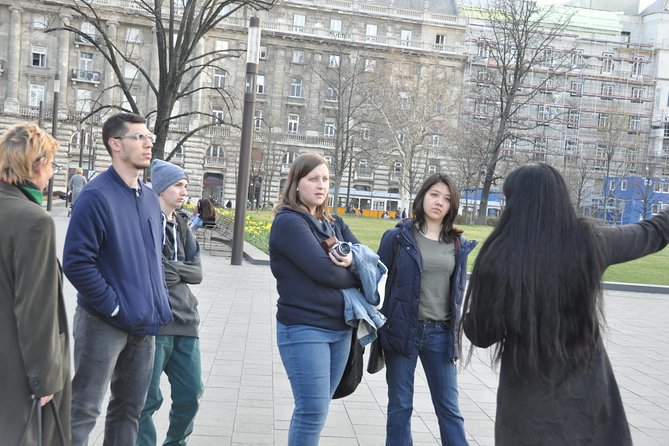
At Elizabeth Square, you hear about the history of the square and what the Budapest Eye area means in modern terms. The guide also points out where some of Budapest’s coolest bars and nightlife gather. Even if you are not a nightlife person, that advice helps you map the city so it feels less like a checklist.
Then you pass by Danubius Hotel Astoria, an impressive French Empire style building. What makes this stop more than just a photo moment is the story element: it is tied to international attention and film culture, including the Josephine Baker Story, directed by Brian Gibson. You start to realize Budapest has long been a crossroads city, not just a modern tourist stop.
One warning I offer you: do not expect long explanations at every corner. This is a walking tour, so the best part of these stops is how fast the guide connects visible architecture to the bigger story.
Through the Jewish Quarter: From Community to Ghetto to Creative Life
As you continue, you travel through the Jewish Quarter, and the guide gives you the district’s historical arc. You hear about life as a thriving community, then the tragic shift to a ghetto during the Second World War. After that, the story turns to more recent decades, when the area became home to artists and students, plus independent shops and bars.
This section is valuable because it gives you a mental map for what you are actually seeing. When you later walk the streets on your own, you can connect names, buildings, and memorials to the timeline you just heard. That makes the city feel personal instead of anonymous.
It is also a reminder to keep your camera away at the wrong moments. This is not a sightseeing-only neighborhood. Some streets are meant for reflection as much as for photos. A respectful pace helps.
St. Stephen’s Basilica Outside: Why the Name Matters
You stop outside St. Stephen’s Basilica (Szent Istvan Bazilika). You learn why the basilica is named after Hungary’s first king. This is a small stop, but it matters because the guide connects religious identity to national origin stories.
What I like about basilica exterior stops is that you can absorb the scale quickly without needing a long ticket process. You get the visual impact, then you get the context that makes the building feel anchored in Hungarian identity.
If you want extra time inside, you may need your own plan after the walk, since this tour does not include admission here.
Szabadság tér Communist Memorial and the Parliament Power View
Next comes Szabadság tér (Liberty Square), where you see the communist memorial. You do not just get a landmark. You get explanation about what it represents and why this square holds weight in Budapest’s political memory.
From there, the tour hits major political symbolism and famous architecture. You pass the Stock Exchange Palace, described as the largest privately owned historic landmark in Budapest, then you spot the Ronald Reagan statue. The guide explains the choice of pose and timing, including why Reagan appears to be walking away from the Parliament looking happy, and the presence of Bush waiting nearby.
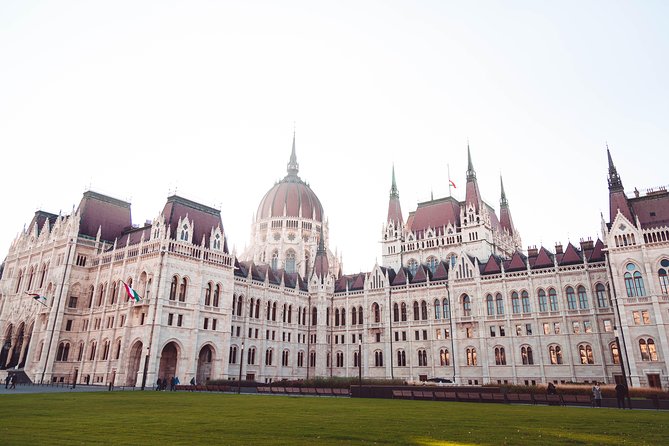
Then you reach the big one: the Hungarian Parliament Building. You stand outside, amazed by the building’s electric neo-gothic style, while also getting a view of the Danube. This is the part where the city starts feeling like a movie set in the best way.
If you are a detail person, you also hear about other important buildings around the square, including a chocolate museum, a former ministry of Justice, and an agricultural museum. Even if you never go inside, you end up with a stronger sense of the area’s purpose and how Budapest organizes its power centers.
Fisherman’s Bastion Sightlines From Pest and the Shoes Memorial
You then shift into a quieter but heavy stretch. From the Pest side, you see the castle area and Fisherman’s Bastion, including the view toward St. Matthias church with its colorful tiled roof. You also look toward the Hungarian National Palace from afar.
This part of the tour is smart because you get the major “Buda side” visuals without needing to hop across the river immediately. The guide also points out St. Margit’s Island and Gellért Hill in the distance, so your mental skyline gets filled in.
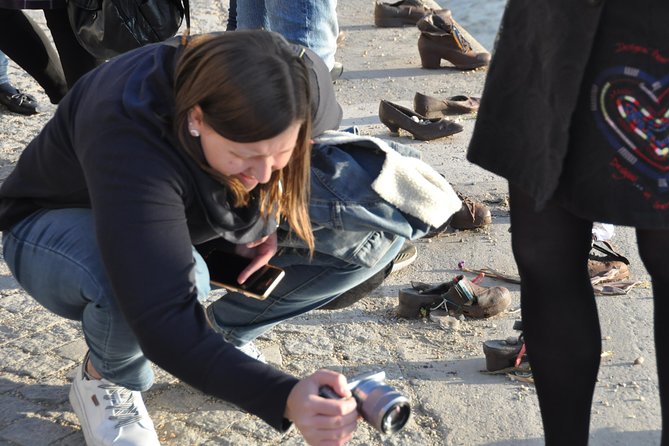
Then comes the stop that lingers: Shoes on the Danube Bank. It is a simple monument of 60 pairs of shoes dedicated to Holocaust victims who were lined up and shot along the banks. The guide keeps the explanation clear, and that clarity helps you understand what the monument is asking you to remember.
If you need a moment, take it. A short pause is not slowing down, it is honoring what you are seeing.
Chain Bridge Finish at Széchenyi Lánchíd: Easy Exit Into the Rest of Your Day
The tour ends at Széchenyi Lanchid (the Chain Bridge). You learn about its history and especially the reconstruction work. It is a fitting finish because the bridge is both a literal crossing and a metaphor for continuity.
From the end point, you can keep moving toward the city center fast and easily. If you are wondering what to do next, this is where the guide’s earlier practical tips pay off. You have just walked through political memory, religious identity, and everyday city life, so now you can choose what you want to explore with better confidence.
If you have been on foot already for hours, this ending is nice because the location is easy to navigate. It avoids the annoying situation where a tour ends in a hard-to-reach corner.
What to Pack and How to Survive Budapest Weather
Bring water and consider sunscreen, because you will be outdoors for a long stretch. Also think about layers. Budapest can be brutally cold, and one tour response notes temperatures around -9°C, with conditions that can hit -25°C.
A practical tip from real walking-tour common sense: bring an umbrella if rain is possible, but also plan for wind. Cobblestones and cold air make the day feel longer, so comfy shoes are not optional.
Also keep in mind that toilet access costs extra. There is no food or drink served on the tour, and there is a short break for coffee and toilet needs.
Who This Tour Is Best For
This tour suits you if you want a fast, guided way to understand Budapest’s core stories without spending a lot of money. It is also a strong choice if you like street-level history, architecture context, and seeing major sights from a practical route.
It is best enjoyed by adults and children over 12, and younger children are welcome. It is not recommended if you cannot walk about 3 miles. If you have trouble hearing in busy environments, note that there is no hearing loop induction mentioned, and crowds can affect how easy it is to hear the guide.
Should You Book This Budapest Historical Free Walking Tour?
Book it if you are arriving in Budapest and want a guided framework on the Pest side, plus real context for Communist history, Jewish Quarter history, and Danube landmarks. The small booking cost plus tip-based model makes it feel like excellent value for first-timers who want to learn while they walk.
Skip it if you hate walking, need lots of indoor time, or want deep museum-style tickets included. Also consider weather, because you will be outside for much of the experience.
If you do book, do it early in your trip. You will get more out of the rest of your day when you can recognize what you are seeing and where it fits in the city’s story.
FAQ
How long is the Budapest Historical Sightening Free Walking Tour?
It runs for about 2 hours 30 minutes.
Is this tour really free?
It has a small booking price listed (around $3.63 per person) and it is described as minimal fee with tips for the guides.
What language is the tour offered in?
The tour is offered in English.
What is included, and what is not included?
Included is an in-person guide. Coffee and/or tea are not included, and there is no food/drink served. Some sights are free to view from outside, while others note admission not included such as St. Stephen’s Basilica, the Stock Exchange Palace, and the Hungarian Parliament Building area.
Where does the tour start and end?
It starts at OTP Bank Budapest, Kálvin tér 12-13, 1085 Hungary. It ends at Budapest, Id. Antall József rkp. 1, 1052 Hungary, near Lanchid (Chain Bridge).
Is the tour suitable if I have limited mobility?
It is not recommended if you are unable to walk about 3 miles.
Do I need to bring anything?
Bring water and consider sunscreen. Also consider umbrellas or warm jackets depending on the weather. There is no food or drink served, and toilet use may cost extra.
Newest reviews from Budapest
- Live virtual walking tour in the Buda Castle quarter★ 5.0 · 10 reviews
- Private Tour Around Budapest★ 5.0 · 10 reviews
- Born Under The Red Star – Communist tour with Coffee in a Retro Bar★ 5.0 · 10 reviews
- Taste Budapest – Fat Boy Foodies Walk★ 4.5 · 10 reviews
- Wine & Food Tasting Cruise on the Danube★ 3.5 · 10 reviews
- Private Transfer from Budapest to Prague with 2 hours for sightseeing★ 4.5 · 10 reviews
- The Real Saw | Escape Room by PÁNiQ SZOBA★ 4.1 · 10 reviews
- City Park True Crime of Hungary and Night Walk Tour in Budapest★ 5.0 · 10 reviews
Historical Tours, compared.
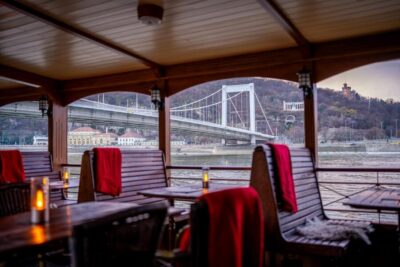
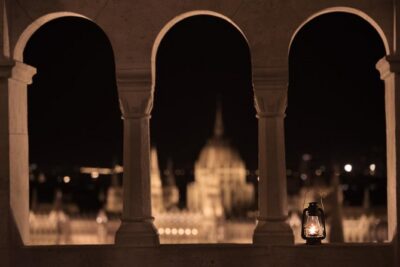
Buda Castle District Dark History, Legends and Vampire Night Tour
Read our review →
BloodThirsty Hungary: Walking tour & Dark Historical Stories
Read our review →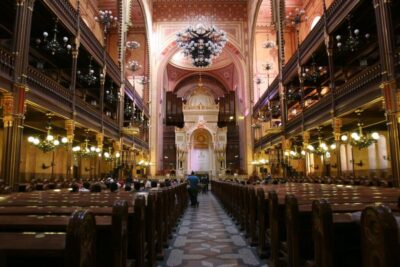
Jewish Heritage Guided Tour with Synagogue Ticket
Read our review →
Budapest Historic Downtown Bicycle Tour in small groups
Read our review →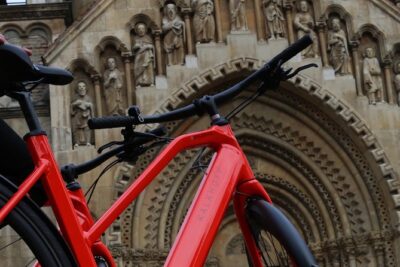
Historic Downtown ride on E-Bicycles Buda & Pest
Read our review →
Jewish History Guided Walking Tour with Historian
Read our review →
Historic Downtown Bicycle Ride with Scenic Views
Read our review →Browse the lists this tour appears in