

Reviewed · BUDAPEST
Budapest: Stretch & Bake Hungarian Strudel with Two Fillings
Budapest’s strudel class is interesting because it turns a famous dessert into a real skill you can repeat at home. You’ll work in a small, local kitchen, learning how stretched dough goes from thick and sticky to paper-thin and rollable, guided by Chef Marta. And you’re not just eating, you’re making two strudels with different fillings.
I especially like the hands-on pace, you do the stretching, filling, and baking step by step. I also like the cultural context, you get the why behind Hungarian strudel, including links between Turkish influence and Habsburg-era food traditions, plus how it shows up in countryside wedding dinners. One drawback to consider is that it is not designed for little kids, it’s not suitable for children under 10.
Key things you’ll notice in this strudel-making class
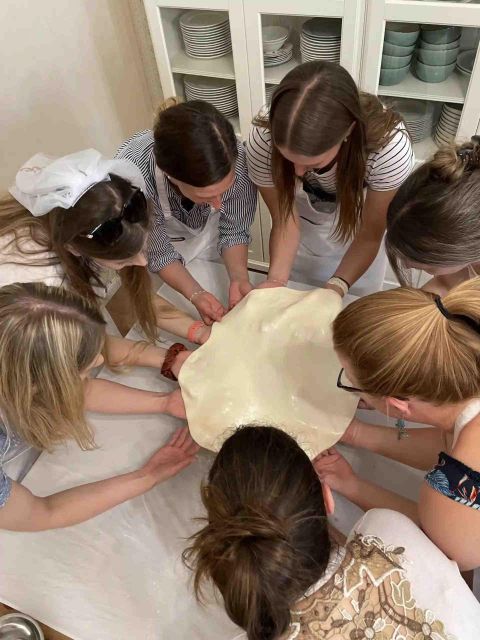
- Chef-led stretching technique focused on getting the dough very thin without tearing
- Two strudels, two fillings, so you taste variety right away
- Small-group kitchen time with a family-style feel, limited to 10 participants
- Local snacks plus Hungarian drinks while your strudels bake
- Family recipes to take home, so you can recreate your results later
Inside a Central Budapest Strudel Kitchen (Kiraly u. 77)
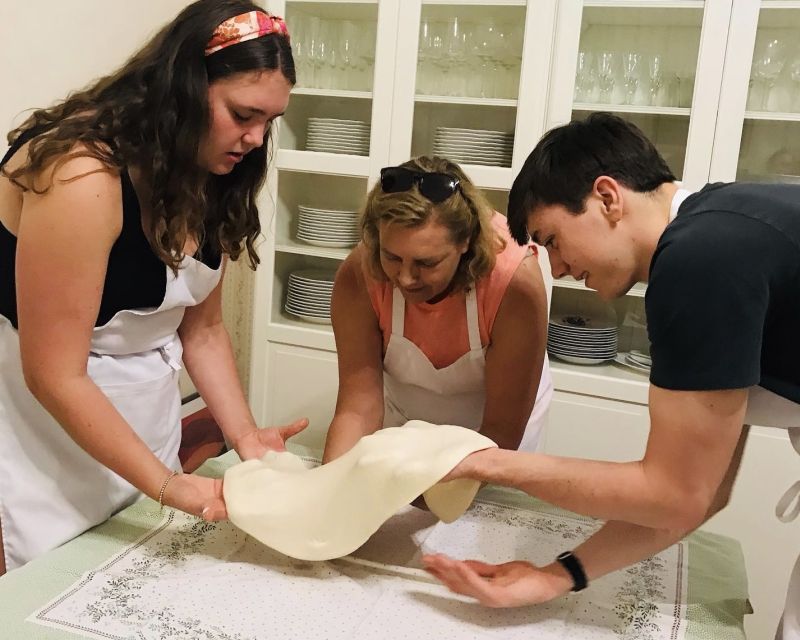
The biggest advantage of this class is where it happens. Instead of a big cooking school, you’ll go to the partner’s private apartment in central Budapest, at Király u. 77, 1077. That setup naturally keeps the group smaller and more personal, and it means you spend your time actually cooking, not waiting in line for tools.
Your chef is Marta, and the vibe is practical and calm. From the way she teaches, you can tell she expects real participation, not just watching. The studio is set up so you can follow along, with ingredients and equipment already handled, so you do not lose time figuring out what goes where.
This matters in a city like Budapest, where it is easy to burn half your day traveling between sights and organized activities. Here, the schedule is short and focused, about 2.5 hours, and the work is concentrated on one outcome: making stretched strudel dough, filling it, baking it, then eating what you make.
What else people book in Budapest on the same trip:
- Budapest: City Highlights Sightseeing Cruise
★ 4.6 · 43,981 reviews - Budapest: Unlimited Prosecco, Beer and Aperol Spritz Cruise
★ 4.8 · 37,304 reviews - Budapest: Széchenyi Spa Day Ticket with Optional Upgrades
★ 4.3 · 23,911 reviews
The 2.5-hour flow, from dough stretching to baked strudel
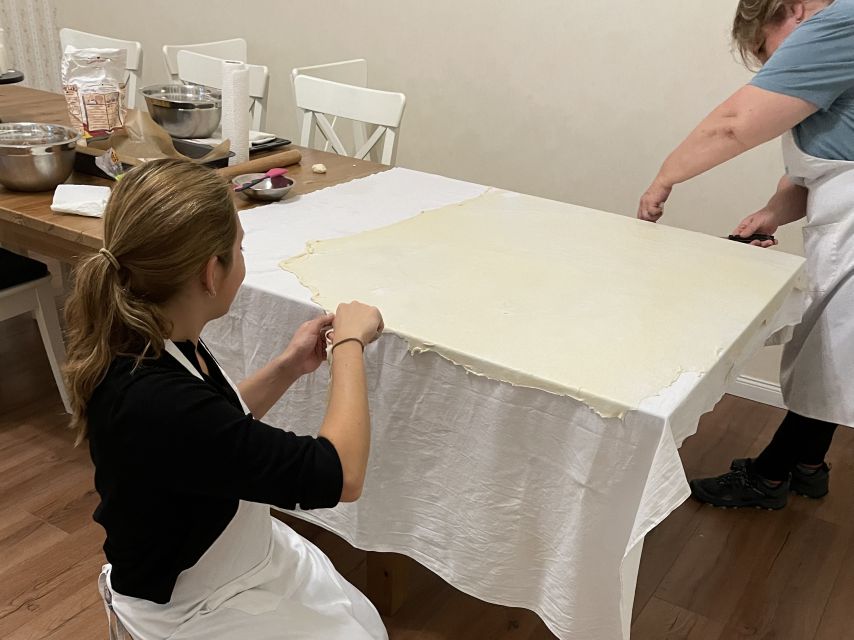
The class runs like a guided workshop. You start with the basics, then move quickly into the hand technique. The center of it all is the stretched version of strudel, where the dough becomes so thin you can see the work under your fingers.
First, you get context on strudel itself. You’ll learn the dessert’s background, including the story that Hungary’s strudel was influenced by Turkish connections and later shaped by the Habsburg Empire. You’ll also hear how strudel traditions connect to countryside life, including its role at wedding dinners. For me, the value here is that it stops being just a recipe and becomes a food tradition with a reason to exist.
Then comes the hands-on part. Under Marta’s guidance, you stretch the dough by hand until it is very thin. This is the part you’ll remember, because stretching dough is both simple and tricky. Simple, because there are only a few physical steps. Tricky, because dough reacts to your touch and timing. You’ll learn what to watch for so it does not tear, and you’ll pick up small habits that make the difference.
While your strudels bake, you do not sit idle. You’ll taste other typical Hungarian bites, along with Hungarian wine, soft drinks, mineral water, and coffee. That snack pause is part of the experience design. You get time to settle, taste other flavors that belong in the same food world, and then return to the oven moment ready to enjoy what you created.
Finally, you sit down with your group and eat the baked strudels. This is not a take-it-to-go situation. You get to savor the results together, which is especially nice because strudel is at its best when it is warm and fresh.
Stretching Hungarian strudel dough, the real skill you’re paying for
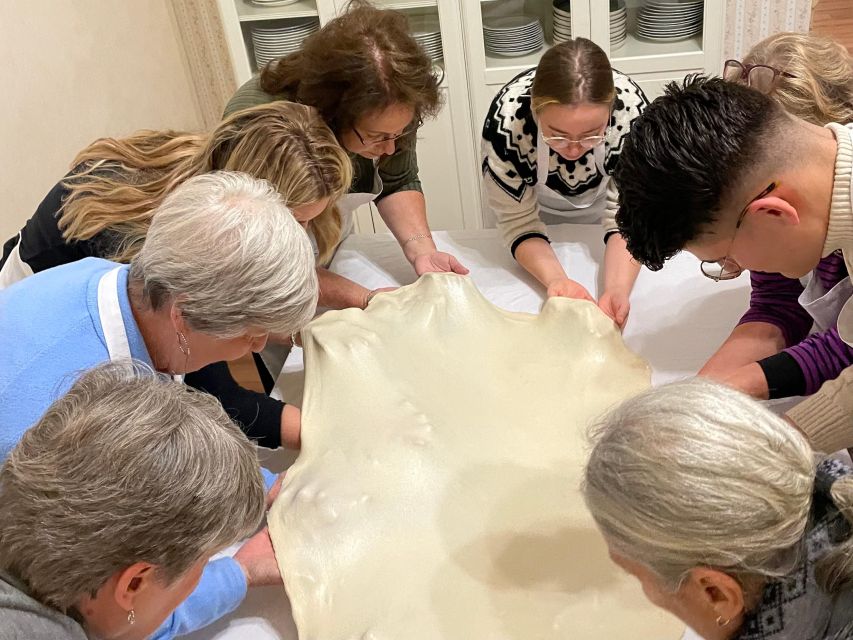
Most cooking classes teach recipes. This one teaches technique, and that is why it feels worth the time.
You will work with stretched dough, not puff pastry, not store-bought shortcuts. Marta shows you how the dough should behave as it thins, what to do with any sticky moments, and how to keep it flexible enough for filling. The class is designed for learning by doing, so you will not just get a lecture on gluten and rolling pin theory.
Here’s the practical advantage for you: once you understand how stretched strudel dough works, you can apply the idea to other dough-based dishes and even troubleshoot at home when your first try is not perfect. The learning curve is real, but the teaching style is patient and step-by-step, and that matters when technique is the point of the class.
Also, the class is built around a small group, limited to 10 participants. That size makes it easier for the chef to spot issues early, like a dough area thinning too fast or a fill distribution that might cause filling to shift during baking.
If you love hands-on work, this is a standout. If you mostly want food without touching dough, you might find it more work than you expect, but the structure is still friendly for beginners because the chef is guiding you through each move.
Two fillings plus classic Hungarian flavors you can name
You make two strudels, and you get to choose different fillings. That choice gives you control over your experience and ensures you taste more than one style.
Typical fillings offered include:
- Poppy-seed with pumpkin
- Sweet or salty cabbage
- Sweet cottage cheese cream
This variety is not random. It reflects what people actually eat in Hungarian home cooking. Cabbage versions bring a comforting, savory bite, and cottage cheese versions skew toward sweet comfort. Poppy-seed with pumpkin is especially “Hungarian” in character, and it is the kind of filling that makes strudel feel like a full dessert rather than just bread with sugar.
For your palate, two fillings means you get to compare textures and sweetness levels in one sitting. For your cooking at home, it means you can choose a filling you liked best and focus your next attempt there.
One more nice detail: you also taste other Hungarian bites while you wait for baking. Even if you are mainly there for strudel, this keeps the experience from feeling like one long wait between steps.
A different sort of Budapest afternoon:
- Budapest: Nighttime or Daytime Sightseeing Cruise
★ 4.2 · 21,062 reviews - Budapest: By Night Sightseeing Cruise with Welcome Drink
★ 4.3 · 15,533 reviews - Budapest: St. Stephen’s Basilica Entry with Options
★ 4.6 · 12,322 reviews - Budapest: 1-Hour Evening Sightseeing Cruise with Drink
★ 4.5 · 9,421 reviews
What you eat while you wait, Hungarian bites and included drinks
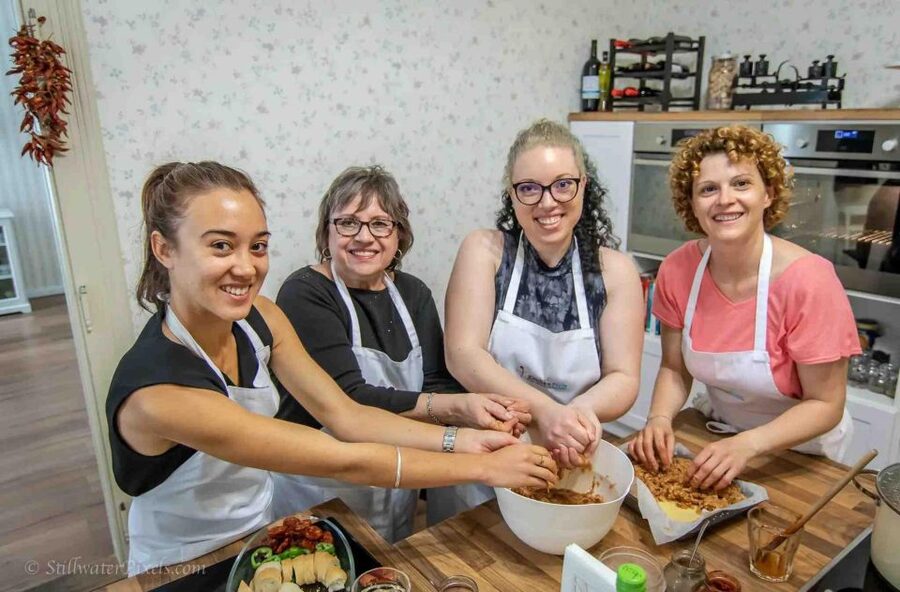
Strudel baking takes time. Instead of leaving you hanging, the class includes typical Hungarian snacks and drinks.
You get:
- Hungarian wine (2 dl)
- soft drinks
- mineral water
- coffee
You also taste other typical Hungarian bites. The exact items can vary, but the idea stays consistent: you’re not just consuming your final product, you’re sampling the flavor world around it.
This is practical for two reasons. First, it keeps your meal from feeling incomplete before the oven results arrive. Second, it helps you build context for what you’re tasting, which makes your home recreation more accurate because you’re not just copying an ingredient list, you’re remembering the flavor balance.
If you’re avoiding alcohol, you still get non-alcoholic drinks and coffee, and you can choose how you pace yourself. The class is short enough that you won’t feel trapped into a long evening of drinking.
The takeaway matters most: family recipes you can recreate
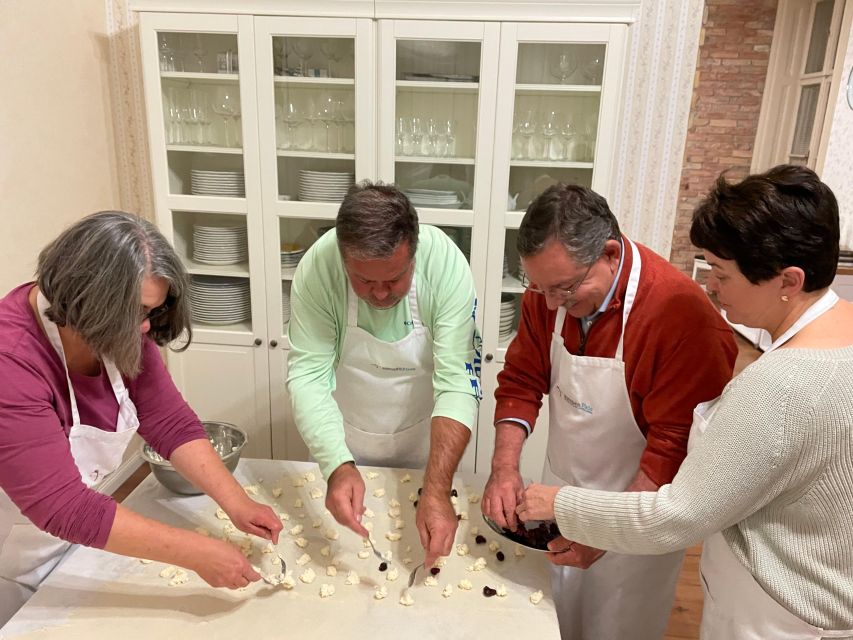
This class earns its value in the take-home part. You’ll receive family recipes, so you can remake the strudels after you return home and your Budapest memories start to fade.
That sounds simple, but it is a big deal. Many cooking classes give you a “you watched and then you left” moment. Here, you leave with a guide designed to match the method you used in the kitchen. Since you’re stretching dough by hand, having the recipe plus the teachable technique steps helps you get closer to the results you saw in class.
I also like that you make two strudels, because you can decide which flavor you want to repeat first. When you recreate a dish, the first attempt is usually the “learning run.” If you loved both fillings, you can plan a second go. If you only loved one, you save time and energy by starting with your favorite.
Price and value, paying $93 for technique, food, and recipes
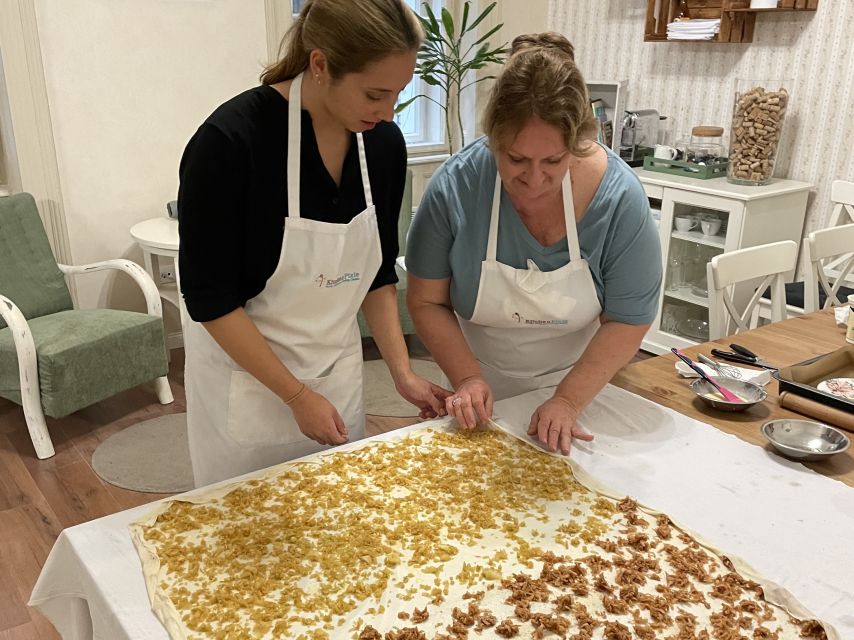
At $93 per person for about 2.5 hours, it is not a casual snack activity. You are paying for a few things at once: chef instruction, an apartment kitchen setup, ingredients and tools, guided stretching practice, two baked strudels, included drinks, and take-home family recipes.
In plain terms, you are paying to learn a method that’s hard to pick up from a video. Dough stretching is not just a motion, it is feedback. Marta’s guidance helps you correct what you feel and what you see. That kind of coaching is expensive in most cities, even before you count the ingredients, the oven time, and the included tasting.
You are also getting an outcome that feels substantial. You do not just leave with a taste. You leave with strudels to eat on the spot, plus the recipe to carry forward. That turns the cost from “a fun experience” into “a skill and a home recipe.”
If your priority is the cheapest food experience in Budapest, this will not be your winner. If your priority is a hands-on, memorable food lesson that you can actually repeat, the price starts making sense.
Who should book this strudel class, and who might not
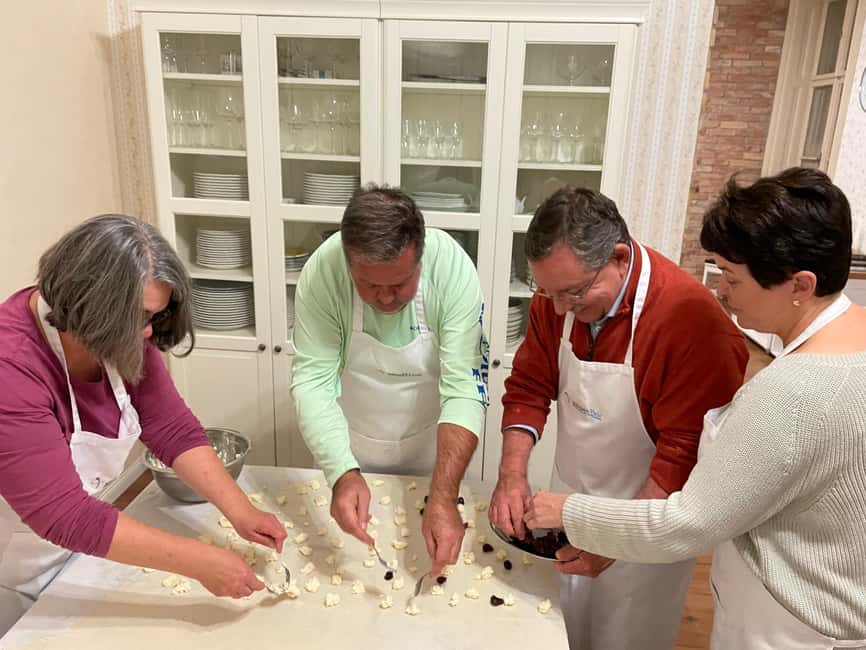
This experience fits best if you like doing, not just watching. You enjoy rolling up your sleeves, learning a technique, and asking questions while the oven does its thing.
It also works well if you want something different from the usual sightseeing loop. Budapest has plenty of food to try on the street, but this gives you a deeper connection to a specific local dessert and the people who make it.
It may be less suitable if:
- You dislike hands-on cooking and prefer purely tasting experiences
- You’re traveling with younger kids, since it is not suitable for children under 10
- You only want a quick stop, because the class is structured for the full 2.5-hour sequence
Should you book this Budapest strudel class?
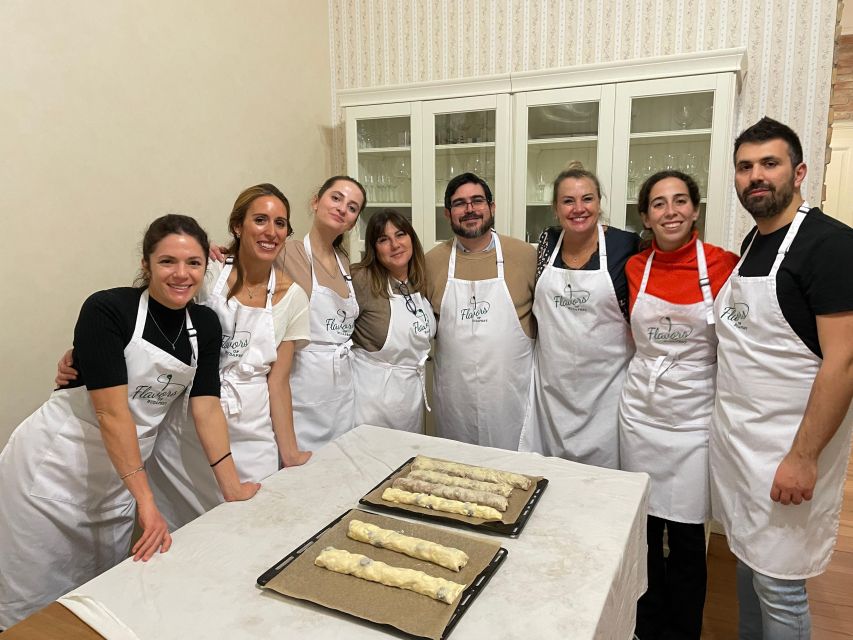
I think you should book it if you want a real Hungarian food skill, not just a meal. The combination of hands-on stretching, two fillings, included Hungarian snacks and drinks, and family recipes is a strong package for the price. Marta’s teaching style also gets highlighted in the way the class runs, with patience and clear guidance that helps you do the work yourself.
If you’re on the fence, pick your motivation. If your goal is to understand Hungarian strudel as a tradition, and to be able to try it at home later, this class is a good bet. If you mainly want to sample and leave, you might prefer a food tasting route instead.
FAQ
How long is the Budapest strudel-making class?
The class lasts about 2.5 hours.
How many strudels will I make?
You will make two strudels in the class.
What fillings are available?
The class includes typical fillings such as poppy-seed with pumpkin, sweet or salty cabbage, and sweet cottage cheese cream.
What is the meeting point address in Budapest?
The class meets at the partner’s private apartment in central Budapest, Király u. 77, 1077 Hungary.
Is hotel pickup or drop-off included?
No, hotel pickup and drop-off are not included.
What drinks and snacks are included?
Included items include Hungarian wine (2 dl), soft drinks, mineral water, coffee, and typical Hungarian snacks.
Is the instructor teaching in English?
Yes, the instructor is listed as teaching in English.
How large is the group?
The group is limited to 10 participants and is described as a small group or family atmosphere.
Is the class suitable for children?
It is not suitable for children under 10 years old.
Newest reviews from Budapest
- Buda Castle Private Walking Tour: A Kingdom of Many Nations★ 5.0 · 9 reviews
- Budapest Walking Tour: Explore Top Sights & Hidden Gems★ 4.5 · 9 reviews
- See the Hungarian Sea: Lake Balaton★ 4.5 · 9 reviews
- Transylvania Tour from Budapest to Bucharest: 4 days★ 5.0 · 10 reviews
- Luxurious, private day cruise with a waterlimousine to Szentendre★ 4.0 · 10 reviews
- Private Tour Around Budapest★ 5.0 · 10 reviews
- Born Under The Red Star – Communist tour with Coffee in a Retro Bar★ 5.0 · 10 reviews
- Live virtual walking tour in the Buda Castle quarter★ 5.0 · 10 reviews