
Reviewed · BUDAPEST
Pest side stories with a Historian
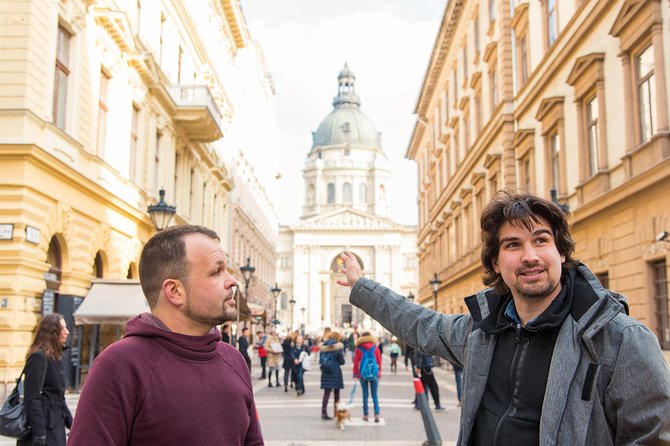
This is a smart way to see Budapest’s Pest side without getting lost in the noise. You start with landmarks that explain how the city was shaped, and you get the story threaded through the streets as you walk.
I love two things right away: the small-group cap of 10 keeps it personal, and the historian guide turns each stop into a clear timeline you can actually remember. Even better, you get practical help along the way, like refreshments and transit tickets.
One consideration: this is a lots-of-walking tour for about 3 hours, so you’ll want comfortable shoes and a little patience for heat and cobblestones.
Key highlights you’ll feel right away
- Max 10 guests means more questions and less crowd herding
- Historian guide storytelling at major Pest landmarks, not random facts
- St. Stephen’s Basilica entry is optional if the group wants to go inside
- Andrassy Avenue UNESCO-listed since 2002, with context for what you’re seeing
- Millennium Underground visit at a key stop on Budapest’s transit history
- Refreshments plus metro tickets included to cut down on logistics
Why Pest, and Why This Walk Makes Sense
Budapest can be split into two very different personalities. Buda feels higher and older. Pest feels like where the city lived, worked, traded, and argued with power. This tour focuses on Pest, so instead of only seeing impressive buildings, you also understand how everyday life and politics shaped the city street by street.
The meeting time is set for the afternoon, start at 2:00 pm near Kempinski Hotel Corvinus on Erzsébet tér. That timing matters. You get enough daylight for outdoor landmarks like Heroes’ Square and Andrassy Avenue, and you’re usually done before the evening crowds fully take over.
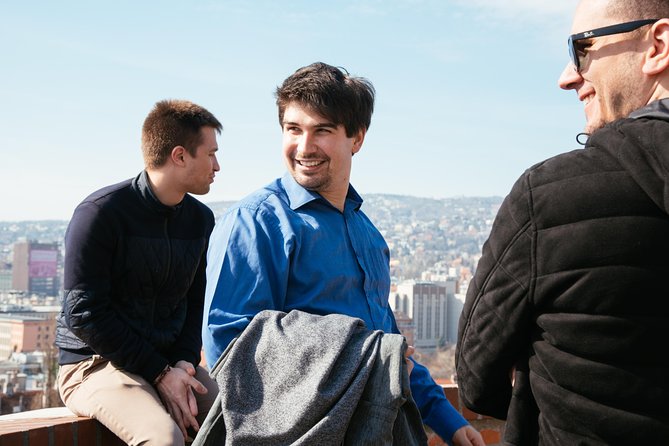
And because it’s capped at 10 travelers, your guide can actually steer the pace and check in with the group. In past tours I’ve done like this, the “historical walking tour” label can sometimes mean a speech plus a slideshow. Here, it’s more practical. You’re outside, looking at real facades, statues, street layouts, and the route is built around those visual clues.
What else people book in Budapest on the same trip:
- Budapest: City Highlights Sightseeing Cruise
★ 4.6 · 43,981 reviews - Budapest: Unlimited Prosecco, Beer and Aperol Spritz Cruise
★ 4.8 · 37,304 reviews - Budapest: Széchenyi Spa Day Ticket with Optional Upgrades
★ 4.3 · 23,911 reviews
Your Historian Guide, and What the Best Ones Do
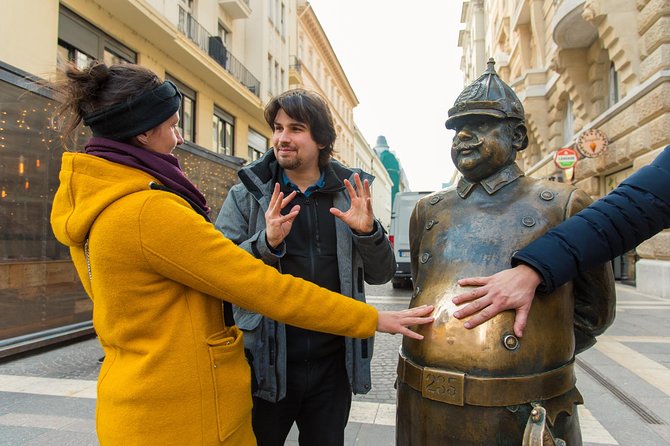
The big reason this works is the guide. The reviews call out guides like Steven “the tall”, Andrew, and Greg for being story-forward, detailed, and able to connect what you see with what happened before and after major conflicts and political shifts.
Expect the tour to feel like guided walking plus an intelligent conversation. You’ll hear why certain statues or building designs were chosen, and what those choices signaled to the people living there. One reviewer described the way the guide linked the waterfront and downtown spaces to invasions, wars, and the stubborn drive of Hungarian identity. Another praised how the guide kept the pace easy even while covering a lot of ground.
That matters for you because history can get heavy fast. A good historian guide here is doing two jobs at once:
- Keeping the story straight as you move from square to square
- Choosing what to explain on the spot so it sticks
Also, you’ll have something small but helpful: refreshments during the walk. After a few kilometers, that can be the difference between enjoying the last stops and rushing through them.
The 7 Stops That Build a Real Mental Map
This tour is roughly 3 hours and designed as a chain of landmarks. You’ll start around Elizabeth Square, then work through the big Pest showpieces, finishing near St. Stephen’s Basilica (with a chance you end at another central point of Pest close to the start).
Here’s how each part usually lands, and what to watch for.
Elizabeth Square: From Market to Stalin Square to Party Zone
You kick off at Elizabeth Square. It’s not just a starting point. It’s a condensed lesson in how quickly cities can repaint their meaning.
The square has worn several identities over time, including market life and periods tied to Stalin-era power. Today it’s known as a younger, more social area, and you’ll see statues and points of interest that help explain how the public space changed roles.
What I like about starting here is the mindset shift. It tells you early on: Pest is layered. A statue in one era can become a symbol of something else later. So as you walk, you’ll naturally start reading buildings like documents.
A different sort of Budapest afternoon:
- Budapest: Nighttime or Daytime Sightseeing Cruise
★ 4.2 · 21,062 reviews - Budapest: By Night Sightseeing Cruise with Welcome Drink
★ 4.3 · 15,533 reviews - Budapest: St. Stephen’s Basilica Entry with Options
★ 4.6 · 12,322 reviews - Budapest: 1-Hour Evening Sightseeing Cruise with Drink
★ 4.5 · 9,421 reviews
St. Stephen’s Basilica (Szent István Bazilika): Inside Only If You Want It
Next up is St. Stephen’s Basilica, described as the largest church in Budapest. Admission is free, but entry inside depends on group interest. If your group wants it, you’ll go in.
This is one of those details you should decide for yourself. If you love interior space, artwork, and the feeling of being inside a major landmark, speak up early so the guide knows the group is interested. If you prefer outdoor viewpoints and quick efficiency, you can still enjoy the stop from the outside.
Either way, it’s a strong marker in the story. You’re going from squares and street life into a symbol of religious and national identity.
Heroes’ Square: A Fast Introduction to 1,100 Years of Hungary
Then you arrive at Heroes’ Square, a main “start here” location for understanding Hungarian history. The point is not just to admire the scale, but to get oriented in the time span the city claims for itself.
The way this stop works on a walking tour is practical: the guide gives you the big-picture framing so you’re not standing there thinking, What am I looking at?
Plan to take your time with the visual elements. It’s a place where symbolism is doing work. Once you understand the story behind the monument design, the square becomes more than a photo stop.
Vajdahunyad Castle: Why a Medieval Look Was Built in 1896
After the grand national scale of Heroes’ Square, you shift to a stop that many people pass by too quickly: Vajdahunyad Castle. It’s built in 1896, but it’s designed to look medieval. That mismatch is exactly why the stop is interesting.
You’ll get an explanation for why it was built this way and what the design communicated when it appeared. In other words, it’s not only about a castle. It’s about how Budapest chose to picture itself at the turn of the century.
A practical tip here: if you’ve already spent time indoors that day, this is a good outdoor breather. If you’re chasing photos, this stop also gives you those “storybook” angles that still feel grounded in real city history.
Andrassy Avenue: The UNESCO Street Pride of Budapest
Next comes Andrassy Avenue. It’s described as the pride of Budapestians and listed as a UNESCO world heritage site since 2002. This is where the tour starts to feel more about urban design and the power of a “grand avenue.”
What you’ll enjoy here is the straight line of sight and the feeling of ceremonial space. The guide’s job is to connect architecture and city planning to what people were trying to project.
If you like walking along a street that feels important because it was planned to be important, you’ll appreciate this section. It’s also one of those places where you can look up and realize, yes, someone thought about every detail.
Vorosmarty Square: Commerce and High-End Pest in the Middle of It All
Then you shift to Vorosmarty Square. This stop is shorter, about 15 minutes, and it focuses on commerce and high-end products in central Pest.
This is a useful contrast after Andrassy Avenue. You get the “grand prestige street” feel, then you move into the shopping and social center energy of the city. The guide helps you understand why this area became a magnet.
Even if you’re not shopping, you’ll pick up a sense of Budapest’s rhythm: the city isn’t only monuments. It’s also streets built for trade, spending, and everyday visibility.
Millennium Underground: Budapest’s Oldest Underground
Finally, you reach Millennium Underground. It’s noted as the oldest underground on the European continent. This stop gives you a different kind of history, not about rulers or wars first, but about infrastructure and modern life arriving in Budapest.
You’ll come away thinking about the city’s confidence in movement and engineering. It’s a strong way to end the walk because it ties the story to real practical change: getting around shaped how people lived.
If you’re the type who loves transit history, you’ll likely enjoy how the guide connects the past to the way the city functions today.
Practical Value: What You Get for Around $58.94
The price listed for this tour is $58.94 per person. That’s not just paying for a walk. You’re paying for several items that reduce your own effort:
- A historian guide who explains what you’re seeing
- Refreshments
- Metro tickets provided
- Admission tickets free for the listed stops
The biggest value point for me is that the inclusions help you avoid tiny costs and decisions that add up on a short timeline. When a tour gives you transit tickets, you can spend more mental energy on the story instead of figuring out what bus or metro line to use next.
Also, the small group size is part of the cost equation. It’s easier for a guide to keep the group moving at a good pace when there are fewer people to manage, and reviews highlight that the pace stays easy even with lots of walking.
So if you’re visiting Budapest for a limited number of days, this is a good way to get a structured orientation to Pest without building your own route from scratch.
Pace, Footwear, and Heat: Your Real-World Setup
This tour is about 3 hours and involves meaningful walking. Reviews mention hot days and long distances, but also note that the guide keeps the pace easy. Still, “easy pace” doesn’t mean “no sweat.”
Here’s how to set yourself up:
- Wear comfortable walking shoes you trust on uneven pavement
- Bring water, even though refreshments are included
- If you want Basilica entry, make that clear early since the inside part is optional
If you’re traveling with limited mobility, you might still be able to participate because most travelers can take part, but the experience does require being on your feet for a while. I’d treat this as a standard walking tour, not a short stroll.
Is This the Right Tour for You?
This works especially well if:
- You want history tied to real places you can point at
- You prefer small groups where questions are welcome
- You like “orientation” tours that help you understand the city quickly
It may be less ideal if:
- You hate walking and want mostly indoor time
- You want a strictly fixed script where every group enters St. Stephen’s Basilica regardless of interest
- You’re after a purely visual tour with minimal explanation
The reviews also give you a clue about what this isn’t. It’s positioned as a better alternative to big, busloaded group experiences, and the small cap is the reason. You get a guided story without the feeling of being rushed through stop after stop.
Should You Book It?
If you’re doing Pest anyway, I’d book this. It’s one of those tours where the guide helps you turn locations into understanding. The best part is the balance: major landmarks like Heroes’ Square and Andrassy Avenue, plus a transit-history stop at Millennium Underground, so you leave with more than just photos.
Book it if you want a historian-led walk that stays practical, with metro tickets and refreshments handled for you. Skip it only if you’re not willing to walk for around 3 hours, or if you prefer self-guided sightseeing with no group pace at all.
FAQ
How long is the Pest side walking tour?
The tour lasts about 3 hours.
What does it cost per person?
The price is $58.94 per person.
Is the tour in English, and how large is the group?
The tour is offered in English, and it has a maximum of 10 travelers.
Where does the tour start and end?
The tour starts at Kempinski Hotel Corvinus Budapest, located at Budapest, Erzsébet tér 7-8, 1051 Hungary. The tour ends at St. Stephen’s Basilica, Budapest, Szent István tér 1, 1051 Hungary, though it may end at another central point of Pest close to the starting area.
What’s included in the tour price?
You get a historian guide, refreshments, metro tickets, and admission is free for the listed stops. A mobile ticket is also provided.
Do you enter St. Stephen’s Basilica during the tour?
You can enter if the group is interested. The basilica stop is listed with free admission.
Can I get a full refund if my plans change?
Yes. Free cancellation is available up to 24 hours in advance for a full refund.
Are service animals allowed, and is it suitable for most travelers?
Service animals are allowed, and most travelers can participate.
Newest reviews from Budapest
- See the Hungarian Sea: Lake Balaton★ 4.5 · 9 reviews
- Buda Castle Private Walking Tour: A Kingdom of Many Nations★ 5.0 · 9 reviews
- Budapest Walking Tour: Explore Top Sights & Hidden Gems★ 4.5 · 9 reviews
- Transylvania Tour from Budapest to Bucharest: 4 days★ 5.0 · 10 reviews
- Luxurious, private day cruise with a waterlimousine to Szentendre★ 4.0 · 10 reviews
- Private Tour Around Budapest★ 5.0 · 10 reviews
- Born Under The Red Star – Communist tour with Coffee in a Retro Bar★ 5.0 · 10 reviews
- Live virtual walking tour in the Buda Castle quarter★ 5.0 · 10 reviews