
Reviewed · COMMUNIST-ERA HISTORY
Rise Against the Soviet: The 1956 Revolution – Private Tour
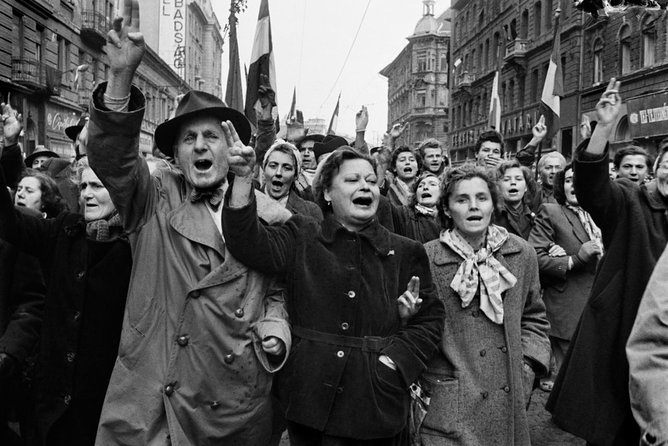
Budapest makes 1956 feel real, not like a textbook chapter. This private tour traces the revolt through locations tied to the uprising, the Soviet crackdown, and the long political afterlife of that trauma. I like that you get a stop-by-stop route with context, and I also like that the guides often bring in personal details from life under communism, not just dates and slogans.
You’ll spend about 3 hours on the ground, moving between key points along the Danube and deeper into the city. That timing is great for a focused overview, but it can feel a bit tight if you already know a lot about 1956 and want extra time on the parts you find most important.
Key things you’ll get from this 1956 Revolution tour
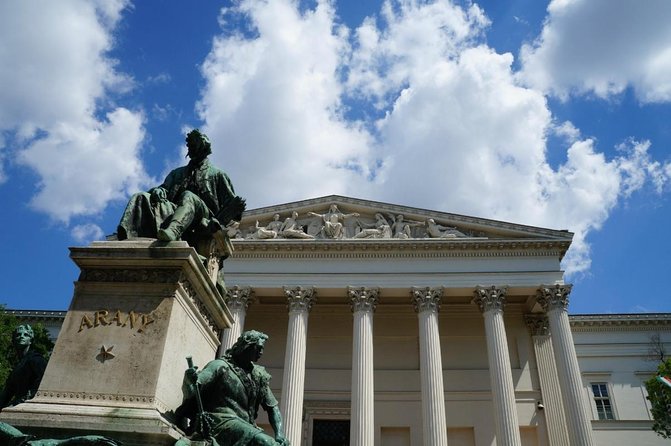
- A focused route tied to the revolt’s most talked-about places, from Kossuth Lajos Square to Corvin Cinema
- English-language guidance with clear storytelling that connects causes and consequences, not just the headline dates
- Real context about political life under communism, often guided by people with first-hand perspective
- A mix of walking and public transport during the city route, with no vehicle stress
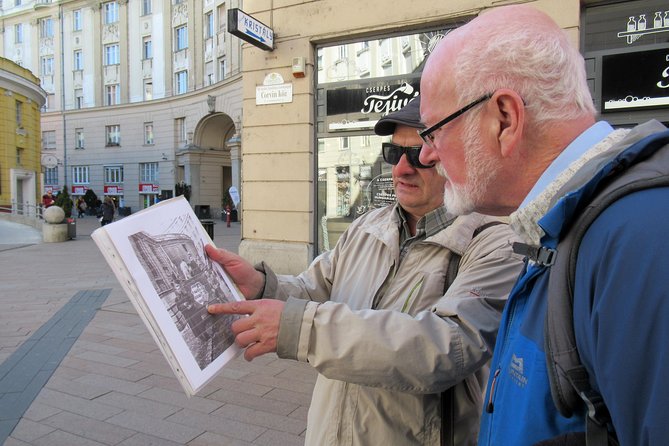
- Free access at the listed stops, plus handouts that help you remember what you just saw
- Small-group privacy (up to 5) so questions and pace can actually work
Why the 1956 Revolution still matters in Budapest
This tour isn’t only about one week in 1956. It helps you understand why the events happened when they did, and why Hungary carried the consequences for decades. That matters, because Budapest looks like a beautiful European capital on the surface, but the city is also layered with political memory. You see how public space becomes a stage for protest, and how power can turn streets into hard lines.
If you’re into 20th-century history, you’ll enjoy the way the guide connects big ideas to physical places. One stop is tied to mass demonstration and killings. Another is tied to the Hungarian communist government’s political headquarters and the fate of Imre Nagy. Along the way, you also get quieter details, like what people needed and where they tried to reach the outside world for help.
More of the communist decades:
- Budapest: Communist History Tour with House of Terror Option
★ 4.8 · 182 reviews - Communism in Hungary with a Historian
★ 5.0 · 70 reviews - Budapest: 3-Hour Walking Tour About Communism (Small Group)
★ 4.7 · 70 reviews
Private touring in a small group, with pickup included
This is a private tour, meaning only your group participates. With up to 5 people, you can ask follow-up questions without feeling like you’re holding up a conveyor belt of strangers. It also helps with pace. In one account, the guide adjusted speed for a family member who needed more time, which is exactly the kind of practical flexibility you want on a history walk.
Pickup is offered at your hotel, or from a central meeting point you agree on. That saves you the “where do we meet again?” hassle, especially if you’re juggling museum times, meals, or jet lag. The tour uses a mobile ticket, and the route is set near public transportation, so you’re not stuck planning transfers while learning the story.
Getting value from a $228.66 group price
The price is $228.66 per group (up to 5) for about 3 hours. If you’re traveling solo, it’s pricier than joining a group tour. If you’re two or three people, it starts to feel much more reasonable, because you’re essentially buying a guided conversation and a tightly planned route, not just a checklist of stops.
Also, many of the stops you visit are listed as free to enter. Add the included handouts and the communism-related souvenir, and you’re getting more than a guided walk. You’re leaving with material you can use to connect the dots later, when the names and dates start to blend together.
One honest consideration: the theme is huge. If you want a full, deep lecture on every thread of 1956, three hours may feel short. Some people have said the tour ran long by about half an hour compared to the advertised time, but even with that, you still have to accept a selective path through the story.
Kossuth Lajos Square: where parliament watched the violence
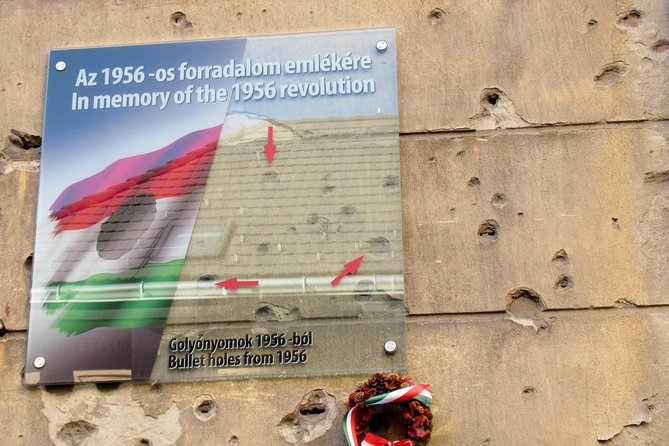
You start at Kossuth Lajos Square, where Hungary’s parliament stands. This isn’t a random landmark stop. It’s tied to the mass demonstration of 1956 and the killings that followed. Standing in this space gives you a real sense of how protests can collide with state power in public, symbolic settings.
What I like about this stop is how it anchors the emotional tone of 1956 early. The guide isn’t just saying what happened. They’re pointing out what the square represents in political life. If you’re the type who likes to understand how a regime communicates, this is where you feel that machinery up close.
A practical tip: plan to take a moment to look around. Even if you only have short time here, the buildings on the square help you visualize why crowds gathered, why governments responded, and why the square stayed important long after 1956 ended.
A different sort of Budapest afternoon:
- Budapest: City Highlights Sightseeing Cruise
★ 4.6 · 43,981 reviews - Budapest: Unlimited Prosecco, Beer and Aperol Spritz Cruise
★ 4.8 · 37,304 reviews - Budapest: Széchenyi Spa Day Ticket with Optional Upgrades
★ 4.3 · 23,911 reviews - Budapest: Nighttime or Daytime Sightseeing Cruise
★ 4.2 · 21,062 reviews
Margaret Bridge, the Danube, and the communist government’s White House
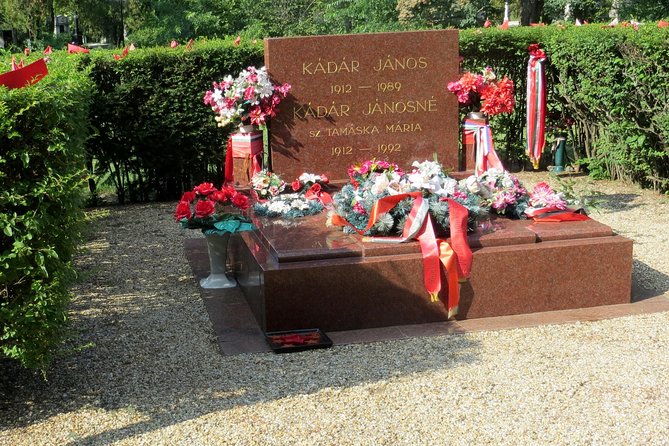
Next is Margaret Bridge, near the Danube. On the banks, there’s a building that was dubbed the White House in communist times. It served as the Party HQ of the Hungarian communist government.
This stop is a good reality check. The story of 1956 isn’t only street resistance. It’s also institutions, headquarters, and decisions made away from the crowds. Seeing the building in its current context helps you understand the gap between what people hoped for and what the leadership actually controlled.
You’ll also look for the statue of Imre Nagy, the Prime Minister in 1956 who was later murdered. That detail is heavy, but it’s central. The guide’s job here is to connect Nagy’s political role to the broader crackdown. Even if you’ve read about him before, seeing his memory in the open space makes his story feel more immediate.
Bem Square and the student protests that sparked a wider moment
Heading south from Margaret Bridge, the tour arrives at Bem Square. This square is tied to an extraordinary scale of protest: 200,000 Hungarian students protesting Soviet rule in 1956. The rally’s origin is also important. It was originally organized to support Polish workers, which shows how 1956 wasn’t a single isolated spark.
The takeaway I’d want you to keep is this: student energy helped push the revolt into something bigger than local anger. When the guide connects that to later events, it stops feeling like a random uprising and starts feeling like a social wave.
There’s also a stop connected to Buda-side intellectual life, Bambi Eszpresszó, a shelter that has been going strong since the 1960s, with the same atmosphere and interior design. This is one of those sideways but meaningful moments in the tour. It shows how people rebuilt public life after trauma, and how certain places hold cultural continuity long after politics shift.
Sándor Petőfi statue: a meeting point for protest then and now
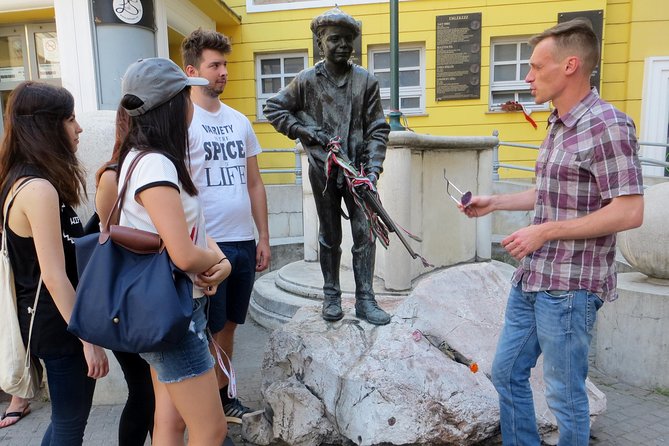
At the Sándor Petőfi statue, the focus turns to symbolism and public memory. Petőfi is presented as a key figure in the 1948 revolution, which is why his name became linked to broader struggle against government. Even now, it acts as a meeting point for political events and protesters.
You’ll also learn about the famous actor Sinkovits Imre, who in 1956 came to this statue and recited Petőfi’s revolutionary words. He was then arrested and imprisoned. That story adds a human layer to political symbolism. It makes clear that in 1956, art and speech could carry real risk.
If you like your history with names and scenes, this is one of the best stops. It’s short, but it punches above its weight because it connects the past to how people still use public space to organize.
Radio Budapest on Sándor Bródy Street: begging for help beyond Hungary
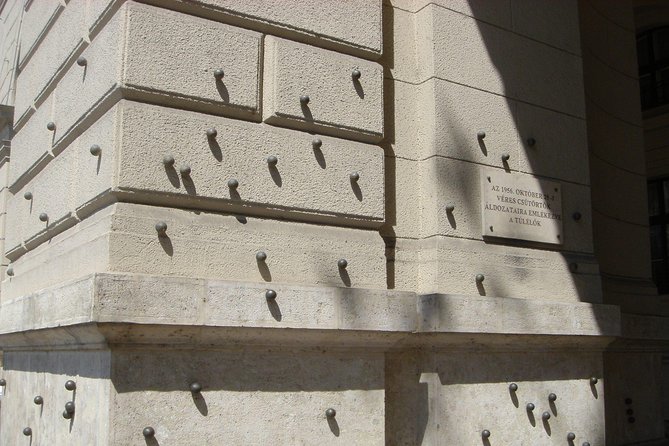
From there, the tour goes to a quieter area along Sándor Bródy Street, near Radio Budapest, the Magyar Rádió Building. It’s described as somewhat secluded from main city arteries, which fits the idea that communication and broadcast rooms are often off the loudest streets.
This location is tied to some of the fiercest fighting in 1956. From here, revolutionaries begged for help from the world at large. That detail is crucial because it flips the common story. Yes, there was resistance with weapons. But there was also the urgent push to tell the outside world, to make the situation visible enough to matter.
What I like about this stop is the way it gives you a sense of what information meant. In a crackdown, controlling the story can be as important as controlling streets. If you pay attention to what the guide says here, the rest of the tour becomes easier to follow.
Corvin Cinema and Corvin köz: resistance inside the fighting zone
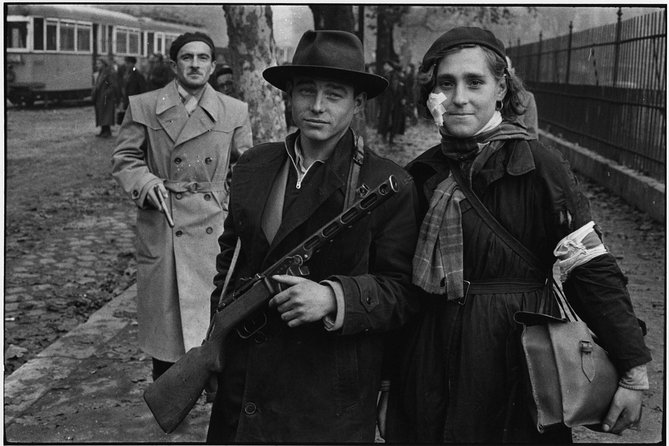
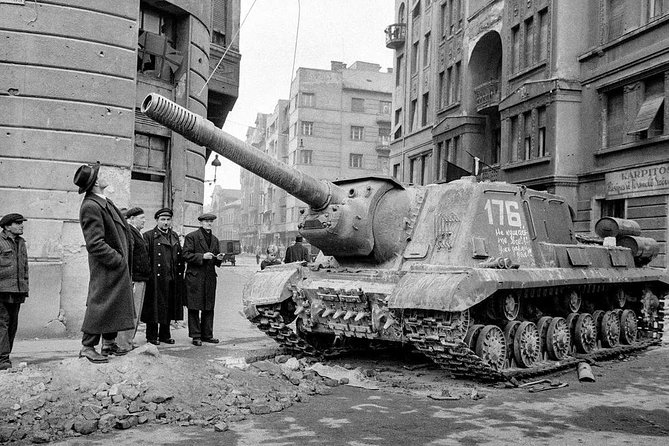
The final stretch brings you to Corvin Cinema in the Corvin köz area. This is presented as a major resistance center. In 1956, local youngsters fought invading Russians with Molotov cocktails and guns stolen from soldiers, aimed at Soviet tanks.
That’s intense, and the tour keeps it grounded. You’ll look at reminders of the battles and talk through both the invasion and what came after. The guide’s job is to make the tactics and the desperation understandable without turning it into a movie scene.
If you want a strong end point, this is it. The story closes with the kind of concrete, on-the-ground resistance that makes earlier stops feel more than symbolic. The route comes full circle: public spaces, government power, communication attempts, and then the fight itself.
Handouts, souvenirs, and how to remember what you just saw
This tour includes handouts and a communism-related souvenir. I always like it when a guide gives you something to take home, because history tours have one predictable problem. You see a lot, you learn fast, and then the names start blending.
The handouts help you keep straight the roles of key figures, the sequence of events, and why each location matters. If you’re the type who likes to review later while walking around the city, these materials can turn a 3-hour tour into a multi-day learning experience.
Also, getting a small souvenir tied to the theme feels less like a tack-on and more like closure. You can put it on your shelf and remember not only that you visited, but why that place mattered.
Guides you might meet: personal perspective and adaptive pacing
Two guide names show up in the accounts you provided: Miklos and Peter. Both are praised for storytelling that makes 1956 easier to understand. Miklos is described as someone who lived through the communist era and could share personal insight into day-to-day realities.
Peter is described as having a mental library of Budapest history, explaining complex topics in a way that makes sense. One account also mentions that Peter slowed the pace to match an elderly guest’s needs and tailored the focus to what mattered most to them. That kind of adaptability matters on a historical tour, because not everyone processes information at the same speed.
There are also a couple of added-meaning stops that can appear depending on the flow of the tour. One account describes an underground memorial devoted to the 1956 Revolution. Another mentions a cemetery where people killed during the revolution were buried. If those details are included on your departure, they raise the emotional weight and make the story feel less abstract.
Practical tips before you go
- Wear comfortable shoes. You’ll be walking between points, plus moving around the city by tram or other public transit.
- Bring a layer. Budapest weather can shift quickly, and you’ll be outside for multiple stretches.
- Plan for a moderate pace. The tour notes a moderate physical fitness level requirement, which usually means you should be able to handle city walking without rushing.
- If you’re traveling with accessibility needs, note that service animals are allowed and the tour operates near public transportation.
Food and drinks aren’t included, so if you’re touring at a busy time, I’d grab a snack before you meet up. You can then focus on the story instead of checking time for lunch.
Should you book this 1956 Revolution private tour?
Book it if you want a tight, structured way to understand the 1956 Revolution’s key sites in Budapest. It’s especially good for history buffs, and it works well if you like your tours guided by people who can explain context and personal consequences, not just recite dates. The private format, up to 5 people, makes a big difference if you enjoy asking questions or want the pace adjusted.
Skip or pair it with something else if you already know 1956 in depth and want longer time in each place. Three hours is enough for a strong overview, but it’s not enough to cover every faction, every political pivot, and every debate.
If you’re unsure, here’s the simple decision rule I’d use: if your ideal Budapest day includes a focused walk through difficult history with clear explanations and real emotional gravity, this tour fits well.
FAQ
How long is the private tour?
The tour lasts about 3 hours.
What is the price, and how many people can be in my group?
The price is $228.66 per group, up to 5 people.
Is pickup available in Budapest?
Yes. You can be picked up at your hotel, or you can meet at a central point you agree upon.
Is the tour in English, and is it private?
The tour is offered in English. It is a private tour, so only your group participates.
What’s included in the tour price?
Handouts are included, along with a communism-related souvenir. A mobile ticket is also provided.
Can I cancel for a full refund?
Yes, you can cancel for a full refund up to 24 hours in advance of the experience start time. If you cancel less than 24 hours before, the amount paid is not refunded.
Newest reviews from Budapest
- Private Tour Around Budapest★ 5.0 · 10 reviews
- Born Under The Red Star – Communist tour with Coffee in a Retro Bar★ 5.0 · 10 reviews
- Live virtual walking tour in the Buda Castle quarter★ 5.0 · 10 reviews
- Taste Budapest – Fat Boy Foodies Walk★ 4.5 · 10 reviews
- Wine & Food Tasting Cruise on the Danube★ 3.5 · 10 reviews
- Private Transfer from Budapest to Prague with 2 hours for sightseeing★ 4.5 · 10 reviews
- The Real Saw | Escape Room by PÁNiQ SZOBA★ 4.1 · 10 reviews
- City Park True Crime of Hungary and Night Walk Tour in Budapest★ 5.0 · 10 reviews
Communist-Era History, compared.
3-Hour Walking Tour About Communism (Small Group)
Read our review →
Memento Park Visit with Private Trabant Transfer
Read our review →
Memento Park: Official Guided Tour with Entry Ticket
Read our review →
Browse the lists this tour appears in