
Reviewed · COMMUNIST-ERA HISTORY
Budapest: 3-Hour Walking Tour About Communism (Small Group)
Budapest has a way of teaching history in plain sight, and this tour uses that idea well. You walk through central Pest where the era of Communism leaves physical traces, and you hear the human stories that explain what they meant day to day.
I especially like the historian-led commentary, because it ties big ideas to specific places. I also like the small group size (10 people max), which makes room for questions and for the personal family anecdotes that bring the topic into focus.
One drawback to consider is that this is a politics-and-memory tour, not a neutral museum vibe. If you prefer a strict, chronological lecture, the story may feel more lived-in than textbook.
Key highlights to look for
- Historian guide with political context, not just facts on a plaque
- Family stories that explain hardship and humor during the Communist era
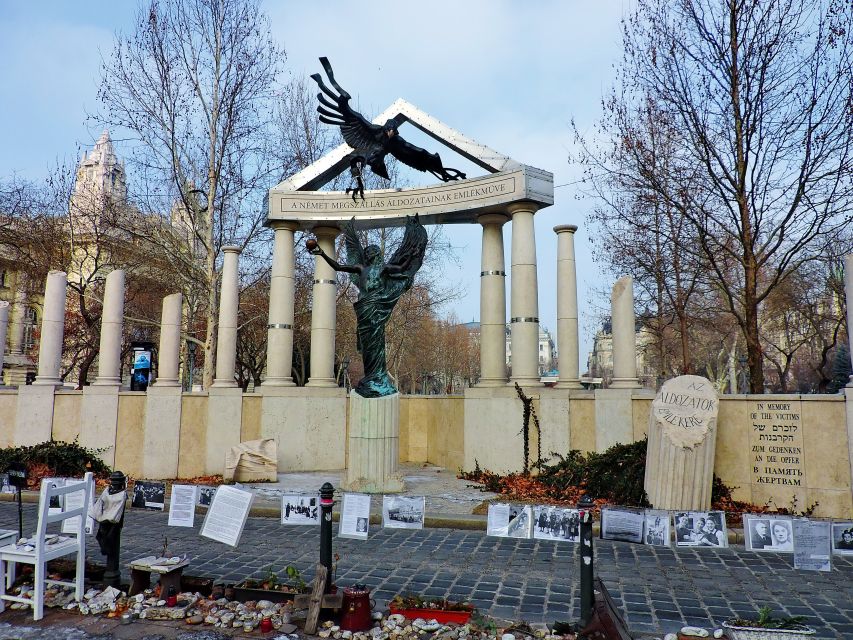
- Remnants you can see in central Pest, including bullet holes
- A ride on the red M2 subway, plus a short reset between walking sections
- A drink in a retro café that has changed very little since the early years of the 1970s (and opened in 1961)
Where Communism shows up in central Pest
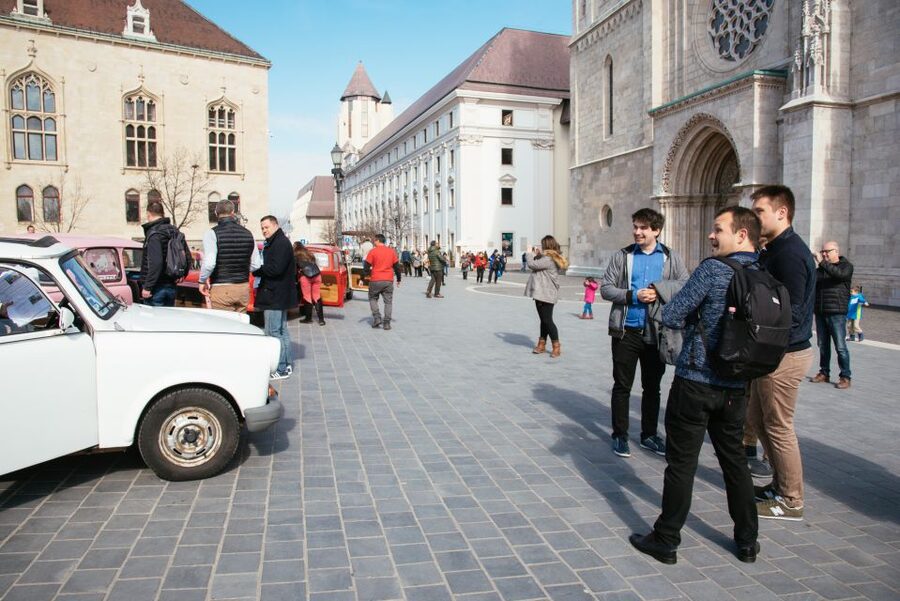
This tour makes the case that modern history is not stuck in a book. In central Pest, you start noticing the signs of the 20th century the way locals do, through small details that many visitors skip.
The walk is designed around the idea that you should understand Communism in Hungary as a process, not a single event. You’ll hear how it arrived, how it worked as a system, and what its legacy looks like after the regime ended.
One reason this works in Budapest is the density of meaning. Streets, squares, and everyday buildings all sit in the same frame, so your guide can connect World War II to the 1956 revolution and then onward to 1989 and the early 1990s without feeling like you are teleporting around town.
More of the communist decades:
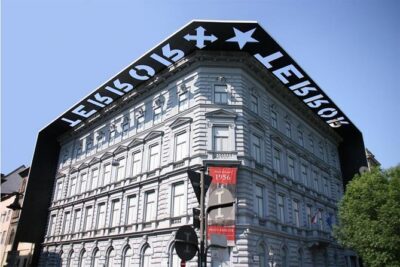
- Budapest: Communist History Tour with House of Terror Option
★ 4.8 · 182 reviews - Communism in Hungary with a Historian
★ 5.0 · 70 reviews - Guided Tour with Admission in Memento Park
★ 5.0 · 48 reviews
Meeting at Erzsébet tér, then starting at Deák tér
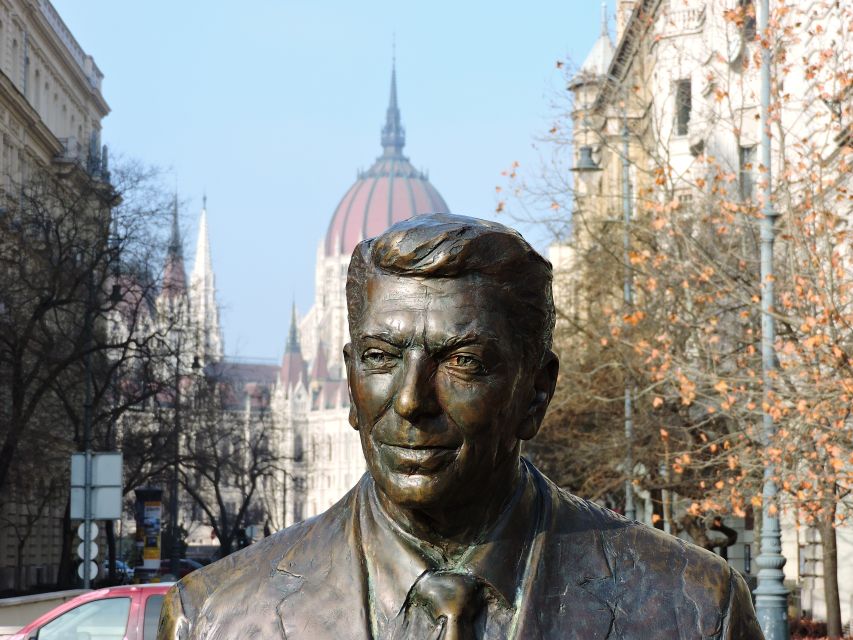
You meet in a very clear spot: in front of Kempinski Hotel Corvinus Budapest, on Erzsébet square, facing the Ferris wheel. It’s an easy landmark to find, and it’s also well served by public transport.
From there, the walk begins through one of the city’s pleasant areas in Pest, starting at Deák tér. That matters because Deák tér is one of those hubs where Budapest feels like itself, not a themed zone built just for tourists.
The tour also stays grounded in movement. You’re not only sightseeing. You’re walking, then riding the subway, then stopping for a drink. That rhythm helps the heavy subject feel more human and less like a one-sided lecture.
Following the story through visible remnants, not just talking points
The route is built around areas dotted with remnants of the Communist period, with the guide using what you can actually see as jumping-off points. Besides bullet holes, the area is described as full of stories that span multiple eras.
This is where the tour earns its “why it’s different” label. Instead of treating the Communist era as an isolated chapter, your guide frames it as part of a longer chain of pressures, upheavals, and political shifts Hungary lived through.
The best moments come when the narration is tied to street-level reality. A building, a square, even a small symbol can start to make sense once you know what system produced it, or what people had to deal with to survive it.
Getting the Communist ideology in plain language
You’re not just learning dates. The tour’s aim is to understand Communist ideology, specifically how it arrived in Hungary, how it shaped everyday life while it ruled, and what remained afterward.
That focus is valuable if you have ever felt confused by the way Communism is discussed online, in headlines, or in simplified political arguments. Here, you get a framework you can apply to what you see around you in Budapest.
And because the guides are historians, the commentary has structure even when it includes vivid personal memories. One of the most praised parts is how the guide builds context first, so later stories land with more weight.
You’ll also be invited to ask questions. That is a big deal for a topic like this, where people bring different backgrounds and different assumptions.
Other Budapest bookings worth a look
- Budapest: Buda Castle Walk with Saint Stephen’s Hall
★ 4.5 · 3,012 reviews - Budapest: Buda Castle District Walking Tour
★ 4.6 · 2,108 reviews - Budapest City Landmarks Walking Tour in 2 Hours
★ 5.0 · 2,048 reviews - 3-Hour Orientation Walking Tour of Buda and Pest
★ 4.8 · 1,834 reviews
Family stories that make the past feel usable today
One of the most consistently praised elements is the use of real family stories from the period of Communism. This isn’t added as decoration. It’s used as evidence of what the system felt like.
Guides such as Judith, Zsuzsanna, Monica, and Virág are specifically mentioned for making the history feel personal and lived-in. I like this approach because it avoids a common problem with political tours: they can turn people into statistics.
Instead, you hear about hardships and even comic moments. That blend matters. It reflects how people truly experienced these years, with fear and friction on one side, and everyday stubborn humor on the other.
There’s also a sense that the guide sees the city as a living reminder. One guide is described as sharing personal insights from growing up in Budapest, which helps you understand why certain symbols still matter in the present.
The red M2 subway ride, a quick reset between chapters
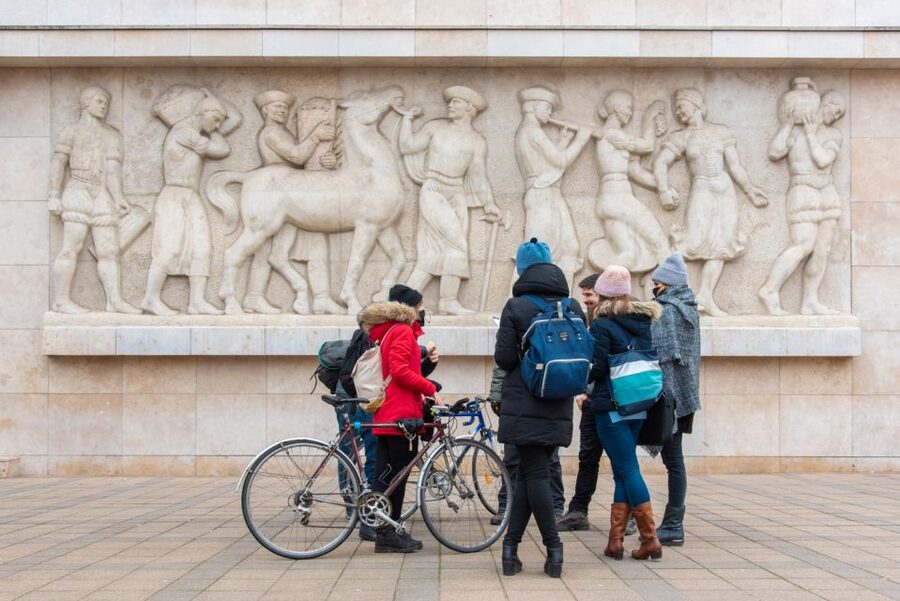
A highlight you can plan for is the ride on the red subway line M2. It’s included, along with a transportation ticket, so you don’t have to puzzle out transit on your own mid-tour.
I like that this part breaks up the walking. A 3-hour tour can get mentally heavy if every second is on foot and every stop feels like a lecture. The subway segment gives you a short reset while you keep moving through the city’s real layout.
It also supports the theme of modern history. You are literally traveling through today’s Budapest while your guide connects what you’re seeing now to what the city endured then.
Stopping at a cult retro café, drink included
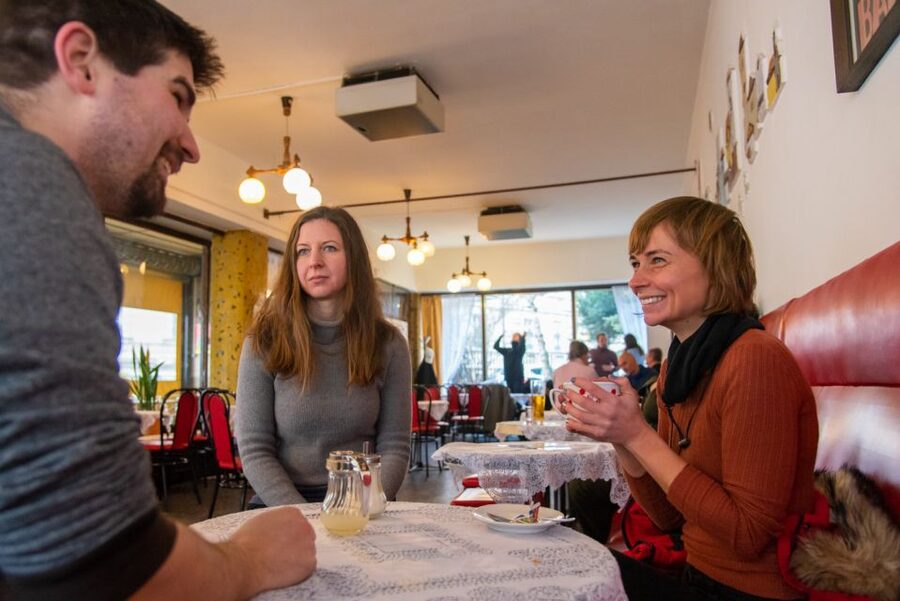
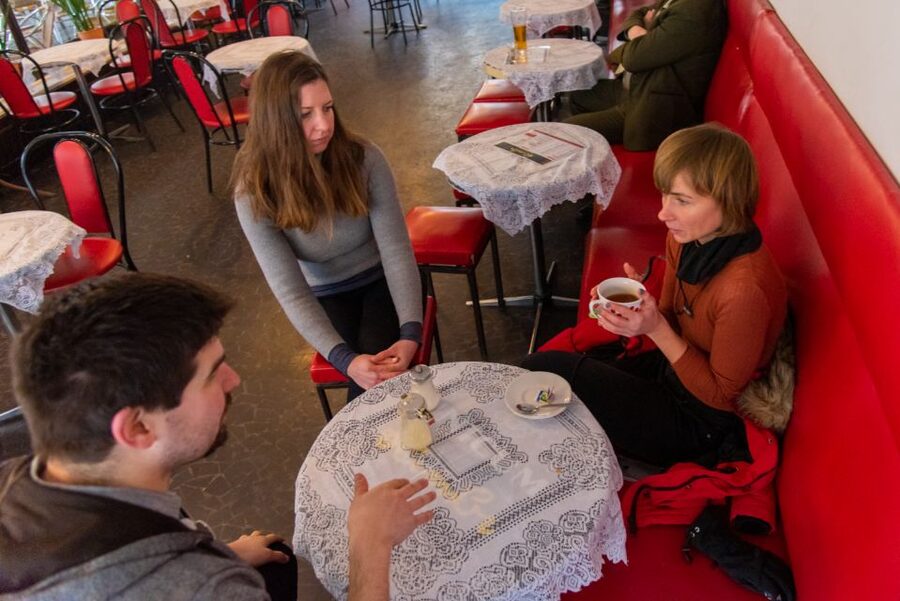
At some point, you’ll pause for a drink at a retro café that has changed very little since the early 1970s, with roots going back to 1961. The fact that the drink is included is part of the tour’s value, and it also makes the conversation feel natural.
This is the part I think many people will appreciate most if they like history with tone. You’re not being rushed through a scripted museum moment. You can ask follow-ups and have a chat with your guide in a setting that feels authentic to the era being discussed.
The café stop also helps you process what you learned during the walk. For a subject like Communism, which can feel abstract, it’s often easier to absorb once you’re in a calmer, more social environment.
What “small group” changes in a history tour
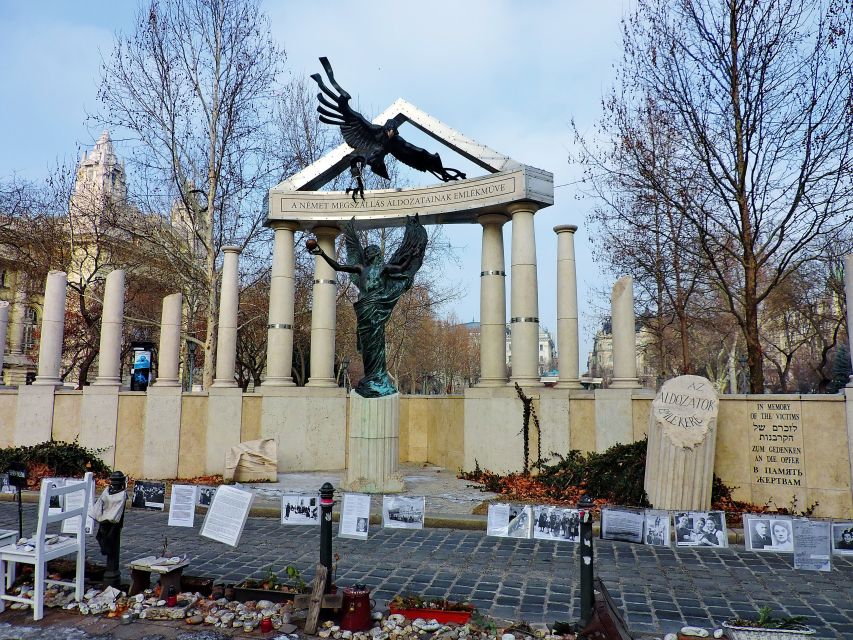
With a group size limited to 10 participants, you get something bigger than comfort. You get better interaction.
In practice, that means you can ask direct questions and get answers that fit your curiosity rather than a one-size-fits-all explanation. The tour is designed to welcome questions, and small groups are the reason that works.
If you’ve ever been stuck behind a big pack on a city walk, you’ll feel the difference here. You move at a human pace, and your guide can adjust the pace of the story depending on the group’s energy and questions.
Price and value: why $57 can make sense here
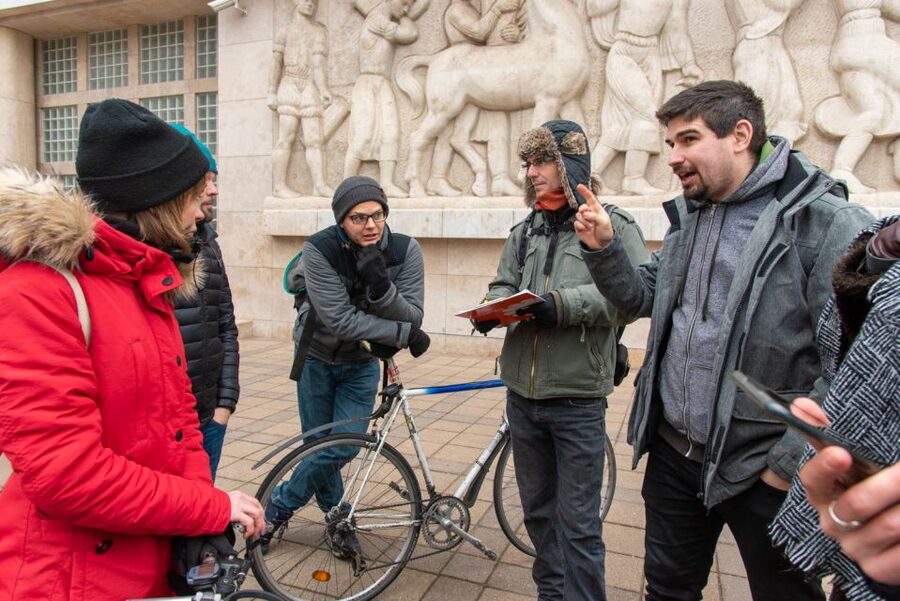
At $57 per person for a 3-hour experience, you should think about what you’re paying for. The price covers the historian guide, a drink, and the subway ticket for the M2 ride.
Many “history walks” charge a similar amount but include no transport and no included break. Here, the subway ride and the café stop reduce your out-of-pocket costs and also improve the flow of the tour.
Also, the tour is focused. You are not spreading time across unrelated topics. You are spending your limited hours learning one coherent story: Communism in Hungary, from arrival to legacy, grounded in places you can point to when you’re done.
So for value, the question is simple: do you want a tighter, more interpretive history session with local, human details? If yes, this price feels reasonable for what’s included and for the small-group format.
How to get the most out of this tour
This tour is most rewarding if you show up ready to think, not just to take photos. The street-level remnants are powerful, but they need your guide’s framing to fully connect.
Wear shoes that can handle a couple of hours of walking plus standing during stops. Even with a subway break, this is still a city-walk experience.
If your goal is to understand Hungary’s modern history in a way that sticks, arrive curious about how systems affect daily life. The tour’s strength is the connection between ideology and the details of living through it.
And if you have a personal question, bring it. The format is built for discussion, not passive listening.
Who this tour is for, and who should skip it
This is a great fit for you if you:
- want a historian guide who connects ideology to what you can see
- enjoy history that uses family stories rather than only official timelines
- like tours that include real breaks, like a drink at a retro café
- prefer a small group where questions are welcome
You might want to choose something else if:
- you dislike political history or prefer purely architectural sightseeing
- you need a strictly chronological lecture with no thematic flexibility
- you want a mostly light, casual walking tour (this one has serious material)
Final call: should you book Budapest Explorers’ Communism walk?
I’d book this if you want Budapest to explain itself beyond landmarks. This tour gives you context for how Communism shaped Hungary and why its traces still matter in the city today, and it does it with a historian’s structure plus personal stories that feel real.
It’s also an easy “yes” if you like guided walking tours that end with a conversation, not a rushed finish. The M2 ride and the included retro café drink make it feel like a complete experience rather than just a walk with a headset.
If your interest is mainly general sightseeing, skip it. But if you’re the type who reads the signs in a place and wonders what people went through behind them, this is a very strong 3-hour use of your time in Budapest.
FAQ
Where do I meet for the tour?
You meet in front of Kempinski Hotel Corvinus Budapest, facing the Ferris wheel on Erzsébet square.
How long is the walking tour?
The tour lasts about 3 hours.
Is the tour in English?
Yes, the live guide offers the tour in English.
Is it a small group?
Yes. It is limited to 10 participants.
Does the tour include any transport?
Yes. It includes a transportation ticket, and you take the red subway line M2.
Is a drink included?
Yes. The tour includes a drink in a retro café.
What is the cancellation window?
You can cancel up to 24 hours in advance for a full refund.
Newest reviews from Budapest
- Private Tour Around Budapest★ 5.0 · 10 reviews
- Born Under The Red Star – Communist tour with Coffee in a Retro Bar★ 5.0 · 10 reviews
- Live virtual walking tour in the Buda Castle quarter★ 5.0 · 10 reviews
- Taste Budapest – Fat Boy Foodies Walk★ 4.5 · 10 reviews
- Wine & Food Tasting Cruise on the Danube★ 3.5 · 10 reviews
- Private Transfer from Budapest to Prague with 2 hours for sightseeing★ 4.5 · 10 reviews
- The Real Saw | Escape Room by PÁNiQ SZOBA★ 4.1 · 10 reviews
- City Park True Crime of Hungary and Night Walk Tour in Budapest★ 5.0 · 10 reviews
Communist-Era History, compared.
Memento Park Visit with Private Trabant Transfer
Read our review →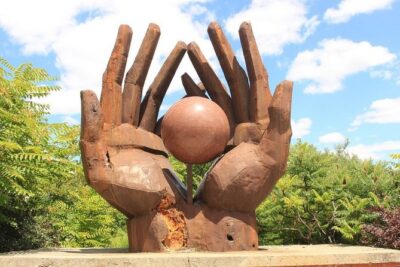
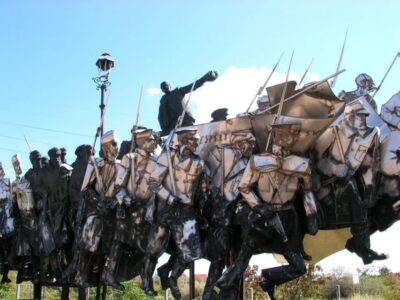
Memento Park: Official Guided Tour with Entry Ticket
Read our review →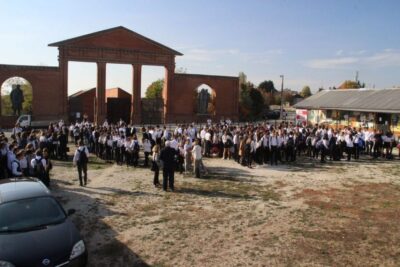
Browse the lists this tour appears in