
Reviewed · COMMUNIST-ERA HISTORY
Communist Budapest Walking Tour
Budapest has plenty of grand views, but this walk is more like a guided tour of how power reshaped everyday life. You go from the 1956 revolution monuments near the Parliament to Cold War symbols around Liberty Square, then end outside the House of Terror. It is the kind of tour that helps you read the city like a living textbook.
I love how it mixes big landmarks with tight explanations, so you are not just collecting photos. Two standout parts for me are the way the guide connects Soviet-era monuments with the human story behind them, and the stop at Puskas Stadium, where propaganda is visible in stone. The one drawback: this is not a sightseeing loop, it is a meaning-first history walk, so if you want pure scenery with zero context, you may feel a little out of your depth.
One more thing to consider, you will finish outside the House of Terror Museum, but the museum exhibit itself is not included. You can still decide whether to go in on your own after the tour, but plan a little extra time if that is your style.
Key takeaways before you go
- A true 3-hour guided storyline through key communist and Cold War sites, not a long museum crawl
- Small group feel (limited to six people, with a maximum of eight), which keeps questions moving
- Outdoor stops with meaning, including a Cold War era atomic shelter reference and an end near the House of Terror
- Historic context you can use, especially around 1956 and the uprising’s first momentum
- Historian-guided walking with lively hosting, including guides like Andras and Kata
A communist Budapest walk that keeps moving, and keeps making sense
This tour is built for momentum. In about three hours, you cover a chain of places that tie together the 1956 revolution, Soviet influence, and the Cold War story Budapest still carries in public spaces. You travel between stops, and you also get enough time at each location to look up, read details, and understand why the site matters.
You should expect more talking than drifting. The guide is there to connect what you are seeing to what was happening at the time, including how symbols were used to shape public life. If you come prepared with a curious mindset, it feels fast and focused.
For me, the best tours do two jobs at once: they help you get oriented, then they help you interpret what you see. This one does that, especially because the stops are linked in a logical flow, not random nearby sights.
More of the communist decades:
- Budapest: Communist History Tour with House of Terror Option
★ 4.8 · 182 reviews - Communism in Hungary with a Historian
★ 5.0 · 70 reviews - Budapest: 3-Hour Walking Tour About Communism (Small Group)
★ 4.7 · 70 reviews
Kossuth Square to Liberty Square: where 1956 turns into Cold War symbolism
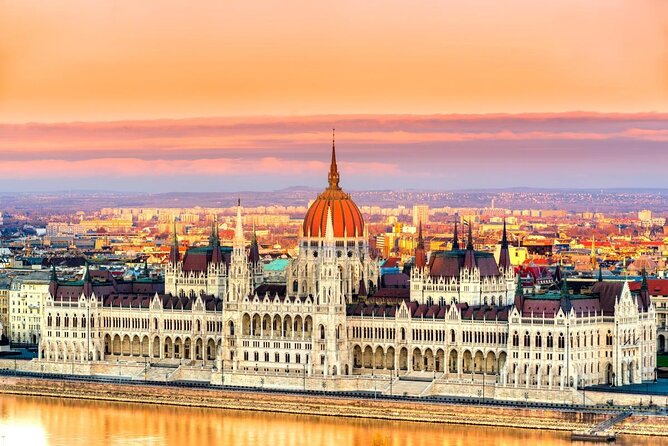
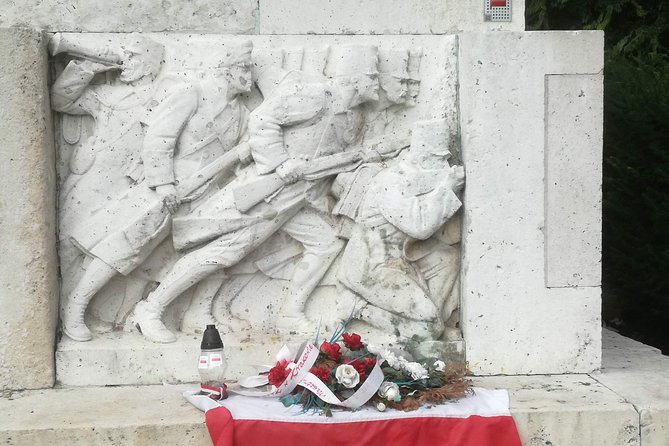
The walk starts near the Hungarian Parliament Building, with a subway ride to Kossuth Square. From there, you explore monuments connected to the 1956 revolution, then head toward Liberty Square where the conversation shifts to the Cold War.
This part works because it teaches you how to read the city’s “public messages.” You will look at the mix of official Hungarian space, Soviet presence, and Western references that show up in the same broad area. The tour also points out details tied to specific figures and institutions, including the US Embassy area and a monument to the Soviet Army.
A few landmarks here are particularly useful for first-time visitors because they stop you from treating everything as generic “old architecture.” You get a guided look at the statue of Ronald Reagan and a reference to an atomic shelter. Even if you do not know much Cold War history going in, the guide’s explanations help you understand why those objects and sites were placed where they are.
Timing-wise, this stop is long enough to slow down and look, but not so long that you lose the thread. The tour also keeps the day moving by bundling this block of sites into one coherent segment, which is exactly what you want in Budapest.
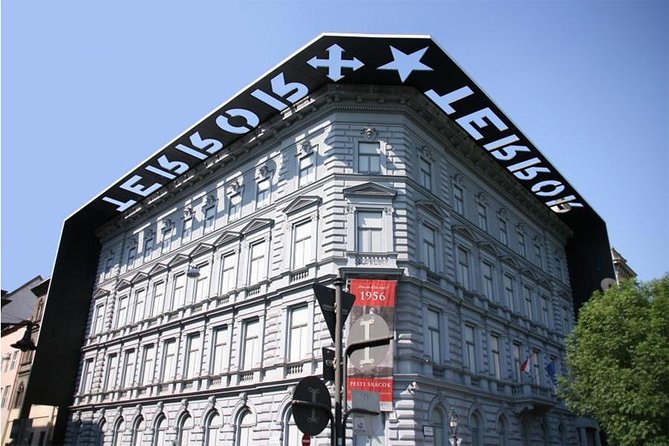
House of Terror Museum: impressive from the outside, and powerful in context
After the Parliament and Liberty Square area, you end the tour route outside the House of Terror Museum. This is one of those buildings that feels like it is already explaining itself, even before you step inside.
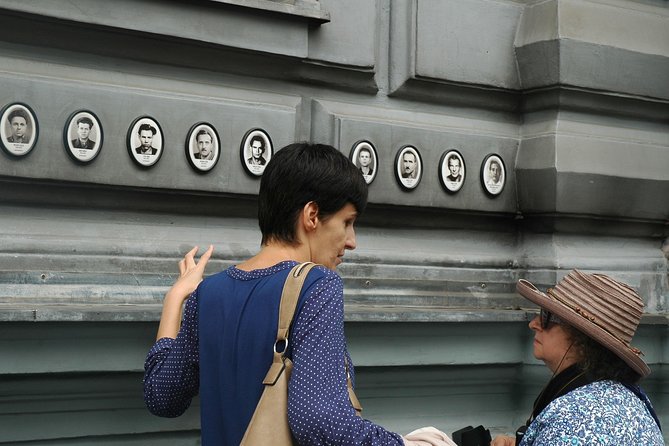
The tour uses it as a capstone. You will spend time outside the museum, with a slab associated with the Berlin Wall visible in front. That small detail matters, because it adds an instant sense of scale and connection, showing how communist repression connected across borders.
Important note: the exhibit inside is not part of the tour. That means you do not get the museum’s full interpretive experience as part of this ticket. Still, as a place to process what you learned, it is a strong finale.
One practical consideration: you will likely want to take a photo, then pause. Do that. The outside-only approach is not a “cop-out,” it is a deliberate transition from streets and monuments to a heavier site of memory. If you are the kind of traveler who prefers to avoid museum queues on a tight schedule, this works well. If you want the full indoor version, you can add time after.
Puskas Stadium area: socialist realist propaganda in plain sight
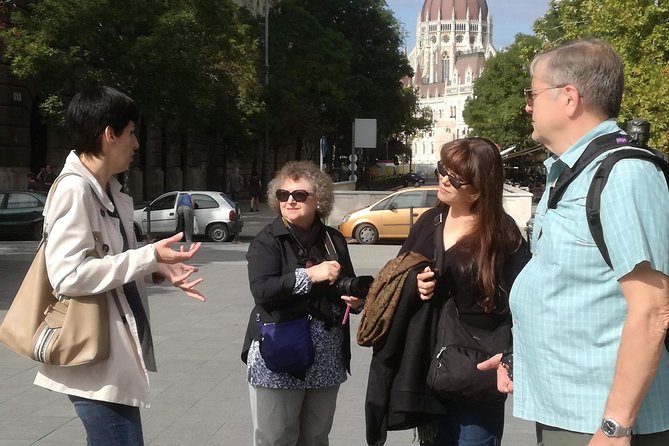
Next you head to the former People’s Stadium, now Puskas Soccer Stadium. Even if you are not a soccer person, this stop is worth it because it shows how the regime used public-facing buildings to project ideology.
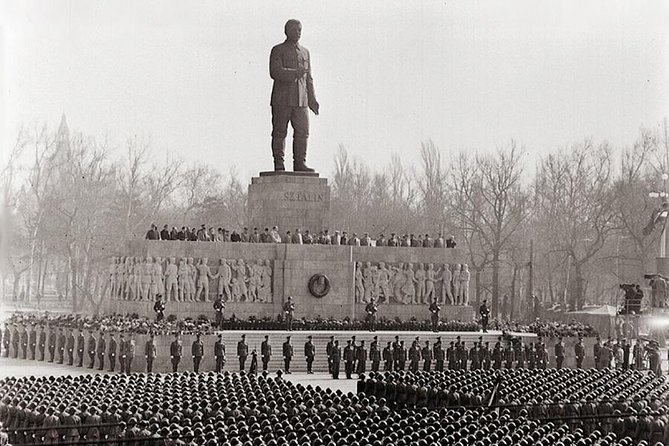
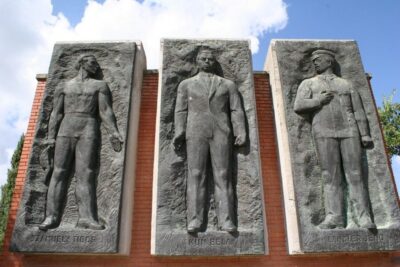
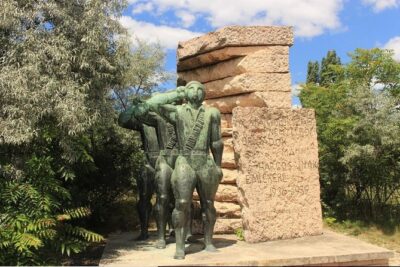
You will see classic socialist realist statues still standing. The tour frames them as propaganda style, heavy-handed and designed to communicate authority. That is the key point for me: you learn to spot propaganda not as an abstract concept, but as something built into the setting.
A good outdoor stop is one where you can look and think without needing to pay for a separate ticket. This one fits that. Admission is listed as free, and the visit time is enough for you to see the statues and get the explanation.
Drawback to keep in mind: if you want lots of interior access, this stop is mostly about what is visible on and around the stadium. You will get context from the guide, but the physical environment is what does most of the work.
Other Budapest bookings worth a look
- Budapest: Buda Castle Walk with Saint Stephen’s Hall
★ 4.5 · 3,012 reviews - Budapest: Buda Castle District Walking Tour
★ 4.6 · 2,108 reviews - Budapest City Landmarks Walking Tour in 2 Hours
★ 5.0 · 2,048 reviews - 3-Hour Orientation Walking Tour of Buda and Pest
★ 4.8 · 1,834 reviews
The Ronald Reagan statue: why Hungary thanked a US president
One short stop in the route is the Ronald Reagan statue. It might sound odd at first, since this is a communist history tour. But that is exactly why it is useful.
The guide explains the Hungarian sense of obligation to Reagan for his role in efforts that helped bring down the Iron Curtain. That gives the story more balance than a strict East-versus-West narrative. Instead of treating the Cold War as only Soviet pressure, you learn how local perspectives interpreted Western political pressure and support.
This stop is quick, but it is memorable because it reorients your assumptions. You are not just collecting communist symbols, you are learning how the endgame and the credit assignment were discussed and shown in the public sphere.
Bem József Square: the uprising begins, plus a 1960s coffeehouse interior
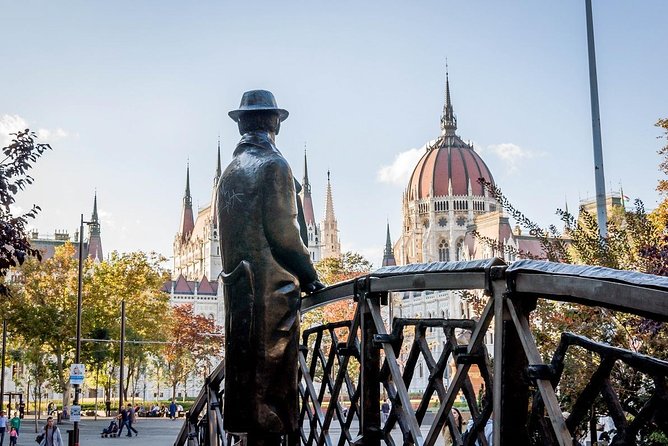
The tour ends with time at Kossuth Lajos Square, including a look at Bem József Square. This is tied to a specific moment: it is where the first big demonstration of the 1956 uprising started.
That detail changes how you experience the space. Instead of treating a square like a backdrop, you treat it like a stage where people acted. The guide connects the location to the uprising’s early momentum, and that helps the whole tour feel less like a list of monuments and more like a timeline you can walk through.
You also get a practical little bonus here: a coffeehouse on the square that has retained its original interior from the 1960s. That is the kind of detail that makes the city feel lived-in rather than staged for tourists.
The drawback is obvious but worth stating: this is not a long break. You might want a quick coffee or a look around, but plan to keep moving because the tour has a set arc and concludes at the House of Terror area.
Small-group historian hosting, and the guides who make it click
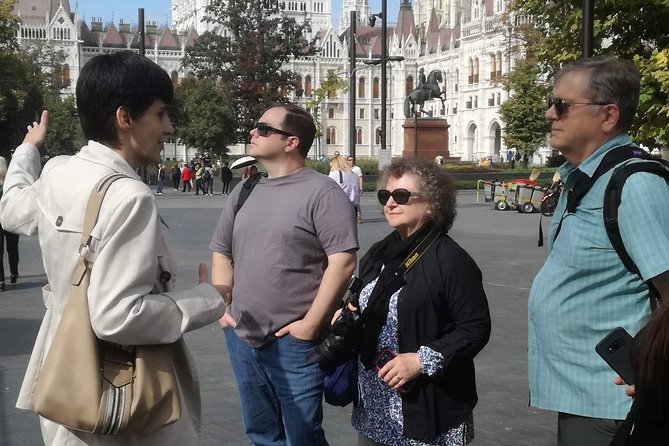
This is where the tour really earns its reputation. The size is intentionally tight, and that matters for this topic. When the group stays small, you can ask questions and get answers that fit what you are actually looking at right now.
The guides are described as local historians and enthusiastic hosts. In my experience with tours like this, the difference between a good guide and a great one is whether they can explain heavy topics without turning them into a lecture. Names from past tours include Andras and Kata, and the consistent message is that they handled questions with depth and kept the conversation practical, not just academic.
I also like that the hosting is not only about facts. You get a sense of what life under communist rule meant, not just how governments behaved. That is a crucial distinction. You leave with an understanding that is easier to carry into the rest of your Budapest days.
The walking and subway rhythm: what it feels like in real time
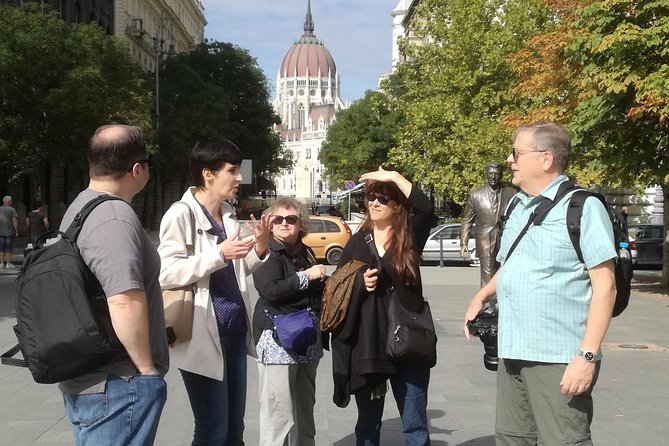
The route is a mix of walking and one short subway transfer early on. That is a smart design for a topic-heavy tour because it reduces fatigue and keeps everyone focused on the next landmark.
Start point is Frankel Leó út 2-4, 1027 Hungary. The tour finishes outside the House of Terror Museum, Andrássy út 60, 1062 Hungary. Ending outside the museum is convenient if you want to keep exploring that area independently afterward.
You are also told the guide can help you buy Budapest tram and metro tickets if you do not already have a visitor pass. That is a small service, but it matters on day one when you are still figuring out how the transit system fits your itinerary. You will also receive a mobile ticket, so check-in is simple.
One practical tip from the structure of the tour: wear comfortable walking shoes. Three hours in Budapest adds up, even with frequent stops. Bring water too, especially if you book the afternoon departure.
Price and value: what $126.50 buys you here
At $126.50 per person for roughly three hours, this is not a budget-only walk. But the value is not just the topic, it is the format.
You get a guided walk in the company of a historian, in a small group setting. That is what turns the route into something you actually remember. If you tried to self-guide this, you would likely know a few names but you would miss the connective tissue that makes the symbols and sites click.
Also, several segments are listed as free in terms of ticket needs for the outdoor stops. The only notable paid element you might add on your own is the House of Terror Museum interior, which is not included in the tour experience. So think of the price as covering expert guiding and site time, not museum admissions.
If you love history and want it tied directly to what you can see outside your window, this is a fair spend. If history-heavy tours drain you, you may feel the cost more strongly.
Who should book this, and who might skip it
Book it if you want to understand Budapest beyond the postcard stuff. This is ideal for you if you like learning through place, if you care about political history and public symbolism, and if you want context that makes other stops across the city easier to interpret.
It is also a good fit if you enjoy asking questions. The small group size makes it realistic to have back-and-forth conversation, which helps for a topic like communism where there is a lot to unpack.
Skip it if your main goal is easy sightseeing without explanation. Even though the tour includes important landmarks, it is built around interpretation, not just viewpoints.
Should you book the Communist Budapest Walking Tour?
If you are curious about how the city reflects communist rule and the Cold War, I would book this. The itinerary is tight, the guide is the star, and the ending near the House of Terror gives you a strong finish to the story.
My biggest “yes, but” is about the museum. If you want the full inside experience, plan extra time for the House of Terror Museum on your own after the walk. If you are good with outside context plus a guided storyline, you can feel satisfied without extra tickets.
Overall, this is one of those tours that can seriously change how you see a place. You will not just walk through Budapest, you will learn how its streets explain themselves.
FAQ
How long is the Communist Budapest Walking Tour?
The tour is about 3 hours long.
What does the tour cost?
The price is $126.50 per person.
What is included in the tour?
You get a 3-hour guided walk with a historian.
Is the House of Terror Museum included?
The tour concludes outside the House of Terror Museum. The exhibit inside is not included in the tour.
What are the start and end points?
The tour starts at Frankel Leó út 2-4, 1027 Hungary, and ends outside the House of Terror Museum at Andrássy út 60, 1062 Hungary.
What languages and group size should I expect?
The tour is offered in English. It is limited to six people for a personalized experience, with a maximum of eight travelers.
Can I get a refund if my plans change?
Yes. You can cancel for a full refund if you cancel up to 24 hours in advance of the experience’s start time.
Newest reviews from Budapest
- Private Tour Around Budapest★ 5.0 · 10 reviews
- Born Under The Red Star – Communist tour with Coffee in a Retro Bar★ 5.0 · 10 reviews
- Live virtual walking tour in the Buda Castle quarter★ 5.0 · 10 reviews
- Taste Budapest – Fat Boy Foodies Walk★ 4.5 · 10 reviews
- Wine & Food Tasting Cruise on the Danube★ 3.5 · 10 reviews
- Private Transfer from Budapest to Prague with 2 hours for sightseeing★ 4.5 · 10 reviews
- The Real Saw | Escape Room by PÁNiQ SZOBA★ 4.1 · 10 reviews
- City Park True Crime of Hungary and Night Walk Tour in Budapest★ 5.0 · 10 reviews
Communist-Era History, compared.
3-Hour Walking Tour About Communism (Small Group)
Read our review →
Memento Park Visit with Private Trabant Transfer
Read our review →
Memento Park: Official Guided Tour with Entry Ticket
Read our review →
Browse the lists this tour appears in