
Reviewed · COMMUNIST-ERA HISTORY
Communist Budapest Walking Tour
This tour is interesting because Budapest lets you read communist power in real places, from protest squares to Cold War stone markers and apartment blocks. I love Bem József Square for how it frames the 1956 uprising, and I love the Social Realist statues at Puskas Stadium because you can see ideology as public art. The main drawback is simple, if you already know the Hungarian timeline well, you might want more on daily life details than you get from the core stops.
In practice, it moves at a relaxing pace with a live historian guide. If your guide is Andras, you may notice he can adapt the route to what you already know, then slow down when your group wants more context.
Key Points You’ll Care About
- 1956 at street level, with Bem József Square and Kossuth Square tied to the uprising’s key moments
- Cold War geography, at Freedom Square with the US embassy, Soviet army monument, Ronald Reagan statue, and an atomic shelter entrance
- Everyday communism in housing, including why 1970s estates felt like progress to young families
- Social Realism as propaganda sculpture, seen at the former People’s Stadium, now Puskas Soccer Stadium
- A guided then-and-now contrast, using an iPad plus old photos to compare Stalin-era looks with today
Reading Communist Budapest in 3 Hours, One Stop at a Time
Budapest is a city of layers. This walking tour focuses on one layer that can feel abstract until you stand in front of it: how Hungary lived through decades of totalitarian control, and how that control shaped daily life, public space, and even what counted as acceptable art.
What makes this experience worth your time is that it does not just point at big monuments. You walk through the mechanics of the era. You start with protest history, shift to Cold War messaging in stone, then move into the physical reality of housing and public ceremonies. By the time you reach the House of Terror, the story has moved from slogans to consequences.
One practical note: it’s about 3 hours on foot and transit. You will do real walking, plus a few short rides, so plan for comfort shoes and an appetite for discussion.
More of the communist decades:
- Budapest: Communist History Tour with House of Terror Option
★ 4.8 · 182 reviews - Communism in Hungary with a Historian
★ 5.0 · 70 reviews - Budapest: 3-Hour Walking Tour About Communism (Small Group)
★ 4.7 · 70 reviews
Bem József Square: Where the 1956 Uprising Gets Real
The tour begins at Bambi Eszpresszó on Frankel Leó út, a handy meeting point because you can get there before you start thinking about politics. From the first stop, the guide anchors the communist era to a turning point people still remember: the first large demonstration of the 1956 uprising.
Bem József Square matters because it shows what political control looks like when it faces resistance. It is not a textbook date. It’s a place where pressure, public courage, and fear all meet in one public space. Your guide’s job here is to connect the dots between the ideology of the regime and the reality of people trying to change their situation.
A nice extra at this stage is a coffeehouse stop with an interior kept in its original form from the 1960s. Even if you only spend a few minutes there, it helps you “zoom out” from protest to everyday life under communism. You start to notice how normal routines continued while the bigger system controlled what could be said, built, and celebrated.
Kossuth Square and Parliament Area: Revolution, Monuments, and Memory
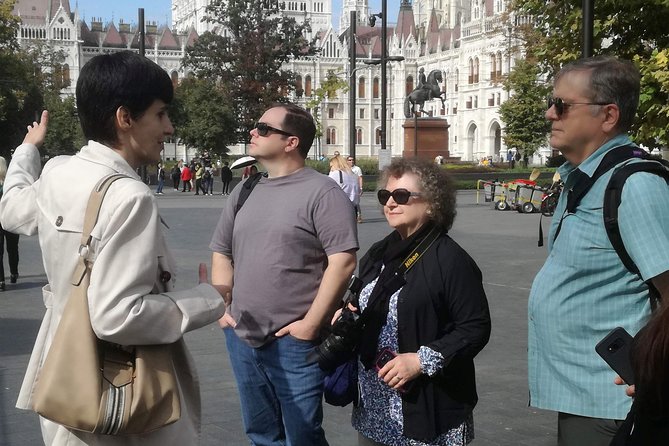
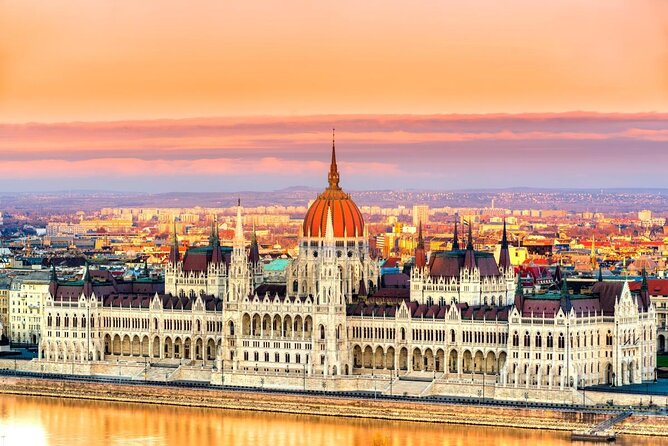
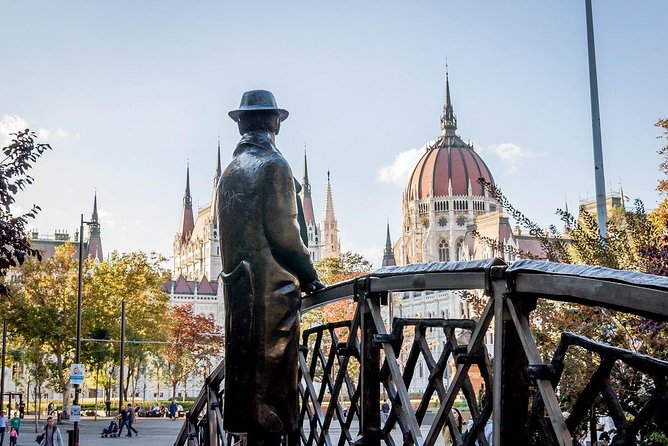
Next you head toward Kossuth Square, and the tone shifts from uprising sparks to public symbolism. This square is tied to important events during the 1956 revolution, and the area around Hungary’s Parliament turns the story into something visible and permanent.
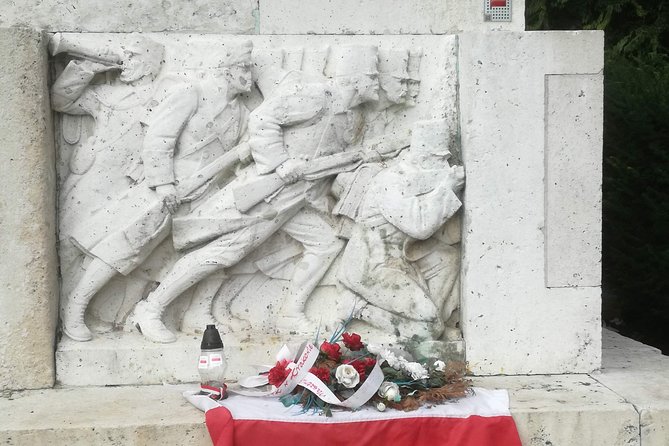
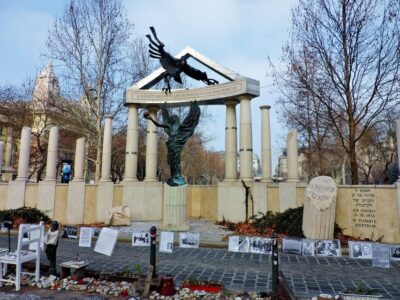
In front of Parliament, you see monuments that bear witness to both the political and armed conflicts of 1956. That is the key point: communist-era Budapest did not erase history so much as it fought over what history should mean. The monuments become a kind of public argument, the stone version of who gets credit, who gets blamed, and what kind of future the state claims to represent.
Your guide’s style matters here. A good historian guide helps you read these markers without getting lost in dates. The goal is to understand the relationship between power and public space. The revolution is not just a chapter in a book. It’s a lens for how monuments and memorials function in Hungary.
Freedom Square: Cold War Symbols in Four Pieces of Stone
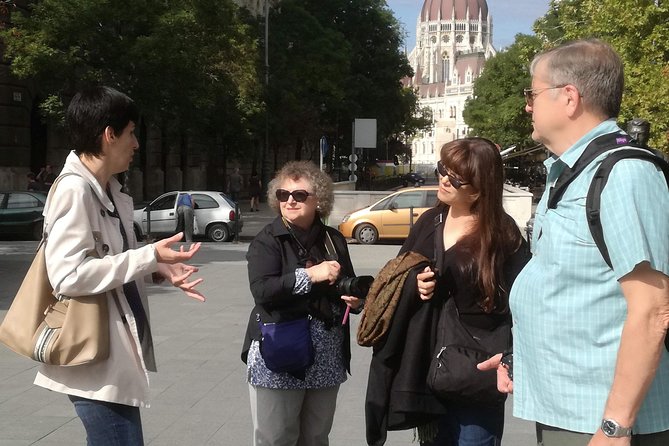
One of the most striking segments is the walk to Freedom Square, where Cold War messaging is placed right in front of you like a set of cues. Here, the tour highlights four stone structures tied to major external powers and the era’s fear culture:
- the US embassy
- a monument to the Soviet army
- a statue of President Ronald Reagan
- the entrance to a secret atomic shelter
This is where the tour becomes more than local history. You see how Budapest’s communism played out in a wider system of influence. Even before you reach the darker museums later, Freedom Square gives you a visual map of intimidation and diplomacy.
If you like places where history can be read without special effects, this stop delivers. You can stand in one location and understand how the city communicated to its residents and to the world. It’s a reminder that during the Cold War, “freedom” was not a single idea. It was a contest, argued with buildings, monuments, and hidden doors.
Other Budapest bookings worth a look
- Budapest: Buda Castle Walk with Saint Stephen’s Hall
★ 4.5 · 3,012 reviews - Budapest: Buda Castle District Walking Tour
★ 4.6 · 2,108 reviews - Budapest City Landmarks Walking Tour in 2 Hours
★ 5.0 · 2,048 reviews - 3-Hour Orientation Walking Tour of Buda and Pest
★ 4.8 · 1,834 reviews
1970s Housing Estates: The Comfort of Progress Under Control
After the squares and memorials, the tour takes you to the edge of the city center for a very different kind of communist evidence. You ride the metro out to 1970s housing estates, where the apartment blocks may look drab and grey today.
But your guide frames why they mattered: at the time, young Hungarian families were genuinely overjoyed to receive an apartment there. The difference was practical. Elevators and modern conveniences that were rare in older Budapest neighborhoods suddenly became part of everyday life.
This is one of the tour’s best balancing acts. It does not pretend daily comfort cancels oppression. Instead, it shows the uncomfortable truth that people can experience improved living conditions while the political system still limits freedom. Communism did not only build fear. It also built housing, jobs, and routines that made life easier in certain ways.
When you walk the estate surroundings, pay attention to what the guide asks you to look for. It’s easy to reduce the story to a grey landscape. The better view is how modern amenities created hope, while the broader system demanded obedience on the big issues.
Puskas Soccer Stadium and Socialist Realist Sculpture
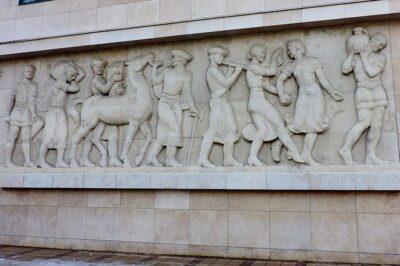
Next comes a location many visitors remember for sports, but this tour makes it political. The former People’s Stadium, now Puskas Soccer Stadium, is one of the places where you can see typical Socialist Realist statues tied to the communist state’s idea of a bright future.
These sculptures portray heroic workers, soldiers, and intellectuals, always pointing in the direction the regime wanted society to go. The style is instantly recognizable once you train your eye. It’s not art meant to be confusing. It’s art meant to be understood at a glance, the kind of message you can absorb while going about your day.
Your guide’s job here is to explain why Socialist Realism worked as propaganda. You do not need to read a speech. You just need to walk past the statues and absorb the same message again and again: the state’s version of dignity, the state’s version of progress.
If you’ve ever wondered how ideology enters daily life without asking permission, these statues answer it. They turn political values into physical form, placed where the public can see them.
Dozsa György Street and the Stalin Trolleybus Contrast Walk
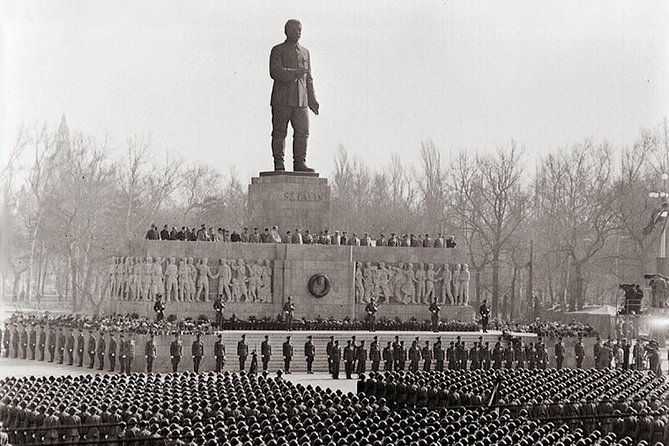
To keep the story moving forward, the tour includes a short ride on one of Stalin’s trolley buses to Dozsa György Street, a wide boulevard used for May Day parades.
That detail matters. Big events like May Day were not only celebrations. They were choreographed demonstrations of unity. The boulevard space itself was part of the political performance, built to hold crowds and to make the state’s presence feel unavoidable.
Your guide then layers in a visual comparison using an iPad and old photos. This is one of the most helpful tools on the whole tour, because it stops the mind from guessing. You get to compare how the streets looked during the Stalin era with how they look now, and you can spot what changed and what stayed.
It also gives you an easy takeaway for Budapest beyond the tour. When you walk around later on your own, you’ll likely notice where the city has kept older lines of planning, even when the buildings and signage changed.
House of Terror: Former Secret Services, Berlin Wall Reminder
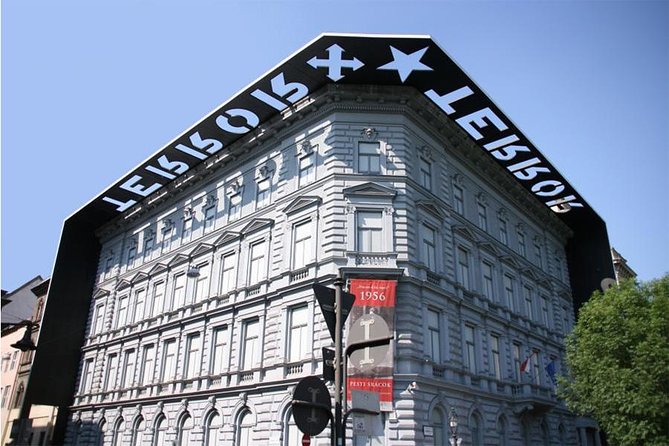
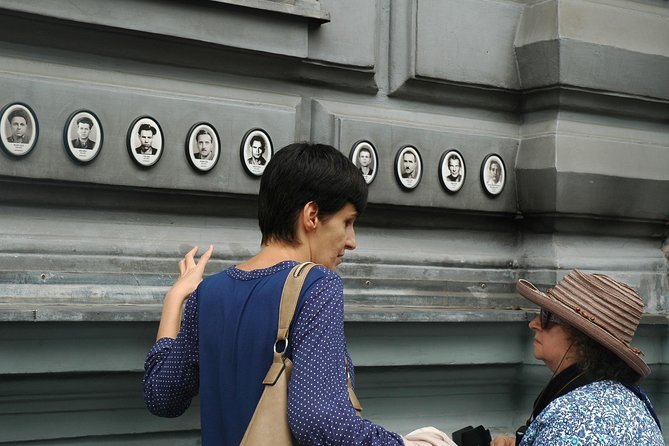
The final anchor is the House of Terror museum, located in the former headquarters of the secret services. This is where the tour stops being about symbols and becomes about outcomes.
The museum commemorates the crimes of communism, with emphasis on the Stalinist years. That focus is important because it helps you understand the distinction between political theory and the machinery used to enforce it.
In front of the building, you also see a slab connected to the Berlin Wall. It serves as a blunt reminder that Budapest’s communist experience was part of a larger European system of surveillance, fear, and repression.
Even if you only read a few exhibits during your stop, this final segment gives you emotional grounding for everything you saw earlier. The squares and statues told you what the system claimed. The museum tells you what the system did.
Price and Logistics: Does $123 Feel Like Good Value?
The tour costs $123 per person and runs 3 hours with a live English-speaking historian guide. For that price, you get an organized route to specific sites, plus interpretation that connects the dots between 1956, Cold War messaging, everyday life, and the regime’s darker side.
In real terms, you are paying for two things:
1) access to a thoughtful guide who can connect monuments to human experience
2) time saved from figuring out what each place actually means
One catch that matters for your budget and planning: tram and metro tickets are not included. If you don’t budget for public transit fares, the final cost creeps up a bit. On the other hand, the route is designed to be efficient, so you are not paying premium time for long detours.
Group size also affects value. The experience offers private or small groups, so you are more likely to get a conversation instead of one-way lectures. The overall pacing is relaxed, which helps you retain what you learn instead of just collecting photos.
Who This Tour Suits Best (and Who Might Want a Different Fit)
This is a great choice if you want a structured way to understand communist Budapest without getting stuck in facts you can Google later. It’s especially good if you care about how politics shows up in urban design, public ceremonies, and public art.
It also fits well if you want something more than a generic “buildings and dates” tour. The housing estate stop brings the story down to daily comfort, and the Social Realist sculpture stop gives you a visual language for ideology.
If you already know Hungarian history from the WWII to 1989 window, you might find parts of the story move fast through the basics. In that case, I would still book, but I’d go in with a clear goal, like asking your guide to focus on daily life mechanisms, or on how Cold War symbolism was staged in Budapest.
Should You Book This Communist Budapest Walking Tour?
I think you should book if you want a guided, site-based story of communism in Budapest, not just a list of landmarks. The combination of 1956 locations, Freedom Square Cold War signals, 1970s housing reality, Socialist Realist sculpture, and the House of Terror creates a clear arc.
If you are price sensitive, budget for the fact that tram and metro tickets are extra. And if you already have a deep background in the era, you may need to engage actively, ask questions, and request more emphasis on everyday life details.
If you match those conditions, this tour is an efficient, memorable way to see a side of Budapest most people only understand in broad strokes.
FAQ
How long is the Communist Budapest Walking Tour?
It lasts about 3 hours.
Where does the tour start?
The meeting point is Bambi Eszpresszó, Frankel Leó út 2/4, 1027 Budapest, Hungary.
What’s included in the price?
The tour includes a 3-hour walking tour and a historian guide.
Are tram and metro tickets included?
No. Tram and metro tickets are not included.
What language is the tour guide?
The tour is offered in English.
Is the tour private or in a group?
It can be private or in small groups.
Is there free cancellation?
Yes, you can cancel up to 24 hours in advance for a full refund.
Newest reviews from Budapest
- Buda Castle Private Walking Tour: A Kingdom of Many Nations★ 5.0 · 9 reviews
- Budapest Walking Tour: Explore Top Sights & Hidden Gems★ 4.5 · 9 reviews
- See the Hungarian Sea: Lake Balaton★ 4.5 · 9 reviews
- Transylvania Tour from Budapest to Bucharest: 4 days★ 5.0 · 10 reviews
- Luxurious, private day cruise with a waterlimousine to Szentendre★ 4.0 · 10 reviews
- Live virtual walking tour in the Buda Castle quarter★ 5.0 · 10 reviews
- Private Tour Around Budapest★ 5.0 · 10 reviews
- Born Under The Red Star – Communist tour with Coffee in a Retro Bar★ 5.0 · 10 reviews
Communist-Era History, compared.
3-Hour Walking Tour About Communism (Small Group)
Read our review →
Memento Park Visit with Private Trabant Transfer
Read our review →
Memento Park: Official Guided Tour with Entry Ticket
Read our review →
Browse the lists this tour appears in