
Reviewed · CITY TOURS
Budapest City Landmarks Walking Tour in 2 Hours
Budapest in two hours sounds impossible, but this walking tour is built for exactly that. You get a fast, human-scale introduction to Pest and the Danube, with practical stops that help you later plan which museums, viewpoints, and cafés are worth your time. I like that the guide blends big landmarks with small backstreet moments, and that you leave with clear context for what you are looking at, not just a photo list.
The main tradeoff is also the point: it is a short “see everything from close to close” format. You will admire major places, but you will not go inside the big ticket interiors, including the Szent István Basilica. If you want deep time inside churches or halls, you should pair this with other tours later.
Key points before you go

- Blue-flag guide meets you near Budapest Eye and keeps the route organized with map guidance
- Outdoor-first sightseeing with free-look stops and zero museum pressure
- Food and Hungarian language bites you can actually use the next day
- Danube segment includes serious memory at Shoes on the Danube Bank
- Route ends near Parliament, so you can keep exploring on foot right away
Why this 2-hour Budapest landmarks walk is such a smart primer
This is a good first-day activity when you want bearings fast. The route is shaped like a guided orientation: you start at Elisabeth Square near the Budapest Eye, then move through classic Pest squares and the riverfront, finishing at the Hungarian Parliament Building. That means your legs get a workout, but you do not end up backtracking all day.
I especially like how the guide sets the stage for the whole city. At the meeting point, you are not just told where to walk next. You get a tour that ties history, architecture, public art, and everyday society together, plus a bit of Hungarian culture and even basic language. It is the kind of overview that makes the rest of your trip feel more connected.
One more reason it works: it is paced so you still have the rest of your day. Even though the duration is listed as about two hours, the experience commonly runs closer to two and a half hours, then you are free to roam.
Other Budapest bookings worth a look
- Budapest: Buda Castle Walk with Saint Stephen’s Hall
★ 4.5 · 3,012 reviews - Budapest: Buda Castle District Walking Tour
★ 4.6 · 2,108 reviews - 3-Hour Orientation Walking Tour of Buda and Pest
★ 4.8 · 1,834 reviews
Price and value: what $3.63 really buys you
At $3.63 per person, you are not paying for admission tickets or long internal visits. You are paying for the guide, the structure, and the stories that help you interpret what you see. In other words, this is value-through-meaning, not value-through-access.
All the stops are listed as free, and even the big church stop is a look from outside. That matters. You avoid spending half your day waiting in lines, while still learning enough to choose where to go deeper later, like inside the Basilica proper or for a guided Parliament visit if it fits your schedule.
If you are traveling on a budget, this is one of those “buy once, use all trip” purchases. You will recognize streets, squares, and river views later because you walked them with an explanation.
Meeting at Elisabeth Square, spotting the guide, and starting without stress
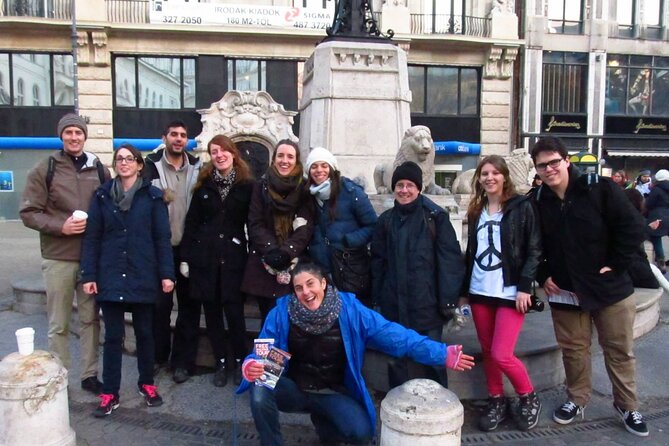
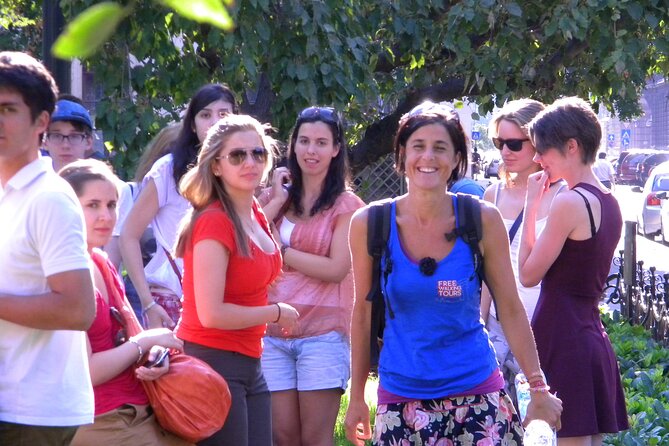
Meet at the Ferris Wheel of Budapest at Erzsébet tér, near the Budapest Eye (Elisabeth Square). The tour guide is licensed and shows up holding a small blue flag about 20 meters from the Ferris wheel area. That detail is small, but it saves real time. When you are in a new city, every minute you spend guessing the meeting spot is a minute you lose.
A practical note: guides and groups can look similar in busy public areas. Your best move is to arrive a few minutes early and scan for the blue flag, not just the crowd.
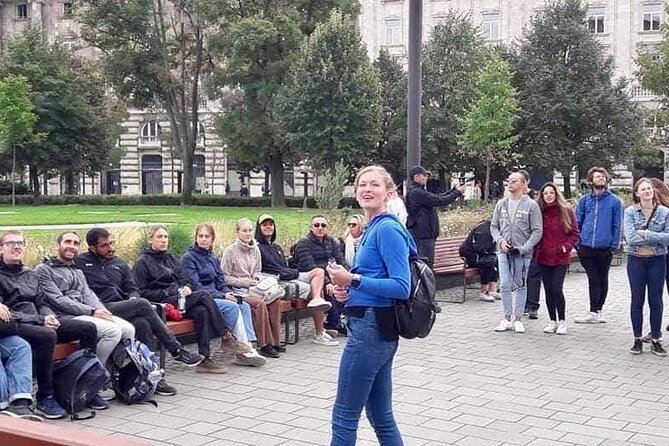
From there, the guide introduces the whole walking flow on a map. They also explain what you will cover, including iconic landmarks and some off-the-beaten-track backstreets.
The full route, stop by stop, and what each place teaches you
A different sort of Budapest afternoon:
- Budapest: City Highlights Sightseeing Cruise
★ 4.6 · 43,981 reviews - Budapest: Unlimited Prosecco, Beer and Aperol Spritz Cruise
★ 4.8 · 37,304 reviews - Budapest: Széchenyi Spa Day Ticket with Optional Upgrades
★ 4.3 · 23,911 reviews - Budapest: Nighttime or Daytime Sightseeing Cruise
★ 4.2 · 21,062 reviews
Erzsébet tér: Budapest Eye area and the tour’s city-wide mindset
Your first stop sets the tone. You begin at Elisabeth Square, and the guide frames Budapest as a layered city, not a single postcard. Expect stories about history and architecture, plus public art and local society, and practical tips like basic Hungarian language and what to eat.
This opening is valuable because it stops you from walking around clueless. After this first segment, many later sights make more sense, especially once you start seeing how buildings and neighborhoods reflect different political eras and cultural influences.
Szent István Bazilika (outside only): scale, style, and how Budapest repeats itself
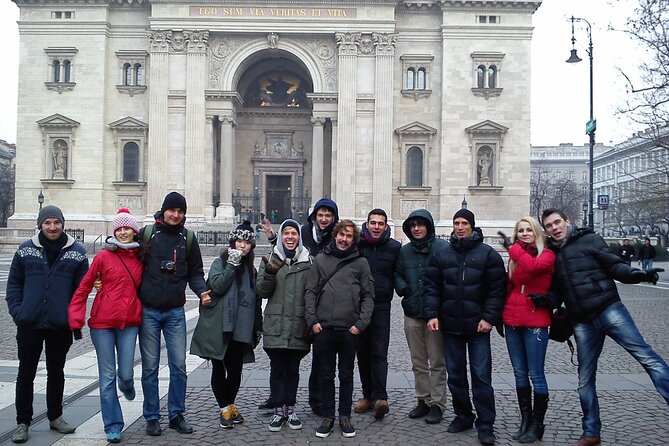
Next you reach Szent István Basilica, the largest church in Budapest, described here as seating about 8,500 people. The tour does not enter the basilica, but you still learn why it looks the way it does, how its architecture reflects different periods of splendor, and why it feels like Budapest itself.
The drawback is obvious: you do not get the interior. But the upside is that you get the context without the time cost. You can decide later if you want to return for the full church experience.
St. Stephen’s Square: public art with personality and real food guidance
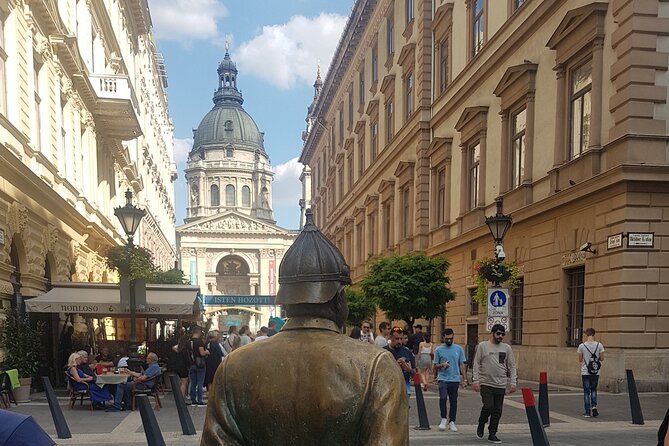
St. Stephen’s Square is where the tone gets playful. You will see public art featuring fat policemen with shiny bellies, and you will learn how Hungarian culinary traditions evolved, including a quick sense of what to eat in Budapest and how to avoid tourist traps.
I like this stop because it turns information into action. Even if you only remember one thing, food guidance is one of the best ways to make a city visit feel worth it. You are not only learning what to see, you are learning what to order.
József Nádor tér: Habsburg connections and porcelain you can spot from the story
At József Nádor tér, the tour shifts into objects and style. You learn about the most Hungarian Habsburg, and you also get pointed at two famous kinds of craftsmanship: Herendi hand-painted porcelain and Zsolnay colorful ceramic masterpieces.
This is one of those stops where a guide helps you look like a local. Without the story, you might walk past ceramic and porcelain displays without understanding why they matter. With the story, you can connect the design to prestige, trade, and cultural identity.
Vörösmarty Square (Vörösmarty tér): people-watching plus a ride through transit history
Vörösmarty tér sits at the end of the famous pedestrian street Váci utca, so it is a great people-watching moment. The tour also ties the square to transit history, pointing out that it includes a terminal for the second oldest underground in the world.
You will hear about neo-classical-style buildings and the posh Gerbaud café. You also get a seasonal cultural layer, including how Christmas markets and traditions work in Budapest.
The benefit here is timing. If you reach this stop mid-tour, it breaks up walking with an easy pause. It also helps you understand why these central areas draw crowds.
Danube embankment near Korzó: tram panoramas and UNESCO-sized views
The Korzó Danube Embankment stop is where the scenery starts doing the talking. You will learn about the first non-Communist statue in Budapest, and you will hear about the panoramic tramline in Central Europe. More importantly, you get a view thread across the river toward Castle Hill.
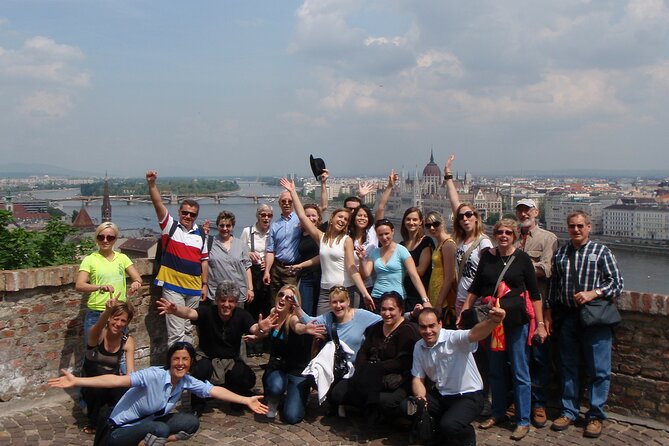
From the riverfront, you are pointed toward Matthias Church, Fisherman’s Bastion, Buda Castle, and Gellért Hill with the Citadel. The tour notes that many of these sights are on the UNESCO World Heritage list, which helps you understand why people travel across continents for what you can see from a simple walk along the water.
Tip: take a moment to let your eyes travel across the line from Castle Hill to the Citadel. Even if you do not plan to climb there today, you will know where you are headed later.
Little Princess Statue: the wish moment (and why it is worth doing)
There is a short stop at the Little Princess Statue, with a playful ritual: making a secret wish while touching the shiny knees. It is quick, but it gives you a reset in the middle of the tour.
I like it because it is not a lecture. You get a small human moment in a city full of monuments, and it helps the memory stick.
Vigadó tér: Franz Joseph and Sisi, plus the sound of famous names
At Vigadó Square (Vigadó tér), you learn about a coronation banquette connected to Franz Joseph and Sisi in the 19th century. The tour also places Budapest on the Central European music map by naming major musicians linked to performances, including Franz Liszt, Debussy, and Brahms.
This is another stop where context matters. Budapest has a habit of mixing politics, ceremony, and culture into one visual scene. After hearing the story, you start spotting those connections immediately.
Széchenyi Lánchíd (Chain Bridge): the story you can picture
A short stop at Széchenyi Lánchíd teaches the history of Pest and Buda through the Chain Bridge, described here as the first permanent bridge built in the city. You get the practical takeaway: bridges are not only transportation. They change how a city grows, how people meet, and how neighborhoods connect.
It is a small segment, but it is efficient storytelling. When you later look at the bridge from different angles, you will remember what it meant to build it permanently.
Gresham Palace: Art Nouveau details without needing a textbook
At Gresham Palace, you learn about a secessionist building from Budapest’s golden-age turn-of-the-century era. The guide explains the history and major ornaments of Art Nouveau style.
This stop is great for visual learners. If you enjoy architecture, you can later zoom in on specific details because you have been pointed toward what to look for.
Hungarian Academy of Sciences: Hungarian words, Nobel pride, and inventions
The tour pauses at the Hungarian Academy of Sciences for two things. First, you get Hungarian words and phrases you can use to impress friends. Second, you hear why Hungary has the largest Nobel Prize awards per capita, plus famous people of Hungarian origin and notable Hungarian inventions you might otherwise miss.
I like this stop because it breaks the usual “just look at buildings” walking tour mold. It gives you a sense of Hungary as a place that contributes to ideas and inventions, not only as a place with architecture.
Shoes on the Danube Bank: WWII memory you do not rush
This is the emotional core of the walk. The tour stops at Shoes on the Danube Bank, where 60 pairs of shoes commemorate the 60th anniversary of the Holocaust. You get WWII context, deportations, and the recent history of the Hungarian Jewish people.
The guide asks you to close your eyes and imagine individuals who died here, ranging from synagogue goers to assimilated Jewish people, from factory workers to factory owners, and across generations.
This stop is not about photos. It is about being present and letting the story land. If you need a moment, take one. If you are the kind of traveler who likes to process quietly, bring that energy here.
Hungarian Parliament Building: the final orientation and what to do next
The final stop is the Hungarian Parliament Building, where the tour ties in recent history, elections, and the neo-gothic architecture of the building. This is also where the guide provides useful recommendations for restaurants and nightlife, plus ideas for what to do on your next days.
It ends with a final orientation, which is exactly what you want at the end of a first walking day. You finish near a major landmark, and you can choose your next move without losing momentum.
What you should do differently because of this tour
This tour is not just a route. It changes the way you walk.
Afterward, you will be able to:
- Spot how buildings and squares connect to different historical periods
- Make smarter food choices, including what to eat and how to avoid tourist traps
- Decide which major sights deserve your money and time later
- Build a simple plan for the rest of your day, because you end near Parliament
Also, the tour includes both iconic landmarks and some off-the-beaten-track backstreets. That combination is key. Iconic sights give you the big picture, while side streets help the city feel real.
And yes, the guides often bring personality. Names that have led strong versions of this walk include Balázs and Sofia (Pest side and Buda side), plus Esther, Marton, Andy, Sophie, Endre, Emmy, Dora, Gary, Rita, and Judith. If your guide is using a speaker, you will usually hear the story clearly even when streets get noisy.
Who this tour fits best
I think this is ideal for:
- First-time visitors who want a city overview without spending a full day on transportation
- Budget travelers who still want a guided experience with real context
- People who enjoy architecture, public art, and food recommendations, and do not need to enter every building
- Travelers who like short structured walks but still want free time afterward
If you are a museum fanatic who wants to spend hours inside major sites, you should view this as the planning phase, not the finale.
Should you book Budapest City Landmarks Walking Tour in 2 Hours?
If you want a fast, friendly introduction that helps you stop guessing and start exploring, book it. The low price makes it easy to add early in your trip, and the structure helps you see a lot while keeping the rest of your day open.
Skip it only if your top priority is interior access. Since the Szent István Basilica is not entered, and the format is built around outside viewing and quick stops, you will need additional attractions to satisfy that kind of day.
FAQ
Where does the tour start and where does it end?
The meeting point is the Ferris Wheel of Budapest at Erzsébet tér, 1051 Hungary. The tour ends at the Hungarian Parliament Building at Kossuth Lajos tér 1-3, 1055 Hungary.
How long is the Budapest City Landmarks walking tour?
It runs for about 2 hours (approx.), with the overall pacing often felt as closer to two and a half hours.
Do we enter the Szent István Basilica?
No. You will learn about the basilica, but the tour does not enter the Basilica.
What language is the tour offered in?
The tour is offered in English.
Will I receive a ticket for this tour on my phone?
Yes. It includes a mobile ticket.
Is tipping required at the end of the tour?
Tips are not included in the price. The guides depend on donations at the end of the tour, and the amount is your choice.
Is the tour affected by weather?
Yes. This experience requires good weather. If it is canceled due to poor weather, you will be offered a different date or a full refund.
Is it suitable for most travelers, and are service animals allowed?
Most travelers can participate, and service animals are allowed.
Newest reviews from Budapest
- Private Tour Around Budapest★ 5.0 · 10 reviews
- Born Under The Red Star – Communist tour with Coffee in a Retro Bar★ 5.0 · 10 reviews
- Live virtual walking tour in the Buda Castle quarter★ 5.0 · 10 reviews
- Taste Budapest – Fat Boy Foodies Walk★ 4.5 · 10 reviews
- Wine & Food Tasting Cruise on the Danube★ 3.5 · 10 reviews
- Private Transfer from Budapest to Prague with 2 hours for sightseeing★ 4.5 · 10 reviews
- City Park True Crime of Hungary and Night Walk Tour in Budapest★ 5.0 · 10 reviews
- The Real Saw | Escape Room by PÁNiQ SZOBA★ 4.1 · 10 reviews
City Tours, compared.
City Sightseeing Hop-On Hop-Off Bus Tour & Extras
Read our review →


Hungarian Chimney Cake Workshop in the City Center
Read our review →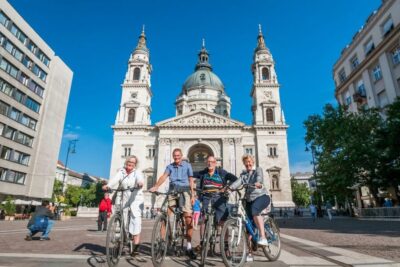
Browse the lists this tour appears in