
Reviewed · BUDA CASTLE
Buda Castle Walking Tour: A Kingdom of Many Nations
Budapest’s Castle Hill is so interesting because it feels less like a single site and more like a whole timeline you can walk across. I like that this is a small-group tour, so questions do not get lost. I also like the focus on how the palace area kept changing hands and roles, from medieval fortress to Renaissance court to Ottoman and Habsburg eras. One consideration: you will pay extra for Matthias Church and Fisherman’s Bastion entries.
You get a guided walk of about 3 hours, and the route runs on mornings or afternoons depending on the day. The meeting point is at Országház u. 31, near public transit, and you use a mobile ticket.
Key Things That Make This Buda Castle Walk Work

- Castle Hill, UNESCO area, on foot with narrow cobbled streets and major facades in sight
- A palace story that tracks real political power shifts over centuries
- Matthias Church interior and roof stop that is usually the emotional high point
- Fisherman’s Bastion views over the Danube, Pest, Margaret Island, and Gellért Hill
- Max 6 people per booking keeps the vibe friendly and flexible
- Guides who tailor the pace examples include Peter, Kata, Marianna, Veronica, and Runa Hellinga
Why Castle Hill Feels Like a Living Timeline
If you only see Budapest from the river or from broad city streets, you miss what makes the city tick at street level. Castle Hill is the opposite of a quick photo stop. It is a hillside neighborhood with a mix of styles, streets that feel older than the current city around them, and buildings that have been rebuilt more times than most people rebuild a kitchen.
This tour is built to help you connect those visual clues into a story. You start with the big, imposing shapes that people associate with royal power, then you move into the areas where you can sense the layering: Gothic and baroque facades, Ottoman rule traces, and later reconstructions after major damage in the 20th century.
I also like the way the route gives you context without turning into a lecture. The idea is simple: you should finish with a clear mental map of where authority lived, how it looked, and why it kept changing. That is how you start noticing details on your own, even after the tour ends.
More of the Castle District:
- Budapest: Buda Castle Cave Tour
★ 4.7 · 5,677 reviews - Budapest: Buda Castle District Vampires and Myths Night Tour
★ 4.6 · 3,830 reviews - Budapest: Buda Castle Walk with Saint Stephen’s Hall
★ 4.5 · 3,012 reviews
The $126.15 Price Tag and What You Really Get
At $126.15 per person for about three hours, this is not a budget stroll. But it is also not priced like a private guide for one household. You are paying for a professional guide, the small-group format, and a route that hits the most meaningful parts of Castle Hill efficiently.
The value is strongest if you fall into one of these groups:
- You want the key history without spending your vacation searching for it
- You care about architecture and want help spotting what style means
- You like conversation, not just a list of dates
Two things push this toward good value. First, the group size is capped low, so you are less likely to feel like a spectator in a larger crowd. Second, the tour is designed around major stops in a tight area, with timed segments that help you keep moving.
The only real cost wrinkle is that tickets for Matthias Church and Fisherman’s Bastion are not included. That is normal for tours in this area. Just plan for it so the pricing feels transparent instead of surprising.
The 3-Hour Route That Makes the Hill Feel Manageable
Castle Hill can trick you. It looks compact on a map, but once you start walking the cobbles, changes in elevation, and the fact that you are moving between viewpoints and churches, the time adds up fast. This tour keeps it under control by using a tight route and repeating the most important historical anchor points in the right order.
You will also get a sensible flow. You begin near the palace core, then widen out to places connected with Hungary’s state power, then you reach the two ticketed highlights that people remember most: Matthias Church and Fisherman’s Bastion. Finally, you end at Vienna Gate with a long view toward Old Buda, including the Roman city of Aquincum’s footprint in the background.
Walking the Sites, Stop by Stop, Without the Guesswork

Other Budapest bookings worth a look
- Budapest: Buda Castle District Walking Tour
★ 4.6 · 2,108 reviews - Budapest City Landmarks Walking Tour in 2 Hours
★ 5.0 · 2,048 reviews - 3-Hour Orientation Walking Tour of Buda and Pest
★ 4.8 · 1,834 reviews - Budapest: 3-Hour Grand City Tour and Castle Walk
★ 4.3 · 1,437 reviews
Stop 1 and 2: Buda Castle, Palace Power, and the Layers of Rule
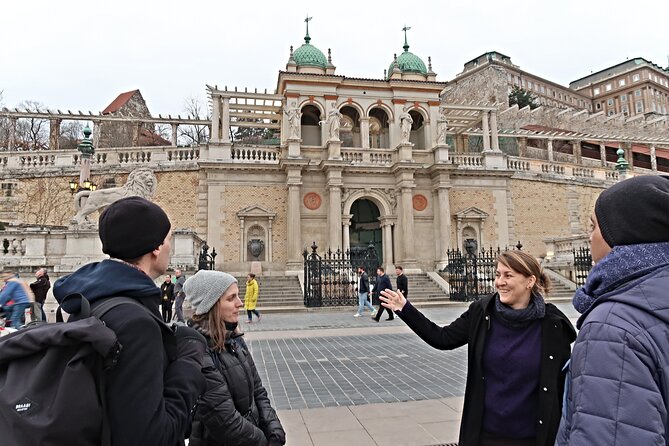
You start on Castle Hill around the palace zone, where two buildings tend to define the view right away. There is the massive palace on the hill’s southern tip, and then there is Matthias Church with its colorful roof and the church tower pointing upward like a landmark for navigation.
Even when you are not buying a ticket for everything, this area delivers. The palace buildings are visible and imposing, and the facades give you a quick sense of why this was such a symbolic place to control. The guide’s job here is to connect what you see with what happened.
The story you will hear includes how the site was used and reshaped across major turning points. King Béla IV is connected with early fortress building on this spot after Mongol devastation. Then the Renaissance period and King Matthias shift the tone toward a famous European court at the end of the 15th century. After that come Ottoman rule by Turkish pashas for a long stretch, followed by Habsburg emperors.
One practical note: the tour gives you a discussion of how the building’s function kept changing, so you are not just standing in front of walls. You should walk away understanding that this is not one “castle moment.” It is a long, messy story of power.
Stop 3: Sándor Palace and Hungary’s Modern Seat of Power
Next you move toward Sándor Palace, which is the official residence of the President of Hungary and the seat of the Office of the President. This is a short stop, but it does something important. It grounds the story in the present.
The original palace is tied to 1806 and is described as Neoclassical. That helps you see how Hungary’s political identity continues, even if the monarchy-era buildings around you are the ones most visitors focus on.
The biggest benefit of this stop is perspective. It reminds you that Castle Hill is not only about crowns and invasions. It is also about modern government, and the hill continues to carry authority.
Stop 4: Matthias Church, the Roof You Notice First
Matthias Church is often the moment when the tour becomes unforgettable. You will spend time on the outside impression first, then you can access the interior, which is an extra-cost stop.
The church is famous for its richly decorated roof and a striking Neo-Gothic reconstruction look from the end of the 19th century. Translation: the building you see is not “frozen” medieval architecture. It is a later style choice that still aims to feel grand and historic.
This stop is also a big deal because Matthias Church is tied to Hungarian kings, including the coronation setting. Even if you are not a royal-history person, that association adds meaning to the scene.
The tradeoff is obvious and simple: this is a ticketed stop. If you hate paying separate entrance fees, you will feel it here. But if you like architecture and interior space, it is usually the part you will be glad you did.
Stop 5: Fisherman’s Bastion Views Over the Danube
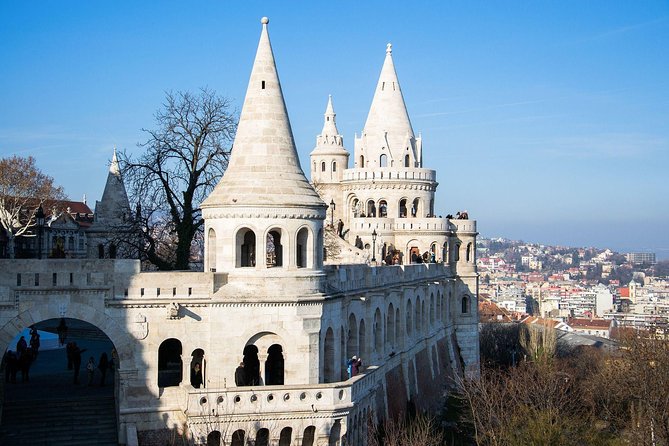
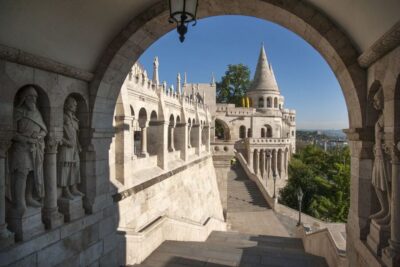
After Matthias Church, you head to Fisherman’s Bastion, an architectural fantasy built between 1895 and 1902 in Neo-Gothic and Neo-Romanesque styles. The key detail that makes this more than a pretty terrace is the symbolism: the seven towers represent the seven Magyar tribes that settled in the Carpathian Basin at the end of the 9th century.
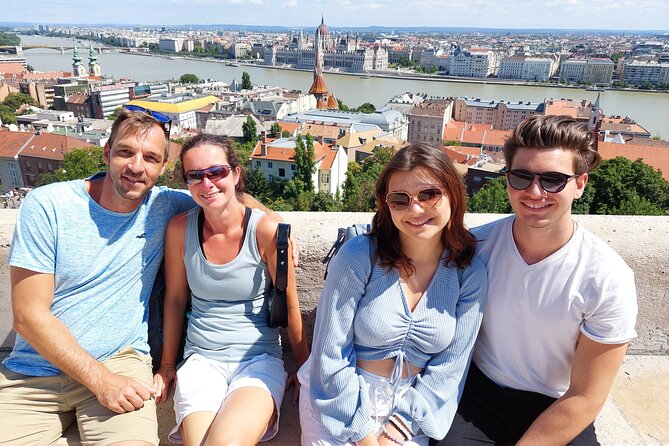
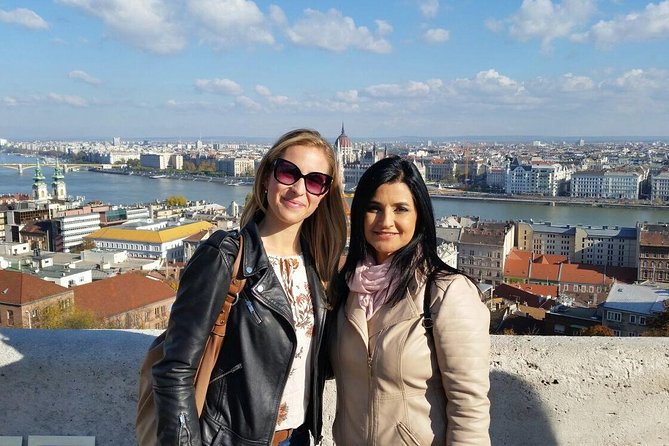
Then you get the reason most people come here. The terraces give one of Budapest’s most famous panoramas: the Danube, Margaret Island, Pest, and Gellért Hill.
I like this stop because it is a break from history talk without losing the story. It is history as skyline. You can stand and orient yourself, then realize Budapest spreads out in a way that connects both sides of the river.
Again, there is an extra ticket cost. But the payoff is a view you cannot replicate from most streets without climbing or aiming for a specific viewpoint.
Stop 6: Vienna Gate and the View Toward Old Buda
The walk ends at Vienna Gate. From here you can see all the way toward Obuda, where the Romans founded the city that was called Aquincum.
This final stop works best if you have been paying attention to the timeline. By the end, you should be thinking in layers: medieval fortress, Renaissance and Ottoman influence, Habsburg rule, post World War II changes, then Roman beginnings much further back in time.
It is a good way to close the loop. You are not just finishing a route. You are ending with a last view that puts the whole hill into a bigger map.
Ticket Stops: How to Plan for Matthias Church and Fisherman’s Bastion

The tour includes a guided walk, but tickets for Matthias Church and Fisherman’s Bastion are not included. You do not need tickets for every step because parts of the route focus on areas where entry is not required.
Here is the practical way to handle it:
- Bring a little extra budget for two ticketed attractions
- Give yourself time to slow down at the viewpoints, because the photos are not quick here
- If you are visiting in busy seasons, arrive ready for lines at the church and terrace
Should you skip anything? If you love views and architecture, I would not. Those two stops are the main “wow” moments built into the route, and they match what makes the Castle Hill area unforgettable.
What the Best Guides Do on This Walk
This tour’s biggest consistent praise is not only the sites. It is how the guide turns them into a coherent experience. Many people specifically highlight guides who adjust to the group, match their pace, and add personal context.
You may be guided by someone like Peter, Kata, Marianna, Veronica, or Runa Hellinga based on the day’s lineup. The key is the style: guides explain the history in a way that makes you feel oriented. They also answer questions patiently instead of rushing you to keep the schedule.
A couple of examples that show the real value:
- Some guides helped guests connect how to use public transportation in Budapest, which makes the rest of your day easier.
- Others shared smaller side stories, like local connections to the district, that help you picture how people actually lived here.
- A few guides specifically adapted the tour to match interests, so the history feels targeted, not generic.
Small-group tours can still feel stiff if the guide is rigid. Here, the evidence points to the opposite. You should expect a more human pace, especially with a max group size of six per booking.
Who This Tour Suits Best (and Who Might Want a Different Plan)

This tour is a great fit if you want:
- A first-time Castle Hill overview that is not just a checklist
- A guide to explain why the buildings look the way they do
- Time for a major panorama from Fisherman’s Bastion
- A smaller group so you can ask questions
It might not be your best match if:
- You hate paying separate entrance fees, because two major stops are ticketed
- You want a deep interior crawl of every royal building. This is a walking tour focused on key areas and viewpoints, not a full museum marathon.
Also, if you are the kind of traveler who enjoys doing a bigger city tour first and then using this as a more focused “insider” walk, you will likely get more out of it. The route is easiest to enjoy when you already have a basic sense of Budapest’s layout.
Should You Book This Buda Castle District Tour?
I think you should book it if your priority is understanding Castle Hill fast, with a guide who can connect the dots between architecture, political power, and changing occupants. The small group size is a real quality advantage, and the combination of Matthias Church, Fisherman’s Bastion views, and the palace-area timeline is a smart use of about three hours.
Skip it only if you are strictly ticket-averse or if you want a totally self-directed wandering day. In that case, you can still explore on your own. But you will miss the guided structure that helps you see what to look for, and why it matters.
FAQ
How long is the Buda Castle walking tour?
It is about 3 hours.
How much does the tour cost?
The price is $126.15 per person.
How many people are in the group?
It is a small group tour with a maximum of six people per booking, and a maximum of 8 travelers overall.
What is included in the price?
A 3-hour guided walk and a professional guide are included.
Are tickets included for Buda Castle, Matthias Church, and Fisherman’s Bastion?
Tickets for Buda Castle, Matthias Church, and Fisherman’s Bastion are not included. The stops for Matthias Church and Fisherman’s Bastion specifically note that admission is not included.
Where does the tour meet?
The start location is Budapest, Országház u. 31, 1014 Hungary.
Is the tour offered in English?
Yes, it is offered in English.
Newest reviews from Budapest
- Private Tour Around Budapest★ 5.0 · 10 reviews
- Born Under The Red Star – Communist tour with Coffee in a Retro Bar★ 5.0 · 10 reviews
- Live virtual walking tour in the Buda Castle quarter★ 5.0 · 10 reviews
- Taste Budapest – Fat Boy Foodies Walk★ 4.5 · 10 reviews
- Wine & Food Tasting Cruise on the Danube★ 3.5 · 10 reviews
- Private Transfer from Budapest to Prague with 2 hours for sightseeing★ 4.5 · 10 reviews
- The Real Saw | Escape Room by PÁNiQ SZOBA★ 4.1 · 10 reviews
- City Park True Crime of Hungary and Night Walk Tour in Budapest★ 5.0 · 10 reviews
Buda Castle, compared.
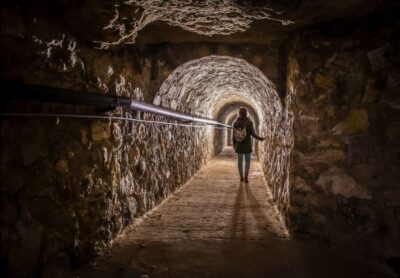
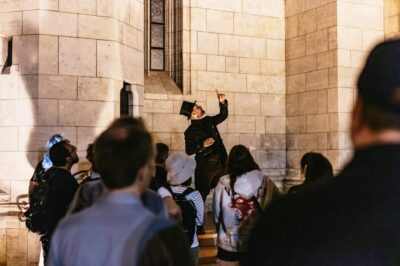
Buda Castle District Vampires and Myths Night Tour
Read our review →
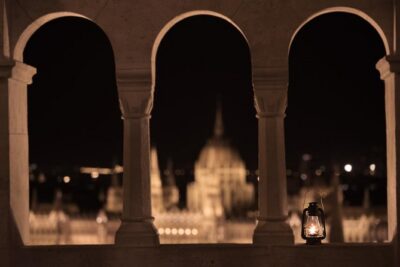
Buda Castle District Dark History, Legends and Vampire Night Tour
Read our review →
Buda Castle District Walking Tour with a Historian
Read our review →

Walking tour in the Buda Castle incl. Fisherman’s Bastion
Read our review →Browse the lists this tour appears in