
Reviewed · ART NOUVEAU
Budapest Art Nouveau Walking Tour
Budapest’s Art Nouveau is interesting because it turns everyday buildings into storytelling in stone, tile, and ironwork. I love seeing Ödön Lechner’s Postal Bank up close, the one people call Hungary’s Gaudi, and I love that Gresham Palace lets you view the entrance hall details inside, not just from the sidewalk. One drawback to plan around: a couple of key stops depend on the day, especially the synagogue on Saturdays.
You’ll also learn how Budapest’s version of Art Nouveau, often called Hungarian Secession, used porcelain and bold references to Asian motifs. That context changes how you look at the facades, because you start spotting the design logic behind the decoration. The tour is led in English by a historian, so you’re not just walking from pretty building to pretty building.
Logistics are pretty simple, with a 3-hour walking format and tram or metro tickets not included. If you do not want hotel pickup, the central meeting point is Madal Café on Alkotmány u. 4. The only real thing to watch is timing, since openings can shift by weekday versus weekend.
Key highlights to look for
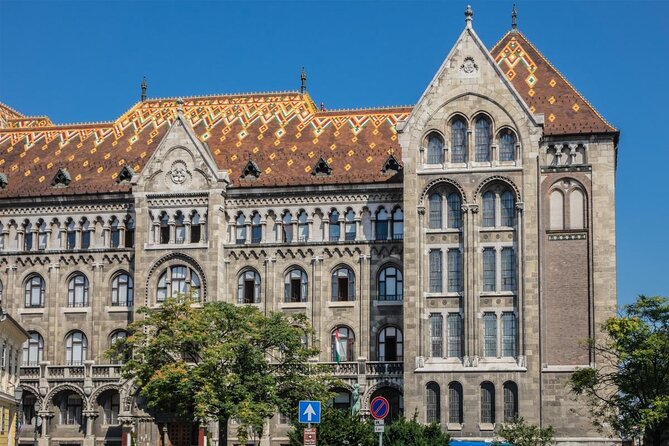
- Lechner’s Postal Bank: flamboyant Art Nouveau design, plus an entrance-hall peek where you can connect exterior to interior.
- Gresham Palace’s interior details: you get more than photos, you get an explanation for what you’re seeing.
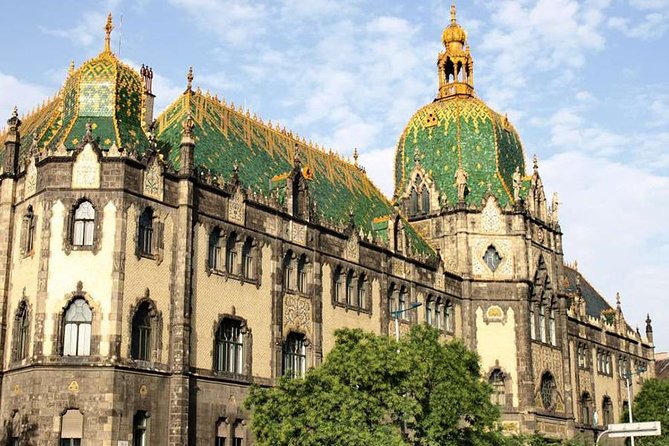
- Zsolnay porcelain tiles at Thonet House: ceramic design as architecture, not just decoration.
- Asian motifs with a clear explanation: you’ll learn why these elements show up in Hungarian Secession and wider Art Nouveau.
- Kazinczy Street Orthodox Synagogue: the tour’s finish point, known for an exquisite Art Nouveau interior.
- Day-dependent access: Hungarian National Bank is not enterable on weekends, and the synagogue is closed on Saturdays.
Why Budapest’s Art Nouveau feels different on a guided walk
Budapest has Art Nouveau in every direction, but without context it can blur together. A guided historian approach helps you learn the patterns fast, so you’re not stuck trying to guess what matters. You come away with a mental checklist: materials, motifs, and the specific local twist called Hungarian Secession.
I like that the tour is built around the idea that Hungary was not copying fashion from Vienna or Paris. It was making a sharper, weirder, more personal version of turn-of-the-century design. The guide’s job is to show you what to notice, then give the why behind it.
You also get a nice mix of “big showpieces” and smaller stops. That matters, because the lesser-known details are where you really feel the creative ambition of the era, especially when you’re looking at ceramics and references that designers borrowed from broader European Orientalism.
More Art Nouveau walks in Budapest:
- Private Art Nouveau Tour Budapest
★ 5.0 · 21 reviews - Art Nouveau Tour in Budapest: 3-Hour Private Tour
★ 4.6 · 21 reviews - Art Nouveau Treasures of Budapest – Exclusive Private Tour
★ 5.0 · 18 reviews
Price and value: is $123 worth it for 3 hours?
At $123 per person for a 3-hour walking tour, you’re paying for three things: a historian guide, a route that’s designed around specific interiors and facades, and time-saving context. You are not just paying for someone to point at buildings.
What you should know is what is not bundled. Tram and metro tickets are not included, and some sites may require extra entry fees. The tour can add the House of Hungarian Art Nouveau for 1000 HUF per person (about $3.50) and the Orthodox Synagogue on Kazinczy Street for 2000 HUF per person (about $7.00), depending on whether they are open on your day.
So the value question is really this: do you want a guided, art-focused route that teaches you how to read Hungarian Secession details? If yes, $123 feels reasonable, because the tour is structured around the most instructive stops, not just the most photogenic ones.
If you prefer to wander independently with a book, you may feel the cost is high. But if you want to understand why Ödön Lechner’s buildings look the way they do, and why Zsolnay porcelain and Asian motifs show up again and again, this format is the efficient way to get it.
How the 3-hour pace works in real life
The tour is a 3-hour walking route, and it keeps moving at a steady pace. That’s good if you want to cover several signature works without burning a full day. It’s also why good footwear matters more than fancy clothing.
Your start point depends on your option. Hotel pickup is optional, but if you choose a central meeting point, plan on meeting at Madal Café on Alkotmány u. 4. Using a fixed meeting point is handy, because it reduces the anxiety of finding a tour that starts at a moving target.
One practical tip: if you’re the type who likes to sketch or take close-up photos, factor in extra time for the entrance halls of the most important sites. The tour gives you those interior peeks, and you’ll want a moment to look slowly, not just glance.
The Postal Bank: where you see Lechner’s Hungarian Gaudi nickname
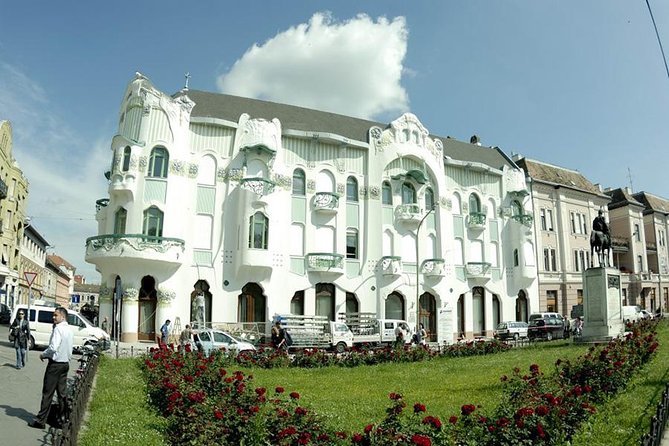
One of the tour’s core pleasures is stepping into the design world of Ödön Lechner. The Royal Post building, also known as the Postal Bank, is treated as the flamboyant example that made people compare Lechner to Gaudí. You’re not just seeing decoration. You’re seeing an architectural point of view.
The guide helps you connect the outside to the inside. You’ll get a look at the building’s Art Nouveau identity, then you’ll be able to take in entrance hall details too. That inside access is a big deal, because Art Nouveau often works like a total design scheme, where the same idea shows up in materials, shapes, and patterns.
When you look at the Postal Bank, I’d focus on how the building uses form to create energy. Lechner’s style often feels like it’s in motion, even when you’re standing still. That’s why it’s such a strong opener for the tour: once your brain registers that logic, the rest of Budapest’s Hungarian Secession starts making more sense.
Other Budapest bookings worth a look
- Budapest: Buda Castle Walk with Saint Stephen’s Hall
★ 4.5 · 3,012 reviews - Budapest: Buda Castle District Walking Tour
★ 4.6 · 2,108 reviews - Budapest City Landmarks Walking Tour in 2 Hours
★ 5.0 · 2,048 reviews - 3-Hour Orientation Walking Tour of Buda and Pest
★ 4.8 · 1,834 reviews
Gresham Palace entrance hall: the details you do not notice solo
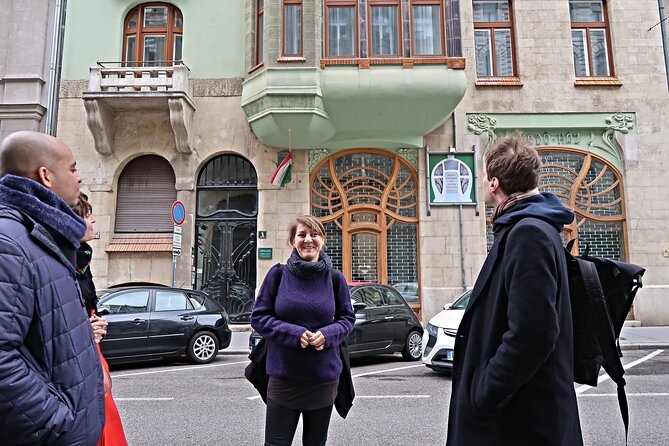
After Lechner, the tour shifts to Gresham Palace, another major stop built for showing off late Belle Époque confidence. The big benefit is that you’re not limited to the exterior. You can see the entrance hall interior, which is where the design storytelling becomes clearer.
Think of it like this: from the street, you read the facade as an image. Inside the entrance hall, you read it like a system. The guide will point out Art Nouveau design elements, helping you see how the exterior glamour connects to interior decoration.
Even if you are not an architecture person, this stop is worth it because it teaches you a habit. You start noticing how lines and ornament guide your eye, and how the building signals status through its craftsmanship.
The drawback is simple: entrance halls can feel busy or time-limited. So go with a light pace, and let the guide do the heavy lifting. If you try to read everything yourself, you’ll miss the key explanations that make the interior more meaningful.
Bedö House and the Hungarian State Treasury: the tour’s connective tissue
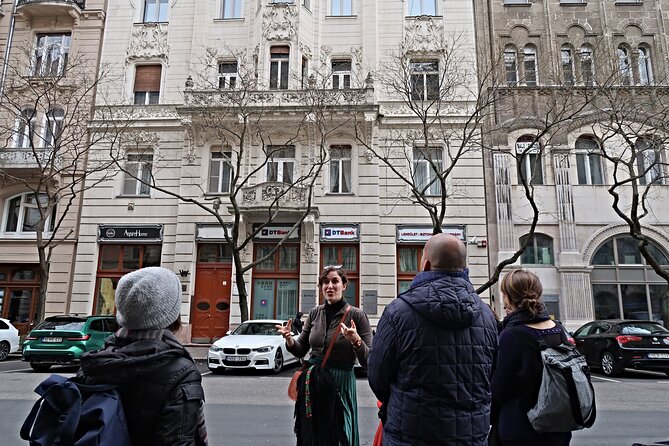
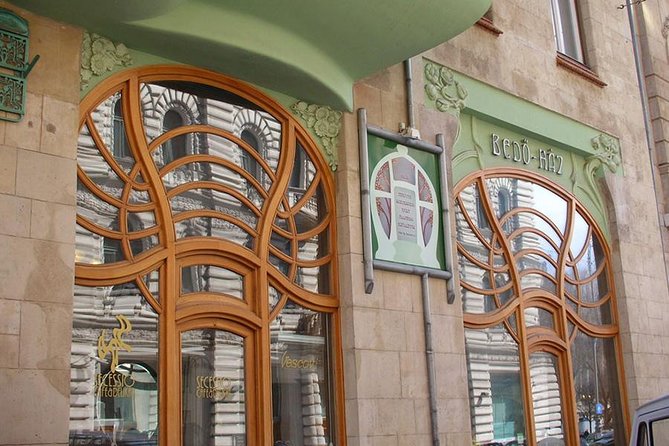
The route also includes Bedö House and the Hungarian State Treasury. These stops help you understand that Hungarian Secession was not only about landmark buildings with crowds and photographers. It was a design approach used across the city, showing up in the kinds of institutional buildings that projected authority and wealth.
What I like about including these is that they create contrast. You see how the same Art Nouveau ideas can appear in different “moods,” depending on the building’s purpose and how much the designers wanted to impress.
You might find that these stops also make the later ceramic and motif sections easier to absorb. If you’ve already seen the style applied to different building types, the Zsolnay and Asian motif themes stop feeling random.
Rózsavölgyi utca and Paris Passage: when the tour rewards slow looking
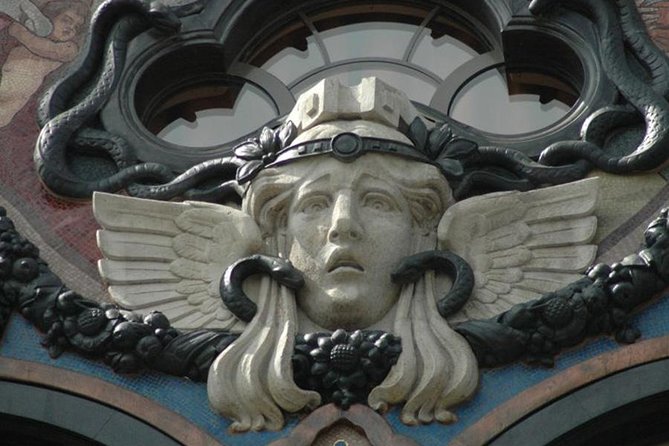
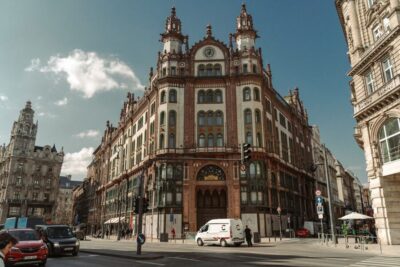
Rózsavölgyi utca and Paris Passage are the kind of stops that are easy to walk past if you are sightseeing on your own. On this tour, they function like breathing space between the bigger interiors, so you can reset your eyes.
Here’s what you’re really paying for at these moments: interpretation. The guide ties the street-level details back to the design vocabulary you learned at the postal and Gresham stops. That means you’re not just collecting images, you’re collecting clues.
It also helps that the tour includes stops like a flower shop with an original interior, a department store, and bank offices, plus a small but exquisite Art Nouveau museum and coffee house. Even if you only glance at some interiors, the fact that they are original adds context. Art Nouveau was not only for grand public buildings. It was for everyday spaces too, where people lived, shopped, and met.
Zsolnay porcelain and why it matters more than you think
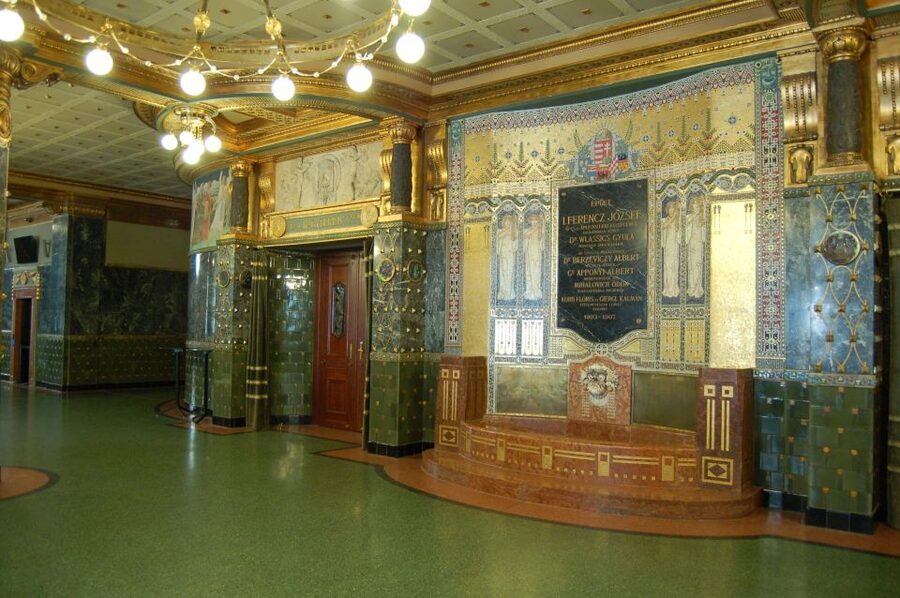
One of the strongest educational threads on this tour is ceramics, especially the use of Zsolnay porcelain tiles in facade design. The tour connects these tiles to a famous Hungarian ceramics factory in Pécs, and you learn why the material became so important to Hungarian Secession.
This is one of those details that can be missed on your own. Porcelain tiles are not just pretty. They change how light hits the building and how patterns repeat across surfaces. The guide also helps you understand why ceramic could fit a style that loved intricate surfaces and bold, symbolic decoration.
So when you see Zsolnay porcelain tiles used on building exteriors, you’re learning a practical skill: spotting the role of materials in design meaning. The tour points to Thonet House as a place where this becomes visible, so it’s not abstract theory.
If you like design, this section is a high point. If you are less into architecture, the good news is that porcelain makes a strong impression even on first glance. You end up caring without needing a degree in art history.
Asian motifs: what you’re supposed to notice and why
Hungarian Secession is famous for using Asian motifs and elements, and the tour explains the logic behind it. You’ll hear two overlapping influences.
First, there’s the idea of Eastern origins connected to stories about the Hungarian nation. Second, you’ll learn about European-wide Orientalism, which shaped how designers across the continent used so-called Eastern imagery in Art Nouveau.
This is where a historian guide matters. Without context, Asian motifs can feel like decoration for decoration’s sake. With context, they become part of a larger cultural conversation, tied to identity and also to fashion trends of the era.
If you want a souvenir skill, this is it. After the tour, you’ll be able to look at Hungarian Secession and recognize motifs as purposeful design choices, not random ornament.
Thonet House and the ceramic-heavy stops you should not rush
Thonet House is highlighted for its use of Zsolnay porcelain tiles on facades. In practice, this is one of those buildings where you will want to slow down for close-up viewing. Tiles can hide the best details at a quick glance.
Even if your feet are ready to move on, try to spend a few extra seconds reading the surface patterns. The guide’s job is to show you what to notice, then help you connect those observations to the broader Hungarian Secession style.
If you are the kind of visitor who only photographs facades, you might be tempted to skip the finer ceramic work. Don’t. The ceramic is where Hungarian Secession feels specific and local, and it’s a key reason these buildings do not blend into generic Art Nouveau.
Finishing at Kazinczy Street Orthodox Synagogue, plus Saturday reality checks
The tour ends at the Kazinczy Street Orthodox Synagogue, known for an exquisite Art Nouveau interior. This is a powerful finish because synagogues, like other religious buildings, often deliver strong atmosphere through interior design choices.
There is one major timing consideration: the Orthodox Synagogue is closed on Saturdays. On the days it is open, you’ll finish with a new appreciation for the glamour and radical design sensibilities that defined Budapest’s Belle Époque.
If your tour lands on a Saturday, the tour can be adapted to your interests or extended to include other Art Nouveau sites such as the Gellért Bath Hotel, the Museum of Applied Arts, and the Geology Museum. Also, an additional entry fee may apply for the synagogue, listed at 2000 HUF per person (about $7.00).
Another day-dependent note: on weekends, you cannot enter the Hungarian National Bank, even though it has very fine examples of Zsolnay porcelain. If that building is important to your plan, keep your schedule flexible or be ready for an alternative route.
Who this tour is best for, and who should skip it
This is a great fit if you want an informed walk with a historian guide and you enjoy design details. It’s especially good if you like Art Nouveau beyond the basics, because the tour keeps returning to materials, motifs, and the Hungarian Secession angle.
You’ll also like it if you are short on time. In three hours you cover multiple signature works, including the two most important buildings treated as big priorities, the Palace of the Royal Post and Gresham Palace.
Skip this tour if you only want sweeping city views or if you prefer long, unstructured wandering. This route is focused, and it moves with intent.
Should you book this Budapest Art Nouveau walking tour?
Yes, if your goal is to learn how to read Hungarian Art Nouveau, not just collect photos. The big reason to book is the combination of entrance hall access at key buildings and the guided explanations that connect porcelain, Asian motifs, and Hungarian Secession into one clear story.
I’d book it especially if you care about craftsmanship and interior design, because the route includes enough moments inside key sites that the style becomes more real. If you’re traveling on a weekend or specifically on a Saturday, check your expectations around site access, since the Hungarian National Bank and the synagogue have limited entry days.
If you want a guided, efficient way to understand why Budapest’s Belle Époque looked the way it did, this is a smart choice.
FAQ
How long is the Budapest Art Nouveau Walking Tour?
It lasts 3 hours.
What is the price per person?
The price is listed as $123 per person.
Is the tour guide a historian, and is it in English?
Yes. It is led by a historian guide and the tour is in English.
What is included in the tour price?
The price includes a 3-hour walking tour and the historian guide.
Are tram and metro tickets included?
No. Tram and metro tickets are not included.
Is pickup available?
Pickup is optional. If you prefer a central meeting point instead of hotel pickup, you will meet at Madal Café, Budapest, Alkotmány u. 4.
Is this tour private or small group?
Private or small groups are available.
What extra fees might be required for entry?
Additional costs may apply if certain sites are open. The House of Hungarian Art Nouveau is listed at 1000 HUF per person (about $3.50), and the Orthodox Synagogue on Kazinczy street is listed at 2000 HUF per person (about $7.00).
Are all buildings open on every day?
No. On weekends you cannot enter the Hungarian National Bank, and the Orthodox Synagogue is closed on Saturdays. The tour can be adapted or extended with other Art Nouveau sites depending on what is open.
What is the cancellation policy?
You can cancel up to 24 hours in advance for a full refund.
Newest reviews from Budapest
- Private Tour Around Budapest★ 5.0 · 10 reviews
- Born Under The Red Star – Communist tour with Coffee in a Retro Bar★ 5.0 · 10 reviews
- Live virtual walking tour in the Buda Castle quarter★ 5.0 · 10 reviews
- Taste Budapest – Fat Boy Foodies Walk★ 4.5 · 10 reviews
- Wine & Food Tasting Cruise on the Danube★ 3.5 · 10 reviews
- Private Transfer from Budapest to Prague with 2 hours for sightseeing★ 4.5 · 10 reviews
- The Real Saw | Escape Room by PÁNiQ SZOBA★ 4.1 · 10 reviews
- City Park True Crime of Hungary and Night Walk Tour in Budapest★ 5.0 · 10 reviews
Art Nouveau, compared.
Art Nouveau Tour in Budapest: 3-Hour Private Tour
Read our review →
Art Nouveau Treasures of Budapest – Exclusive Private Tour
Read our review →
Browse the lists this tour appears in