
Budapest is a great city to see by bike because the sights line up along the river and the bridges, so the ride feels like part sightseeing and part freedom. I like the photo-stop pacing that lets you actually take in key views instead of just rolling past. I also like the local guide commentary, which turns famous landmarks into a guided story you can follow in real time.
One thing to keep in mind is that cycling speed and comfort vary by bike type. If you choose a regular bike and the group has a few e-bikes, you might feel the pace shift, especially in wind or cold.
Key highlights worth planning around
- Two bike options: regular bicycle or electric bike, both included
- Photo stops built in so you can pause for views and not feel rushed
- A tight central route that hits Parliament, Danube memorials, and the basilica area
- Scenic river crossing time over bridges linking Buda and Pest
- Luggage storage and water so you can travel lighter
- Small-group or private options available for a calmer ride
Why a Budapest bike tour works so well
Budapest can feel big on foot. By bike, you get to cover ground without spending your day in transit buses or hopping trains. In about two and a half hours, you can hit the kind of skyline moments that usually take a full day of wandering.
What makes this particular tour feel useful is the blend of landmarks plus stop-and-look moments. You’re not just cycling from one postcard to the next. You also get guided commentary on historical events and legends, which helps you understand why these places matter and what to notice while you’re there.
And yes, you’ll feel the city. Even in cooler months, it’s that nice kind of travel: wind in your hair, hands on the handlebars, and the Danube stretching out beside you at just the right times.
More rides around Budapest:
- Budapest: Grand Sightseeing Bike Tour
★ 4.8 · 984 reviews - Budapest Highlights Bike Tour
★ 5.0 · 770 reviews - Budapest: Guided City Discovery Bike Tour
★ 4.7 · 702 reviews
The 150 minute flow: how the ride is paced
The tour runs 150 minutes, and that time is designed for a steady rhythm: brief introductions, then cycling, then short photo stops where your guide keeps you pointed at the right angles.
You start at Haris köz 4, a small pedestrian street. From Ferenciek tere metro station, it’s a short walk toward Váci Street, then you step into Haris köz to find the office at number 4 on the left side. It’s central enough that you can pair this with a meal or a museum visit afterward.
Once you’re on the bikes, the route is structured to group Buda and Pest sights through the major river crossings and the main viewpoints. You’ll also have luggage storage, plus a bottle of water, so you are not carrying extra weight while you ride.
Where the tour begins: Central Market Hall stop
Central Market Hall is the classic Budapest start point because it’s where you feel the city’s daily energy. Even if you do not plan to shop, it gives you a baseline for local life. Seeing it early also helps you orient your brain to what you’ll be riding toward next.
On the ride in and out, you also get a safety briefing and a quick setup period. That matters more than you’d think, because fit changes everything when you’re on a bike for over an hour.
Tip from the practical side: if you pick a regular bike, spend a minute making sure the seat height and handle position feel natural. Several riders have flagged that when bikes are not set up well, it can turn a scenic ride into a chore.
St. Gerard Sagredo Statue: small stop, big context
This is the kind of stop that pays off later. You pause, take photos, and your guide connects what you see here to the larger story of the city. It’s not just a statue moment. It’s a way of getting oriented before the route starts stacking the big viewpoints.
Because Budapest’s neighborhoods sit on different elevations, small anchors like this help you keep track of what is uphill, what is downhill, and which direction your next sight will reveal itself.
More history walks in Budapest:
- Budapest: Historic Cruise with Welcome Drink
★ 4.7 · 6,512 reviews - Budapest Historical Sightseeing – Free Walking Tour
★ 5.0 · 1,302 reviews - Buda Castle District Dark History, Legends and Vampire Night Tour
★ 4.5 · 1,240 reviews - BloodThirsty Hungary: Walking tour & Dark Historical Stories
★ 4.9 · 633 reviews
Fisherman’s Bastion: the view stop you’ll remember
Fisherman’s Bastion is one of those places that looks even better in real life, because you get both the architecture and the panorama. This stop includes a photo pause, plus guided commentary so you understand what you’re seeing beyond the obvious.
The main value here is timing. From the bike, you approach with momentum, then you slow down to look. That rhythm makes the lookout feel earned, not like a random stop on a checklist.
If you care about viewpoints, bring a phone that can handle a little wind, because along the river it can be gusty.
Margaret Bridge and Margaret Island: ride plus recovery space
Crossing over Margaret Bridge is a classic Budapest move, and it’s a nice change of pace because the route opens up. You get another photo stop and a scenic ride segment that helps you enjoy the river line rather than just hitting stops back to back.
Then you reach the Water Tower on Margaret Island area. Margaret Island is the kind of place where you can take a breath. Your guide gives context, and you may also get a little free time here, which is useful for stretching your legs, buying a quick drink if you want, or simply stepping off the bike for a minute.
In cold weather, this island segment can feel like a short reset. You’re still moving, but it’s visually calmer than the busiest center zones.
Crossing into the big hitters: Erzsébet Bridge and Buda Castle views
The route is designed to connect Pest and Buda in a way that keeps the highlights within reach. Along the way, you’ll cycle over Erzsébet Bridge and get perspective on Buda Castle area viewpoints.
Your stops and passing segments may include the Buda Castle Funicular area, plus key monuments like the St. Gellért (Gerard) Statue. This is where cycling really shines in Budapest: you can reposition quickly and see the same area from angles that would take too long to walk between.
If you love “how cities work,” pay attention here. Bridges, slopes, and viewpoints are the real map of Budapest, and the bike route makes those features obvious.
Japanese Garden and the castle-zone stops
From the information provided, the ride is also set up to include the Japanese Garden, plus the Medieval Dominican Convent & Royal Mansion area. These are less about one single photo and more about the feeling of place.
Even if you are not spending time reading plaques, the guide’s commentary gives you a way to make sense of why these areas look the way they do, and how they connect to the city’s story.
This is one reason bike tours are better than bus tours for me. The stops are small, but the narration helps you stitch the sights into one mental picture.
Parliament, Shoes on the Danube, and Liberty Square
If you only had time for one set of stops, this is it. The route includes the Hungarian Parliament Building, the Shoes on the Danube Bank Memorial, and Liberty Square (Szabadság tér).
- Hungarian Parliament Building: You’ll have a strong view angle from the bike, and your guide can point out what to notice while you look.
- Shoes on the Danube Bank Memorial: This stop is less about sightseeing and more about remembering. The guide’s explanation helps the memorial land with the right weight rather than just looking like a sculpture wall.
- Liberty Square (Szabadság tér): This is where the city shows a more formal, civic face. It’s a good transition stop after the memorial.
This trio makes the tour more than a highlight loop. You move from iconic architecture to a serious remembrance moment, then to a civic square that helps you reset.
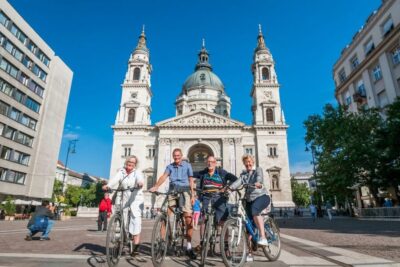
Hungarian State Opera and St. Stephen’s Basilica
The route also covers the Hungarian State Opera and St. Stephen’s Basilica, both major landmarks that most first-time visitors want to see.
On a bike tour, you get two advantages here:
- You see them in the context of the city streets that lead to them.
- You can appreciate the approach, not just the building front.
Your guide’s commentary also helps you decide what to focus on if you want to come back later and explore on foot.
Regular bike vs e-bike: choose based on your day
The tour includes your bike choice, regular or electric, depending on the option you select. E-bikes are a smart pick if you:
- want an easier ride with less leg strain
- are traveling in colder weather or wind
- prefer arriving with energy for photos and a longer stroll after the tour
At the same time, one rider issue you should take seriously is group mismatch. When e-bikes and regular bikes ride together, the pace can feel faster for regular riders. Also, speed differences are more noticeable in strong wind, which Budapest can absolutely deliver.
If your group includes mixed abilities, ask your guide to clarify the pace expectation before you roll out. A simple check at the start can save frustration later.
Guide quality matters, and it shows
The best rides are driven by the guide. This one is built around a live local guide who shares commentary on historical events, landmarks, local legends, and hidden gems.
Language is the main variable. The tour offers live guiding in Dutch, English, German, Italian, and Spanish. In one situation, a booked language did not match what was used, and that created frustration and a sense of limited communication. In another case, a guide named Misheel was especially helpful when a rider had trouble driving the bike due to a previous injury. That kind of practical support is a big deal on a cycling tour.
So here’s the balanced take: if you care about historical depth and you want a smooth language experience, double-check your language selection when booking. And if you have any bike comfort needs, tell the guide early. These tours move quickly, so early communication helps.
Photo stops and what to do at each one
Photo stops are included, and they’re not random. They’re timed for viewpoints where stopping actually helps you see the city properly. That’s why riders often remember them most.
At each photo pause, do this:
- switch your phone to landscape mode for wider skyline shots
- take one quick overall photo, then one tighter detail photo
- ask your guide what angle is best, since they usually know the street-side perspective you cannot guess
If it’s cold or windy, keep your hands warm. That sounds obvious, but numb fingers turn photo stops into a battle. Wear gloves that work with your phone screen if possible.
Weather, cold, and winter reality
The tour runs in various weather conditions, so dress for wind as much as for temperature. Even when it is snowy or icy outside, the experience can still work, as long as your gear and mindset are ready for it.
One positive example from a winter ride was how enjoyable it stayed even with unexpected snow and cold. The lesson for you is simple: the route can still deliver the highlights, but comfort depends on layers, gloves, and shoes that handle slick ground.
If you tend to get cold, plan for extra warmth. You will be moving, but Budapest breezes by the river.
Who this tour suits best
This is a strong fit if you:
- want to see top sights in a time-efficient way
- like getting history explained as you move, not just reading afterward
- are comfortable riding a bike for around 150 minutes
- want scenic views without the stress of navigating
It’s also a good match for couples and small groups who prefer guided pacing over solo wandering.
If you dislike cycling, have significant mobility limitations, or feel uneasy on a bike in traffic, you might find it stressful. The tour requires a basic level of fitness, and the mechanics of cycling are the whole point.
Kids and family options
Children under 7 participate for free. Children up to 20 kg can travel for free on the child seat of the parents’ bike. Helmets and child seats are available on request, and there are children’s bikes for participants up to 130 cm.
If you’re traveling as a family, this is one of the better ways to keep kids engaged, since they get a mix of motion, short stops, and viewpoints without a long walk.
Just make sure you plan for fit and safety at the start, and talk through bike handling with the guide before you depart.
Price and value: is 33 dollars worth it?
At $33 per person for about 150 minutes, you’re paying for three things: a guide, a bike (regular or electric), and the efficiency of covering multiple landmarks in one go.
Here’s the value logic:
- The bike saves time and energy compared to walking between the Parliament, Danube, and basilica areas.
- The guide helps you understand what you’re seeing, especially at places like the Danube Shoes memorial and major civic landmarks.
- Photo stops and water take away small friction points, so you spend your time on the sights.
The only real value risk is when the ride timing and language do not match what you expect. In one case, a shorter ride happened compared to what some participants expected, and in another, language mismatch affected how much history you could absorb. If those things matter to you, choose your bike option carefully, confirm language, and plan to be flexible.
A practical checklist before you roll
Bring your passport or ID card. Wear clothes that handle wind and cycling. If you can, add:
- gloves
- a hat or hood for cold gusts
- phone power (battery drains in cold weather)
- comfortable shoes with grip
Also, if you’re booking e-bike or regular bike, pick based on your comfort, not just cost. The goal is to enjoy the viewpoints, not to fight the ride.
Should you book this Budapest Historical Bike Tour?
Book it if you want a time-smart way to see key Budapest landmarks, and you enjoy learning while you move. The combination of bike coverage, photo stops, and live guide commentary makes it a strong first-city-overview choice.
Skip it or change your expectations if:
- you need very detailed history in your preferred language and you’re worried about mismatches
- you are sensitive to cycling pace differences between regular bikes and e-bikes
- you dislike cold-weather cycling and you are not prepared with proper layers and gloves
If you line up a good bike fit at the start, choose the right bike for your comfort, and tell your guide what you need, this tour is exactly the kind of practical Budapest experience that lets you see more and stress less.
FAQ
How long is the Budapest Historical Bike Tour?
The tour lasts 150 minutes.
Do I get a regular bicycle or an e-bike?
You choose between a classic bicycle or an electric bike, and the bike is included with your booking option.
Where is the meeting point?
Meet at Haris köz 4, 1052 Hungary. From Ferenciek tere metro station, walk about 2 minutes toward Váci Street, enter Haris köz from Váci, and find the office at number 4 on the left side.
Is food included in the tour price?
No, food is not included.
What should I bring?
Bring your passport or ID card.
Are there child seats, helmets, or kids bikes?
Child seats and helmets are available on request. Children under 7 participate for free, children up to 20 kg travel for free on the child seat of their parents’ bike, and there are children’s bikes for participants up to 130 cm.
Newest reviews from Budapest
- Born Under The Red Star – Communist tour with Coffee in a Retro Bar★ 5.0 · 10 reviews
- Live virtual walking tour in the Buda Castle quarter★ 5.0 · 10 reviews
- Private Tour Around Budapest★ 5.0 · 10 reviews
- Taste Budapest – Fat Boy Foodies Walk★ 4.5 · 10 reviews
- Wine & Food Tasting Cruise on the Danube★ 3.5 · 10 reviews
- Private Transfer from Budapest to Prague with 2 hours for sightseeing★ 4.5 · 10 reviews
- The Real Saw | Escape Room by PÁNiQ SZOBA★ 4.1 · 10 reviews
- City Park True Crime of Hungary and Night Walk Tour in Budapest★ 5.0 · 10 reviews
Cycling Tours, compared.
Browse the lists this tour appears in