
Reviewed · COMMUNIST-ERA HISTORY
Life Under Communism” with optional visit to the House of Terror
Budapest shows its communist past in brick, stone, and street names, and this 3-hour walk turns those leftovers into clear, human stories. I especially love the Soviet-era street stops you can still point to today, and the planned pause at Bambi Presszó, a café tied to the old culture of the system. One thing to consider: the experience depends on which optional add-on you choose, and you should confirm your specific option before you go so you are not left expecting a museum visit that was not included.
If you care about the 20th century, you will like how the guide brings the era to street level. People like Miklós, Balázs, and Agy show up as real personalities, not just nametags, and they tend to explain how everyday life felt during the hard years. For me, the biggest practical drawback is simple, sound and pacing: if you are far from your guide or the group is noisy, you may miss details, so bring your best listening stance.
Key things to know before you go
- 3 hours, mostly walking through central Budapest sites tied to the communist and 1956 era
- Choose an option: Memento Park (statues) or House of Terror Museum (one focused museum visit)
- Bambi Presszó coffee stop is part of the flow, right in the middle of the story
- You hit the big 1956 locations like Kossuth Square and Corvin köz, not just generic photos
- Private group experience for up to 5 people, so the guide can tailor questions and pace
- Tickets for the chosen add-on are included, so you can plan without last-minute museum math
Communism on Budapest sidewalks, and why this walk works
This tour is interesting because it is not built around a single museum. Instead, you read Budapest like a timeline. You start with early communist-era power symbols, then move into the tension that led to the 1956 uprising. The city becomes the classroom, and the guides treat the streets as evidence.
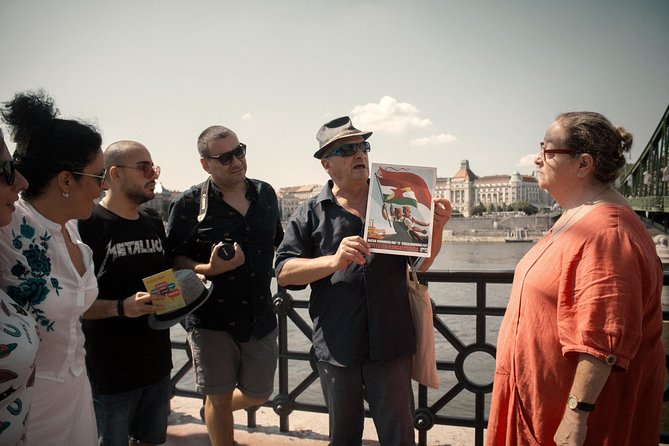
What makes it especially useful is the mix of “macro” and “micro.” You get big-picture context about Soviet control and Hungarian resistance, but you also get the street-level reality: squares where crowds gathered, a neighborhood where young fighters used improvised weapons, bridges with huge views, and statues you can actually stand in front of.
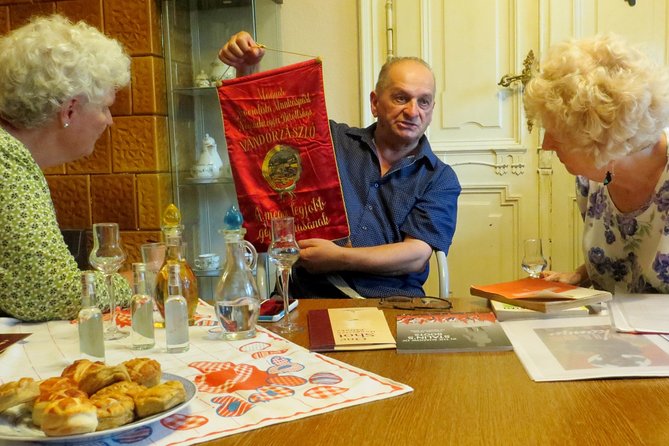
You also get a real human factor: guides like Miklós and Balázs are known for being friendly, approachable, and willing to answer questions. That matters, because communist-era topics often lead to follow-ups like, Who controlled this? Why did people risk something here? What did ordinary life look like?
The tour is designed for a moderate physical fitness level. It is not a sprint, but it is a walking day in central Budapest. Wear comfortable shoes, and if stairs are an issue for you, ask ahead how your guide plans to handle routes.
More of the communist decades:
- Budapest: Communist History Tour with House of Terror Option
★ 4.8 · 182 reviews - Communism in Hungary with a Historian
★ 5.0 · 70 reviews - Budapest: 3-Hour Walking Tour About Communism (Small Group)
★ 4.7 · 70 reviews
Liberty Square first: Soviet siege memory in plain sight
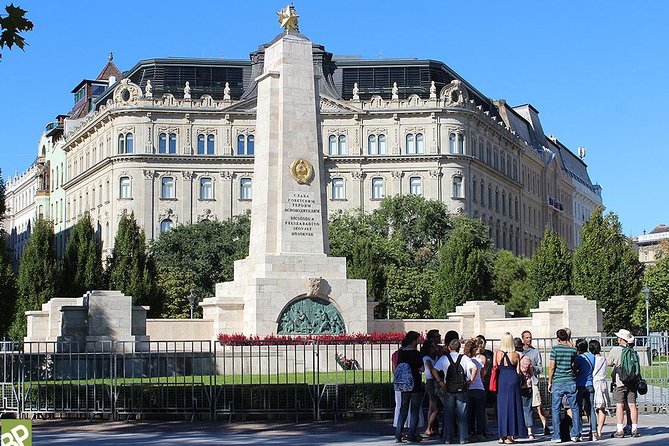
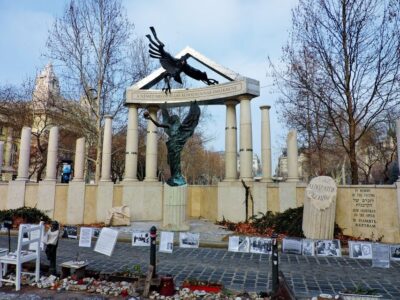
You begin at Liberty Square, where you see a major memorial connected to the Siege of Budapest in World War II. The guide points out how the monument’s scale and tone communicate power and narrative, and why it became part of the postwar landscape.
This first stop is a good setup because it frames the big idea behind the whole experience: regimes do not just rule with armies. They also rule with memory. In this case, you are looking at a grand structure tied to the Soviet role near the end of the war, and it sets up the later story of occupation, control, and resistance.
Practical tip: spend a minute looking at details. Big memorials can blur together if you only glance at them. Look at names, placement, and how the monument sits in the city. Your guide will help you connect what you see to what you hear.
Szabadság tér and Kossuth Square, where politics turned into danger
From Liberty Square, you move to Szabadság tér. This space is tied to the Habsburg-era city planning, and it is an example of how different layers of history share the same geography. Even if your main interest is communist rule, this stop helps you understand that Budapest did not start as a blank slate. New systems reused old city bones.
Then the route sharpens at Kossuth Square, where the Hungarian Parliament building anchors the view. The guide explains the role this area played during the 1956 revolution, including the firefight that began in front of Parliament. The story is tense and not fully tidy, because even the number of deaths is not known with certainty. You also learn that the crowd was not a single type of person, but a mix of protesters including civilians, women, children, and elderly people.
Why this matters on foot: a square like this can feel like just architecture unless you know what happened there. Standing in the same space where the day unfolded makes the story feel less like a textbook line and more like a lived moment.
Inside the Parliament square area: what you do in 20 minutes
You spend time at the Hungarian Parliament Building area, with about 20 minutes allocated there. The ticket to the building in this part is free per the experience description.
You should not expect a long museum-style visit in this time. Instead, use it as orientation: take photos if that is your thing, but more importantly, look at the positioning of key buildings around the square. Your guide connects those surroundings to how public life and public space worked during political upheaval.
Tip: if you care about details, ask your guide a question during this stop. The best answers usually come when you are standing exactly where the story happened.
A different sort of Budapest afternoon:
- Budapest: City Highlights Sightseeing Cruise
★ 4.6 · 43,981 reviews - Budapest: Unlimited Prosecco, Beer and Aperol Spritz Cruise
★ 4.8 · 37,304 reviews - Budapest: Széchenyi Spa Day Ticket with Optional Upgrades
★ 4.3 · 23,911 reviews - Budapest: Nighttime or Daytime Sightseeing Cruise
★ 4.2 · 21,062 reviews
Petőfi Statue and Március 15. Square: a social scene near historic power
Next comes the area around the Petőfi Statue and Március 15. Square, down near Erzsébet Bridge and near one of the oldest churches in Budapest, which was renovated in 2011 and became a popular social spot.
This is a smart contrast point. The tour does not only drag you through suffering and conflict. You also see the everyday city after the big events. People still meet here, take walks, and hang out. That is part of the message: history may be heavy, but life keeps going.
If you want a more personal feel, this stop is where you can ask your guide how the city changed after 1956 and after the collapse of communist rule in 1989. Even without a museum, you will start to notice what got erased and what stayed.
Corvin köz: where young resistance met Soviet tanks
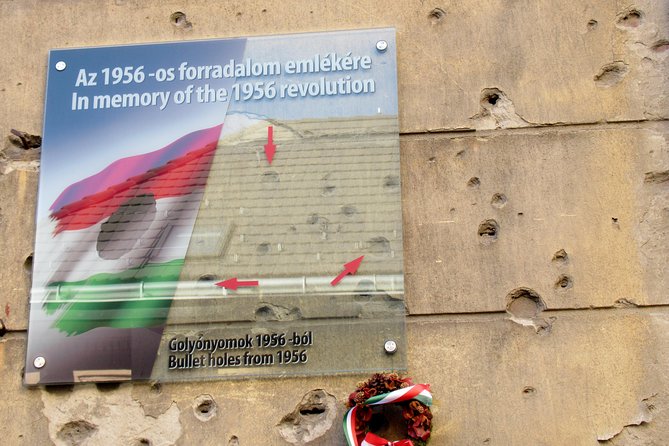
One of the most striking parts of the walk is Corvin köz, described as a major resistance center during the 1956 uprising. This is where local youngsters fought invading Russians with Molotov cocktails and guns they had taken from soldiers to hit Soviet tanks.
On a map, it might seem like just another neighborhood gap between streets. On the ground, it feels like a memory lane. Your guide points out reminders of the battles and explains the invasion and what followed after.
This is also a good place to check your own expectations. You are not touring a battlefield battlefield, and you are not watching reenactments. You are learning from what remains: urban layout, markers, and the way stories got preserved.
Practical tip: if the group is large, keep your eyes up. When the guide starts connecting street corners and events, it helps to follow along with location cues, not just listen from afar.
Crossing to Gellért Hill: viewpoints that put the story in scale
After Corvin köz, you cross one of Budapest’s beautiful bridges and arrive near Gellért Hill, moving to St Gellért Square.
St Gellért Square is named for Bishop St Gellért, also called the Martyr for Hungarian Christendom. You get a powerful view from here, including a look toward the Liberty statue, which was erected in 1947 to commemorate Soviet liberation. That statue is a key theme in the communist era narrative: who gets credited, and who gets remembered.
This is where you will likely pause a few extra seconds. The view helps you understand why rulers love monuments with sightlines. They are not random. They are placed where people have to look.
Coffee at Bambi Presszó: a small pause with big meaning
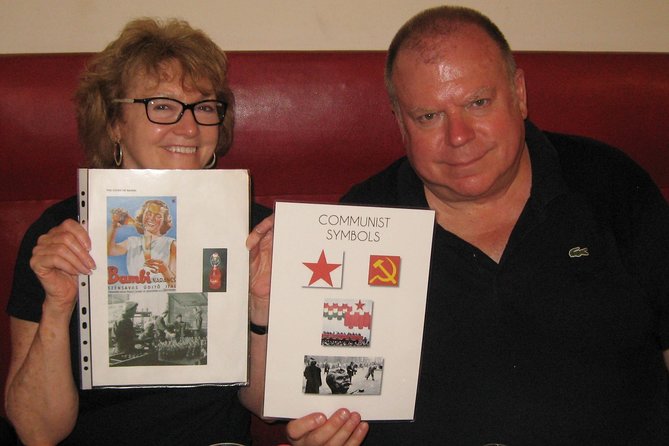
The tour includes a coffee stop at Bambi Presszó, described as a last stronghold of communist culture. Even if you are not a coffee person, this is worth treating as part of the historical experience, not just a break.
Why? Because communist-era culture was not only politics. It was also routines, social spaces, and the tone of daily life. A coffee break in a setting linked to that era gives you a chance to re-center, then ask your guide a question when the group energy is calmer.
One practical caution: the tour description highlights the coffee stop, but it also says additional food and drink are not included. So, order smart, and if you want to be sure what is covered, ask your guide what the plan is for that beverage.
Memento Park option: statues saved instead of erased
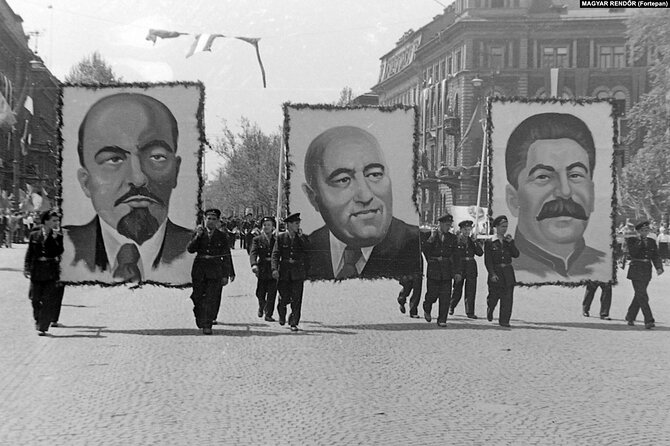
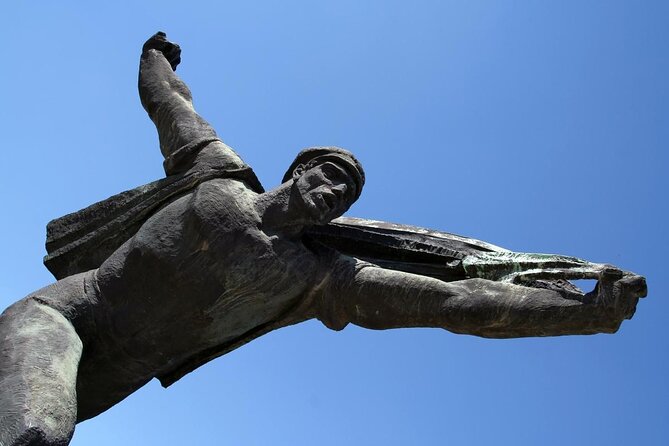
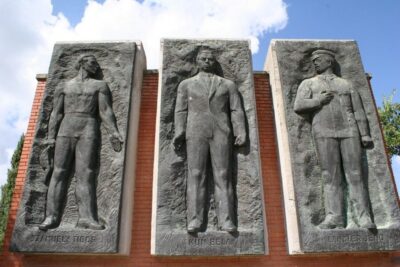
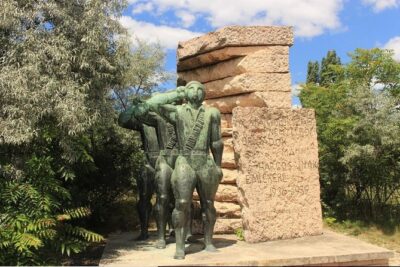
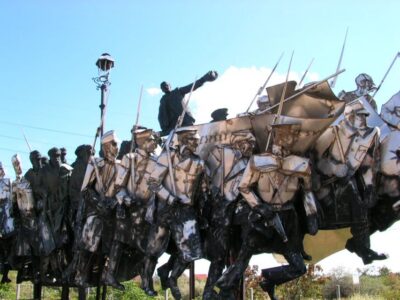
If you choose Memento Park, you get about one hour, and the admission ticket is included. The premise is simple and effective: when communism collapsed in Hungary in 1989, Budapest was left with many public works of art celebrating the era. Instead of destroying them, the city government decided in 1993 to save the statues, leading to the creation of Memento Park.
Memento Park is not trying to romanticize. It is showing you how propaganda looked in public. The result is often strange, even eerie. Large figures and political symbols you might have seen in other contexts now sit together, and you start to see the visual language.
Who will enjoy this option most? If you like symbolism, design, and how ideology tries to look permanent, Memento Park is a great match. It also pairs well with people who want a lighter museum visit compared to the House of Terror.
House of Terror option: one focused museum visit
If you choose House of Terror Museum, you also get about one hour, with admission included. This museum is tied to the darker side of totalitarian rule, and it is housed in a building that was renovated and reworked to feel monument-like.
The exterior is described as black and stark, with architectural features that help the building stand out against the streets of Andrássy Avenue. Inside, there is even a T-54 tank on display.
If your heart rate rises at the thought of museums about oppression, this option is probably for you, but it is still worth going in with clear expectations. This is a single museum focus after a walking tour. You will not have time to wander forever, so prioritize what you want to understand and ask the guide how to read the museum efficiently.
House of Terror vs Memento Park: how to pick the right add-on
Here is the simple rule I use when deciding between these two:
- Pick Memento Park if you want to understand how communist power talked through statues and street art.
- Pick House of Terror if you want the more direct, focused account of terror and repression, in a museum designed for that impact.
You can also choose based on emotional stamina. One option can feel like ideology made visible in concrete form. The other focuses on the machinery of fear.
Either way, confirm the exact add-on you selected. I say this because there is real potential for confusion if you assume both museums are included by default. Before you meet your guide, check what is on your confirmation, and have the name of the option in your pocket so you can point it out easily.
Price and value: what you are paying for
The tour price is $280.33 per group for up to 5 people. That is not cheap, but it is also not built like a mass sightseeing bus ride. You are paying for:
- A private group experience
- A guide who can answer questions and adjust to what you want to focus on
- Entrance tickets for the chosen optional visits
- Informative handouts
Then there are the gray areas where costs can surprise you. The tour includes the listed admission tickets for the options, but it says additional food and drink are not included. Also, the summary says pickup is offered, while the details list hotel pickup and drop-off as not included. So, treat meeting point clarity as part of the price equation.
For value, I recommend doing the mental math this way:
- If you add Memento Park or House of Terror, you are already getting ticket value wrapped into the experience.
- If you skip both add-ons, you should make sure you still feel the tour length and stops justify the guide time.
If you are a small group, private guiding can feel worthwhile because you can ask follow-ups and stay on pace. In larger groups, it can feel less personal, but this one is designed for your group only.
Logistics that matter: timing, transport, and the listening game
This is scheduled for about 3 hours, and it is booked on average about 28 days in advance. In other words, it is a popular way to understand Budapest’s 20th century.
The tour is described as a walking experience with near public transportation. It starts at Liberty Square. If you are using transit, I would plan to arrive a little early and get oriented before you meet your guide.
Also, bring listening strategy. Some guides may speak softly depending on the group setup. If you want every detail, stay close and face the guide during explanations, especially at Kossuth Square and at Corvin köz. If you have hearing concerns, tell your guide at the start, and ask them to position the group where everyone can hear.
Who this tour fits best
This is a strong choice if you:
- Want to connect Budapest’s modern look to the communist era you see in statues and streets
- Care about the 1956 revolution and how public space became a stage for events
- Prefer guided walking over reading alone
It also fits history-minded travelers who like real conversational context. In past experiences with guides such as Miklós, Balázs, and Agy, the tone tends to be friendly, story-driven, and grounded in local understanding.
If you want a purely relaxing sightseeing loop with no heavy topics, this may feel intense. If you want to understand how ideology worked in real places, it will land well.
Should you book it
Book it if you want a guided walk that makes communist-era landmarks meaningful, and especially if you plan to add Memento Park or House of Terror. The structure is practical, the sights are central, and the coffee stop gives you a reset without losing momentum.
Skip or rethink if you need strict guarantees on exact add-ons and costs without any chance of confusion. Do yourself a favor, double-check your selected option before you show up, and treat the coffee and any extra drinks as pay-as-you-order unless your confirmation clearly says otherwise.
If you get the right option matched to your ticket, this tour is one of the best ways to read Budapest as a living history book, written in streets.
FAQ
How long is the tour?
The walking tour is about 3 hours long.
Is this tour private?
Yes. It is a private tour/activity, and only your group participates.
What language is the tour offered in?
The tour is offered in English.
Where does the tour start?
It starts in Liberty Square.
Are the Memento Park and House of Terror visits included?
They are optional. If you choose an option, the entrance ticket for that visit is included.
How long do the optional visits take?
Both Memento Park and House of Terror are listed as about 1 hour each.
Is there a coffee stop?
Yes. The tour includes a coffee stop at Bambi Presszó. Additional food and drink are not listed as included.
Is hotel pickup included?
Pickup is listed as offered, but hotel pickup and drop-off is listed as not included. Confirm your meeting point when you book.
What is the physical fitness level needed?
The tour notes a moderate physical fitness level.
Are children allowed?
Children must be accompanied by an adult.
Newest reviews from Budapest
- Private Tour Around Budapest★ 5.0 · 10 reviews
- Born Under The Red Star – Communist tour with Coffee in a Retro Bar★ 5.0 · 10 reviews
- Live virtual walking tour in the Buda Castle quarter★ 5.0 · 10 reviews
- Taste Budapest – Fat Boy Foodies Walk★ 4.5 · 10 reviews
- Wine & Food Tasting Cruise on the Danube★ 3.5 · 10 reviews
- Private Transfer from Budapest to Prague with 2 hours for sightseeing★ 4.5 · 10 reviews
- The Real Saw | Escape Room by PÁNiQ SZOBA★ 4.1 · 10 reviews
- City Park True Crime of Hungary and Night Walk Tour in Budapest★ 5.0 · 10 reviews
Communist-Era History, compared.
3-Hour Walking Tour About Communism (Small Group)
Read our review →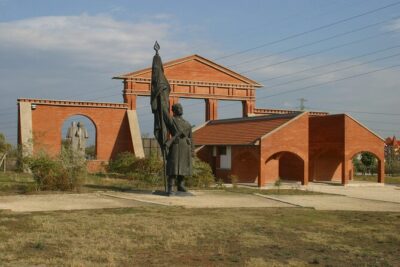
Memento Park Visit with Private Trabant Transfer
Read our review →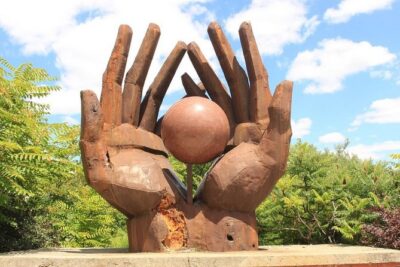
Memento Park: Official Guided Tour with Entry Ticket
Read our review →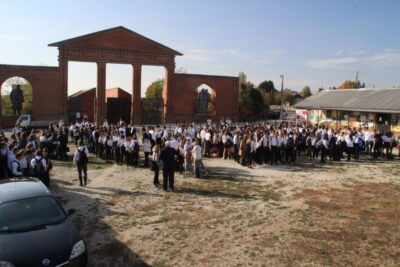
Browse the lists this tour appears in