
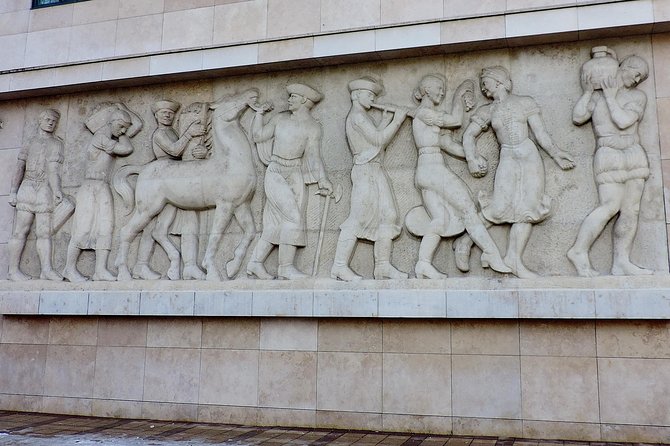
Reviewed · COMMUNIST-ERA HISTORY
Communism in Hungary with a Historian
This is the kind of Budapest tour that turns stone and statues into real decisions people had to live with. You start at Elizabeth Square, then glide through major Cold War landmarks, guided by a historian who mixes dates with human stories. Guides like Judit, Raymond, Gábor, and Virág are known for making the era feel close, not distant.
I love two things most. First, the tour stays small (max 10), so you can ask questions and get answers that actually fit what you’re wondering. Second, you get an on-the-ground sense of how communism shaped daily life, including the way religion, work, and even fear played into it.
One possible drawback: this is a history walk, so you should be ready for a fair amount of standing and reading the vibe of streets and buildings from the outside, not a sit-down museum day.
Key highlights you will notice right away
- Small group, big storytelling, capped at 10 travelers, which keeps the pace human.
- Metro included, with tickets provided, so you are not juggling transport while you listen.
- Elizabeth Square to Szabadság tér, two places where the communist era left strong visual marks.
- Outside views only at St. Stephen’s Basilica and the Parliament area, paired with the stories that happened around them.
- Coffee included at a Communist-style cafe to end the tour with a real sense of place.
- Balanced tone, often discussed as honest and fair, with room for questions.
Why Budapest’s communist sites need a real guide
Budapest has that classic postcard look, but politics is part of the city’s architecture. This tour helps you see the layer beneath the photos: how systems of power were built, advertised, defended, and then dismantled.
What makes it especially useful is the mix of landmarks and personal context. The guides do not just list dates. They connect the “what happened” with the “what it felt like,” including how families dealt with nationalization, changing work and housing, and the constant worry that someone could report you. That kind of detail is exactly what makes history stop being abstract.
If you like tours where your guide answers your questions without rushing you, this format fits. The small size matters here. Even if you are not a history nerd, you will feel comfortable asking, and you will learn faster because the group is not too big to hear each other.
More of the communist decades:
- Budapest: Communist History Tour with House of Terror Option
★ 4.8 · 182 reviews - Budapest: 3-Hour Walking Tour About Communism (Small Group)
★ 4.7 · 70 reviews - Guided Tour with Admission in Memento Park
★ 5.0 · 48 reviews
Meeting at Kempinski Corvinus near Erzsébet tér, then getting moving
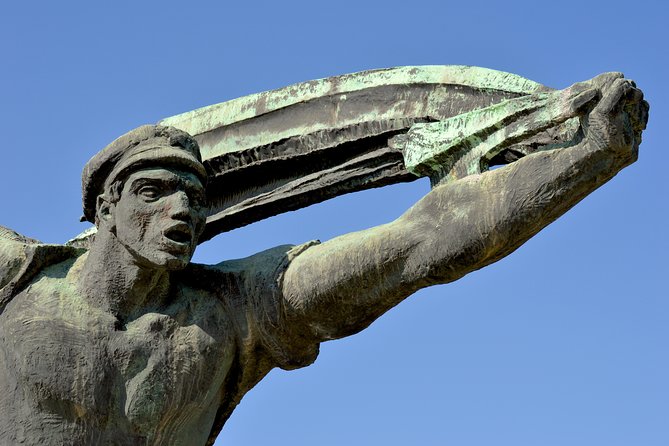
You meet at Kempinski Hotel Corvinus Budapest, at Erzsébet tér 7-8, 1051. The start is set for 2:00 pm, and the whole experience runs about 3 hours.
The practical win is that you are not stuck figuring out the next stop. You’ll travel by metro with tickets included, which saves both time and stress. Metro use also makes sense in Budapest because distances can feel longer than they look, especially when the weather is cold or rainy.
You also get a mobile ticket, so you are not hunting for printed passes. And if you are traveling with a service animal, it is allowed. The route is designed so most people can participate, and it stays close to public transportation, which helps if you need a break.
If you come in expecting inside access to everything, adjust your mindset. This tour is mainly about what you can see from the street and understand as you walk.
Elizabeth Square: the Stalin-era feel you can spot in minutes
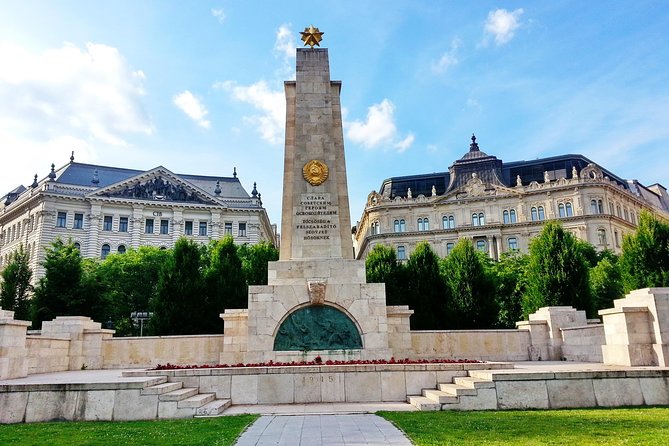
Your first stop is Elizabeth Square (Erzsébet tér). This is the place that anchors a lot of the communist-era storytelling in Budapest. The era left behind monuments and symbolism that are easy to miss if you are just passing through.
The guide frames the square as more than a scenic meeting point. You will learn how propaganda and power were made visible in public space, and why the monuments and layouts matter. It’s the kind of place where, once you know what you are looking at, you start seeing the message even from across the street.
One of the smartest parts of this start is pacing. Fifteen minutes here is long enough to set context, but not so long that you get tired before you even move into the heavier topics. You will get your bearings fast, and then the tour keeps building the story.
St. Stephen’s Basilica: faith under communism, seen from the outside
Next, you’ll walk by St. Stephen’s Basilica (Szent István Bazilika). The focus is not architecture class. It is religion’s role during communism, including the way religious life was treated and how families and communities navigated restrictions.
Important practical detail: you look at the basilica from the outside, and admission is not included. So if you were hoping for an entry ticket moment, this is the place where you set expectations correctly.
Even outside, the basilica works well for the theme. It becomes a counterpoint to the state’s worldview. In communism, institutions like the church were never just religious buildings. They could be alternative sources of authority and community, which made them politically sensitive.
If you appreciate tours that explain the human side of policy, you’ll likely enjoy this stop. Many guides bring family stories into the conversation, which is a major reason the reviews praise this experience as more than standard sightseeing.
A different sort of Budapest afternoon:
- Budapest: City Highlights Sightseeing Cruise
★ 4.6 · 43,981 reviews - Budapest: Unlimited Prosecco, Beer and Aperol Spritz Cruise
★ 4.8 · 37,304 reviews - Budapest: Széchenyi Spa Day Ticket with Optional Upgrades
★ 4.3 · 23,911 reviews - Budapest: Nighttime or Daytime Sightseeing Cruise
★ 4.2 · 21,062 reviews
Szabadság tér: remnants, statues, and a bunker glimpse
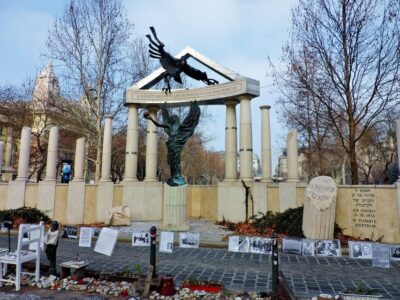
At Szabadság tér, you shift from monuments to surviving fragments. This is where the communist presence can feel physical in a different way. You’ll see remnants through memorials, statues, and even nearby embassies, and you will get a guided narrative that turns those objects into evidence.
One of the most memorable elements here is that you also see part of a bunker from the outside. Even without entering anything, the view helps you picture the mindset of the time. It’s easier to understand fear and contingency planning when you can connect it to a concrete structure rather than a vague concept.
This stop is longer, about 45 minutes, because it needs space for explanation. It’s the kind of place where you might want to ask questions, and the small group format helps. If you are the type who asks why certain symbols appear next to each other, your guide can usually connect the dots quickly.
The main consideration: because the tour is outdoors and walking-focused, dress for the weather. The tour still works in rain, but you will feel it. Bring a layer and keep water handy.
Parliament and Kossuth Square: Bloody Thursday in context
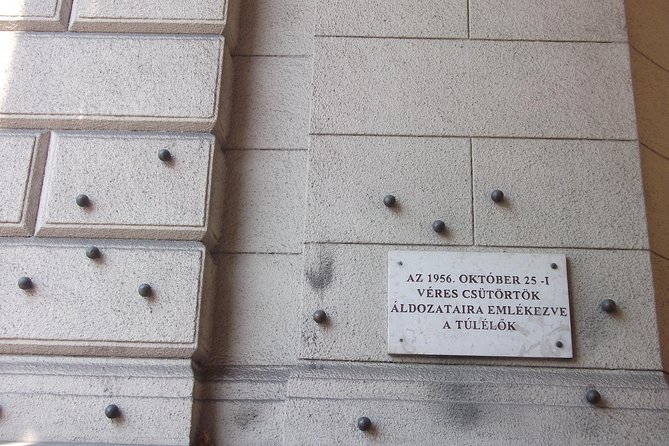
The tour then heads toward the Hungarian Parliament Building area and focuses on the 1956 revolution event often referred to as Bloody Thursday, connected to events that took place on Kossuth Square in front of the Parliament.
You do not just hear a name and a date. You get the story connected to the physical location, which is crucial for this topic. Seeing the Parliament setting helps you understand why crowds, confrontations, and political messaging had such power in public view.
Admission is not included for this stop, and the emphasis is on understanding events around the building. So treat this as a guided history moment in the street, not a timed-ticket attraction.
If you enjoy “why this happened here” history, this is the part you’ll remember later. Many people leave Budapest with photos of Parliament, but this experience teaches you what the building represented during political crisis, and how the city’s center functioned as a stage.
Ending at Bambi Café: coffee, Cold War vibes, and an unchanging room
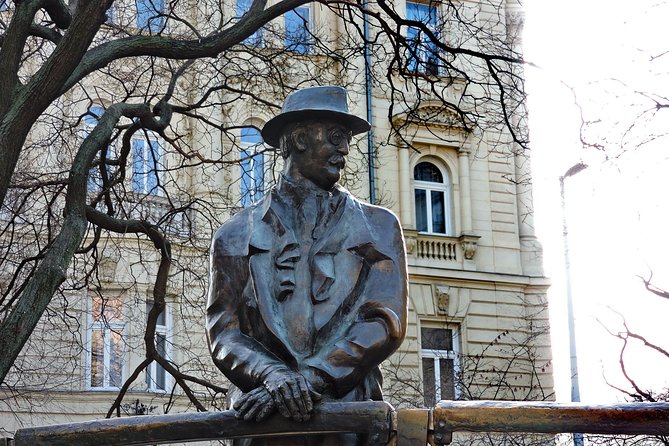
The tour typically ends at Bambi Café on the Buda side, near the center and close to Margaret bridge. On colder or wet days, it may end on the Pest side in the center closer to where you started, so the plan adapts to weather.
This final stop is more than a snack. It is a chance to process what you just learned with a coffee in hand. The whole point is to finish with something that has a lived-in feel.
A fun detail worth knowing: Bambi Café opened in 1961, and it has not changed too much since then. That makes it a good last touch for a tour about an era defined by continuity and control, and then the later shift away from it.
You’ll also get a natural opportunity to talk with your guide. A lot of guides encourage questions at this stage because the tour has already given you enough context to make your curiosity sharper. If your goal is to connect old events to what you see today, this is where that conversation happens easiest.
Price and value: is $59.13 for 3 hours a smart deal?
At $59.13 per person for about 3 hours, this tour is priced like a guided walking experience with a few extras baked in. Here’s what you are really paying for:
- A small group size capped at 10, which usually means more direct attention.
- Metro tickets included, so the transportation piece is handled.
- Coffee included at the Communist-style cafe.
- A historian-style guide approach, with family stories and political context that standard city walks rarely cover.
If you have ever paid for a tour that is mostly “Here is the building, moving on,” this one is different. The strongest value is the way the guide turns each visible site into an explanation of how power worked and how people adapted.
Also, the price is a reasonable match for Budapest. You’re not spending full-day money, but you are getting the kind of narrative that usually takes much longer to piece together on your own. Book far enough ahead because this one is commonly planned in advance, with many departures typically booked about a few weeks out.
Who this tour fits best, and who may want a different style
This tour is ideal for you if you want Budapest beyond the usual sights and you like history that connects to real life. It fits particularly well if you are curious about:
- how communism shaped housing and work
- how institutions like churches survived and negotiated
- why public space mattered for political messaging
- how the 1956 revolution story connects to specific places
It may be less ideal if you want mostly museum interiors or a lot of ticketed access. Also, if you are expecting synagogues, you should know this is not that type of tour. It stays focused on the communist and Cold War thread, and it does not include synagogue visits.
Finally, if you dislike walking in cold or wet weather, plan for layers. The route does not sound like an all-day hike, but it is still an outdoor story format.
How to get the most from your guide in real life
I think the best way to enjoy this tour is to come with a few questions you actually care about. For example, you can ask things like:
- How did everyday life change when businesses and apartments were nationalized?
- What did church survival look like under party pressure?
- How did fear and reporting shape what people did at work and home?
- What made 1956 feel different in the city center?
Guides tend to answer with warmth and professionalism, and some have personal or family perspectives they incorporate naturally. That is a big reason people highlight guides like Raymond, Gábor, and Virág. The guides are also patient with questions, so you are not stuck with one-way facts.
One more practical tip: wear shoes that handle uneven pavement. Budapest sidewalks can be charming, but they can also be hard on the feet when you’re stopping often for explanations. If your brain is processing a lot of dates and names, your feet should feel stable.
Should you book this communism in Hungary with a historian tour?
Book it if you want a compact, well paced Budapest experience that teaches you how the communist era shaped the city you are standing in. The small group, the metro included, and the coffee finish make it more than a textbook walk.
Skip it or consider something else if you mainly want inside museum time, or if you are shopping for a tour that focuses on different communities and sites, like synagogues. This one is specifically aimed at communist and Cold War themes, from Elizabeth Square to the Parliament area, with the cafe providing a closing sense of time and place.
If your travel style is: show me the streets, explain the why, and keep it human, this is a great match.
Newest reviews from Budapest
- Private Tour Around Budapest★ 5.0 · 10 reviews
- Born Under The Red Star – Communist tour with Coffee in a Retro Bar★ 5.0 · 10 reviews
- Live virtual walking tour in the Buda Castle quarter★ 5.0 · 10 reviews
- Taste Budapest – Fat Boy Foodies Walk★ 4.5 · 10 reviews
- Wine & Food Tasting Cruise on the Danube★ 3.5 · 10 reviews
- Private Transfer from Budapest to Prague with 2 hours for sightseeing★ 4.5 · 10 reviews
- The Real Saw | Escape Room by PÁNiQ SZOBA★ 4.1 · 10 reviews
- City Park True Crime of Hungary and Night Walk Tour in Budapest★ 5.0 · 10 reviews
Communist-Era History, compared.
3-Hour Walking Tour About Communism (Small Group)
Read our review →
Memento Park Visit with Private Trabant Transfer
Read our review →
Memento Park: Official Guided Tour with Entry Ticket
Read our review →
Browse the lists this tour appears in