

Reviewed · WALKING TOURS
Budapest: 3-Hour Walking Tour of Pest with a Historian
Pest has a younger energy than Buda, and this walking tour is built to show you both sides of that contrast, with a historian doing the translating. You walk downtown, ask questions, and stitch together what you see with what Hungary lived through.
I love two things about it: you get St. Stephen’s Basilica inside with the included ticket, and you ride the Millennium Underground instead of treating the metro like a quick commute.
One thing to consider: it is a packed 3-hour walk with some cobblestones and a subway stop, so if you want a slow, take-your-time stroll, this might feel a bit quick.
Key highlights that make this Pest walk worth your time

- St. Stephen’s Basilica interior ticket included, so you are not hunting for the right entry time
- Millennium Underground ride, the oldest subway line on the continent, felt as a proper transit moment
- Heroes’ Square and the big historical cast, framed as Hungary’s long arc, not just names on stone
- Andrássy Avenue walk (UNESCO), where grand architecture is also a story about the city’s outlook
- Real downtown streets, including places like Zrínyi Street and the Danube Promenade stretch
- Small group, up to 10, which makes Q&A actually work
Why Pest in 3 hours is a smart way to get oriented
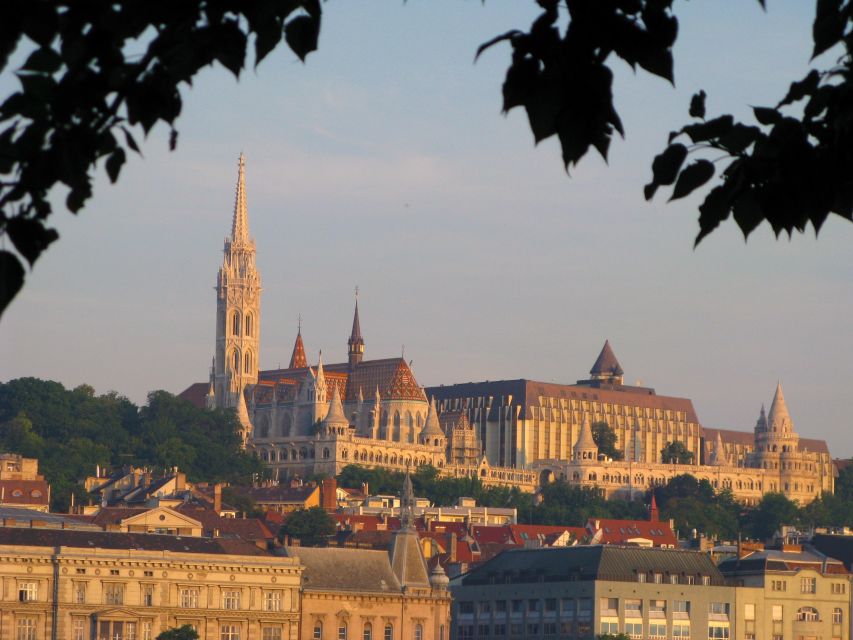
Budapest can feel like two cities sharing one river. Pest is the side that grew outward with trade, administration, and everyday life, and that is exactly the lens this tour uses. You will start with major landmarks, but the bigger goal is understanding how Pest thinks and how it differs from Buda, both historically and in daily life today.
The pacing is meant to be steady, not frantic. Guides on this tour tend to shape the walk around your questions, and that matters because Hungary’s story is layered, from the Austro-Hungarian Empire to the WWII years and the Communist era. When a guide can connect a building in front of you to a political decision decades earlier, the city stops being a photo set and starts being understandable.
Also, the group size helps. With a small group (limited to 10), you are more likely to get a real conversation rather than a lecture you are forced to listen to from the back.
Other Budapest bookings worth a look
- Budapest: Buda Castle Walk with Saint Stephen’s Hall
★ 4.5 · 3,012 reviews - Budapest: Buda Castle District Walking Tour
★ 4.6 · 2,108 reviews - Budapest City Landmarks Walking Tour in 2 Hours
★ 5.0 · 2,048 reviews
St. Stephen’s Basilica inside: the ticket you will appreciate
St. Stephen’s Basilica is Budapest’s largest church, and the best part is not the postcard exterior. The value here is the included entrance ticket that gets you inside for the full experience.
What makes the basilica a great early stop is how quickly it gives you a sense of scale and ambition. Inside, you can connect the physical grandeur to what Hungary valued across different periods. Your guide also frames it in the bigger timeline, so you are not just admiring decoration, you are learning why the site mattered and how people experienced it.
A practical note: basilicas can mean crowds, and an included ticket helps keep the tour from turning into a half-hour delay hunt. If you like architecture, sacred spaces, and short lessons with clear takeaways, this is one of the strongest parts of the route.
Heroes’ Square: a “1000 years” stop that doesn’t feel like homework
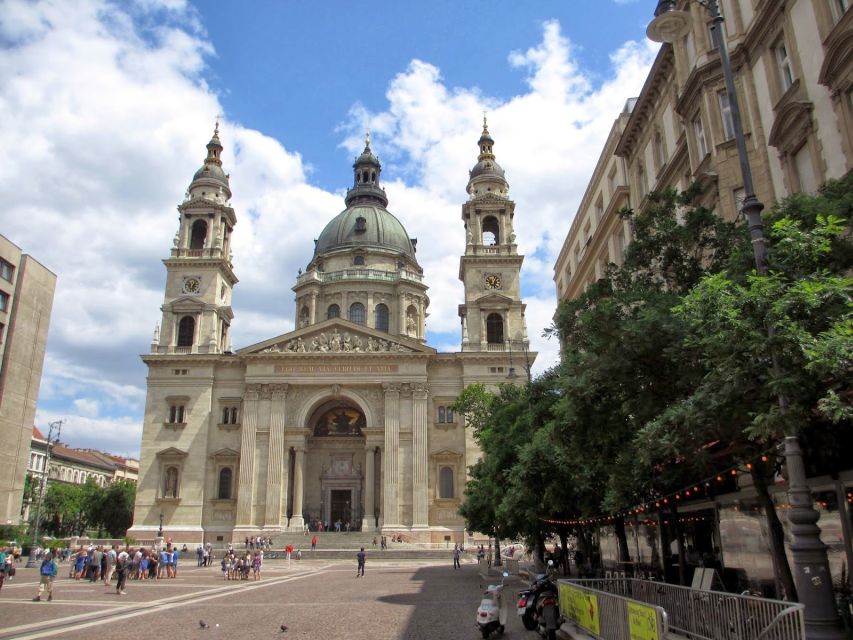
Heroes’ Square can be a tough stop if all you get is a quick pointer at statues. Here, the focus is on what those figures represent and how the city narrates its identity through them.
This is where the tour leans hardest into Hungary’s longer arc. You will learn about influential historical persons tied to the monument, and the guide helps you make sense of the symbolism. The square is also a great reset moment in the middle of the walk because you can look around, take photos, and absorb the story visually.
I like this stop because it sets up a question you will keep thinking about for the rest of the day: how does a place decide which people become its public memory? When your guide gives the context, the monument stops being background and becomes a clue.
Andrássy Avenue to the Opera: UNESCO streets you can actually walk
Andrássy Avenue is a UNESCO world heritage site, and on foot it works better than from a bus window. This section of the tour is where Budapest’s “grand boulevard” feel comes through: sweeping views, impressive façades, and a sense of how the city presented itself.
Along the route, you also get architecture you can read like a language. The Hungarian State Opera shows you the cultural importance placed on performance and public life. This is not just pretty streets either, because the guide ties the architecture to Hungary’s historical confidence and changing politics.
If you enjoy walking in cities with rhythm, Andrássy Avenue gives you that. It also helps you space out the heavier history stops. By the time you reach the next landmark, you are not overloaded, you are ready to keep connecting stories to details.
A different sort of Budapest afternoon:
- Budapest: City Highlights Sightseeing Cruise
★ 4.6 · 43,981 reviews - Budapest: Unlimited Prosecco, Beer and Aperol Spritz Cruise
★ 4.8 · 37,304 reviews - Budapest: Széchenyi Spa Day Ticket with Optional Upgrades
★ 4.3 · 23,911 reviews - Budapest: Nighttime or Daytime Sightseeing Cruise
★ 4.2 · 21,062 reviews
Gresham Palace, the Academy of Sciences, and the Danube Promenade walk
Not every stop here is famous by name, and that is a good thing. You also pass through streets and buildings that make Pest feel lived-in and real, including the Art Nouveau splendor of Gresham Palace and the historic Academy of Sciences.
This part of the tour helps you notice Budapest’s variety. Pest is not one uniform style. It is a mix of periods and ambitions, layered on top of each other. When you walk by something like the Gresham Palace details and then keep moving, the city starts to feel like it grew in phases instead of being planned in one moment.
You also get a Danube Promenade stretch, which is useful for two reasons. First, it gives you a break from city-street density. Second, it reminds you that Budapest’s story is tied to the river, not just to buildings.
And since Zrínyi Street cobblestones are part of the walk, you will feel the city’s texture under your shoes. That sounds small, but it is exactly what makes a walking tour more than sightseeing.
Millennium Underground ride: history you can feel in your seat
The Millennium Underground stop is one of the most memorable pieces of this tour because it is not a museum display. You ride it.
This line is described as the oldest one on the continent, and that matters because you are experiencing a piece of how Budapest moved people for generations, not just learning the fact. The ride also breaks up the walking in a practical way, so the tour feels balanced rather than nonstop.
I also like that it adds a different kind of “history.” With monuments you look. With transit you notice motion, everyday behavior, and how infrastructure shapes routines. It is a quieter lesson, but it sticks.
If you are curious about how old cities still function in modern ways, this is a great moment. It makes the phrase Budapest history feel less like a timeline and more like daily life.
How the historian guide turns streets into story (and answers your questions)
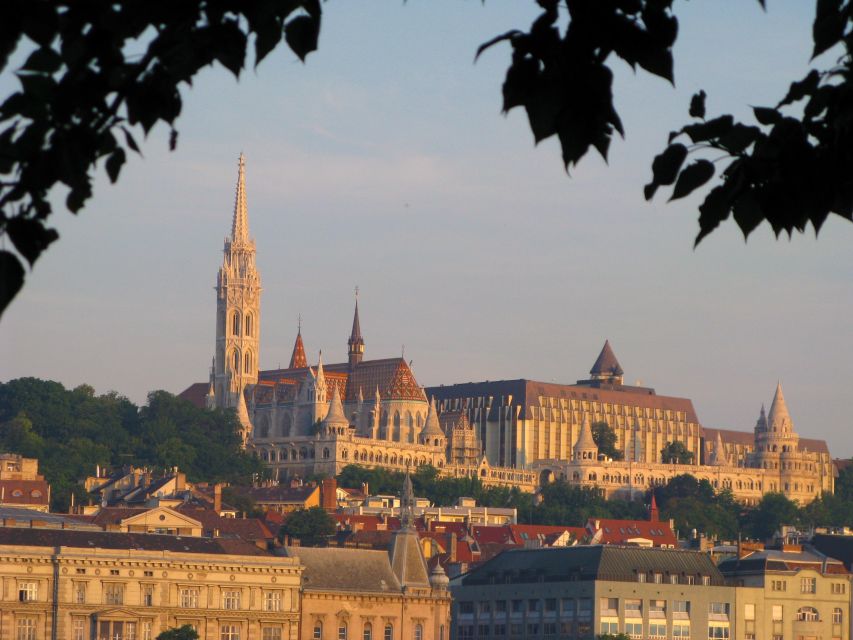
What elevates this tour is the way the guide teaches. The best guides here do two things at once: they share context and they keep the conversation open.
You will find guides like Judit, Barbara, Monica, Andrea, Raymond, Greg, Gergely Molnár, and Noemi mentioned across past tours. Names differ, but the pattern is consistent: guides explain what you are seeing, then connect it to major events and everyday life. One guide can give you a quick historical foundation early on, then build from there so you are not lost in the middle.
You should also expect real Q&A. This tour is friendly to questions about Hungary today, not only the past. That is useful if you want more than postcard Budapest and you are trying to understand how historical changes affect what people say and do now.
Small-group format helps here. With fewer people, you are more likely to get direct answers and follow-up discussion, instead of listening to general statements that do not fit your interests.
Price and what $57 buys you in real value
At $57 per person for a 3-hour tour, you are paying for three things you would otherwise have to piece together: expert storytelling, a guided route that hits the main Pest highlights, and included entries and transit that reduce friction.
Two included items stand out for value. The St. Stephen’s Basilica entrance ticket means you do not have to manage that on your own during a short stay. The subway tickets included for the Millennium Underground ride take away another logistical step and keep the schedule moving.
The small-group cap of 10 also supports the price. If you have ever done big-city walks where you spend more time keeping up than learning, you will appreciate the smaller size.
Is it expensive? It is not cheap, but it is not out of line for a historian-led experience with entry included and a transit component. If you want the “most useful” overview of Pest rather than random landmarks, this price can feel fair.
Who should book this Pest walking tour
This tour is a strong fit if:
- You want a clear introduction to Pest and how it differs from Buda
- You like history explained in plain terms, with time for questions
- You prefer walking plus one short transit ride over sitting through a standard bus loop
- You care about landmark context, like why Heroes’ Square statues matter
It may be less ideal if you:
- Want a slow, unstructured stroll with lots of long stops
- Have limited tolerance for walking over cobblestones and moving between several sites in a short window
If it is your first time in Budapest, this tour is a good way to get your bearings fast. It also pairs well with later independent exploring, because you will know what to look for when you return to places like St. Stephen’s Basilica, Andrássy Avenue, or the river areas.
Meeting point at Kempinski Corvinus: arriving without stress
You meet in front of Kempinski Hotel Corvinus Budapest, facing the Ferris wheel on Erzsébet square. If you are using the metro, you can reach it using M1, M2, or M3, with the Deák Ferenc tér stop being the key reference point.
I like this meeting spot because it is central and easy to reference. If you arrive a little early, you can take a moment to orient yourself to Erzsébet square before the group gathers and you start moving.
Should you book this historian-led Pest walking tour?
Yes, if you want the best use of a short Budapest trip. The combination of St. Stephen’s Basilica inside (ticket included), a Heroes’ Square framing that connects names to meaning, a real ride on the Millennium Underground, and a walk along Andrássy Avenue gives you a dense, useful introduction to Pest without feeling like a rush job.
Book it especially if you enjoy asking questions. This is the kind of tour where the guide can tailor explanations on the fly, from big empire shifts to Communist-era impacts and what Hungary feels like now.
If you are mostly hunting for silent photo stops and minimal walking, you might prefer something lighter. But if you want to leave Budapest with a clearer mental map of Pest and the forces that shaped it, this one is a solid choice.
FAQ
How long is the Budapest Pest walking tour?
The tour lasts 3 hours.
How much does the tour cost?
The price is $57 per person.
What is included besides the walking tour?
You get a historian guide, entrance ticket to St. Stephen’s Basilica, subway ticket(s), and the walking tour itself.
Do you visit St. Stephen’s Basilica?
Yes. You visit St. Stephen’s Basilica inside, and the entrance ticket is included.
Do you ride the subway during the tour?
Yes. The tour includes a ride on the Millennium Underground, and subway ticket(s) are included.
How big is the group?
The group is small, limited to 10 participants.
What language is the tour guide?
The tour is offered in English.
Where is the meeting point?
You meet in front of Kempinski Hotel Corvinus Budapest, facing the Ferris wheel on Erzsébet square.
Can I get a refund if my plans change?
Yes. Free cancellation is available up to 24 hours in advance for a full refund.
Newest reviews from Budapest
- Buda Castle Private Walking Tour: A Kingdom of Many Nations★ 5.0 · 9 reviews
- Budapest Walking Tour: Explore Top Sights & Hidden Gems★ 4.5 · 9 reviews
- See the Hungarian Sea: Lake Balaton★ 4.5 · 9 reviews
- Transylvania Tour from Budapest to Bucharest: 4 days★ 5.0 · 10 reviews
- Luxurious, private day cruise with a waterlimousine to Szentendre★ 4.0 · 10 reviews
- Born Under The Red Star – Communist tour with Coffee in a Retro Bar★ 5.0 · 10 reviews
- Live virtual walking tour in the Buda Castle quarter★ 5.0 · 10 reviews
- Private Tour Around Budapest★ 5.0 · 10 reviews
Walking Tours, compared.

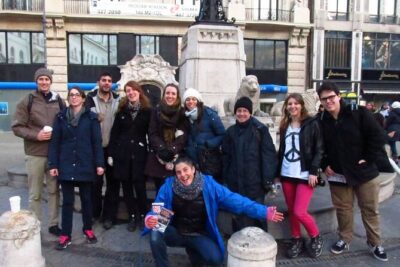
Budapest City Landmarks Walking Tour in 2 Hours
Read our review →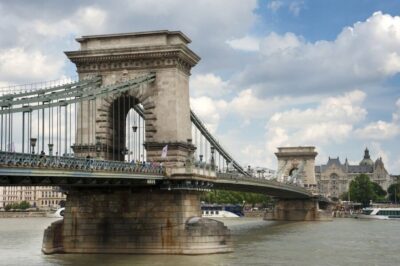
3-Hour Orientation Walking Tour of Buda and Pest
Read our review →
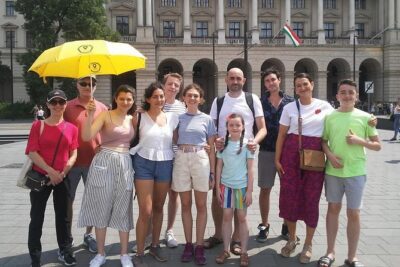
Budapest Historical Sightseeing – Free Walking Tour
Read our review →
Budapest Food Walking Tour: Eat, Sip & Explore Like a Local
Read our review →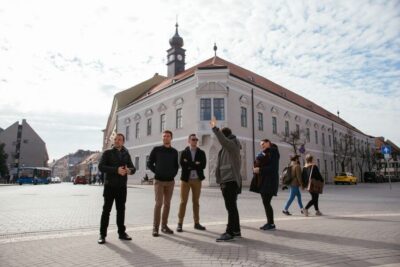
Buda Castle District Walking Tour with a Historian
Read our review →Browse the lists this tour appears in