
Reviewed · ART NOUVEAU
Art Nouveau Treasures of Budapest – Exclusive Private Tour
This Budapest Art Nouveau private tour is interesting because it pairs a relaxed walking plan with expert eyes on the details, and it ends where you can actually view Miksa Róth stained glass. I really like that the guide includes an art historian, so you learn what to notice instead of just collecting building names.
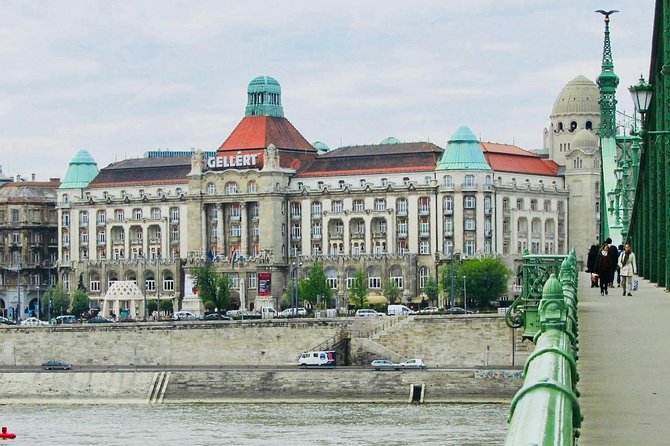
I also like the mix of Secessionist stops, from Hotel Gellért to the Postal Savings Bank by Ödön Lechner, so you see how one artistic movement shows up in different materials, textures, and public spaces. One consideration: it is a mostly on-foot tour using public transport between areas, and the Central Market Hall stop uses a ticket that is not included, so plan your extra spending and pace.
Key highlights at a glance
- Art historian-led looking at Art Nouveau and Hungarian Secession design details, not just quick photos
- Hotel Gellért viewed in its iconic Seccesionist style setting (admission ticket free)
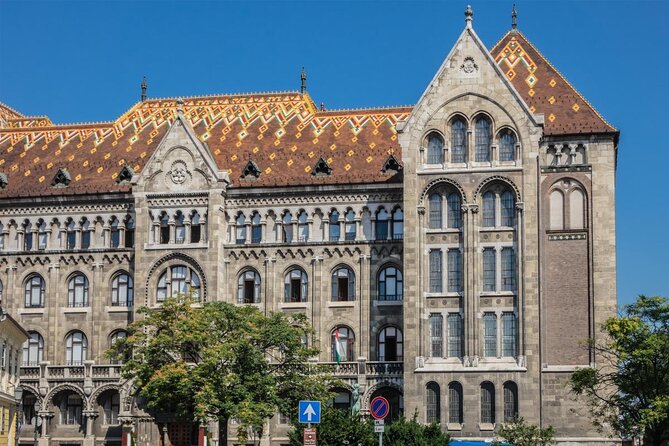
- Ödön Lechner’s Hold utca Postal Savings Bank with colorful tile and folk motif storytelling
- Miksa Róth stained glass access at the end of the tour in a century-old private apartment
- Flexible start time and optional pickup to fit your schedule
- Small private group with a cap of up to 5 people
Why Budapest Art Nouveau is best seen with a guide (and a plan)
Budapest is one of those cities where Art Nouveau and Hungarian Secession do not sit politely behind ropes. They show up on façades, in tilework, in staircases, and in the way buildings shape public life. The fun part of this tour is that it turns that scattershot beauty into a clear route, with short timed stops and expert commentary guiding you toward the real design ideas.
I like that the tour is built around how the style feels in real space. You are not just staring at posters. You walk across bridges, pause at major landmarks, and then finish in a private setting where you can see stained glass in a context that feels lived-in. That ending matters, because Miksa Róth’s work is famous, yet not always easy to access.
The other smart choice is the private format. For a group of up to 5, you can ask questions as you walk. That small-group size also helps the guide keep the pace steady for a 2.5 to 3 hour experience.
The guide team you’ll rely on for the design details
This is not a drive-by tour. You get a local guide plus a professional art historian guide, along with a professional guide. That combo changes the experience from sightseeing to learning how to read buildings.
In past tours, the guide has been Miklós, described as articulate and personable, with real passion for how Budapest’s architecture works. That kind of energy is useful, because Art Nouveau can look decorative until someone points out the structure beneath the ornament. A good explanation helps you spot the difference between style trends, workshop choices, and symbolism.
You also get what I think of as insider access. One review mentioned that the tour included lobby and restaurant interior moments that require the kind of knowledge and timing you usually do not have on your own. Even if you are mainly interested in exterior façades, those occasional interior glimpses are where the style turns from wallpaper to atmosphere.
More Art Nouveau walks in Budapest:
- Private Art Nouveau Tour Budapest
★ 5.0 · 21 reviews - Art Nouveau Tour in Budapest: 3-Hour Private Tour
★ 4.6 · 21 reviews - Budapest Art Nouveau Walking Tour
★ 5.0 · 17 reviews
Starting at Central Market Hall, then heading for the Danube views
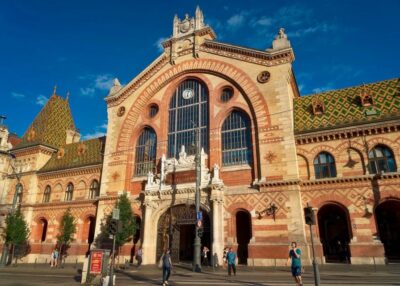
The tour begins at Central Market Hall in Budapest (1093 Hungary). Expect about 20 minutes here. Admission is not included, so you will want to budget for your own entry ticket if you plan to go in rather than only view from the entry areas.
Central Market Hall is a practical starting point for an Art Nouveau day. It is close to transit, it has strong visual density, and it gives you a baseline sense of how Budapest gathers commerce and culture in one place. Even if you are just using it as a design warm-up, you can look for motifs and material choices that echo the broader Secession look later in the route.
From there, you walk across one of Budapest’s beautiful bridges, heading toward Gellért hill. These bridge segments are short, but they matter because you get skyline framing and a sense of how different districts sit around the Danube. In a city full of sweeping vistas, those quick walk moments are often the most memorable.
Hotel Gellért Thermal Bath, Secession style in real life
Next up is St. Gellért Thermal Bath and Swimming Pool, connected to Hotel Gellért. This stop is about 20 minutes, and the tour notes admission ticket free.
Hotel Gellért is iconic for a reason. It has long been associated with the bath experience on the Danube’s western bank, but here the emphasis is on its Secessionist style. You get to see how a “peace of art,” meaning a designed work of architecture, can live inside something functional and everyday.
This is a good place to slow down a bit mentally. When you are focused on a thermal setting, you naturally stop looking at ornament as something separate from life. Instead, you see it as part of the way a public building invites movement, expectation, and comfort.
Potential drawback: because it is a bath complex, you might want to wear footwear that works for a bit of walking and standing. Also, the stop is time-boxed, so if you want deeper exploration, you may want to return later on your own after the tour.
Hold utca Postal Savings Bank by Ödön Lechner: tilework with a story
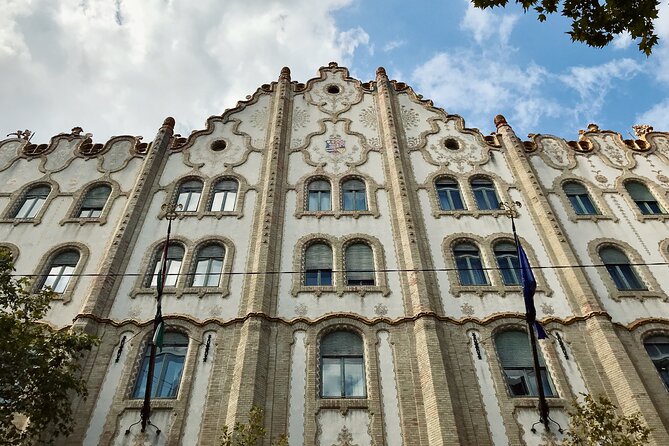
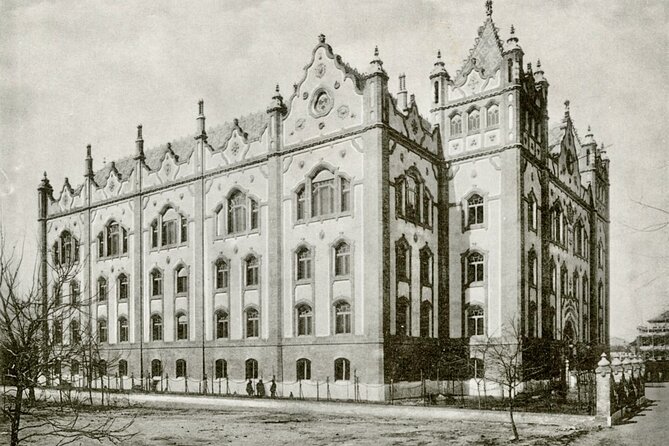
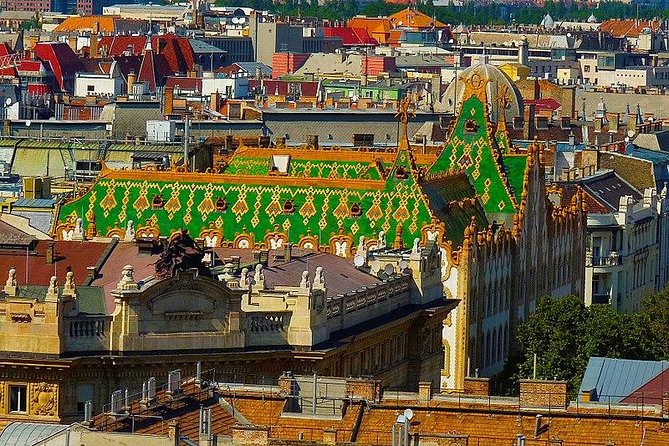
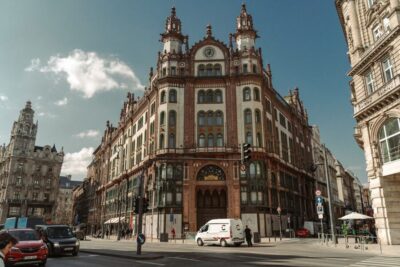
The core design stop in this route is Hold utca, tied to the Postal Savings Bank building designed by Ödön Lechner in 1901. The tour lists it as part of the “Nemzeti Bank” reference, but the building focus is clearly the Postal Savings Bank on Hold utca.
You spend about 20 minutes at the first banking stop, and then another 20 minutes again at the Postal Savings Bank. Admission is listed as free for these stops.
Why Lechner matters here is simple: the building is described as an extravaganza of colourful tiles and folk motifs. That combination is one of the best shortcuts for understanding Hungarian Secession. It is not just floral curves. It is a hybrid language, mixing decorative pattern, national visual references, and modern design ambition.
In practical terms, your art historian guide should help you look past the “pretty” layer. Focus on repetition, how motifs sit on surfaces, and how tilework acts like a skin for the architecture. When you see it explained, you start noticing how different façades and entry zones communicate different moods.
Possible planning note: because both banking-related stops are free, this is where you get the most “bang for time.” Still, the tour keeps everything moving. If you are the type who could spend an hour photographing details, you may feel slightly rushed unless you also enjoy the walking and bridge viewpoints.
A different sort of Budapest afternoon:
- Budapest: City Highlights Sightseeing Cruise
★ 4.6 · 43,981 reviews - Budapest: Unlimited Prosecco, Beer and Aperol Spritz Cruise
★ 4.8 · 37,304 reviews - Budapest: Széchenyi Spa Day Ticket with Optional Upgrades
★ 4.3 · 23,911 reviews - Budapest: Nighttime or Daytime Sightseeing Cruise
★ 4.2 · 21,062 reviews
Gutenberg Square and the Miksa Róth stairway lead-glass
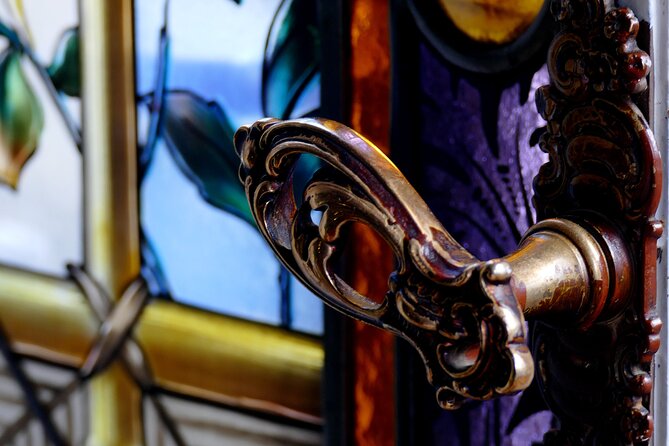
After the bank visuals, the tour moves toward Gutenberg Square. This stop is around 15 minutes, and admission is listed as free.
The highlight here is a historic art deco building in Budapest’s 8th district, with a stairway lead-glass by Miksa Róth. This is a useful reminder that Budapest’s architectural story does not stay in one style box. Within the same day, you can connect Art Nouveau roots to later expressions in building interiors.
Even with only 15 minutes, this stop can be satisfying because stained glass is visual information you do not have to “translate.” You can see the craftsmanship immediately. Your guide’s job is to connect that craftsmanship back to the broader artistic movement and the name Miksa Róth carries in stained glass design.
One consideration: because the stop is short, you should arrive ready to look up and around quickly. If you pause too long for photos, you might miss the chance to hear the explanation that ties the glass to its place in the city.
The ending at Rákóczi tér: a century-old apartment and a Miksa Róth stained glass window
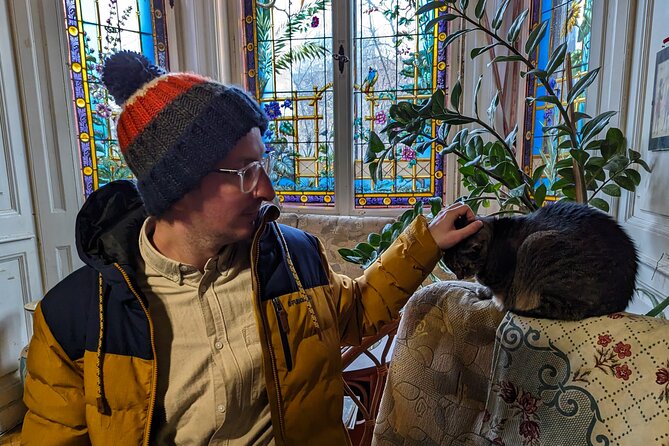
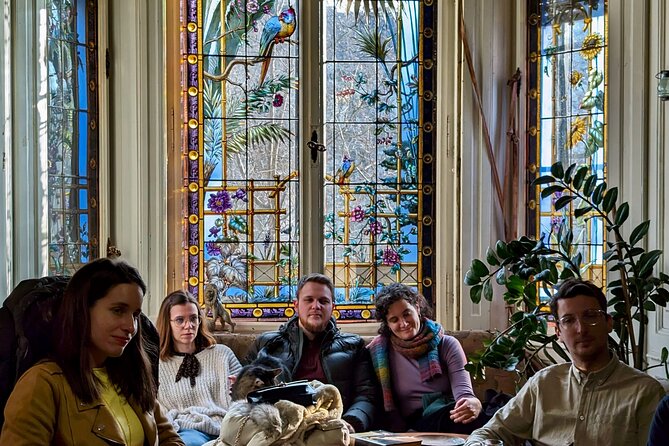
This tour finishes in a century-old private apartment near Rákóczi tér. This is where you get the truly special access: you can observe and admire an invaluable stained glass window by Miksa Róth.
This ending is why I think this tour is worth choosing instead of building your own self-guided route. Famous artists are often present in a city, but their best work is sometimes behind access limits. Here, you are not just looking at public façades. You are seeing stained glass as something designed for a real room, in a real living context.
Also, this kind of finish changes how the day feels. You start with public buildings and city views, and you end with a more intimate art moment. You might find that helps everything you saw earlier lock into place, especially the Secession emphasis on craft and symbolism.
Price and timing: is $261.67 per group good value?
The price is listed as $261.67 per group, up to 5 people, with a duration of about 2 hours 30 minutes to 3 hours. That matters, because in Budapest, the difference between “one-person entry tickets” and “a guided art historian session” can be huge.
Here is the value math I see:
- You get private time with a local guide and a professional art historian for a full walking route.
- Several major stops are listed as free for admission (Hotel Gellért stop, the Postal Savings Bank stops, and Gutenberg Square).
- The one notable exception is Central Market Hall, where an admission ticket is not included, so plan for that extra cost.
Another value factor: flexible start time and pickup options. If you are trying to fit a specific architecture day into your trip, those small logistics can save time and stress.
One caution that affects overall cost and comfort: the tour does not include private transportation. It is designed for walking, with public transport between areas. Public transport tickets are not listed as included, so factor in transit costs and time, and wear shoes you can stand and walk in for a few hours.
Who this tour suits best (and who might want to skip it)
This is a great fit if you:
- Love Art Nouveau, Hungarian Secession, and decorative architecture that tells a story
- Prefer learning from a guide who explains design choices while you walk
- Like private tours where you can ask questions and keep the pace comfortable
- Want a highlight finish at Miksa Róth stained glass that you likely cannot plan on your own
This might not be ideal if you:
- Want a long, slow museum-style visit at one site, because stops are short and timed
- Are not comfortable with about a half-day of walking and standing for a total time of around three hours
- Are hoping meals and drinks are built into the tour (food and drinks are not included unless specified)
It also fits well for travelers who appreciate practical city framing. Bridge walks and district-to-district movement can turn a style topic into an actual sense of where these buildings live in Budapest.
FAQ
FAQ
How long is the Art Nouveau Treasures of Budapest private tour?
It runs about 2 hours 30 minutes to 3 hours.
How many people are in a private group?
It is a private tour, and the group size is up to 5 people.
Is the tour offered in English?
Yes, it is offered in English.
Does the tour include pickup?
Pickup is offered. You can meet at your hotel in Budapest, or at a central meeting point you agree on.
Is admission included for Central Market Hall?
No. The Central Market Hall stop is listed as admission ticket not included.
Are the other stops ticketed?
For St. Gellért Thermal Bath and Swimming Pool, the admission ticket is listed as free. For the Postal Savings Bank stops and Gutenberg Square, admission is also listed as free.
How do you move between locations?
The tour does not include private transportation. It is designed to be done on foot, along with public transportation.
Where does the tour end?
It ends at Rákóczi tér in Budapest, in a century-old private apartment where you can view a Miksa Róth stained glass window.
Is there a cancellation refund?
Free cancellation is available. You can cancel up to 24 hours in advance for a full refund.
Should you book this Art Nouveau Treasures tour?
If you care about Art Nouveau and Hungarian Secession beyond the postcard level, this is a strong choice. The mix of Secession landmarks plus the finish at a Miksa Róth stained glass window gives you both breadth and a standout ending. Just make sure you are comfortable with a walking-focused route and the fact that Central Market Hall entry is not included.
Newest reviews from Budapest
- Private Tour Around Budapest★ 5.0 · 10 reviews
- Born Under The Red Star – Communist tour with Coffee in a Retro Bar★ 5.0 · 10 reviews
- Live virtual walking tour in the Buda Castle quarter★ 5.0 · 10 reviews
- Taste Budapest – Fat Boy Foodies Walk★ 4.5 · 10 reviews
- Wine & Food Tasting Cruise on the Danube★ 3.5 · 10 reviews
- Private Transfer from Budapest to Prague with 2 hours for sightseeing★ 4.5 · 10 reviews
- The Real Saw | Escape Room by PÁNiQ SZOBA★ 4.1 · 10 reviews
- City Park True Crime of Hungary and Night Walk Tour in Budapest★ 5.0 · 10 reviews
Art Nouveau, compared.
Art Nouveau Tour in Budapest: 3-Hour Private Tour
Read our review →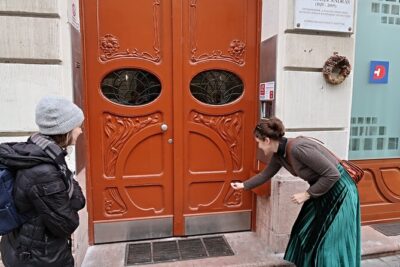
Browse the lists this tour appears in