
Reviewed · WALKING TOURS
Budapest Grand Walk
Budapest Grand Walk is interesting because it stitches together the big, famous sights with the streets between them. You cover a lot of ground on foot, then use public transit for quick reality checks on how the city actually moves. It is built around history you can see, not history you only hear.
I like two things a lot here. First, you start with Hungarian sparkling wine at Tasting Table Budapest before you even leave the Palace district. Second, guides such as Aniko and Angela have a knack for turning major events into something you can picture, including the story line from early medieval Hungary through the present, plus very clear context for 1956 and the Jewish Quarter. The one catch is that the route is packed for a 4-hour plan, so you will want comfortable shoes and a little patience for crowds at the major landmarks.
Key Highlights Worth Signing Up For
- Sparkling-wine start at the Palace district wine shop, setting a relaxed tone from the first minute
- Europe’s oldest metro line ride, which breaks up the walking and gives a real feel for local transit
- Pest classics plus smaller stops, including Andrassy Avenue, St. Stephen’s Basilica, and the former Jewish Quarter
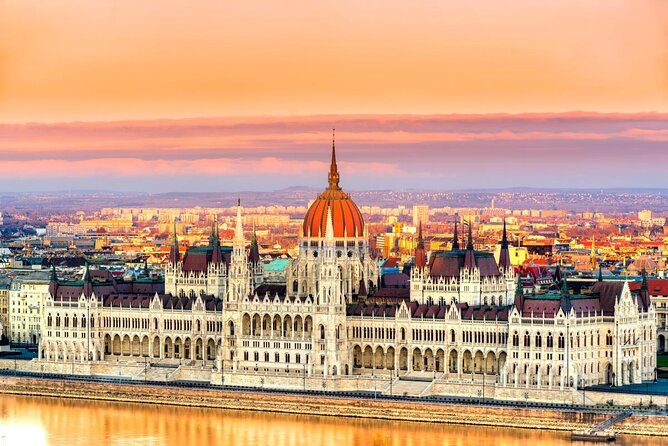
- The Danube promenade viewpoint circuit, with Parliament and Chain Bridge across the river
- Shoes on the Danube Holocaust Memorial, paired with other riverfront monuments and explanations
- Small-group format (2 to 8 people), helpful for asking questions and getting personal pacing
A Mid-Afternoon Grand Walk That Links Both Sides of Budapest
This is a 4-hour, guided walking tour in Budapest that starts in the mid-afternoon. The meeting point is at Tasting Table Budapest, Bródy Sándor u. 22, 1088 Hungary, in the Palace district. The tour ends near the Chain Bridge on the Pest side, so you can continue on your own right away.
The layout matters. You spend time in Pest for the key sights and stories, then finish at a point that sets you up for Buda Castle exploring across the river. If you want your first day in Budapest to feel coherent, this kind of structure is gold.
Other Budapest bookings worth a look
- Budapest: Buda Castle Walk with Saint Stephen’s Hall
★ 4.5 · 3,012 reviews - Budapest: Buda Castle District Walking Tour
★ 4.6 · 2,108 reviews - Budapest City Landmarks Walking Tour in 2 Hours
★ 5.0 · 2,048 reviews
Start at Tasting Table Budapest, Then Taste and Walk
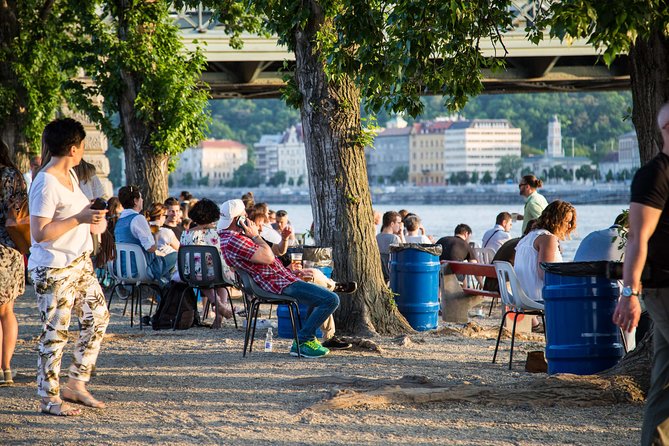
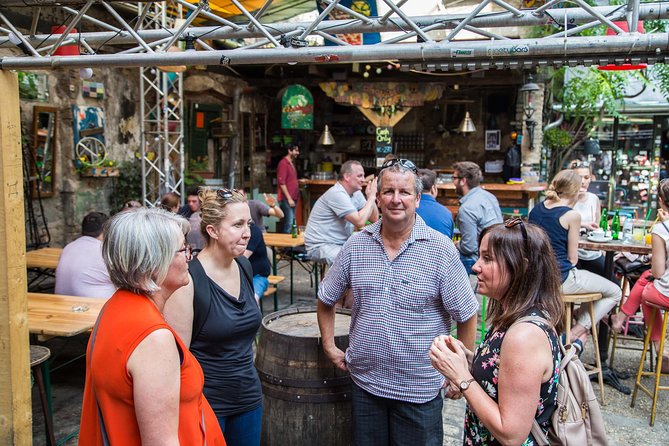
You begin at Tasting Table Budapest, where you meet your guide and start with an aperitif style moment. A glass of Hungarian sparkling wine kicks things off, and it helps the group settle quickly, especially after travel days.
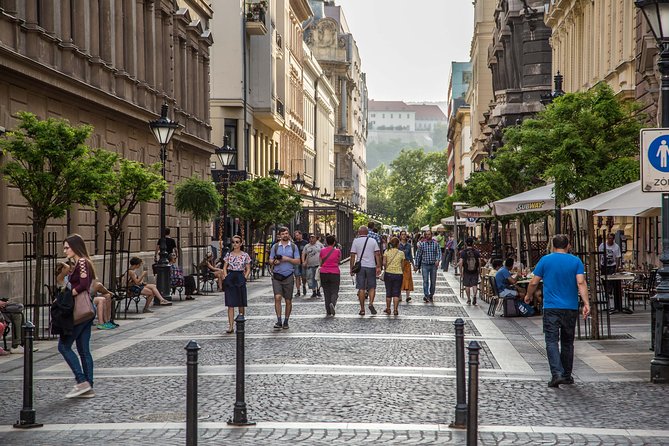
From there, you head by foot into Pest’s handsome streets. That walking piece is not just for exercise. It is the only way you notice how the city’s buildings, street widths, and corners shape daily life, and how the big landmarks fit into the neighborhoods around them.
Palace District and 1956 Footsteps: Radio Building and Museum Area
One of the tour’s smartest choices is using the Palace district area to set historical context early. As you move through Pest, you pass the Hungarian National Radio Building, which played an important role during the 1956 Revolution. Even when you only see the exterior, the guide’s explanations make the building feel like a chapter, not just an address.
You also pass near the National Museum area. That matters because Budapest’s story runs through the way people preserve and display their identity. You get the sense that you are not just walking around monuments, you are walking through the institutions that shaped national memory.
Andrássy Avenue Power Stops: Opera House and the Main-Sight Energy
You will also pass the Hungarian State Opera House, a neo-Renaissance building on Andrássy út. It was designed by Miklós Ybl, and the architecture is the sort that rewards slowing down for a few photos.
Andrássy Avenue itself comes into the highlight set, so expect that “big boulevard” feel with monumental buildings nearby. This is a good time to let the guide connect the styling of the city to the politics and aspirations of the eras you are touring through. If you like when architecture turns into storytelling, this section will click.
A different sort of Budapest afternoon:
- Budapest: City Highlights Sightseeing Cruise
★ 4.6 · 43,981 reviews - Budapest: Unlimited Prosecco, Beer and Aperol Spritz Cruise
★ 4.8 · 37,304 reviews - Budapest: Széchenyi Spa Day Ticket with Optional Upgrades
★ 4.3 · 23,911 reviews - Budapest: Nighttime or Daytime Sightseeing Cruise
★ 4.2 · 21,062 reviews
Heroes Square and Basilica Stop: Big Icons With Real Meaning
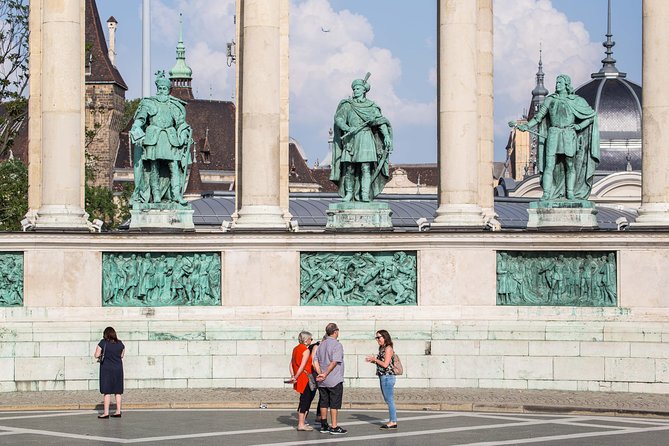
Heroes Square is one of the major photo magnets on the route, and you get time to admire it in context. The guide uses it as a turning point, linking national identity to who gets remembered and how.
Next up is St. Stephen’s Basilica (Szent Istvan Bazilika). This Catholic basilica is named for Stephen, the first King of Hungary, and the church houses his mummified right hand. It is the kind of detail that changes how you see a famous building, because it gives you a specific reason people treat the place as important.
If you are the type who likes to know one or two concrete facts before you look at the ceiling and domes, you will appreciate how this stop is framed.
The Oldest Metro Line Ride and a Café Break That Actually Helps
After St. Stephen’s Basilica, the tour includes a few short trips on public transportation. One highlight is a ride on Europe’s oldest metro line. That is not a gimmick. It is a practical reset when walking adds up and you want to keep your energy for the Danube and Jewish Quarter portions.
You also get a coffee break at a favorite local café, with coffee and/or tea included and one coffee or drink as part of the tour. This pause is key for two reasons. It keeps the pace human and it gives you a chance to look less like a sightseeing robot and more like you are living in the city for an hour.
Former Jewish Quarter Focus: Grand Synagogue Area and Király utca
The former Jewish Quarter portion is one of the most meaningful and visually memorable parts of the day. You will see the Grand Synagogue area, including the Grand Synagogue, described as Europe’s largest. The tour keeps it moving, but the guide’s framing helps you understand why this neighborhood is central to Budapest’s story.
You will also pass by Gozsdu udvar, along with Király utca. That combination gives you both the landmark scale and the street-level vibe, so you are not only looking at history from a distance. You get the sense of how the area looks today, not only how it looked in textbooks.
Danube Promenade Sights: Parliament, Chain Bridge, and Buda Castle Views
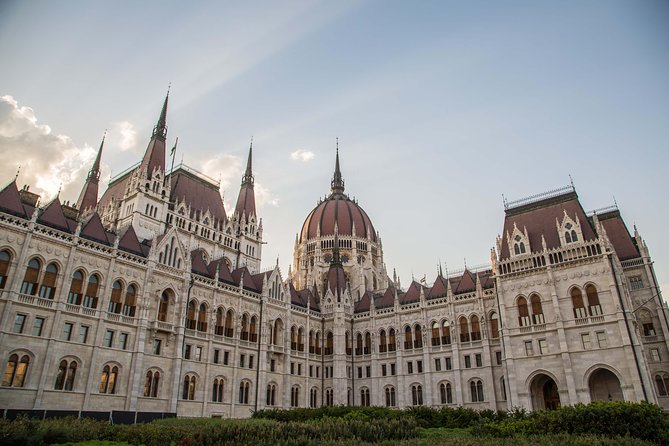
Once the tour heads toward the Danube bank, the views start doing the heavy lifting. The neo-Gothic Parliament building dominates the Danube bank, and standing where you can see it across the river helps you understand Budapest’s layout fast.
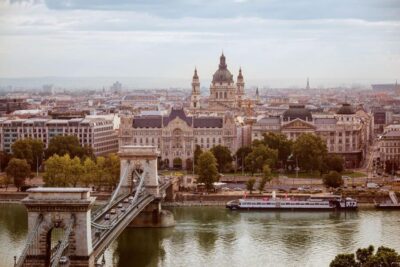
The tour also includes a Danube promenade perspective with the Chain Bridge and Buda Castle across the water. That is a smart way to orient yourself. If you are planning to return later for photos or longer walks, these angles help you pick your next best viewpoint.
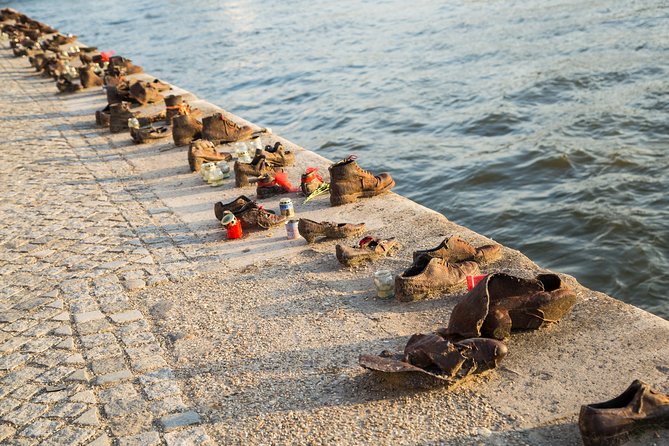
You will also see the Shoes on the Danube Holocaust Memorial. This memorial is one of Budapest’s most moving stops, and the guide’s explanations matter here because the symbolism can be easy to miss if you only scan it as scenery.
Other Riverfront Monuments and Why Names Matter
Along the way, you are not only viewing the big-ticket landmarks. The route includes additional monuments, including a Soviet Monument, and the guide explains why memorials include names tied to major events.
One example mentioned is why there is memorial attention to characters such as a US major and Ronald Reagan. You may not catch that type of detail on your own. When the guide connects the names and the locations to the political shifts and alliances, the city starts reading like a timeline.
Finish Near Chain Bridge, Then Go Explore Buda Castle on Your Own
Your tour ends near the Chain Bridge on the Pest side, which is a practical gift. You can cross the bridge and continue exploring Buda Castle whenever you feel like it, instead of rushing an instant stop as the final act.
As you look toward Buda Castle, you may notice that the overall experience also touches areas around the 7th district complex of seven buildings and connected courtyards. These courtyards are described as lively, with shops and restaurants, so it feels less like you only visited a museum and more like you arrived at an active district.
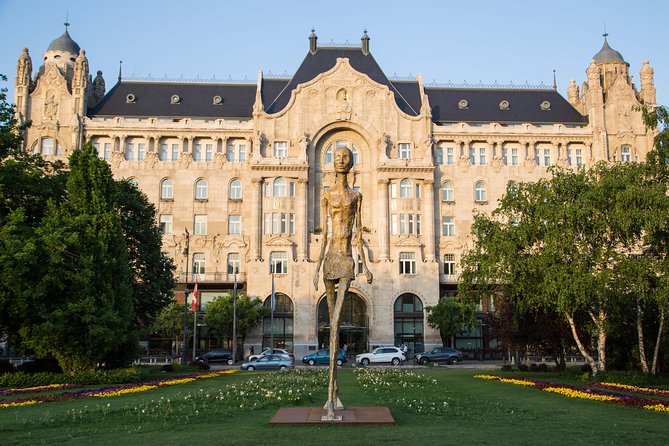
Two other named highlights in this zone include the Hungarian Academy of Sciences, set in an elegant neoclassical palace built in 1865, and Liberty Square, with beautiful buildings including the former stock exchange. Even if you do not spend extra time there today, knowing where to aim makes your follow-up wandering more satisfying.
Walking Load, Timing, and How to Keep the Day Comfortable
This is a moderate walking tour. Comfortable shoes are strongly recommended, and it helps to arrive with energy since the 4-hour route includes multiple stop-and-go segments for photos and questions.
The timing is mid-afternoon, which is often a sweet spot for light and pacing, but it also means you should plan your dinner later. The tour is designed to fit a lot into 4 hours, and it can stretch a bit if you are not in a rush, so build in room for a slightly longer day if you want to savor conversations.
Public transport rides are included, including the metro line portion, so you are not walking nonstop. Still, you should expect enough on your feet that you will feel it after.
Price and Value: What You Get for $125
At $125 per person, the value comes from the mix. You are paying for an English-speaking local guide, a structured route across major sights and lesser-known stops, and included drinks plus transit.
Included items that add real value:
- A glass of Hungarian sparkling wine at the start
- Coffee and/or tea, with a coffee or drink break during the tour
- Alcoholic beverages included
- Public transportation segments, including the continent’s oldest metro line
If you were to DIY this, you would still pay for transit, coffees, and possibly museum or sight costs depending on what you choose to do. The tour also compresses decision-making, so you spend your energy looking and learning instead of mapping the day.
It is also offered as a shared small group with a maximum of 8 travelers. That often helps you feel part of the experience without the chaos of huge group buses.
Who This Tour Suits Best, and Who Might Want a Different Plan
This works very well for first-day visitors who want an orientation tour that combines classics and context. It is especially a fit if you like history tied to specific places, like the 1956 Revolution connection at the Hungarian National Radio Building, and the Holocaust remembrance at the Shoes on the Danube Memorial.
You will also like it if you enjoy walking but do not want to plan every leg alone. The tour gives you a coherent arc from Palace district to major Pest landmarks, then down to the Danube and toward Chain Bridge.
If you want minimal walking, this may feel like too much. It is also not a quiet sit-down museum tour. It is a moving day with photo stops and frequent questions.
Should You Book Budapest Grand Walk?
Book it if you want a 4-hour Budapest overview that actually helps you understand what you are seeing, with included wine, coffee, and transit built into the plan. It is also a smart choice if you want to finish near Chain Bridge so you can continue to Buda Castle at your own pace.
Skip it or consider a shorter alternative if you know you cannot handle a moderate walking day, or if you prefer to spend most of your time inside one area rather than connecting Pest to the river views that frame Buda.
FAQ
Where does the Budapest Grand Walk start and end?
The tour starts at Tasting Table Budapest, Bródy Sándor u. 22, 1088 Hungary. It ends near the Chain Bridge at Széchenyi Lánchíd, Budapest, Hungary.
How long is the tour?
It is approximately 4 hours.
What language is the tour offered in?
The tour is offered in English.
What is included in the tour price?
Included items are an English-speaking local guide, a glass of Hungarian sparkling wine at the start, a coffee break (one coffee or drink included), coffee and/or tea, alcoholic beverages, and a few short trips on public transportation including Europe’s oldest metro line.
How much walking is involved?
The tour includes a moderate amount of walking, so comfortable shoes are recommended.
Can I cancel or change my booking and get a refund?
This experience is non-refundable and cannot be changed for any reason. If the minimum number of travelers is not met and it is canceled, you will be offered an alternative or a full refund.
What group size should I expect?
It is a shared small-group tour with 2 to 8 guests, and the route is designed for that smaller group size.
Newest reviews from Budapest
- Buda Castle Private Walking Tour: A Kingdom of Many Nations★ 5.0 · 9 reviews
- Budapest Walking Tour: Explore Top Sights & Hidden Gems★ 4.5 · 9 reviews
- See the Hungarian Sea: Lake Balaton★ 4.5 · 9 reviews
- Transylvania Tour from Budapest to Bucharest: 4 days★ 5.0 · 10 reviews
- Luxurious, private day cruise with a waterlimousine to Szentendre★ 4.0 · 10 reviews
- Private Tour Around Budapest★ 5.0 · 10 reviews
- Born Under The Red Star – Communist tour with Coffee in a Retro Bar★ 5.0 · 10 reviews
- Live virtual walking tour in the Buda Castle quarter★ 5.0 · 10 reviews
Walking Tours, compared.
Budapest City Landmarks Walking Tour in 2 Hours
Read our review →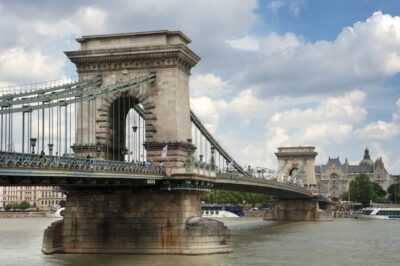
3-Hour Orientation Walking Tour of Buda and Pest
Read our review →
Budapest Historical Sightseeing – Free Walking Tour
Read our review →
Budapest Food Walking Tour: Eat, Sip & Explore Like a Local
Read our review →
Buda Castle District Walking Tour with a Historian
Read our review →Browse the lists this tour appears in