
Reviewed · WALKING TOURS
Downtown Pest Walking Tour
Pest is where Budapest started to flex its muscles, and this 3-hour walk makes that story easy to grasp. I like that you get a historian guide who connects buildings to big political, financial, and religious shifts in the late 1800s, right in the street. If you’re lucky enough to get András or Zsofia, you’ll see what good storytelling sounds like.
I love two parts most: the stop at the Stock Exchange Palace and Freedom Square, where the city’s wealth and ambition show up in stone, and the Art Nouveau streets that give Budapest its distinctive face. You also get a clear sense of how Andrassy Boulevard was planned for the Hungarian nobility, not random foot traffic.
The main drawback is simple: it is a 3-hour walking route through major monuments and busy squares. If you need lots of long sits, plan for short stand-and-look pauses instead of expecting benches everywhere.
Key highlights you should care about
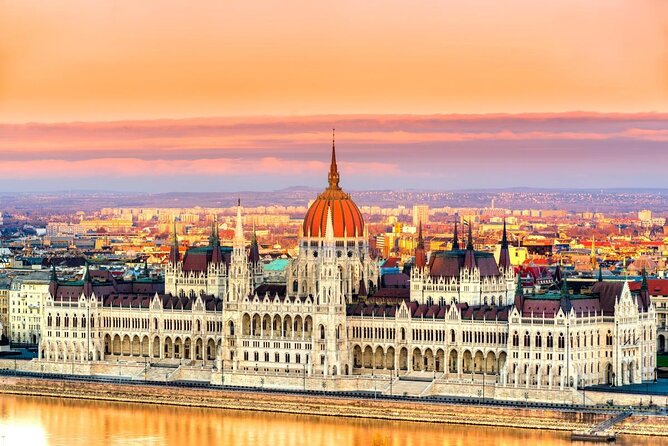
- Parliament at Kossuth square: huge from the outside, packed with art inside when you’re looking for more than a photo stop
- Holocaust Monument by the Danube: an on-the-ground place to remember, not a far-off museum idea
- Freedom Square with the Stock Exchange Palace: Budapest’s financial power in a walkable cluster
- St. Stephen’s Basilica area: a smooth pivot from civic life to religious life
- Second-largest synagogue in the world: a major landmark tied to the city’s Jewish community and civic role
- Andrassy Boulevard to Heroes Square: an end-to-end “how the city celebrates itself” finale
Downtown Pest: the 19th-century parts of Budapest you can actually walk
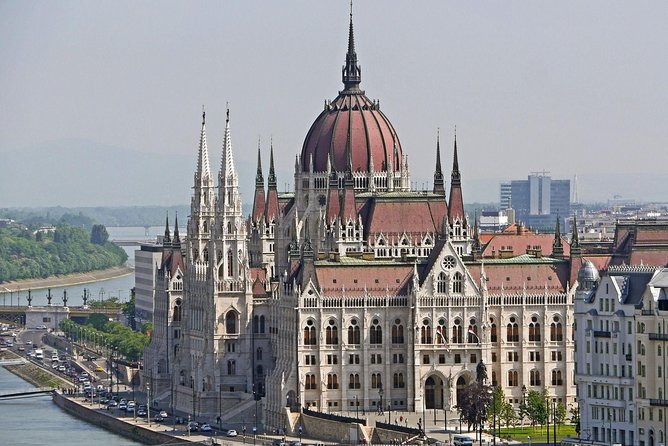
Downtown Pest is the east-bank side of Budapest, and it’s where you feel the city’s growth during Hungary’s big 19th-century transformation. This tour is built around that fact. You move from the big civic stage at Parliament, to the riverfront memorial, to the financial center at Freedom Square, then out to the grand boulevards and the ceremonial finish at Heroes Square.
What makes this experience work is the pace and the way the guide explains connections. In the same walk, you’re not just collecting famous names. You’re learning why those names matter, and how the city shaped itself as a newborn Hungarian nation in the second half of the 19th century.
You’ll spend most of the time outside, looking at the architecture at human speed. That matters, because Budapest’s grand buildings can feel like postcards until someone tells you what to notice.
Other Budapest bookings worth a look
- Budapest: Buda Castle Walk with Saint Stephen’s Hall
★ 4.5 · 3,012 reviews - Budapest: Buda Castle District Walking Tour
★ 4.6 · 2,108 reviews - Budapest City Landmarks Walking Tour in 2 Hours
★ 5.0 · 2,048 reviews
Starting at Szamos Cafe, then meeting Parliament at Kossuth square
The tour meets at Szamos Cafe, Budapest Kossuth Lajos tér 10. From there, you’re set up to start in the heart of the action at Kossuth square, right in front of Parliament.
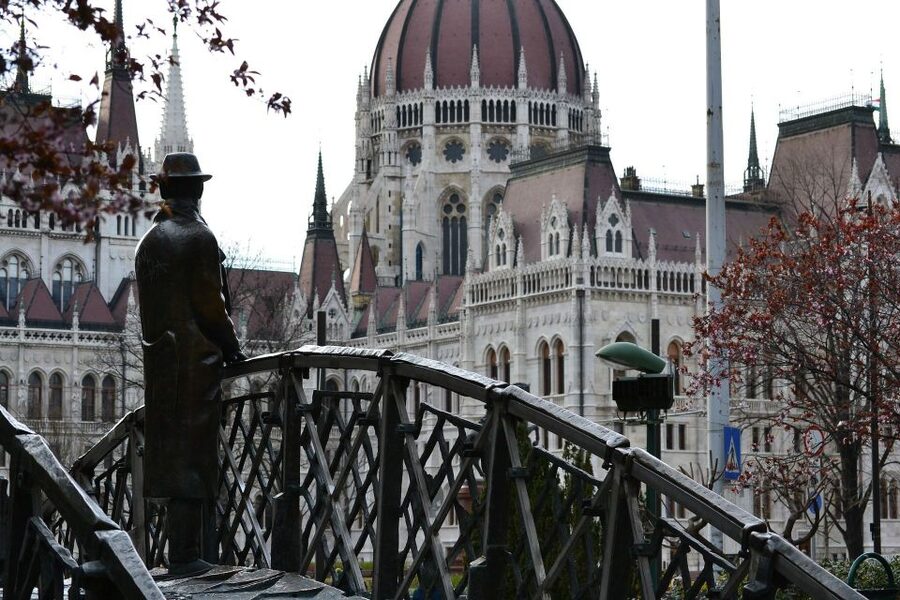
At the inauguration in 1896, Parliament was described as the largest and most costly structure ever built in Hungary. Outside, that reads as pure scale. Inside, it shifts from impressive to almost overwhelming, because it contains works of art representing nearly every famous Hungarian painter and sculptor from that era.
A practical tip: when you arrive at the square, give yourself a minute to look at the building as a whole before zooming into details. The historian framing helps, but you still get the best payoff when you first grasp the massing and location.
Parliament to the riverfront: Holocaust remembrance where it happened
Right behind Parliament, you’ll reach the Holocaust Monument on the banks of the Danube. This is not a symbolic stop placed somewhere convenient. It is positioned at a spot where many thousands of Jewish citizens of Budapest were tragically killed in the last months of World War II.
That wording is heavy, and it should feel heavy. The value of a guided walk here is not that it turns grief into entertainment. It’s that you get help placing the memorial in its exact geography and meaning, so you do not rush past with a camera-only mindset.
If you’re the type who likes to read every plaque, this stop can take more time than you expect. If you’re more of a “feel it and move on” person, the guide pacing will help you keep moving without turning away.
Freedom Square and the Stock Exchange Palace: Budapest’s financial power in one sweep
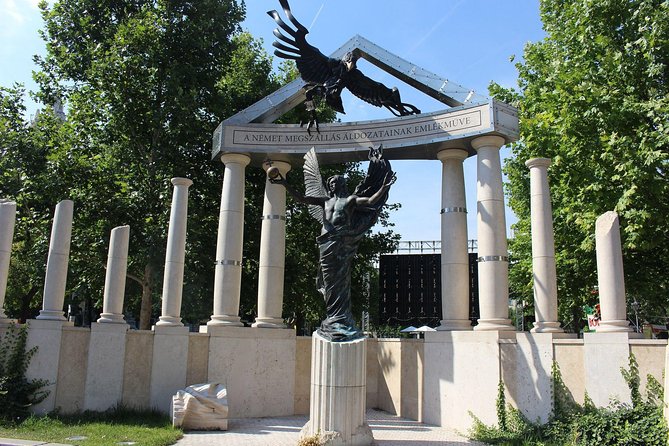
Next up is Freedom Square, originally built as the financial center of the city, and widely seen as Budapest’s most beautiful square. That’s the kind of claim that can sound like marketing until you’re standing inside the space.
Here, the tour leans into two things you can see quickly:
- The massive Stock Exchange Palace
- The opulent surrounding buildings that still house several banks
This is one of those areas where architecture is doing social work. It tells you who had money, who had influence, and what the city wanted to project. In a single walk, you get a sense of why Pest became the opulent political and financial hub during Hungary’s nation-building phase.
If you only know Budapest from bridges and spas, this section changes the picture. It adds the civic and economic backbone that made those cultural landmarks possible.
A different sort of Budapest afternoon:
- Budapest: City Highlights Sightseeing Cruise
★ 4.6 · 43,981 reviews - Budapest: Unlimited Prosecco, Beer and Aperol Spritz Cruise
★ 4.8 · 37,304 reviews - Budapest: Széchenyi Spa Day Ticket with Optional Upgrades
★ 4.3 · 23,911 reviews - Budapest: Nighttime or Daytime Sightseeing Cruise
★ 4.2 · 21,062 reviews
Cardinal Mindszenty and the shift toward St. Stephen’s Basilica
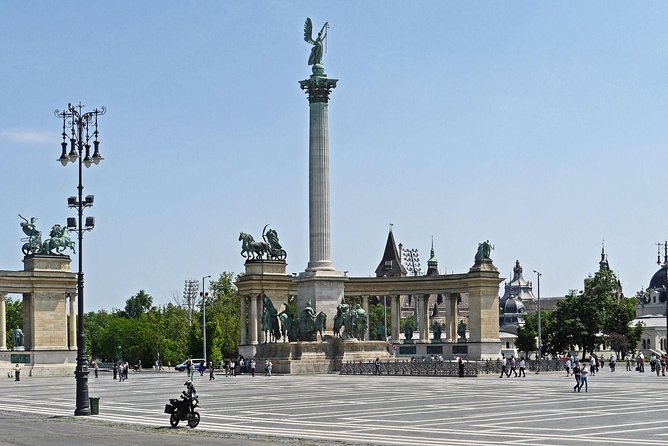
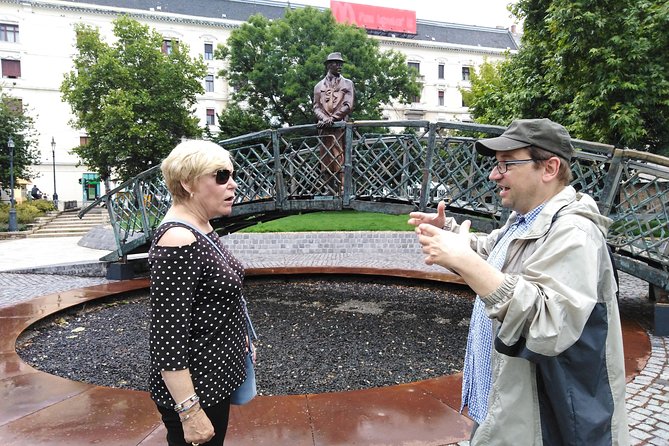
From Freedom Square, you’ll see the statue of Cardinal Mindszenty, a major figure in Hungary’s Catholic history. The story attached to this statue is very specific: he lived hidden for 15 years in the U.S. embassy while on the run from the communists.
That kind of detail matters because it connects a public monument to a private kind of survival. It’s one of the moments where the tour’s historian approach feels more useful than a standard sightseeing route, because the statue becomes a clue rather than a random stop.
After that, you continue toward St. Stephen’s Basilica, passing by a streak of Art Nouveau buildings Budapest is famous for. This is where the walk gets visually playful. Art Nouveau tends to reward slower looking, especially when you start spotting decorative patterns and window rhythms the first time you notice them.
The Jewish landmarks near St. Stephen’s: community, status, and civic impact
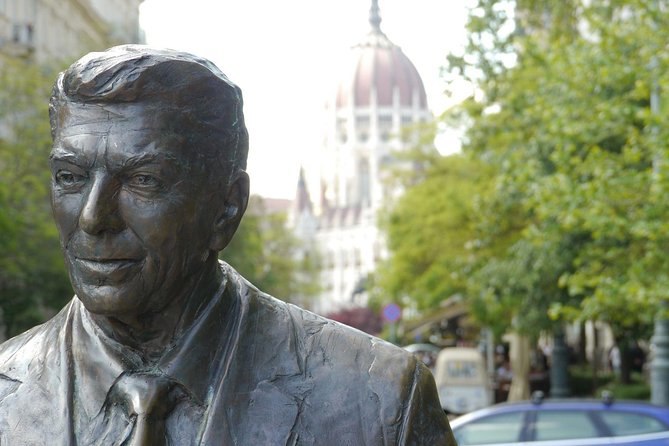
A bit farther on, the route brings you to the second-largest synagogue in the world. The guide frames it not just as a religious building, but as a monument to the vital role the city’s Jewish population and wealthy bourgeois played in the development of the city.
That phrasing gives you a more grounded understanding than calling it simply historical. You learn to link community power to urban growth. You also learn to recognize that major cities often rise because of many overlapping economic and social networks, not one single story.
If you’re worried about a tour being too surface-level, this is one of the stops where you’ll feel the difference. The guide is aiming for context, not just sightseeing.
Andrassy Boulevard: the noble esplanade you can walk edge to edge
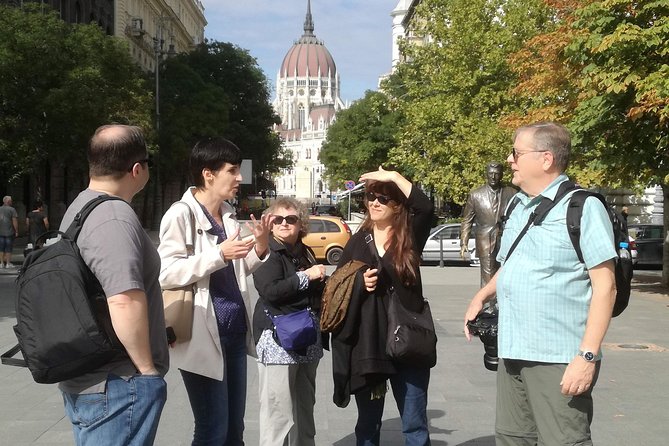
After St. Stephen’s Basilica, the tour travels along and under Andrassy Boulevard, an esplanade designed for Hungarian nobility. That detail is a big clue. It means the boulevard wasn’t intended as a casual “anyone can stroll here anytime” space. It was planned for a specific social layer.
You’ll appreciate this more if you treat the street like a design lesson. Look at how wide it feels, how it channels movement, and how the grandeur fits the idea of formal status. Even if you don’t know the full architectural story, the boulevard’s scale helps you understand why the nobility needed their own kind of stage.
There is also a short stop at the Opera House, which works as a natural cultural breather between streetscapes. You’re moving from civic and financial power to a more theatrical, public-facing world.
Heroes Square finale: the 1,000-year anniversary celebration in 1896
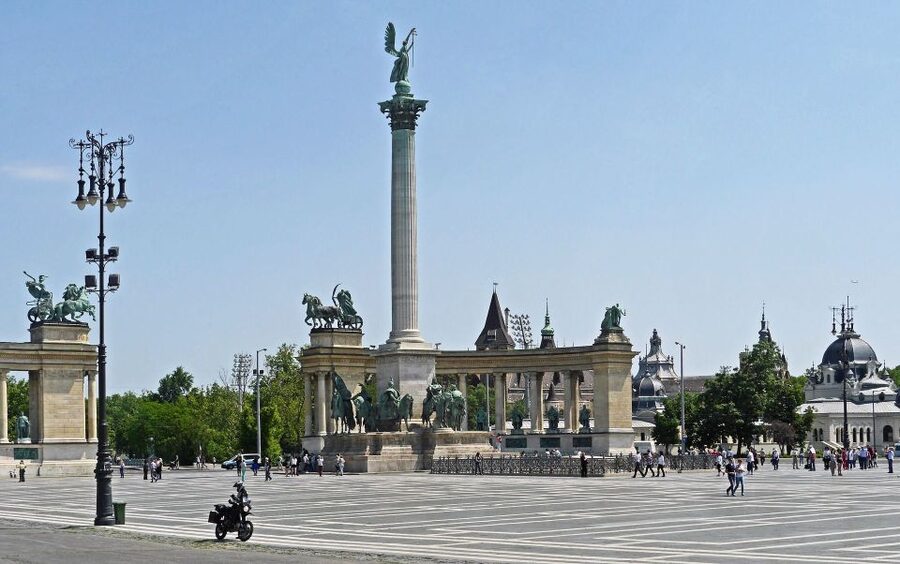
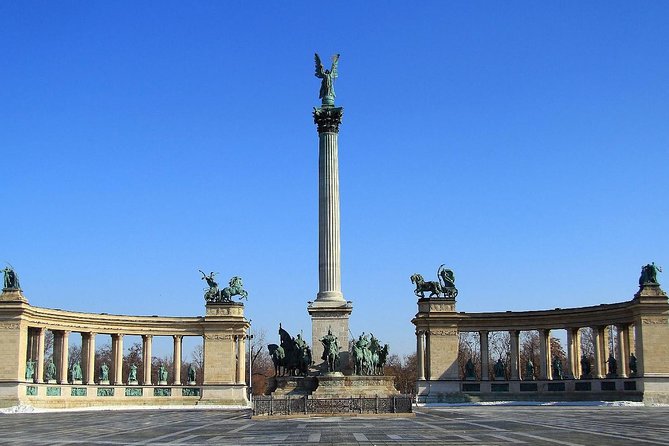
The tour ends at Heroes Square, where in 1896 Hungarians celebrated the 1,000-year anniversary of the founding of their kingdom.
Ending here is smart because it gives you a sense of national framing. You started with a building meant to represent the modern Hungarian state, and you end at a monumental space built to represent long continuity and collective identity. Between those two points, you saw the city’s religious, financial, and social landmarks in a way that feels connected, not random.
If your feet are starting to feel it, Heroes Square can still be worth the extra minutes. Even if you skip lingering, the final panoramic view of the square gives you closure. You can look back on the route you just walked and see the pattern.
Price and value: where $123 fits in a 3-hour guide-led day
At $123 per person for a 3-hour walking tour, this isn’t a budget impulse buy. But it also isn’t just paying for someone to point at buildings.
You’re paying for:
- A historian guide (not just a quick “local facts” guide)
- English language commentary
- A route that ties major landmarks together in one flow
In plain terms, you’re buying context you would otherwise have to piece together yourself. If you’re the type who likes to know why something was built where it was built, the price starts to make sense quickly.
It also helps that the tour can be private or small groups, which typically makes it easier to ask questions and keep the guide’s explanations tailored to your pace. The reviews you’ll see about guides like András and Zsofia also highlight that the best parts are the teaching and the calm pace, not rushing to hit a checklist.
Who this tour is best for, and who should think twice
This tour is a great fit if you:
- Want to understand Pest as the political and financial heart of late 19th-century Hungary
- Like architecture, but also want the human stories behind it
- Appreciate guides who take time to answer questions, not just move the group along
You might think twice if you:
- Get uncomfortable on longer standing and walking stretches
- Prefer self-guided reading at your own pace, without a set route
What you should do before you go
You don’t need to study, but you’ll enjoy it more if you set a simple goal: learn one connection between each stop.
For example:
- Parliament as a national statement of power
- The riverfront memorial as a real place tied to WWII tragedy
- Freedom Square as financial center architecture
- Religious and political tension through the Mindszenty story
- Andrassy Boulevard as designed social space
- Heroes Square as national celebration framing
That mindset turns a standard sightseeing walk into something you can carry with you later when you’re back on your own.
Should you book the Downtown Pest Walking Tour?
I’d book it if you want a well-guided, historian-led way to understand Pest’s major monuments without turning your day into a frantic scavenger hunt. The strongest reason is the combination of big landmarks and clear explanations, plus the guides’ proven ability to keep the pace comfortable, answer questions, and tell the stories in a way that makes the route feel like one coherent walk.
If you’re sensitive to walking time and want lots of seating, you might not love a 3-hour route. But if you’re fine standing for short stretches and you like architecture with context, this is a high-value use of a half morning or early afternoon in Budapest.
FAQ
How long is the Downtown Pest Walking Tour?
The tour lasts 3 hours.
What is the meeting point for the tour?
The meeting point is Szamos Cafe, Budapest Kossuth Lajos tér 10.
Where does the tour start and what is the first major stop?
You start in front of Parliament at Kossuth square.
Where does the tour end?
The tour ends at Heroes Square.
Is the tour guided in English?
Yes, the live tour guide is English.
What major places will I see during the walk?
You’ll see Parliament, the Holocaust Monument, Freedom Square, the Stock Exchange Palace, the statue of Cardinal Mindszenty, St. Stephen’s Basilica area, the second-largest synagogue, Andrassy Boulevard, the Opera House, and Heroes Square.
How much does the tour cost?
It costs $123 per person.
Are private or small-group tours available?
Yes, private or small groups are available.
Is there free cancellation?
Yes, you can cancel up to 24 hours in advance for a full refund.
Can I reserve without paying right away?
Yes, it offers reserve now & pay later, so you can book your spot without paying today.
Newest reviews from Budapest
- Buda Castle Private Walking Tour: A Kingdom of Many Nations★ 5.0 · 9 reviews
- Budapest Walking Tour: Explore Top Sights & Hidden Gems★ 4.5 · 9 reviews
- See the Hungarian Sea: Lake Balaton★ 4.5 · 9 reviews
- Transylvania Tour from Budapest to Bucharest: 4 days★ 5.0 · 10 reviews
- Luxurious, private day cruise with a waterlimousine to Szentendre★ 4.0 · 10 reviews
- Private Tour Around Budapest★ 5.0 · 10 reviews
- Born Under The Red Star – Communist tour with Coffee in a Retro Bar★ 5.0 · 10 reviews
- Live virtual walking tour in the Buda Castle quarter★ 5.0 · 10 reviews
Walking Tours, compared.
Budapest City Landmarks Walking Tour in 2 Hours
Read our review →
3-Hour Orientation Walking Tour of Buda and Pest
Read our review →
Budapest Historical Sightseeing – Free Walking Tour
Read our review →
Budapest Food Walking Tour: Eat, Sip & Explore Like a Local
Read our review →
Buda Castle District Walking Tour with a Historian
Read our review →Browse the lists this tour appears in