
Reviewed · JEWISH HERITAGE
German tour in the Budapest city centre & the Jewish quarter
Budapest can feel like a postcard, but this German walking tour is more about learning how the city works. You start at the Hungarian Parliament Building and move through Downtown Budapest’s landmark 19th century and early modern institutions, then you finish in the Jewish Quarter around Kazinczy Street. I like that it pairs big monuments with the smaller everyday themes, like money, politics, and how locals lived. I also like that the guide keeps telling short stories so the sights connect, not just pass by. One drawback to plan for: it is German only, so you will want at least basic German, or you may miss some of the finer details.
The route is simple to follow and timed for a comfortable pace, so you can focus on what you see instead of mapping. In the reviews, guides such as Georgiana, Zsuzsanna (also called Szusza), and Gábor are singled out for being kind, funny, and quick to answer questions. And even without going inside any buildings, you still get plenty of photo stops and viewpoint time.
At a glance, you are looking at a 2.5 hour walk in the heart of Central Budapest, guided in German, with no entrance fees because you stay outside. You also end near Szimpla ruin pub, so the tour is a handy way to start your day, then keep the evening going.
Key things that make this tour worth your time
- Parliament Building photo stop plus guided context so you understand what you are looking at beyond the postcard angle
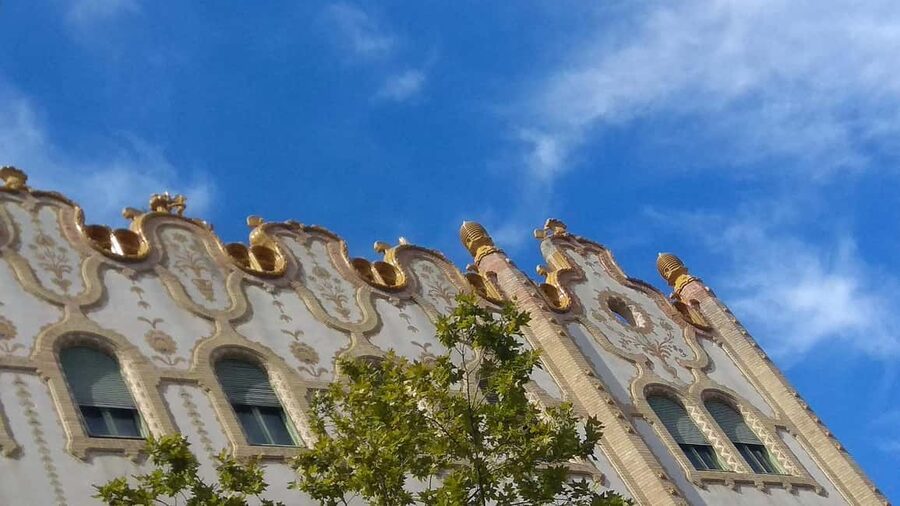
- Downtown Budapest institutions like the National Bank and Postal Savings Bank, tied to everyday life
- St. Stephen Basilica at street level with sights and scale explained, without ticket lines
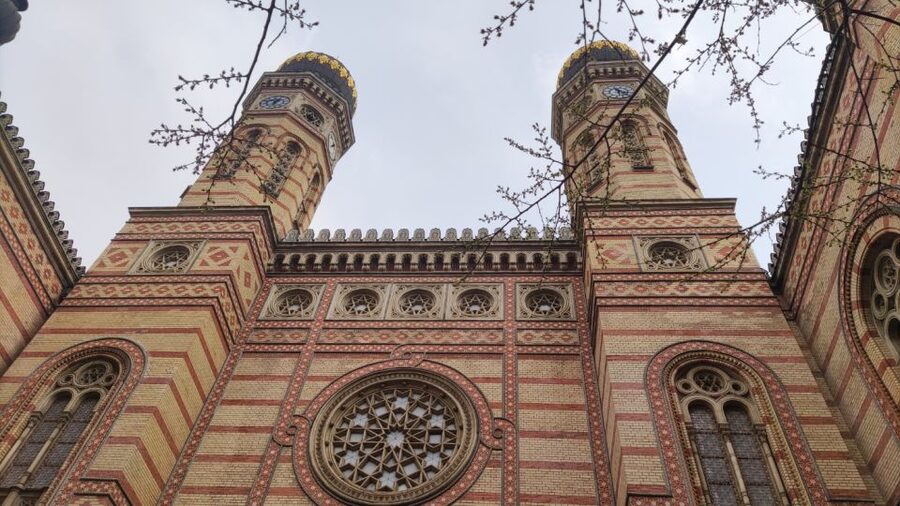
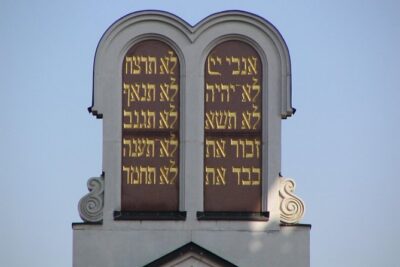
- Jewish Quarter highlights including Rumbach, Dohány, and Kazinczy synagogues, plus memorials
- Street art and ruin pub culture around Kazinczy Street, with practical food and bar tips
- Small and medium groups that keep the walk interactive, not a lecture from the back
Meeting at Gyula Andrássy, then turning history into a walk you can remember
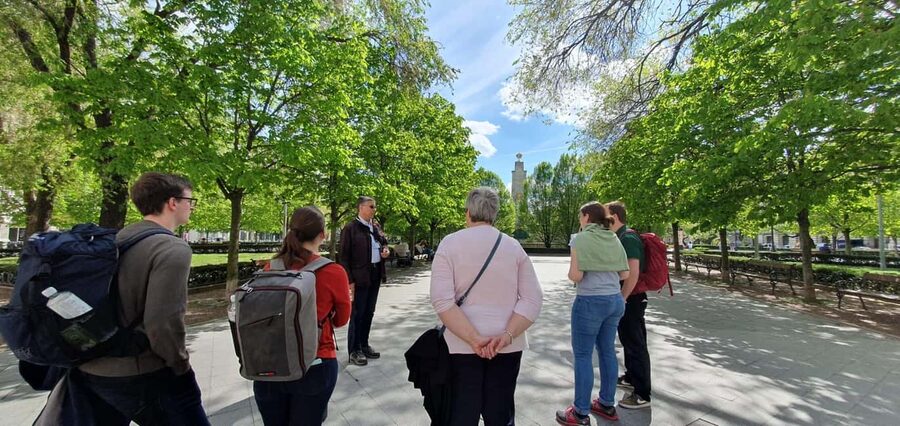
Most good walking tours start with a point of orientation. This one starts at the statue of Gyula Andrássy, which is a smart choice because it signals that you are about to connect modern Budapest with the older political layers beneath it. You will meet by that statue, and your guide wears a tour guide card, so it is easy to spot the right person even if you arrive a few minutes early.
From there, the walking rhythm is calm but purposeful. It is not one of those tours where you stop constantly, then rush at the end. Instead, you get short segments with clear reasons to look at what comes next, so you do not feel lost in a crowd.
If you are the kind of traveler who likes to understand the logic of a city, this is the approach I prefer. Budapest has so many layers that it is easy to see buildings as decorations. Here, the guide helps you read them as clues about society, power, and local habits.
More of Jewish Budapest:
- Budapest: Jewish Heritage Guided Tour with Synagogue Ticket
★ 4.8 · 533 reviews - Walking Tour Budapest incl. the Shoes on the Danube Bank
★ 5.0 · 387 reviews - Past and Present of Budapest Jewish District Tour
★ 5.0 · 264 reviews
Hungarian Parliament Building, Szabadság Square, and what Downtown Budapest was built to do
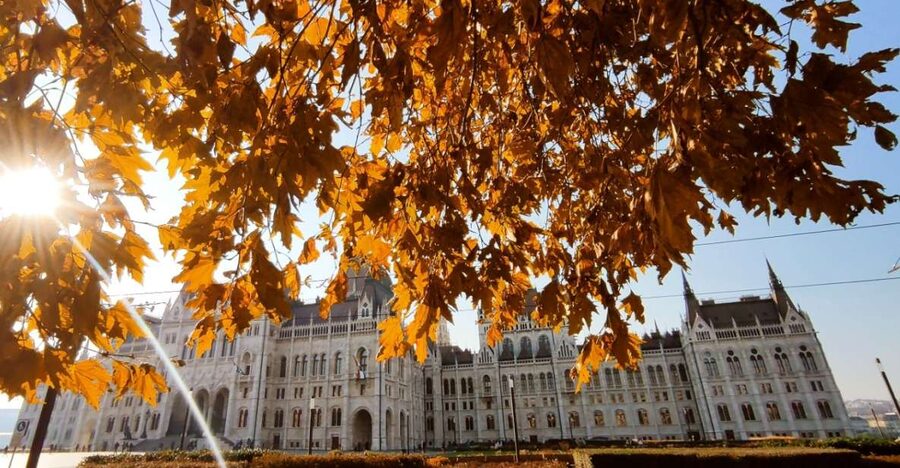
The first major sight is the Hungarian Parliament Building. You get a photo stop and a guided explanation, which matters because the building is famous, but the details can still be confusing. The guide frames the structure through Hungarian history and the way the city’s political heart shaped daily life around it.
You then head toward Szabadság Square for another photo stop and guided sightseeing. This is one of those places where the open space lets you reset your eyes. You can look at the surrounding architecture and also get a sense of how broad and formal parts of the city feel compared with the narrower Jewish Quarter streets later on.
What I like most about the Downtown stretch is the mix of grand and practical. You are not only looking at beautiful façades. You are also hearing how people related to institutions, and that is what makes the walk stick. That includes references to financial life and politics, not in a textbook tone, but in a way that helps you interpret what you see on the street.
Downtown Budapest’s 1890s buildings: money, institutions, and street-level scale
As you continue through Downtown Budapest, you focus on older buildings from the late 1800s, including architectural style and city function. The route highlights places like the Postal Savings Bank and the Hungarian National Bank. Even if you are not a history nerd, the lesson is simple: these are buildings that were designed to project trust.
For me, this is where you start to feel the advantage of a guided walk. Without a guide, you might admire façades and move on. With the guide, you understand why certain designs were chosen, and you notice how those big institutions sit inside the flow of ordinary streets.
You are also looking at a contrast that makes Budapest interesting. The Parliament area feels like state power. Downtown institutions feel like economic power. Later, the Jewish Quarter will show community power through places of worship, memory, and social life. You can feel the shift just by walking.
One consideration: since this is an outdoor walking tour, your comfort depends on weather. On cold or rainy days, plan for layers. On hot days, bring water, because this route stays in the city center without long indoor breaks.
St. Stephen Basilica without ticket time: why “outside explanations” still work
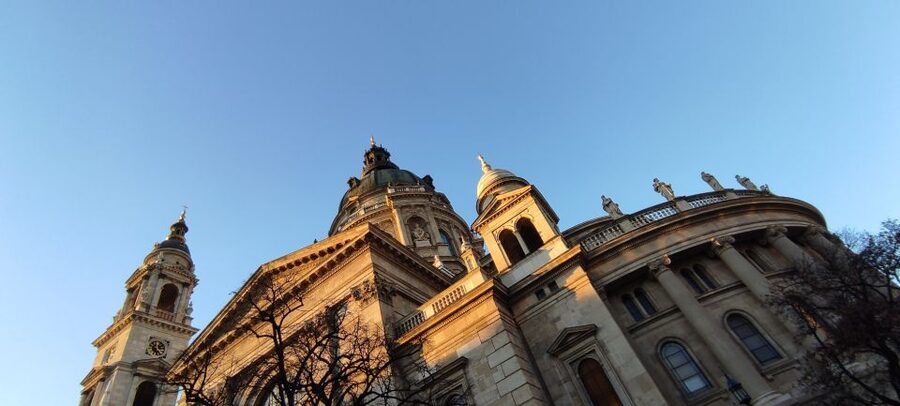
Next comes the St. Stephen Basilica. You get another photo stop plus guided tour and sightseeing, but entrance fees are not included because the plan does not go inside. That may sound limiting, but in practice, it can be a smart use of time.
You still get to admire the basilica’s monumentality, especially from the right street angles where the scale hits you. The guide also uses the exterior view to explain what you are seeing, so you leave with context even if you never step in.
This is a good fit if you want to keep momentum. Many visitors burn half a day hopping between ticketed spots. Here, you get one of Budapest’s biggest icons handled quickly and then you move on to the parts that often require more reading: the neighborhood streets and the meaning behind them.
If your goal is maximum inside-the-building time, you might add a separate Basilica visit later. But if your goal is understanding the city as you walk, this plan works very well.
Other Budapest bookings worth a look
- Budapest: City Highlights Sightseeing Cruise
★ 4.6 · 43,981 reviews - Budapest: City Sightseeing Hop-On Hop-Off Bus Tour & Extras
★ 4.1 · 4,337 reviews - Budapest City Landmarks Walking Tour in 2 Hours
★ 5.0 · 2,048 reviews - Budapest: Nighttime or Daytime City Sightseeing Cruise
★ 4.1 · 2,046 reviews
Entering the Jewish Quarter: synagogues, monuments, street art, and modern hangouts
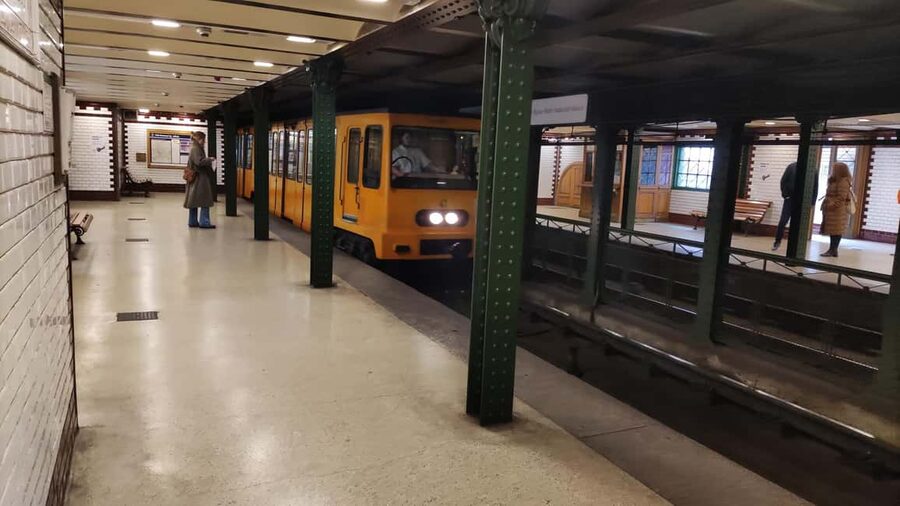
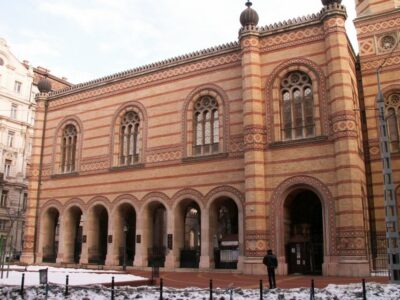
The walking tour then continues into the Jewish Quarter, and this segment is the heart of the experience. You get about fifty minutes here, with photo stops, guided sightseeing, and a focus on key landmarks. The tour names synagogues including Rumbach, Dohány, and Kazinczy, plus Jewish monuments you would otherwise miss or feel unsure about.
What makes this part valuable is the way the guide blends different layers of the area. You are not only shown sacred or historical sites. You also learn to notice everyday signals of life, change, and community memory.
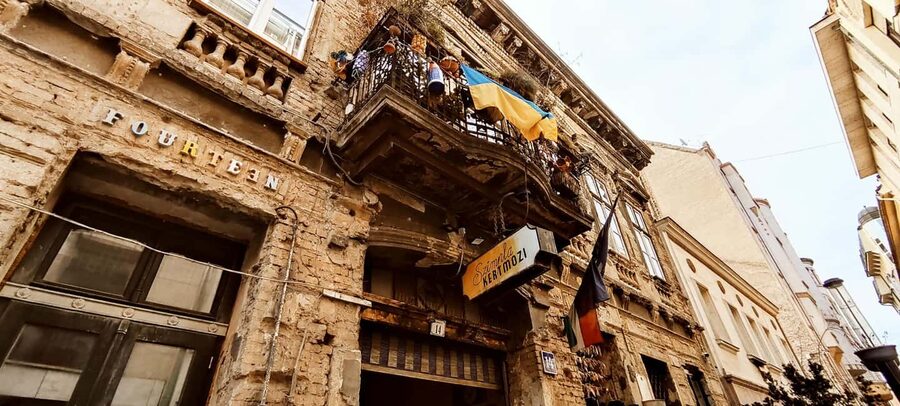
And yes, this neighborhood also has a modern side. The walk includes talk about street art and the culture of ruin pubs, where older buildings get a second life. That matters because the Jewish Quarter is not a museum zone. It is a lived area, and the tour helps you understand both the historical weight and the current street energy.
You end near Kazinczy Street, close to the Karavan Street Food court, and then you finish at Szimpla Kert. That is a very practical finish point. It means you can immediately turn sightseeing into a meal or a drink without having to figure out your next move after a long walk.
For food planning, you get plenty of lead-in tips during the Jewish Quarter portion. In the reviews, restaurant and bar recommendations come up again and again, including guidance that helps you decide what to do next while you are still in the neighborhood.
German guiding that turns “what” into “why,” with guides like Georgiana and Zsuzsanna
A German-only tour can be a deal breaker for some people, but if you speak the language, it can also be a real advantage. The guide is able to tell short cultural explanations in a direct way, not just translate key phrases. That is how you end up understanding habits and history, not just location names.
The standout theme from the experiences people described is the guides. Georgiana is praised for being kind and for bringing people to picturesque spots while explaining context. Zsuzsanna, including a nickname such as Szusza, is praised for passion and for making the city feel human. Gábor is also mentioned with positive notes about the way the tour connects Jewish culture and Budapest itself.
I like this style because it is interactive in tone. The guide keeps you oriented, then adds anecdotes that help you remember why a building matters. You also get questions answered, which is a huge advantage when you are standing in front of real architecture instead of reading it later.
One more practical bonus: the tour includes digital guides, including a Budapest Restaurant guide and a Budapest Money Saver and Guide. Even if you already have an itinerary, those digital pages are useful because they help you choose where to spend time and money while you are on the ground.
2.5 hours on foot: the real pacing and what to wear
This is a 2.5 hour walking tour through central Budapest. The stops are timed with short sightseeing and photo moments, so you see a lot without feeling trapped in one place for ages. You do not go inside buildings, which keeps the schedule moving.
Because you are walking between the Parliament area, Downtown sights like the National Bank area, St. Stephen Basilica, and then deeper into the Jewish Quarter, comfortable shoes matter. I would treat it like an efficient half-day plan. You do not want to be nursing sore feet before you reach the neighborhood streets.
Group size is small or medium, which I like for two reasons. First, you can hear the guide without strain. Second, the pace stays manageable. If you prefer a more personal experience over a large group hustle, this is the right size.
Wheelchair accessibility is listed as available, which is good to know for planning. If you need specific support, you should still double check with the operator based on your personal needs, since the route is still a city-center walk.
Price and value: why $23 can feel like a bargain if you use the guide well
At $23 per person, the price is low enough that the biggest question is not whether you get value, but whether you will use it. This tour earns its cost because you get live German guiding plus two digital resources, and you avoid paid entrance fees since you do not go inside buildings.
The value also comes from efficiency. In 2.5 hours, you cover multiple top-tier landmarks and also reach the Jewish Quarter, including synagogues and memorial sites. If you tried to do this on your own, you might spend time figuring out logistics and still miss the meaning behind what you see.
Also, the tour ends in a neighborhood where you can immediately act on what you learn. Being near Szimpla Kert gives you a smooth transition into dinner or a drink. That is part of the value, too. It reduces decision fatigue at a time when you are tired from walking.
If you are the type who likes to understand a place, a guided walk in a dense, layered city like Budapest is almost always worth it. If you only want photos and do not care about context, you might feel the price is unnecessary. But for most people, especially those who like stories and city interpretation, this one makes sense.
Should you book this German Budapest city center and Jewish Quarter walk?
Book it if you want a well-paced Budapest Jewish Quarter walking tour with a German guide, clear landmarks, and enough cultural context to make the city feel coherent. It is also a strong choice if you like your sightseeing paired with practical advice, because you finish near Kazinczy Street and Szimpla Kert and you get restaurant and bar direction along the way.
Skip it or plan a different option if German is a problem for you. Since the tour is German only, the quality of your experience depends on your comfort following explanations. Also, if you want lots of time inside famous buildings, this tour is not built for that. It focuses on exterior views and guided understanding without entry.
If you want one good “start here” plan for central Budapest, this is a smart pick. It gives you the orientation, the neighborhood context, and the next-step ideas to keep your trip moving instead of guessing.
FAQ
What is the duration of the tour?
The tour lasts 2.5 hours.
Where do I meet the guide?
Meet by the statue of Gyula Andrássy. The guide will be wearing a tour guide card.
What language is the tour in?
The live tour guiding is in German.
Is this tour inside buildings or mostly outside?
It is a walking tour with photo stops and guided sightseeing, and entrance fees are not included because the plan does not go inside buildings.
Which areas and sights are included?
You walk from the Houses of Parliament area through Downtown Budapest sights such as the National Bank and St. Stephen Basilica, then into the Jewish Quarter to see synagogues including Rumbach, Dohány, and Kazinczy, plus Jewish monuments.
Where does the tour end?
The tour ends at Szimpla Kert, near Kazinczy Street.
What is included in the price besides the guiding?
In addition to live German guiding, you receive digital guides including a Budapest Restaurant guide and a Budapest Money Saver and Guide. Small or medium-sized groups are also part of the experience.
Are there entrance fees included for museums or churches?
No. Entrance fees are not included.
Is the tour wheelchair accessible?
Wheelchair accessibility is listed as available.
FAQ
Can I cancel for a full refund?
Free cancellation is offered up to 24 hours in advance for a full refund.
Is there a pay later option?
Yes, you can reserve now and pay later.
Newest reviews from Budapest
- Private Tour Around Budapest★ 5.0 · 10 reviews
- Born Under The Red Star – Communist tour with Coffee in a Retro Bar★ 5.0 · 10 reviews
- Live virtual walking tour in the Buda Castle quarter★ 5.0 · 10 reviews
- Taste Budapest – Fat Boy Foodies Walk★ 4.5 · 10 reviews
- Wine & Food Tasting Cruise on the Danube★ 3.5 · 10 reviews
- Private Transfer from Budapest to Prague with 2 hours for sightseeing★ 4.5 · 10 reviews
- The Real Saw | Escape Room by PÁNiQ SZOBA★ 4.1 · 10 reviews
- City Park True Crime of Hungary and Night Walk Tour in Budapest★ 5.0 · 10 reviews
Jewish Heritage, compared.
Jewish Heritage Guided Tour with Synagogue Ticket
Read our review →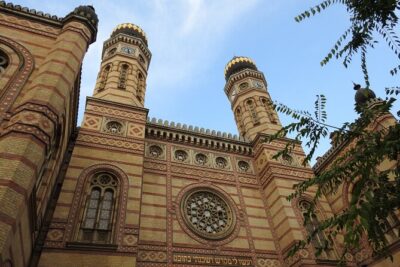
Past and Present of Budapest Jewish District Tour
Read our review →
Budapest Dohany Synagogue & Hungarian Jewish Museum & free extras
Read our review →
Jewish History Guided Walking Tour with Historian
Read our review →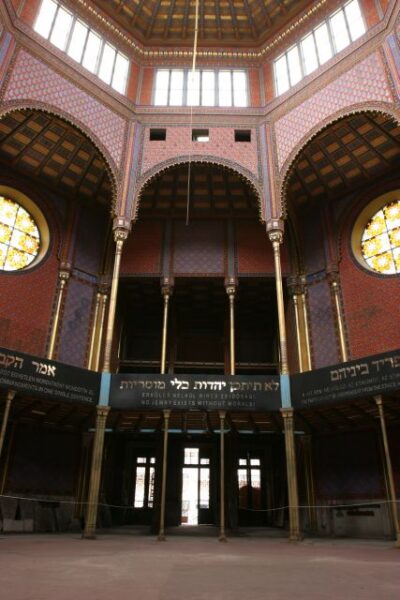
Browse the lists this tour appears in