
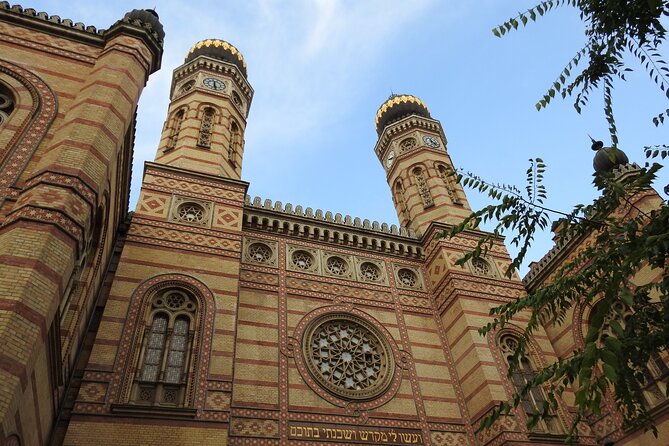
Reviewed · JEWISH HERITAGE
Past and Present of Budapest Jewish District Tour
A short walk that connects Budapest’s Jewish sites with what happened next, and what you can still see today, is more interesting than it sounds. I love the clear past-to-present storyline, and I like how real neighborhood streets do the talking, not just plaques. One possible drawback: the tour focuses on exteriors, so you will not go inside any synagogue buildings.
You start in District VII at Elizabeth Square, then wind through places tied to Jewish life, restrictions, and survival. Most people find the pace manageable and the small-group size keeps it conversational, but it is still a standing-and-walking experience.
Note on language: the tour is offered in English, yet accents can vary a bit depending on the guide. If you struggle with fast speech, pick a seat near the front and ask questions early.
Key highlights
- Elizabeth Square start point near the Ferris Wheel, easy to find and great for orientation
- Nagy Zsinagóga context outside, including the memorial courtyard and cemetery view points
- Rumbach Street Synagogue exterior, paired with street art and restored details
- Gozsdu Passage to Ghetto Wall reference, where the past sits inside today’s nightlife corridor
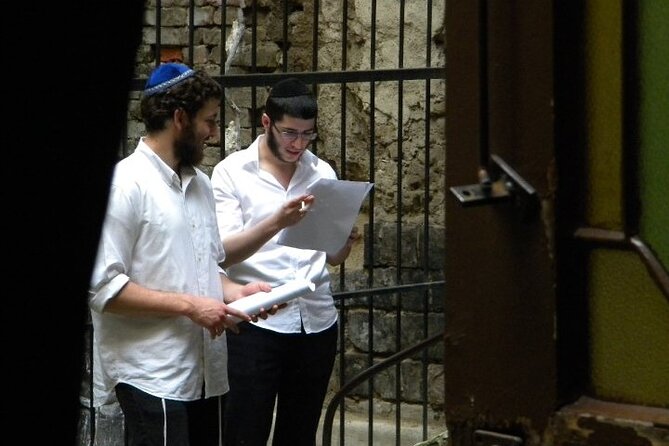
- Kazinczy Street Synagogue area stop, including Orthodox community details and ritual themes like kosher food
- Szimpla Kert finish, a low-stress wrap-up at a ruin bar with murals and pop-up exhibitions
Why this Jewish Quarter walk is a smart use of 90 minutes
This tour works because it gives you a backbone first. You are not just collecting photos of big buildings. You are learning the storyline of Hungary’s Jewish community, from a more confident Belle Époque era through the destruction that followed.
If you are short on time in Budapest, this is the kind of walk that helps you later. When you wander back on your own, the streets make more sense. You will also know what to look for near places like the Great Synagogue complex, the memorial courtyard area, and the smaller synagogue sites you might otherwise miss.
The format is straightforward: meet, walk, stop, learn, walk, stop again. No museum marathons, no long transit shuffles across town.
More of Jewish Budapest:
- Budapest: Jewish Heritage Guided Tour with Synagogue Ticket
★ 4.8 · 533 reviews - Walking Tour Budapest incl. the Shoes on the Danube Bank
★ 5.0 · 387 reviews - German tour in the Budapest city centre & the Jewish quarter
★ 5.0 · 359 reviews
Meeting at Erzsébet tér (Elizabeth Square) and getting your bearings fast
You meet at Erzsébet tér at the Ferris Wheel of Budapest. It is one of those practical meeting spots that reduces friction. You will be able to confirm you are in the right place quickly, and you can arrive by public transportation.
From the start, your guide sketches the route and points out major sights as you go. That matters. District VII can feel like “just streets” if you do not have a map in your head. Early on, you get the geography, plus the historical direction: from the Belle Epoque or Golden Age toward the destruction.
I also like that this start is not awkward. You are not standing outside some random alley waiting for a late arrival. Elizabeth Square is open and easy to read.
Erzsébet tér to Deák Ferenc Square, Gaudiopolis and the rules of who could trade
At Erzsébet tér, the tour focuses on major Jewish landmarks and the broad history of Jews in Hungary. You learn the big timeline, then you start to connect it to city life rather than treating history like a separate chapter.
Then you move to Deák Ferenc Square. This is where the tour leans into two ideas that help the rest of the walk click.
First is Gaudiopolis, described as the City of Joy in Latin. Instead of only hearing about trauma, you also get a sense of how Jewish communities built culture, institutions, and daily life.
Second is Schutzpass, which is presented as something that saved thousands of Jewish life. Even if you already know the term in a general way, the tour uses it to explain how protection could exist, but never reliably, during the Nazi occupation era.
You also get a reminder that city space was not neutral. The former medieval city wall ruins you pass speak to how Jews were excluded from certain trading areas within the city limits. That is the kind of detail that changes how you read the neighborhood. It turns “where are the buildings?” into “why are these streets shaped this way?”
Outside the Great Synagogue (Nagy Zsinagóga) without going in, and what you still gain
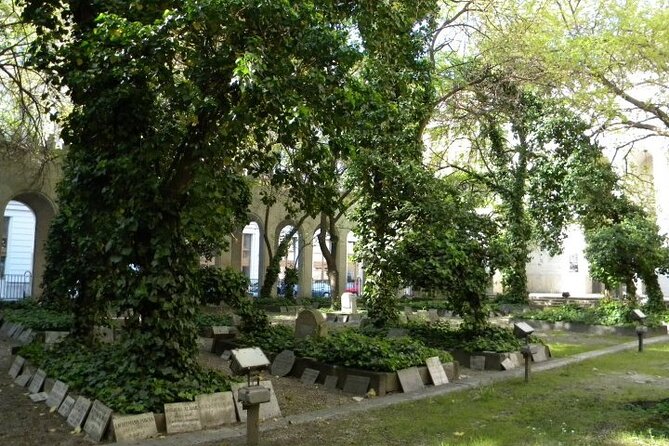
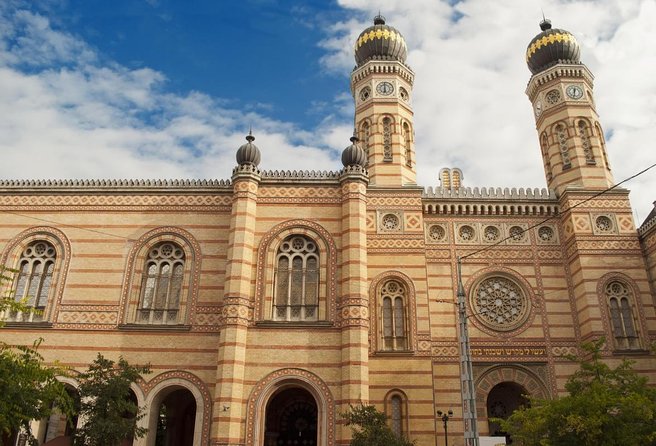
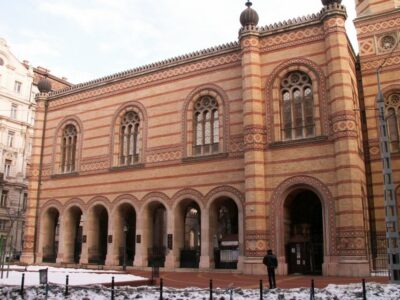
One of the strongest points on this route is the stop at the Great or Central Synagogue, the Nagy Zsinagóga. The tour’s message is clear: this is the largest synagogue in Europe, and it is tied to Jewish movements like Neologue and Orthodox, plus topics like Zionism.
Important: the tour does not enter the synagogue. You do get to see key outside features, including the Memorial Courtyard and the cemetery from outside. For many visitors, that is the right trade-off. Entry would add time and cost, and it would also squeeze the rest of the route.
What you gain by staying outside is context with less pressure. You can hear the story while looking at the setting. If you are the type who likes to understand before you pay for entrances, this stop fits your style.
Possible drawback: if you are hoping for an interior architecture moment, you will need a separate plan. Some people want both. This tour is the orientation and story, not the full building visit.
A different sort of Budapest afternoon:
- Budapest: City Highlights Sightseeing Cruise
★ 4.6 · 43,981 reviews - Budapest: Unlimited Prosecco, Beer and Aperol Spritz Cruise
★ 4.8 · 37,304 reviews - Budapest: Széchenyi Spa Day Ticket with Optional Upgrades
★ 4.3 · 23,911 reviews - Budapest: Nighttime or Daytime Sightseeing Cruise
★ 4.2 · 21,062 reviews
Rumbach Street Synagogue exterior stop, plus murals that keep history visible

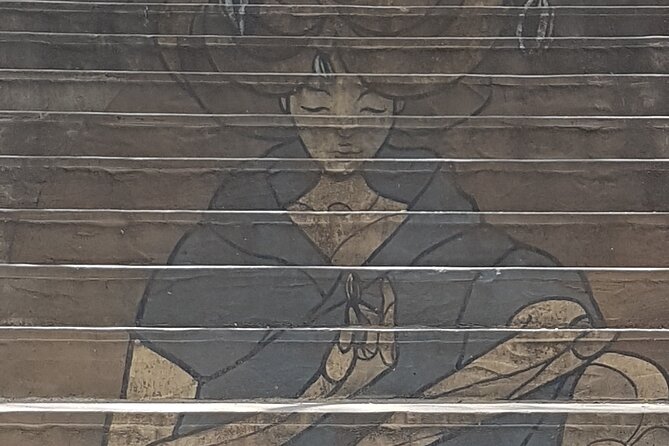
Next comes Rumbach Street Synagogue. This is another exterior-only moment, but it is not a throwaway stop. You learn about the beautifully restored synagogue and you also get pointed toward murals and urban street art around the area.
This is one of the places where the title Past and Present earns its keep. Budapest does not keep its memory only in monuments. It also leaves it on the walls, in street art, and in restoration choices you can see as you walk past.
If you care about how cities remember things, this stop is useful. You will know what you are looking at, not just what you are photographing.
Gozsdu Udvar and the ghetto wall remnant, where today’s scene sits on old ground
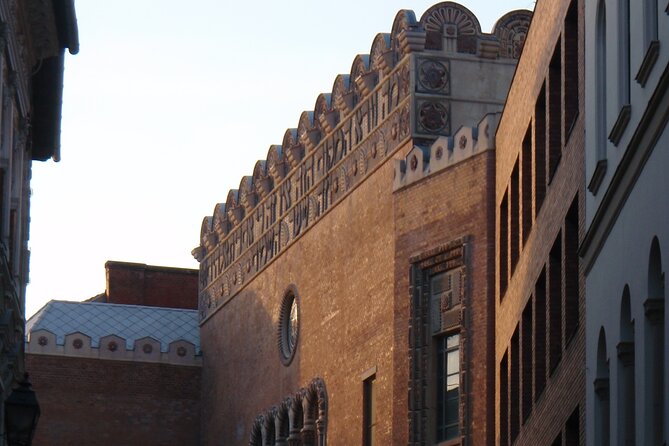
At Gozsdu Udvar, you pass through the Gozsdu Passage and learn about its past and present. The tour frames the passage as a mix of entertainment, gastronomy, culture, and market life.
Then it ties that “today” scene to a difficult “then.” You will see the last piece of the ghetto wall. That contrast is powerful, and it happens without drama. You are simply walking through a modern corridor, with the historical marker in sight.
This is a stop that helps you understand District VII as a lived neighborhood, not only a history stop. Yes, the area carries heavy context. But it is also a place where people still eat, shop, hang out, and create nights out. Learning the layering helps you avoid treating the Jewish Quarter like a postcard set.
If you want a little extra respect in your pacing here, slow down for a moment. The wall remnant is small enough that you could miss it if you are moving too fast.
Kazinczy Street Synagogue area, kosher food, ritual bath, and Orthodox life
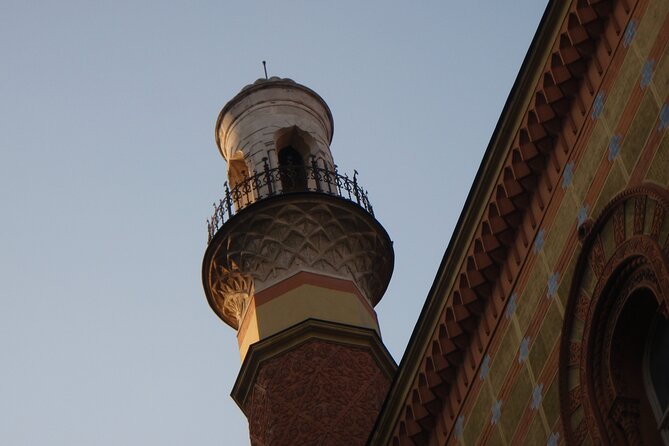
At Kazinczy Street, you stop just outside the Kazinczy Street Synagogue. The tour notes that it belongs to the Orthodox community of 50 to 60 families.
You also hear about kosher food and the Jewish ritual bath. Even without entering the synagogue, these details matter because they move the story beyond headlines. They show daily rules and daily practice, the stuff that shaped how people lived, not just what happened to them.
As with other exterior stops, the practical trade-off is time. You are seeing the setting while getting the explanation. If you later want the deeper ritual specifics in a guided format or inside a synagogue, you can build that as a follow-on.
Szimpla Kert finish at a ruin bar, a calm landing after a heavier story
You end at Szimpla Kert, a ruin bar at Kazinczy u. 14. There is no entry fee, so you are not forced to buy anything just to claim the end point.
The tour uses Szimpla Kert for a final orientation: more murals, urban street art, and pop up exhibitions. It is a good way to stop walking without abruptly switching to something totally unrelated.
This ending also fits the emotional tone. The tour includes tragedy tied to Nazi occupation and the destruction of Hungarian Jews. It is not a light comedy stroll the whole way. Finishing in a creative cultural space helps you reset without erasing what you learned.
Price and value when the route is story-led, not ticket-led
The listed price is $3.63 per person, duration about 1 hour 45 minutes, and the group size is capped at 25. You are also given a mobile ticket.
Here is the real value angle: the listed price is small because the booking fee supports administration and does not contribute to the guide’s earnings. Your guide depends on donations at the end, and tips are not included.
So what are you really buying? A guided route that compresses a full neighborhood story into 90 minutes, with a licensed local guide and English narration. You are also paying for something less visible: clarity. When a guide can explain why the city wall mattered, why the memorial courtyard exists, and how community movements fit together, you end up with a usable framework.
Is it cheap enough to feel suspicious? Not necessarily. In this model, the core experience is the guidance, and the donation at the end is part of how guides sustain the work. If your budget is tight, this is one of those options where you can still participate without paying museum entrance fees.
Pacing, group size, and how to choose the right moment
The route is designed to work for most travelers and it is a maximum of 25 people. That usually means you get enough speaking time, without feeling like you are listening to history in an auditorium.
That said, the experience is heavier than some other walking tours in Budapest. You will stand and listen for longer stretches than, say, a general architecture walk. If you know you prefer shorter, lighter context, consider whether you want this story now or later.
Language is the other practical variable. The tour is offered in English, but you can run into harder-to-follow accents depending on the guide. If that might be an issue for you, arrive early, take a spot where you can hear clearly, and do not be shy about asking for repetition.
Who this tour is best for (and who might want a different style)
This is a great fit if you:
- want a fast orientation to District VII with a past-to-present thread
- care about synagogues as cultural and historical landmarks, not just buildings
- like learning while walking through the actual streets where the story took place
- need a first Budapest Jewish Quarter introduction before you go deeper on your own
You might choose a different option if:
- you mainly want synagogue interior visits, because this tour does not enter any synagogue
- you dislike tours that have more historical weight than entertainment
- you want lots of personal storytelling beyond facts, since the style here is structured around key historical points and stops
Should you book this Budapest Jewish District Tour?
I would book it if you are visiting District VII for the first time and want the clearest foundation in the shortest time. The outside-only route still hits major sites, including the Great Synagogue area, Rumbach Street, Kazinczy Street, and the Gozsdu Passage area with the ghetto wall remnant. You finish in a place that feels like Budapest, not like a history off-ramp.
If you do book, do two things: wear comfortable shoes, and be ready for a meaningful, sometimes heavy narrative. If you later want to go inside a synagogue, treat this tour as the map and the explanation. Then you can choose a separate interior visit that matches your schedule.
FAQ
How long is the Past and Present of Budapest Jewish District Tour?
It runs about 1 hour 45 minutes.
What language is the tour offered in?
The tour is offered in English.
Do we enter any synagogues during the tour?
No. The tour does not enter the synagogues. You will see key areas from outside, including the Memorial Courtyard and cemetery for the Great Synagogue stop.
Where is the meeting point?
You meet at the Ferris Wheel of Budapest, at Erzsébet tér, 1051 Hungary.
Where does the tour end?
The tour ends at Szimpla Kert, Kazinczy u. 14, 1075 Hungary.
Is there an entry fee for Szimpla Kert at the end?
No. The ruin bar has no entry fee.
How big is the group?
The tour has a maximum of 25 travelers.
How much does it cost?
The price is $3.63 per person.
What about tickets, like a mobile ticket?
You receive a mobile ticket.
Are tips included in the price?
Tips are not included. Guides depend on donations at the end, and the amount is your choice.
Is cancellation free?
Free cancellation is available up to 24 hours before the start time for a full refund.
Newest reviews from Budapest
- Private Tour Around Budapest★ 5.0 · 10 reviews
- Born Under The Red Star – Communist tour with Coffee in a Retro Bar★ 5.0 · 10 reviews
- Live virtual walking tour in the Buda Castle quarter★ 5.0 · 10 reviews
- Taste Budapest – Fat Boy Foodies Walk★ 4.5 · 10 reviews
- Wine & Food Tasting Cruise on the Danube★ 3.5 · 10 reviews
- Private Transfer from Budapest to Prague with 2 hours for sightseeing★ 4.5 · 10 reviews
- The Real Saw | Escape Room by PÁNiQ SZOBA★ 4.1 · 10 reviews
- City Park True Crime of Hungary and Night Walk Tour in Budapest★ 5.0 · 10 reviews
Jewish Heritage, compared.
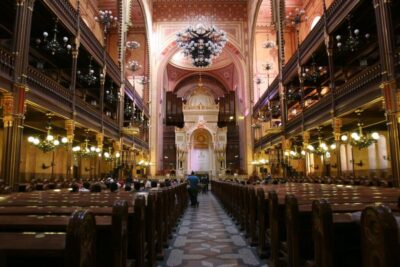
Jewish Heritage Guided Tour with Synagogue Ticket
Read our review →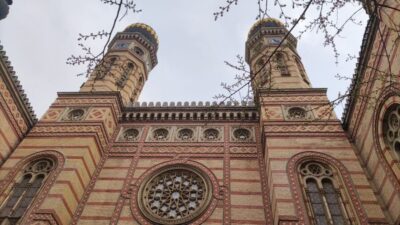
German tour in the Budapest city centre & the Jewish quarter
Read our review →
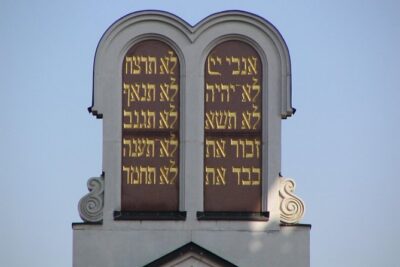
Budapest Dohany Synagogue & Hungarian Jewish Museum & free extras
Read our review →
Jewish History Guided Walking Tour with Historian
Read our review →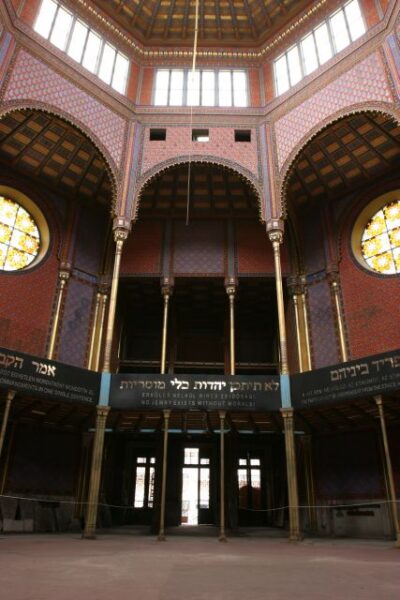
Browse the lists this tour appears in