
Reviewed · JEWISH HERITAGE
Budapest Grand Half-Day Jewish Heritage Tour
Budapest’s Jewish Heritage tour is interesting because it packs major landmarks into a tight loop through the Jewish Quarter, where religion, tragedy, rescue, and daily life all sit next to each other. You start at the grand Dohány Street Synagogue and end the morning or afternoon with more orthodox practice and street-level history in the area that once defined so much of Jewish life in Budapest.
What I like most is the guided focus at the two anchor interiors, Dohány Street Synagogue and the Jewish Museum Budapest. You’re not just looking at buildings, you’re getting the stories and context that help the memorials and streets make sense.
The main drawback to consider is that this is still a walking tour, with multiple synagogue/memorial stops and at least some time outdoors, so it may not feel comfortable if you need mobility support. Also, a few groups have reported time ending earlier than expected due to guide timing, so if you have a hard appointment afterward, plan some buffer.
Key highlights you should plan around
- Dohány Street Synagogue interior visit plus a skip-the-line entrance
- Jewish Museum guided tour to connect objects, people, and events
- Raoul Wallenberg Memorial Park and the Tree of Life in a moving, guided setting
- Former ghetto streets and New Jewish Quarter walking route, with real places to notice
- Kazinczy Street Synagogue inside visit in art nouveau style
- Kosher cake and coffee stop during the route, with a lunch discount option
Why Budapest’s Jewish Quarter is more than a stop on the map
This tour works because it’s built around contrasts, and Budapest is unusually good at showing them close up. You get monumental places like Dohány Street Synagogue, then you move into memorial parks tied to the Holocaust, then you walk the streets where Jewish communities carried on through food, shops, synagogues, and neighborhood life.
You also get a guide who can explain the “why,” not only the “what.” Many groups highlight English that’s clear and confident, plus the ability to handle questions without dodging hard topics. If you like history that stays human and specific, the format helps.
Still, it’s half-day timing. That’s not a slow museum day where you can linger. It’s a smart itinerary that trades extra time for coverage, and that’s exactly why it’s good value for most first-timers.
More of Jewish Budapest:
- Budapest: Jewish Heritage Guided Tour with Synagogue Ticket
★ 4.8 · 533 reviews - Walking Tour Budapest incl. the Shoes on the Danube Bank
★ 5.0 · 387 reviews - German tour in the Budapest city centre & the Jewish quarter
★ 5.0 · 359 reviews
Dohány Street Synagogue: the anchor moment at the start
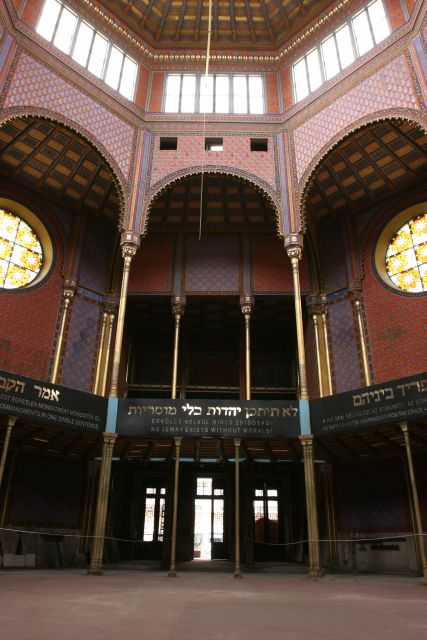
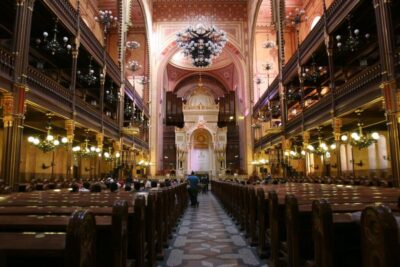
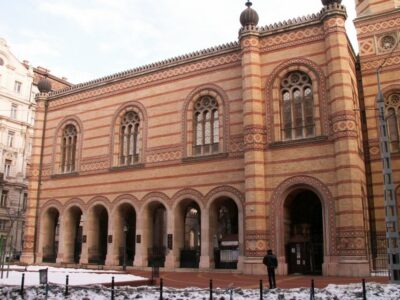
You begin at Dohány Street Synagogue, a site you’ll recognize instantly because it’s on the short list of Europe’s biggest synagogues. The tour takes you inside first, with a guide who sets the stage before you’re dropped into the scale of the sanctuary.
Why that matters: when a building is this large, it can feel like an impressive shell unless someone connects it to community life, religious practice, and the city’s changing fortunes. A guided start helps you interpret what you’re seeing, from architectural presence to the sense of congregation and continuity.
You’ll also benefit from the practical touch of a separate entrance to skip the line, which keeps the tour moving. If your day in Budapest is packed, this matters more than it sounds. Nothing kills momentum like spending the first 30 minutes waiting.
Jewish Museum Budapest: turning what you see into something you understand
After the synagogue, the tour moves into Jewish Museum Budapest for guided time. This is where you typically get the “connective tissue” between places. Instead of treating sites as separate dots on a route, you start learning how the past lived day to day, and how it’s represented now.
I like this part because museum guidance changes how you walk through memorial sites later. You’re better able to read meaning into objects and names, which makes stops like the cemetery and Wallenberg-related areas hit harder, without feeling random.
There’s also something practical here: a guided museum visit helps you stay focused even if you’re not a museum person. You don’t have to be fluent in Jewish history beforehand. Your guide builds the framework while you’re there.
One thing to keep in mind is pace. Some groups have felt the early segment could be seated for a while. If you’re traveling with kids or you need frequent movement, wear comfortable shoes and plan for a schedule that can include indoor time with listening.
Martyrs’ Cemetery, then the Wallenberg sites: a walk with emotional weight
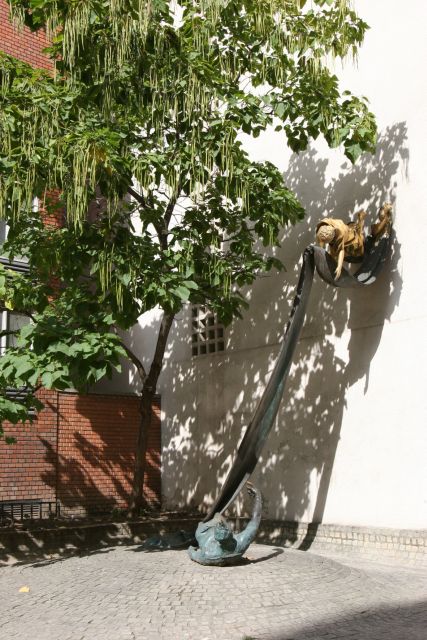
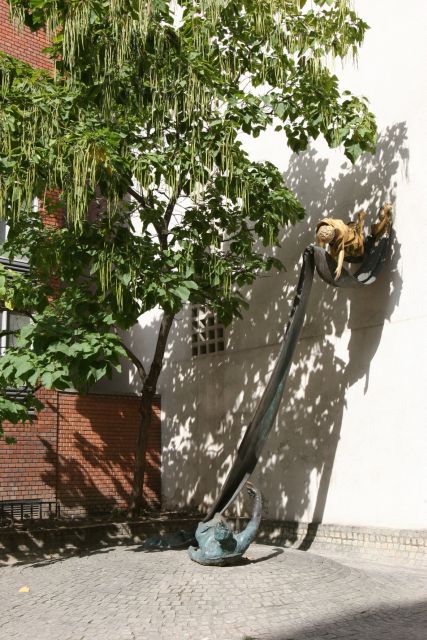
The route includes the area connected with the Martyrs’ Cemetery, and later you reach Raoul Wallenberg Holocaust Memorial Park with the Tree of Life. Even if you’ve read about the Holocaust, these stops matter because they’re geographically specific. Names and memory aren’t only on paper here.
Raoul Wallenberg is strongly tied to rescue efforts, and the memorial park format helps you see that history as a chain of decisions, risks, and human action. The Tree of Life adds a grounded, symbolic layer. It’s not abstract. You’re standing in a designed space for reflection, while your guide helps you connect it to what happened to Hungarian Jews and what surrounded them.
You’ll also pass by the Carl Lutz Memorial, another name that often comes up in the story of rescue during the Holocaust. Lutz is sometimes referred to as Hungary’s Schindler in the context of how he helped save people. The point of including both Wallenberg and Lutz on one route is clear: it prevents you from thinking only of tragedy. You also get the “how some people tried to help” thread.
More history walks in Budapest:
- Budapest: Historic Cruise with Welcome Drink
★ 4.7 · 6,512 reviews - Budapest Historical Sightseeing – Free Walking Tour
★ 5.0 · 1,302 reviews - Buda Castle District Dark History, Legends and Vampire Night Tour
★ 4.5 · 1,240 reviews - BloodThirsty Hungary: Walking tour & Dark Historical Stories
★ 4.9 · 633 reviews
Heroes’ Temple, Rumbach Synagogue, and Jewish life that continues

Between the memorials and the deeper walk through the quarter, the tour includes outside visits such as Temple of Heroes and Rumbach Street Synagogue. It also stops at areas tied to community life, like the Jewish Center.
These outside visits are short by design, but they still add value. You see how the city’s Jewish architecture and institutions are woven into the neighborhood, not isolated into a single monument zone. That helps you understand the Jewish Quarter as a real district with a present day identity, not only a historic concept.
This is also where the tour earns points for balance. The itinerary doesn’t treat everything as a single mood. It shifts from synagogues to memorials to neighborhood streets, so you experience the full pattern of community endurance and rebuilding.
The Jewish Quarter walk: New Jewish Quarter and former ghetto streets
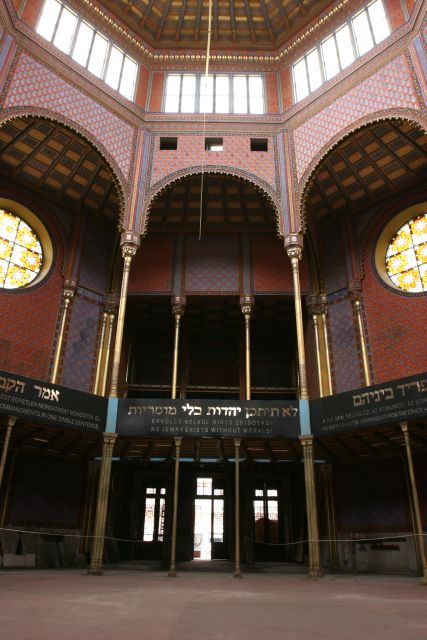
Then you move into the streets of the Jewish Quarter, including the New Jewish Quarter and the route through parts of what was once the ghetto area. This is the “life on the ground” section of the tour.
You’ll look for synagogues, monuments, and everyday markers like kosher restaurants and kosher shops. Even if you don’t eat there, the presence of these places tells you that Jewish life didn’t vanish. Your guide helps connect what you’re seeing to why these businesses and institutions matter culturally, not only religiously.
There are two ways this walk helps you as a traveler. First, it gives you orientation in Budapest. After a guided walk through a smaller area, you’re less likely to feel lost later. Second, it turns the quarter into a readable place. You start to notice the same theme repeated across different buildings and signs.
The tour also passes Madách Square and Gozsdu Passage, a well-known pedestrian passage. Even if you don’t spend time shopping, it’s a useful break in the rhythm of memorial and synagogue stops.
Kazinczy Street Synagogue: art nouveau style and real orthodox practice

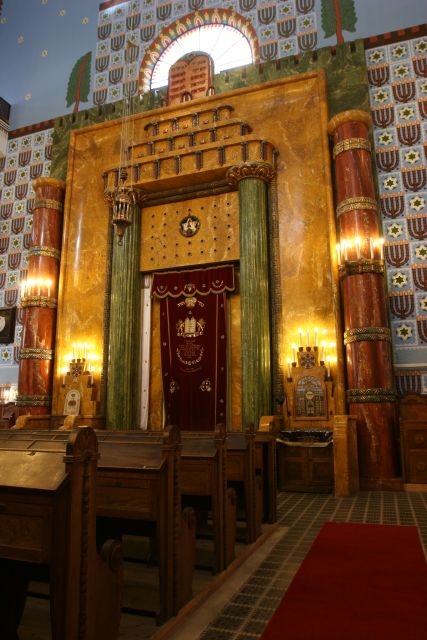
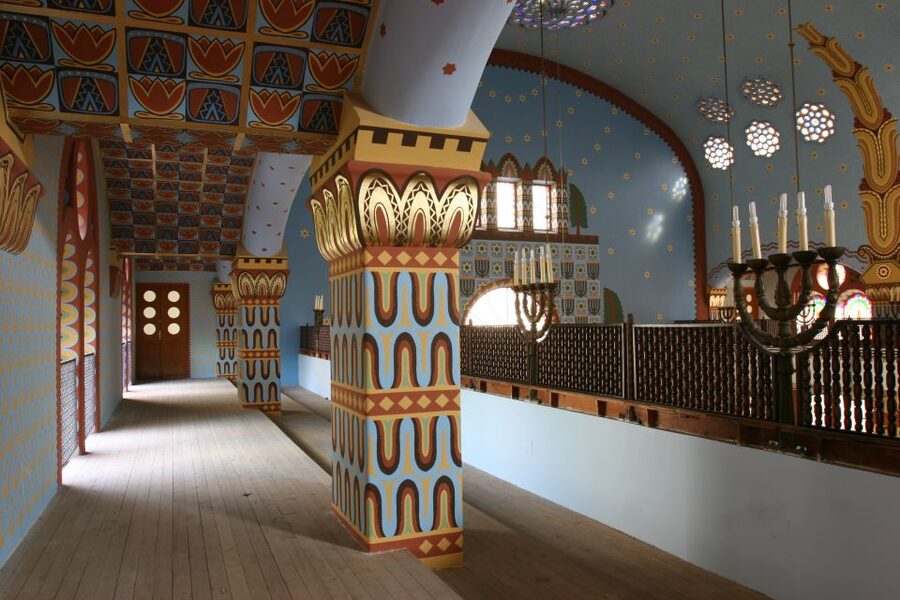
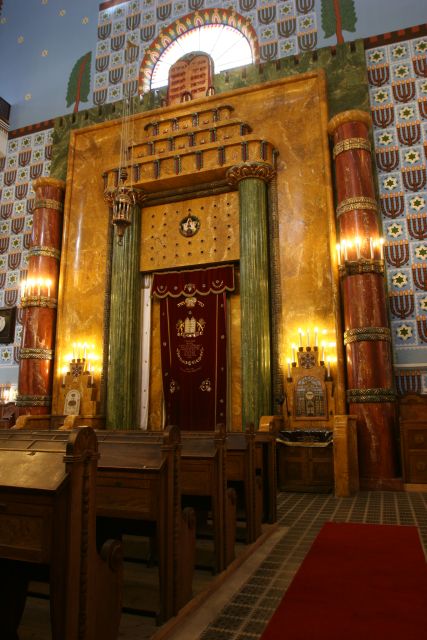
The final synagogue focus includes Kazinczy Street Synagogue, which is visited inside. It’s described as one of the larger operating orthodox synagogues in Europe and built in art nouveau style. That combination is worth paying attention to because it signals something specific: style and devotion here are not separate worlds.
Why the inside visit matters: you get a sense of how orthodox practice continues in an active setting. That’s a different experience from passing buildings as exterior landmarks. Inside, your guide can explain what you’re seeing in terms of community rhythms and religious function.
Timing-wise, this section is usually the payoff for the route. If you’ve been absorbing museum context and memorial meaning, Kazinczy becomes the practical anchor for understanding continuity.
Price and pace: is $116 for 4 hours good value?

At $116 per person for about 4 hours, you’re paying for more than a walking guide. The tour includes entrance fees for multiple major sites, including Dohány Street Synagogue, Jewish Museum Budapest, Raoul Wallenberg Memorial Park, and Kazinczy Street Synagogue. You’re also getting a skip-the-line approach at Dohány, which reduces wasted time.
So for many first-time visitors, this pricing model is fair. You effectively bundle paid entries with interpretation, in a single organized route instead of piecing together tickets and timing on your own.
Where value can feel less strong is if your day needs strict finishing times. A few groups have reported ending earlier than expected, which is frustrating if you booked your afternoon tightly. If you have an evening plan, give yourself breathing room. This is a tour that benefits from flexibility.
Guides like Benjamin, Orsi, and Petra: what “good guiding” looks like here
One of the most praised parts of this experience is the guide. Names that come up include Benjamin, Orsi, and Petra, and the consistent theme is strong English plus storytelling that connects Hungary with broader Jewish life.
What you should look for in a great guide here:
- The ability to explain serious history without losing clarity
- Humor and human delivery, which helps when topics get heavy
- Openness in Q and A, where questions are answered directly
If you’re the type who wants to understand what you’re seeing in plain language, this tour’s guide style is a major part of the value.
What you should bring, and how to make the route feel easier
You’ll want passport or an ID card since it’s required for the tour experience. Bring comfortable shoes because you’ll be walking through multiple stops, including areas near memorial parks and through streets of the quarter.
The tour also doesn’t allow pets and doesn’t allow luggage or large bags. If you’re carrying a big backpack from the airport or train station, plan to store it before the tour.
If you’re sensitive to indoor listening time, note that museum and synagogue sections can include seated guidance. Dress for both indoor and outdoor weather.
Final verdict: should you book this Budapest Jewish Heritage tour?
If you want a first-time, structured way to understand Budapest’s Jewish Quarter, I think booking makes sense. The route hits major anchors: Dohány Synagogue, the Jewish Museum, Wallenberg and Lutz memorial areas, and ends at Kazinczy Street Synagogue in an orthodox setting. That combination is hard to replicate on your own in a way that feels coherent.
Skip this only if you have very strict timing demands or you need mobility support, since it’s not marked as suitable for wheelchair users. Also, if you know you need more free time in one place, this is more “high-coverage” than “lingering.”
For most visitors, the sweet spot is this: you get orientation, you get context, and you leave with a much clearer map of what Budapest’s Jewish story looks like when you walk it.
FAQ
Where does the tour start?
The meeting point is Dohány Street Synagogue, Dohány u. 2, 1074.
How long is the Budapest Grand Jewish Heritage tour?
It runs for 4 hours.
What sites are included during the tour?
You’ll visit Dohány Street Synagogue, the Jewish Museum Budapest, Raoul Wallenberg Holocaust Memorial Park including the Tree of Life, and you’ll also see areas including Martyrs’ Cemetery, Heroes’ Temple (outside), the Jewish Centre, Rumbach Street Synagogue (outside), the Carl Lutz Memorial, Gozsdu Passage, and Kazinczy Street Synagogue (inside).
Is pickup included?
No, pick-up is not included.
What’s included in the price?
The price includes a professional guide and entrance fees for Jewish Museum Budapest, Dohány Street Synagogue, Raoul Wallenberg Memorial Park, and Kazinczy Street Synagogue.
Is it suitable for wheelchair users?
No, the tour is not suitable for wheelchair users.
What should I bring?
Bring a passport or ID card and wear comfortable shoes. Large luggage is not allowed.
Newest reviews from Budapest
- Private Tour Around Budapest★ 5.0 · 10 reviews
- Born Under The Red Star – Communist tour with Coffee in a Retro Bar★ 5.0 · 10 reviews
- Live virtual walking tour in the Buda Castle quarter★ 5.0 · 10 reviews
- Taste Budapest – Fat Boy Foodies Walk★ 4.5 · 10 reviews
- Wine & Food Tasting Cruise on the Danube★ 3.5 · 10 reviews
- Private Transfer from Budapest to Prague with 2 hours for sightseeing★ 4.5 · 10 reviews
- The Real Saw | Escape Room by PÁNiQ SZOBA★ 4.1 · 10 reviews
- City Park True Crime of Hungary and Night Walk Tour in Budapest★ 5.0 · 10 reviews
Jewish Heritage, compared.
Jewish Heritage Guided Tour with Synagogue Ticket
Read our review →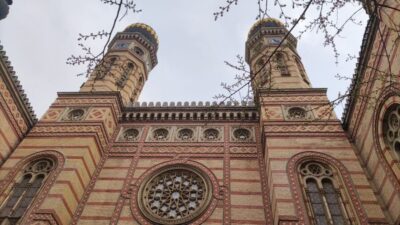
German tour in the Budapest city centre & the Jewish quarter
Read our review →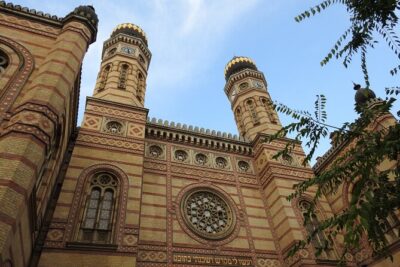
Past and Present of Budapest Jewish District Tour
Read our review →
Budapest Dohany Synagogue & Hungarian Jewish Museum & free extras
Read our review →
Jewish History Guided Walking Tour with Historian
Read our review →
Browse the lists this tour appears in