
Reviewed · JEWISH HERITAGE
Budapest Dohany, Heroes’, Rumbach synagogues & Jewish Ghetto Tour
Budapest’s Jewish Quarter is the kind of place where buildings teach you history fast, and this tour helps you read that story on foot. I love the Great Synagogue visit, especially how it ties architecture, Hungarian Jewish communities, and even Franz Liszt’s organ connection into one visit. I also love the stop in Raoul Wallenberg Holocaust Memorial Park, because the guide keeps the focus on people, choices, and consequences. One possible drawback: it packs a lot into about 2 hours 20 minutes, so if you want long, slow museum time, you’ll feel a bit rushed.
You’ll start by Dohány Street, then work your way through memorials and active street scenes, ending at the Rumbach Synagogue. The route is mostly walk-and-stand, with a dress code at the synagogues, so I recommend bringing covered shoulders and something knee-length or longer.
Key highlights you will feel right away
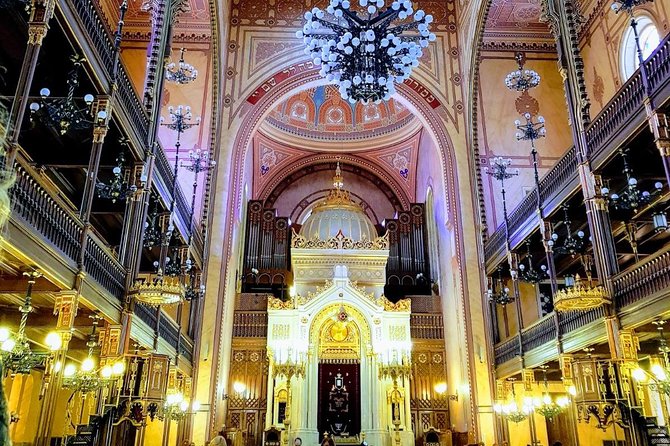
- Great Synagogue entry with the big-picture story of Hungarian Neologue Jewry and the organ connection linked to Franz Liszt
- Wallenberg Park memorial stops including the Emmanuel Tree of Life Memorial and a Holocaust cemetery with 2,000+ victims
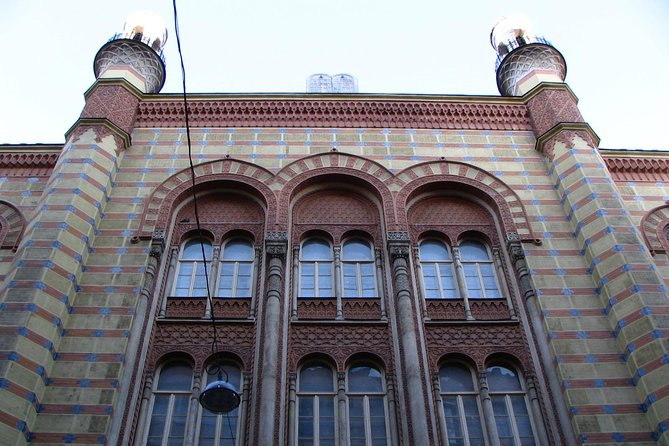
- Rumbach Street Synagogue interior time with the Otto Wagner, 1872 Moorish-style design and a recently reopened feel
- Király Street and Gozsdu Udvar for present-day Jewish culture in streets that once held food shops and apartments
- Carl Lutz and Spinoza Színház stops that add both rescue history and Enlightenment-era ideas
- Kazinczy Street synagogue area with Orthodox life and Art Nouveau, though entry there is not included
Where the Tour Fits in Budapest (And Why It Works)
If you only do “one neighborhood” in Budapest beyond the usual sights, the Jewish Quarter is a strong choice. It is not just pretty streets. It is a map of how communities formed, changed, and survived, then rebuilt.
This tour is smart because it mixes three things you need for context:
1) a major synagogue interior,
2) Holocaust memorial ground,
3) the streets where Jewish life became visible again.
You also get a guided flow, which matters here. Without a guide, you can see the buildings and miss the why. With a guide, you start connecting the dots between Neologue, Orthodox, and the physical features of synagogues that were built to communicate values, status, and identity.
Group size stays manageable, with a maximum of 35, and the tour is in English. Most travelers can participate, but plan for a steady walking pace and time standing outside in Budapest weather.
More of Jewish Budapest:
- Budapest: Jewish Heritage Guided Tour with Synagogue Ticket
★ 4.8 · 533 reviews - Walking Tour Budapest incl. the Shoes on the Danube Bank
★ 5.0 · 387 reviews - German tour in the Budapest city centre & the Jewish quarter
★ 5.0 · 359 reviews
The Start at Dohány Street: Great Synagogue, Big Scale, Clear Meaning
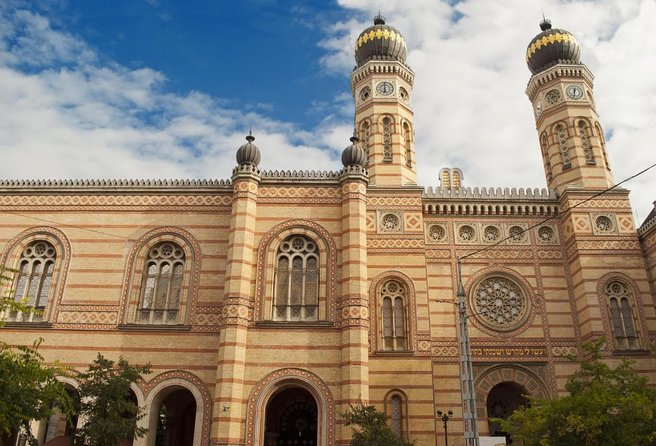
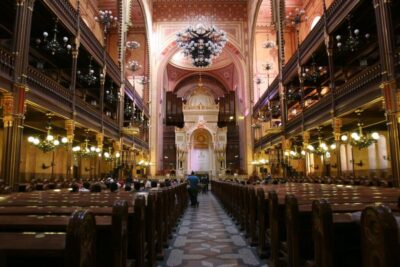
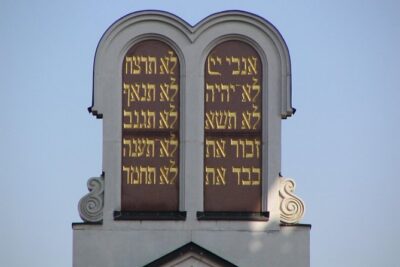
The meeting point is at Dohány u. 2-4, and the first big interior stop is the Great or Central Synagogue (Nagy Zsinagoga). This is the largest Jewish temple of Europe, and that scale hits you immediately when you step inside.
What I like most here is that the visit is not just “look at the building.” You get a guided explanation of the Hungarian Neologue Jewish community and the broader history of Hungarian Jewry. That helps you understand why the synagogue’s style and role mattered in the 1850s, not only as a place of worship, but as a public statement.
Then there’s the Franz Liszt connection. The tour points out the organ and the famous association with him, which turns the synagogue into a cultural landmark, not a historical artifact. Even if you are not a music person, it is a great way to make the space feel alive.
Practical tip: synagogues require a modest dress code. Shoulders must be covered, clothing should reach the knee or be covered, and cover-ups may be available for purchase on the spot. Men also need head cover for entry. If you forget, it can slow things down. If you arrive prepared, you walk in and get to the good parts faster.
Raoul Wallenberg Memorial Park: Holocaust History With Names and Choices
After the first synagogue, you move to Raoul Wallenberg Holocaust Memorial Park. This is one of the most important stops on the route because it grounds the tour in the Holocaust period in Hungary and the people who acted while others did not.
The guide focuses on the story of Hungarian Jews and the Righteous Gentiles who saved tens of thousands by risking their own lives. That emphasis on courage and moral choice matters. It keeps the narrative from becoming only numbers and dates.
There are also specific memorial features built into the walk:
- the Emmanuel Tree of Life Memorial, and
- the Holocaust Cemetery on the territory of the Budapest ghetto, described as the resting place of more than 2,000 victims.
This stop is typically emotional and quiet in a way that feels respectful rather than performative. If you are the type who likes to process slowly, you may find yourself standing a little longer than expected. Give yourself mental space here.
A note on pacing: the time is about 20 minutes for this portion. That is enough to understand what you are seeing, but it is not designed for long reading. If you want deep personal reflection, you can always return later on your own.
Rumbach Street Synagogue: Otto Wagner’s Moorish Masterpiece Reopened
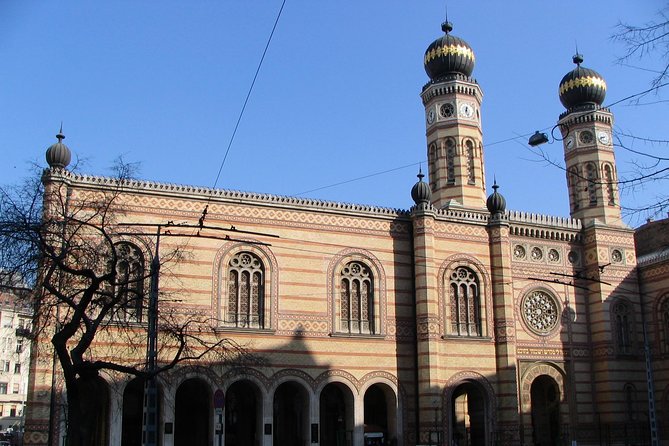
Next comes the Rumbach Street Synagogue (Rumbach Sebestyén u. 13). This is a stop that surprises many people because it looks unlike the “typical synagogue” expectations. It is a masterpiece by Viennese architect Otto Wagner from 1872, with a striking Moorish-style design.
The tour highlights that the synagogue has recently reopened after many years of renovations. You feel that “newly revealed” energy in how guides talk about it, because you are not only learning history. You are stepping into a space that is part of today’s ongoing restoration and Jewish life in Budapest.
What you get on this stop is roughly 45 minutes and included admission, which is the right amount of time to appreciate:
- the architecture from the sidewalk approach,
- the exterior character as you walk the streets of the Jewish quarter,
- and the interior when you step in.
If you love buildings, do not just glance and move on. Look up and look around. Synagogues are designed to guide attention, and the Rumbach one is especially theatrical.
And practical bonus: the tour ends here, so you are not rushing to catch the next connection right after the most visually rewarding interior.
A different sort of Budapest afternoon:
- Budapest: City Highlights Sightseeing Cruise
★ 4.6 · 43,981 reviews - Budapest: Unlimited Prosecco, Beer and Aperol Spritz Cruise
★ 4.8 · 37,304 reviews - Budapest: Széchenyi Spa Day Ticket with Optional Upgrades
★ 4.3 · 23,911 reviews - Budapest: Nighttime or Daytime Sightseeing Cruise
★ 4.2 · 21,062 reviews
Király Street and Gozsdu Udvar: Where the Quarter Feels Alive
Between memorial intensity and synagogue interior time, the tour includes street segments that make the neighborhood feel real today.
On Király Street, you learn how it was the high street of Pest in the 18th and early 19th centuries. It became a commercial and trade center and the cradle of Jewish life in Pest. Today, it is full of commercial and cultural activity again, so the street history does not stay trapped in the past.
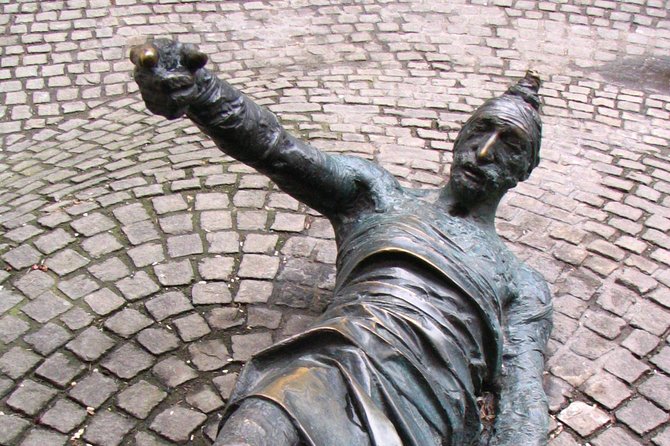
Then you move to Gozsdu Udvar, described as one of the most colorful spots in the Jewish district. This is where you see how the quarter functions as a social and cultural space. The tour also gives historical context: in the past, the area housed kosher salami stores, food stores, and apartments. That detail is an easy reminder that neighborhoods are layered, not replaced.
You can use these short stops to reset your brain. Think of them as the “breathing space” that keeps the tour from turning into one long solemn lesson.
Carl Lutz Memorial and Spinoza Színház: Rescue Story Meets Big Ideas
Two tiny stops do a lot of storytelling.
First is the Carl Lutz Memorial. This is a quick, focused moment to meet one of the brave Righteous Gentiles who risked his own life to save thousands of Hungarian Jews during the Holocaust. Even though the stop is brief, it reinforces a theme the earlier memorial section started: survival was not automatic. People made decisions.
Then comes Spinoza Színház, a cultural venue named after the Jewish Dutch philosopher of Portuguese Sephardi origin. The tour frames him as an early representative of Enlightenment thinking in the 17th century. That makes the quarter feel broader than just tragedy. You are also seeing how Jewish intellectual life shaped European ideas.
These stops are short, but they work well if you like your history human-sized. They also give you a break from constant interior time.
Dob Street and Kazinczy Street: Orthodox Life and Art Nouveau Style
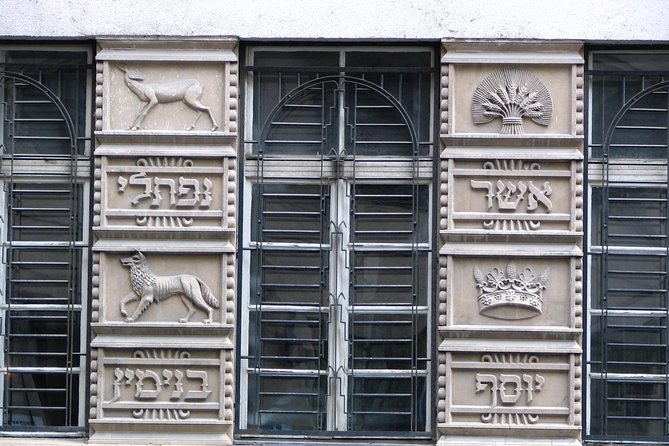
The tour walks into the feel of the quarter’s religious life again on Dob Street, a street running parallel to Király. Historically it ran through the center of the ghetto. Today, it is part of the revival of Jewish life in Budapest and Hungarian Jewish Orthodoxy.
Next is the Kazinczy Street synagogue area. Kazinczy Street is called the cultural street of Budapest, lined with ruin pubs and more. The tour includes a short stop at the Orthodox synagogue area on Kazinczy, with a focus on what is around it, not only what you see from the outside.
You learn about:
- Art Nouveau architecture, called Secession in Budapest, and
- the Orthodox community presence, including a synagogue, a mikveh, kosher restaurants and cafes, schools, a butchery, and kosher food stores.
Important practical detail: the Kazinczy Street synagogue entry is listed as not included. So if you want to go inside, expect to pay additional admission on the day.
Kosher Flodni Stop: Food as a Memory Trigger
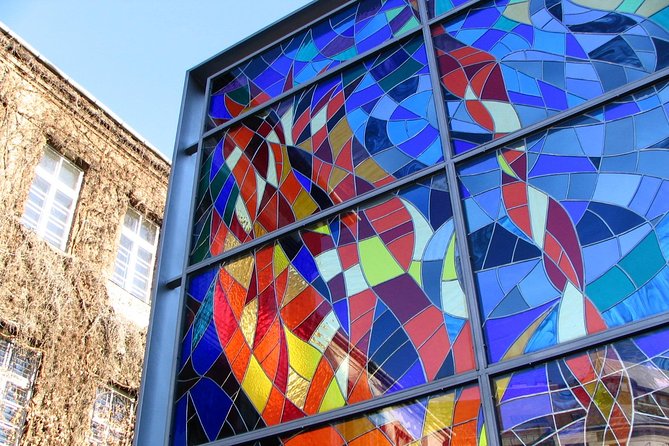
The tour includes a stop tied to kosher flodni, described as one of the best-known places in Budapest for this Hungarian Jewish cake.
I like this kind of food moment because it turns cultural learning into something you can taste later, not just remember from notes. If you have dietary needs, keep them in mind here. The tour timing is tight, so this is a “grab it if you want” type of stop rather than a slow sit-down meal.
Timing, Weather, and How to Not Feel Rushed
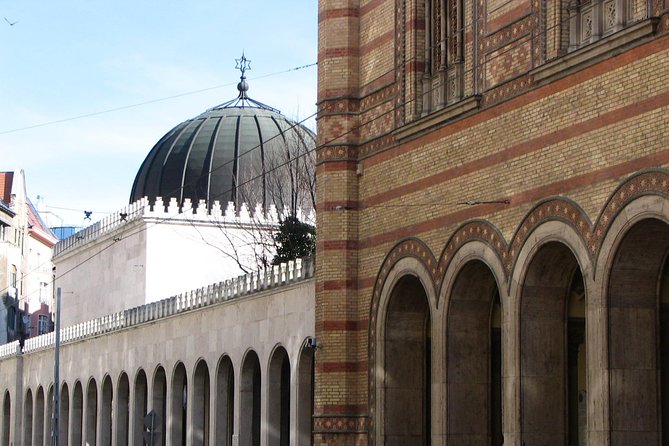
The tour duration is about 2 hours 20 minutes, with a schedule that moves you from synagogue to memorial park to another major interior, then through several street sections. Some parts are 5 to 10 minutes, so if you hate being on a timetable, this will feel a bit structured.
Weather matters too. The tour requires good weather, since much of it happens outdoors. If you are visiting in colder months, dress for it. One review mentioned chilly conditions, and dress code requirements at synagogues mean you cannot just wear whatever thermally thin layer you planned.
Also, remember the group max is 35. That is big enough for energy, but small enough that you can ask questions during the stops if the guide has time.
If you can choose your arrival day, try to schedule this earlier rather than right before you leave the city. It is the kind of tour that makes the next places you visit in Budapest feel more meaningful.
Price Value: What $63.52 Actually Buys You
At $63.52 per person, you are paying for:
- a guided English walking route through the Jewish Quarter,
- and included admission for major interior and memorial stops.
Included admissions cover the Great Synagogue (about 30 minutes), the Holocaust Memorial Park stop (about 20 minutes), and the Rumbach Synagogue (about 45 minutes).
That combination is the value. You get both big architecture and the Holocaust memorial grounding, not just a street walk with no entry. The Kazinczy Street synagogue stop is not included for admission, so the price mainly concentrates on the core program.
If you are comparing self-guided options, the guide is the difference. Here, the hard part is context: understanding why these buildings look the way they do, and how the memorials connect to the ghetto story. Paying for the guide saves you from wandering in circles with half-formed understanding.
Who Should Book This Tour (And Who Might Skip It)
Book this tour if you:
- want synagogue interiors with real context,
- care about Holocaust history tied to Hungary and Budapest,
- and like mixing architecture with modern street life like Király Street and Gozsdu Udvar.
You may want a different plan if you:
- need long, quiet time in one place, such as a museum,
- or prefer a very light walking tour with minimal standing.
This is also a great choice if you are traveling solo. The structure and pacing keep you from feeling lost.
On the guide side, the tour experience often depends on the person leading it. Names that come up in this program include Milan and David, and you can also run into guides like Micky or Daniel. The common thread is clear explanations and a willingness to answer questions, with some guides sharing personal family context connected to the themes of the tour.
Should You Book? My Practical Recommendation
I recommend booking this tour if you want a compact but serious Jewish Quarter visit with the key interiors and memorial stops covered. For the money, the included synagogue admissions and Holocaust memorial time are the real drivers of value.
If you are careful with your schedule, dress code, and cold-weather comfort, you will come away with a much better sense of where Hungarian Jewish life began, what it endured, and how it reappeared in the streets you walk today. Just go in knowing it is not a slow, wandering day. It is a guided storyline with stops that land in the right order.
FAQ
How long is the Budapest Jewish Quarter tour?
It lasts about 2 hours 20 minutes.
Where do we meet and where does the tour end?
You meet at Budapest, Dohány u. 2-4, 1075 Hungary, and the program ends at Rumbach Street Synagogue, Budapest, Rumbach Sebestyén u. 13, 1074 Hungary.
Is the tour in English?
Yes, it is offered in English.
What is the price per person?
The price is $63.52 per person.
Which parts include admission tickets?
Admission tickets are included for the Great / Central Synagogue, the Holocaust Memorial Park stop, and the Rumbach Street Synagogue. The Kazinczy Street synagogue visit is listed as admission not included.
What is the dress code for the synagogues?
Shoulders must be covered, clothing must reach the knee or be covered before entering. Cover-ups may be available for purchase on the spot. Men need a head cover upon entry.
How big are the groups?
The tour has a maximum of 35 travelers.
What should I know about weather?
This tour requires good weather. If canceled due to poor weather, you will be offered a different date or a full refund.
Can I cancel for a full refund?
Yes. You can cancel up to 24 hours in advance for a full refund. If you cancel less than 24 hours before the start time, the amount paid is not refunded.
Is the tour accessible for most people and are service animals allowed?
Most travelers can participate. Service animals are allowed.
Newest reviews from Budapest
- Private Tour Around Budapest★ 5.0 · 10 reviews
- Born Under The Red Star – Communist tour with Coffee in a Retro Bar★ 5.0 · 10 reviews
- Live virtual walking tour in the Buda Castle quarter★ 5.0 · 10 reviews
- Taste Budapest – Fat Boy Foodies Walk★ 4.5 · 10 reviews
- Wine & Food Tasting Cruise on the Danube★ 3.5 · 10 reviews
- Private Transfer from Budapest to Prague with 2 hours for sightseeing★ 4.5 · 10 reviews
- The Real Saw | Escape Room by PÁNiQ SZOBA★ 4.1 · 10 reviews
- City Park True Crime of Hungary and Night Walk Tour in Budapest★ 5.0 · 10 reviews
Jewish Heritage, compared.
Jewish Heritage Guided Tour with Synagogue Ticket
Read our review →
German tour in the Budapest city centre & the Jewish quarter
Read our review →
Past and Present of Budapest Jewish District Tour
Read our review →
Budapest Dohany Synagogue & Hungarian Jewish Museum & free extras
Read our review →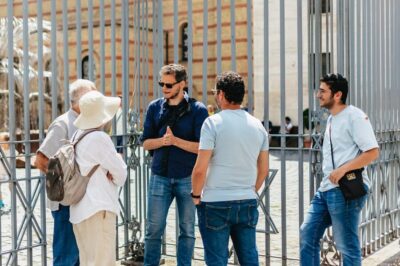
Jewish History Guided Walking Tour with Historian
Read our review →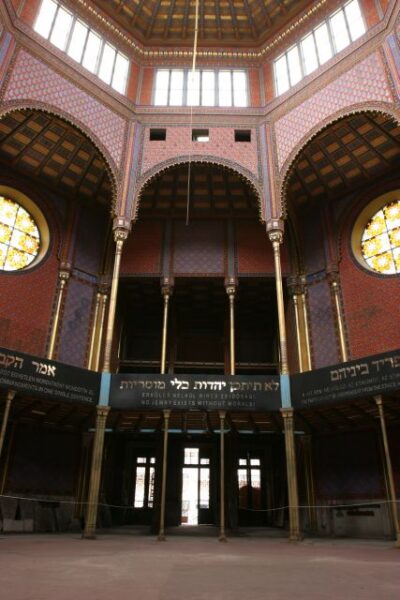
Browse the lists this tour appears in