
Budapest’s Jewish District can feel like a whole textbook written across streets. This walk is interesting because you don’t just look at landmarks, you see how memory and everyday life share the same block, from ghetto-era traces to modern murals.
Two things I really like: you get clear context about Jewish community life and traditions, including both Ashkenazi and Sephardic roots, and you’re walked through practical ways to understand what you see in courtyards and street layouts. You also end at Szimpla Kert, so the story lands with a sense of how people live now, not just what happened then.
One possible drawback: the topics, especially World War II and the ghetto, are handled with sensitivity, but it’s still emotional material. If you prefer pure sightseeing with zero heavy context, you may find parts of the walk a bit intense.
Key points to know before you go
- Licensed local guide with English explanations that connect architecture, symbols, and street life
- Ghetto-era traces and guidance on where you can view remains of the Budapest Ghetto Wall on your own
- Dohány Street Synagogue and other sites viewed with context you can actually use while walking
- Courtyards, street layouts, and small urban details where history stays visible
- Street art and murals that reference Hungarian history, Jewish heritage, and collective memory
- Szimpla Kert as a thoughtful finale, plus time for questions and local orientation
Starting by the Budapest Eye: How You Get Oriented Fast
You begin near the Budapest Eye Ferris wheel, by the Danubius fountain in the middle of the square, and you’re close to the Raoul Wallenberg Memorial. That starting point matters. It frames the walk with a strong reminder that this district is not only about old stone and old faith, it’s also about moral courage and what cities choose to remember.
From there, you move on foot at a relaxed pace. The tour is designed for a basic physical fitness level, and it runs in most weather conditions, so dress for the day. Comfortable shoes are the whole game here, because you’ll be on sidewalks and through tight urban turns more than you’ll be waiting for transit.
There’s a small but useful practical touch too: you get orientation to key locations along the way, and the guide points out what you can revisit independently after the group is done. That means the walk doesn’t just end at Szimpla Kert, it gives you a map for your next steps.
More of Jewish Budapest:
- Budapest: Jewish Heritage Guided Tour with Synagogue Ticket
★ 4.8 · 533 reviews - Walking Tour Budapest incl. the Shoes on the Danube Bank
★ 5.0 · 387 reviews - German tour in the Budapest city centre & the Jewish quarter
★ 5.0 · 359 reviews
Deák Ferenc tér Stops: The City’s Rhythm Before the Jewish District Story
One of the smartest parts of the tour is how it threads in the wider city flow before zooming into Jewish landmarks. You briefly pass through Deák Ferenc tér, then continue with short on-foot segments. These quick shifts help you understand where the Jewish District sits in Budapest’s larger layout, not as a museum district cut off from the rest of town.
In real life, most neighborhoods overlap. People shop, work, commute, and walk their dogs near historic sites. The tour leans into that, which is why it feels less like a lecture and more like a guided walk that explains why the streets look the way they do.
Dohány Street Synagogue Exterior: Symbols You Can Read After This Tour
You’ll spend a good chunk of time at Dohány Street Synagogue. You’re not asked to guess what you’re looking at. The guide puts the building in context and connects it to the wider story of Jewish community life in Budapest.
Even if you only see the exterior, you can leave with much better “reading skills.” The guide explains how Jewish life shaped architecture, commerce, and social fabric starting in the 19th century and onward. That turns the synagogue from a single photo stop into a landmark with a history behind it.
You’ll also hear about the presence of Ashkenazi and Sephardic traditions, which helps explain why Jewish communities in the region were not one single culture. When you understand that background, later details, like street markers, courtyards, and memorial references, make more sense.
Rumbach Street Synagogue: Courtyards and Neighborhood Texture
Next you move to Rumbach Street Synagogue for a shorter guided stop. The point here is not just the site itself, it’s the way the district is built. You start noticing the neighborhood texture: the way courtyards work, how buildings relate to the street, and how urban details carry meaning.
This is where the tour’s “past and present” idea becomes real. You’re standing in a living neighborhood, not behind ropes. That means you’ll see ordinary street life right alongside historic context, and the guide helps you connect those layers without flattening the story.
Other Budapest bookings worth a look
- Budapest: Buda Castle Walk with Saint Stephen’s Hall
★ 4.5 · 3,012 reviews - Budapest: Buda Castle District Walking Tour
★ 4.6 · 2,108 reviews - Budapest City Landmarks Walking Tour in 2 Hours
★ 5.0 · 2,048 reviews - 3-Hour Orientation Walking Tour of Buda and Pest
★ 4.8 · 1,834 reviews
Gozsdu Udvar: Where Everyday Budapest Sits on Top of Earlier Stories
At Gozsdu Udvar, the tour keeps moving without losing focus. This stop helps you understand that the Jewish District today is not frozen. Urban spaces evolve, and new uses take shape in places with older significance.
The guide uses the route to point out how memory persists through street layout, small markers, and the overall shape of the area. It’s a subtle lesson, but it’s practical: when you later walk around on your own, you’ll know what to pay attention to besides the obvious monuments.
Kazinczy Street Synagogue: Understanding the District Through Everyday Layout
You’ll pass by Kazinczy Street Synagogue for a focused guided segment. Again, even when you’re mostly looking at exteriors, you’re learning how to connect Jewish heritage to the neighborhood’s everyday structure.
One of the best parts of this tour is the balance. It covers religion and community life, but it also covers commerce and daily routines. That means the district doesn’t feel like a stage set. It feels like a place that once worked a certain way, then changed because history forced it to.
And because the guide ties things together, you’ll likely find you can place new details as you go. That’s the kind of travel skill that pays off after the tour ends.
Ghetto-Era Streets and the Budapest Ghetto Wall: What You Should Know Before You Look
The tour addresses the 20th century and World War II with balance and sensitivity. You’ll walk past former ghetto streets and you’ll also encounter places where remains of the Budapest Ghetto Wall can still be seen.
What I like here is that the guide gives you context, then gives you practical guidance. You’re not left standing there thinking, what am I supposed to notice? Instead, you learn what these locations meant historically, and you get instructions on how and where to view the remains independently after the walk.
If you’re the type who wants to understand without sensationalizing, this is the right approach. The point is remembrance, not shock value. The tour helps you hold two realities at once: the district’s survival, and the way trauma shaped the city.
Courtyards, Urban Details, and Street Symbols: The Hidden Work the City Does
A big theme is how memory is embedded in the cityscape. You’ll reflect on history in courtyards and on street-level urban details, not just in grand buildings. Courtyards are especially important in dense European neighborhoods, because they’re where people lived their daily lives, and because they can hold traces that a street view alone won’t show.
The guide also pays attention to symbols and the way they’re placed. That’s useful even if you’re not a history buff. You start seeing the district like a layered document. One part is architectural, one part is cultural, and one part is memorial.
If you tend to travel fast and take photos later, slow down for this section. The details are brief, but they’re the difference between seeing a district and understanding it.
Street Art and Murals: How Budapest Talks Back to the Past
Later in the walk, the focus shifts to the Jewish District today, including urban street art and murals that reference Hungarian history, Jewish heritage, and collective memory. This isn’t random graffiti. The guide explains what you’re looking at and how it connects to larger themes.
This is one of the most satisfying parts because it’s not only about what was lost. It’s about what’s still being said, what’s still being remembered, and how public art becomes a kind of ongoing conversation.
It’s also honest about change. You’ll hear how ongoing urban development is reshaping the area. That matters because the district is not just surviving in the past tense. It’s continuing to live, build, and adapt.
Szimpla Kert Finale: Ruin Pub Energy With Real Orientation
You finish at Szimpla Kert, described as Budapest’s first ruin pub. This is a smart ending point because it gives you a place to ask questions after the heavy and detailed parts of the walk.
You’ll have time for remaining questions and practical local orientation to help you continue exploring the Jewish District independently. And since Szimpla Kert is a well-known stop, it’s also a helpful anchor for getting your bearings without turning your day into a scavenger hunt.
One review I saw highlighted how much people enjoyed the ruin bar segment. That fits with the tour’s tone. The walk gives you context, then you land somewhere social where you can process it with fresh eyes.
Value and Fit: Is This Walk Worth Your Time?
At about $1.89 per person for a 1.5 hour guided experience, the value feels unusually strong. You’re paying for a licensed local guide, multiple landmark stops, contextual explanations, and a guided visit inside Szimpla Kert at the end. That’s a lot to pack into one short walk, especially when the tour focuses on meaning, not just names.
This is a great match if you want:
- A structured way to understand Jewish heritage in Budapest, including both community traditions mentioned in the tour
- A route that connects Holocaust-era memory to what you see in the neighborhood today
- A guide-led explanation of courtyards, street layouts, and symbols you might otherwise miss
It may be less ideal if you want purely light sightseeing or if heavy historical topics are hard for you. Just know the guide handles WWII content with care, but it’s still part of the story.
Should You Book This Jewish District Walk?
Yes, I think you should book it if you want to walk the district with a brain attached. The tour’s biggest strength is that it links old and new in a way that helps you understand what you see, not just what you pass.
I’d especially recommend it early in your Budapest visit, or anytime you feel like the Jewish District is too big to approach on your own. You’ll come away with names, context, and practical follow-up pointers for independent exploring, and you’ll finish in a lively setting at Szimpla Kert where questions and conversation feel natural.
FAQ
Where is the meeting point?
You meet about 10 to 15 meters from the Budapest Eye Ferris wheel, next to the Danubius fountain in the middle of the square.
What is the closest metro station?
The closest metro is Deák Ferenc tér (M1 yellow, M2 red, M3 blue), followed by a 2 to 3 minute walk.
How long is the walking tour?
The duration is 1.5 hours.
What language is the tour in?
The tour is in English.
What does the tour include at the end?
The tour includes time at Szimpla Kert, including a guided visit inside, with time for questions and practical local orientation.
Is the tour wheelchair accessible?
Yes, the tour is wheelchair accessible.
What should I bring and wear?
Bring comfortable shoes. Dress for most weather conditions since the tour runs in most weather.
Are there any rules about recording or noise?
Audio recording is not allowed, and making noise is not allowed.
What is not allowed during the tour?
Alcohol and drugs are not allowed, and bachelor or bachelorette party groups are not allowed.
Newest reviews from Budapest
- Private Tour Around Budapest★ 5.0 · 10 reviews
- Born Under The Red Star – Communist tour with Coffee in a Retro Bar★ 5.0 · 10 reviews
- Live virtual walking tour in the Buda Castle quarter★ 5.0 · 10 reviews
- Taste Budapest – Fat Boy Foodies Walk★ 4.5 · 10 reviews
- Wine & Food Tasting Cruise on the Danube★ 3.5 · 10 reviews
- Private Transfer from Budapest to Prague with 2 hours for sightseeing★ 4.5 · 10 reviews
- The Real Saw | Escape Room by PÁNiQ SZOBA★ 4.1 · 10 reviews
- City Park True Crime of Hungary and Night Walk Tour in Budapest★ 5.0 · 10 reviews
Jewish Heritage, compared.
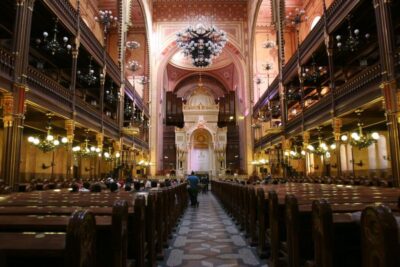
Jewish Heritage Guided Tour with Synagogue Ticket
Read our review →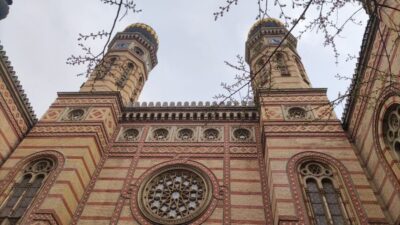
German tour in the Budapest city centre & the Jewish quarter
Read our review →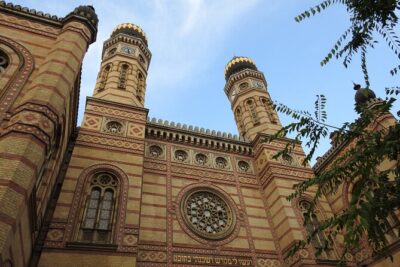
Past and Present of Budapest Jewish District Tour
Read our review →
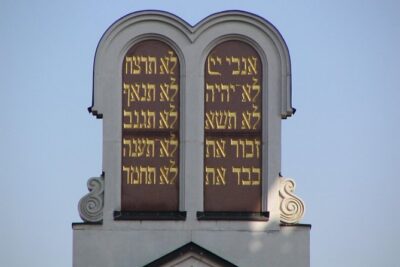
Budapest Dohany Synagogue & Hungarian Jewish Museum & free extras
Read our review →
Jewish History Guided Walking Tour with Historian
Read our review →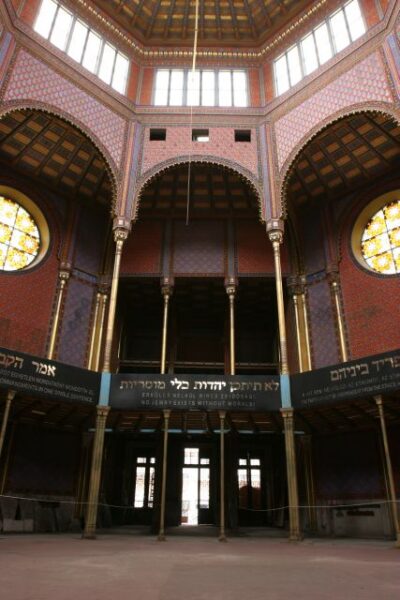
Browse the lists this tour appears in