
Reviewed · JEWISH HERITAGE
Jewish Budapest (German-language city tour)
Budapest’s Jewish Quarter can feel like a maze, but this German-language walking tour turns it into a guided story you can follow in real time. I love that you get to see three of the biggest synagogues in Budapest (from the outside) while learning how different Jewish communities shaped religious life there. One catch to plan for: the tour is in German, so if your German is rusty, you’ll have to rely on the general flow and the digital term guide.
What makes it especially satisfying is the balance of place and meaning. You walk through the streets that still hold everyday Jewish life, and the tasting of Flodni gives you a simple, edible way to remember what you learned.
I also like that the group stays small, max 25, which makes it easier to ask questions without feeling rushed. And with guide Gábor Glasner leading, you get a confident, organized approach, including plenty of room for your curiosity.
Key highlights worth your time
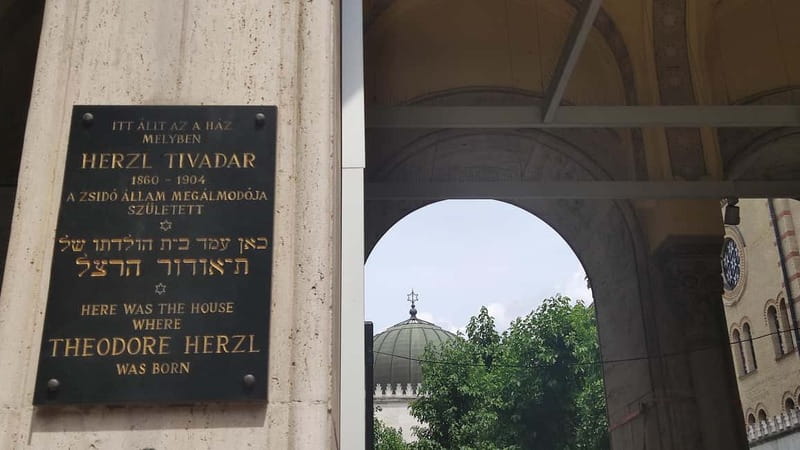
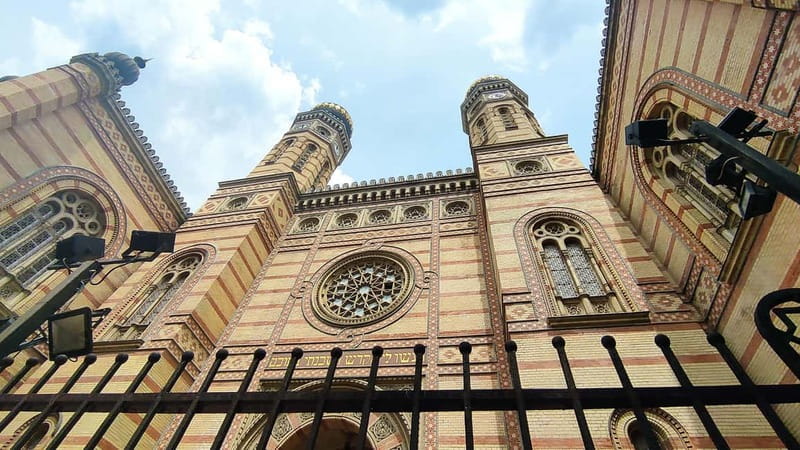
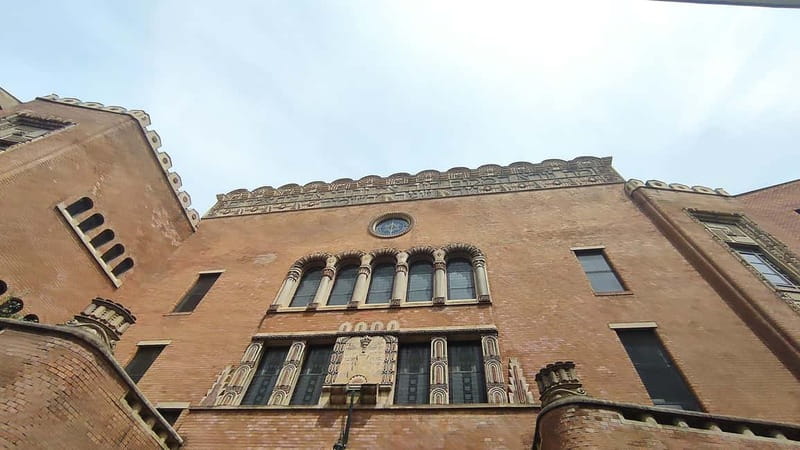
- Three synagogue exteriors: Rumbach, Dohány (Great), and Kazinczy, explained in context without ticket lines.
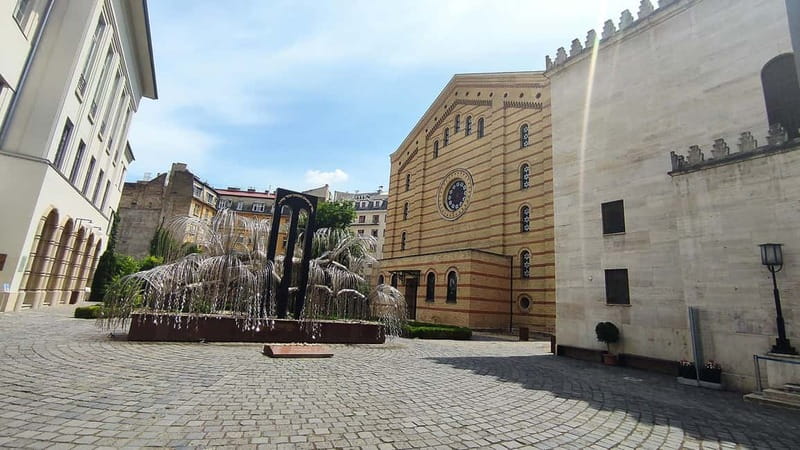
- Emanuel Tree and a small cemetery stop tied to the Holocaust in Hungary and what it means today.
- Flodni dessert taste plus guidance on Jewish food habits, not just one sugary bite.
- Community differences in plain language including how synagogues reflect different Jewish groups.
- Conservative and Orthodox life in practice like the mikvah, customs, and clues for kosher dining.
- Small group feel with time to ask questions, led by Gábor Glasner in German.
Walking the Jewish Quarter with a timeline in your hands
This tour works because it treats Budapest’s Jewish Quarter like a living archive. In 90 minutes, you don’t just see impressive buildings, you build a timeline: Jewish life in the city, the Holocaust period, then how communities continue with traditions, institutions, and food.
The format is also realistic. You are not waiting around for long inside visits or complicated logistics. You walk, you listen, and you get context where it matters, right outside the places where the story happened.
And since synagogues are not entered during the tour, you should think of this as a perspective tour. You’ll learn what you are looking at, what the architecture signals, and why the sites still matter in modern Budapest.
More of Jewish Budapest:
- Budapest: Jewish Heritage Guided Tour with Synagogue Ticket
★ 4.8 · 533 reviews - Walking Tour Budapest incl. the Shoes on the Danube Bank
★ 5.0 · 387 reviews - German tour in the Budapest city centre & the Jewish quarter
★ 5.0 · 359 reviews
Meeting at Sisi and getting your bearings fast
You start at Madách Imre tér 1, with the key practical detail that you meet behind the statue of Empress Elisabeth (Sisi). If you’ve ever wandered in the Jewish Quarter, you know how easy it is to get turned around. Meeting behind a recognizable landmark makes the first 5 minutes much smoother.
Your guide wears an ID visibly around their neck. That sounds small, but it matters on tours in busy areas with lots of pedestrians and café spillover.
The tour is scheduled for about 1.5 hours, and the walking segments between stops are built into that. If you want to enjoy the narration without feeling rushed, pace yourself. Comfortable shoes help, but the route is mainly a city walk.
Madách Imre tér: the starting point that frames the whole story
Right at the start, you connect the Jewish Quarter’s location with its meaning. The area is often called a gateway into the neighborhood, and the guide uses Madách Imre tér as the launching point for the history of Budapest’s Jewish community.
This is one of those moments that makes later stops click. Instead of memorizing names, you understand why these synagogues are clustered where they are, and why different Jewish groups would build places of worship with their own priorities.
It’s also where you get the tour’s tone: history is not presented as distant tragedy only. There’s also present-day community life, traditions, and how people observe customs.
Rumbach Street Synagogue and the way Jewish groups shaped buildings
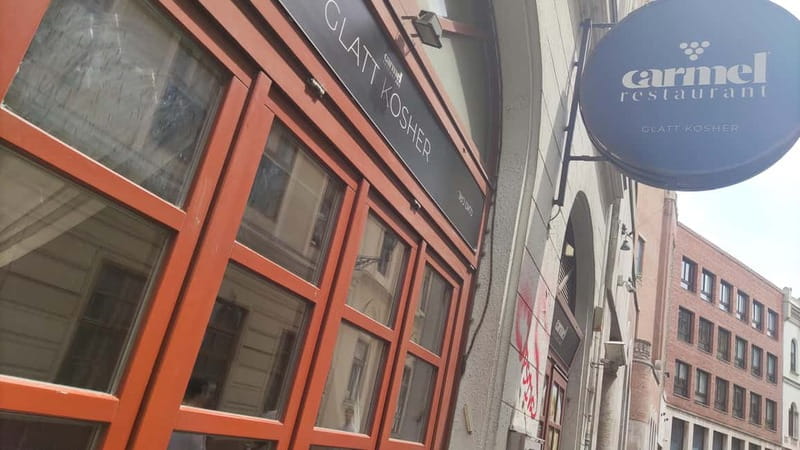
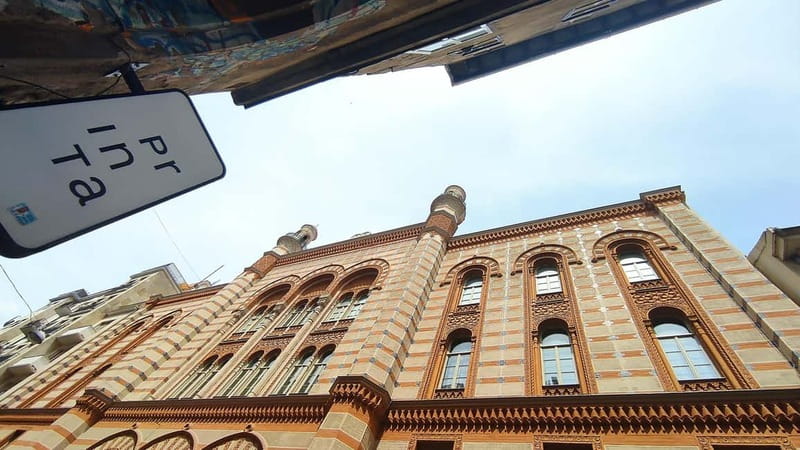
Next comes the walk to the Rumbach Street Synagogue, about 20 minutes. From the outside, you’ll talk about the way Jewish communities split into different groups, and how those differences show up in religious life and synagogue design.
This stop is valuable even if you’ve seen photos of synagogues before. Most buildings look impressive, but explanations help you notice what you were previously blind to, like how a place signals identity and belief through its style and setup.
It’s also a good mental reset. After the opening history, you get a tangible example of how community differences influenced what people built. That makes the next stops feel more like connected chapters, not separate sightseeing.
Other Budapest bookings worth a look
- Budapest: City Highlights Sightseeing Cruise
★ 4.6 · 43,981 reviews - Budapest: City Sightseeing Hop-On Hop-Off Bus Tour & Extras
★ 4.1 · 4,337 reviews - Budapest City Landmarks Walking Tour in 2 Hours
★ 5.0 · 2,048 reviews - Budapest: Nighttime or Daytime City Sightseeing Cruise
★ 4.1 · 2,046 reviews
Dohány Street Synagogue, the small cemetery, and the Emanuel Tree
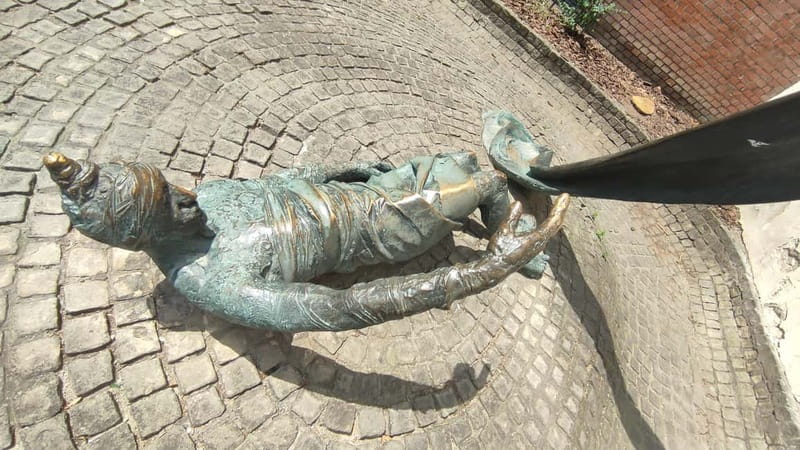
The walk to Dohány Street Synagogue takes about 15 minutes, and this is the emotional core of the route. Here you’ll see a small Jewish cemetery and the Emanuel Tree, which functions as a Holocaust memorial.
The guide explains the history of the Hungarian Holocaust in a way that ties directly to what you can see around you. Even though you are not going inside the synagogue during the tour, the exterior setting still matters. The cemetery and memorial are not just symbols, they are physical reminders of what was lost and what survived.
One practical note for your experience: this part can feel heavy. If you prefer a lighter pace, keep that in mind and take a slower moment when the guide reaches the Holocaust memorial and cemetery area. You’ll get more out of it if you let the weight of the place land.
Kazinczy Street Synagogue and the end where daily life takes over
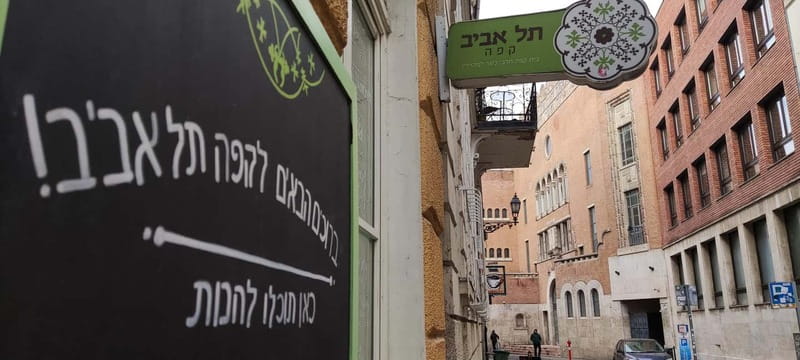
The last walk to the Kazinczy Street Synagogue is longer, about 30 minutes. It’s a transition from the most solemn stop toward the neighborhood’s continuing rhythm.
You finish near Kazinczy u. 27, 1075, and you end with more living culture than museum mode. This is where the tour shifts to modern community habits: conservative and Orthodox Jewish life, customs, and what institutions and everyday choices look like on the ground.
This matters because so many historical tours stop at the past. Here, you get a sense of how traditions continue, which helps you avoid the common Budapest mistake of seeing history as a set piece rather than a continuing story.
Flodni dessert: the simplest memory trick in the Jewish Quarter
Yes, you get dessert, but it’s not just a gimmick. You taste Flodni, a typical Jewish dessert from Budapest, and your guide also gives you a digital guide to Jewish cuisine.
The real value is the framing. When food is connected to eating habits and community life, it stops being a random sweet stop. Instead, it becomes a reference point you can use while walking around later.
If you do only one thing after this tour, I’d recommend using the dessert as a clue to seek out the broader Jewish food culture in the area. You’ll be able to ask better questions and recognize what you’re eating as part of a tradition, not just another bakery treat.
Conservative and Orthodox life: mikvah, customs, and kosher clues
A big portion of the tour’s educational value comes from what happens after the synagogue exteriors. The guide brings you into the world of conservative Jews and also references Orthodox life.
You’ll learn about the mikvah (ritual bath), and you’ll hear how community customs shape everyday routines. The tour also covers kosher restaurants and other institutions, so you leave with practical signals for what to look for if you want to keep exploring on your own.
This is a helpful section for travelers who want more than architecture. It answers the question people often carry in their heads: beyond synagogues, what does religious tradition look like in daily life?
The digital guides you get actually matter
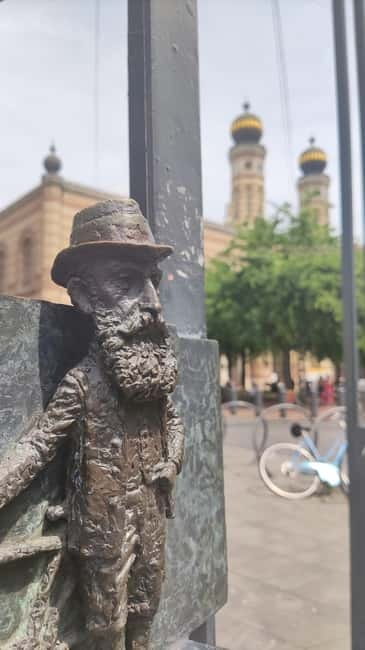
You receive digital extras: a guide to Jewish cuisine and a guide to Jewish terms. These are small, but they solve a real problem on cultural tours.
When you are learning about community splits, religious concepts, and key terms, you can miss details if you only have what the guide says in the moment. The digital guides give you a second chance to understand what was said and keep your notes tidy.
If you speak German, you’ll also get more out of the lessons because the tour itself is in German, and some content can appear in its original language.
Price and value: what $23 buys you for 90 minutes
The price is about $23 per person for 1.5 hours. The best value here is not that you get five attractions in a spreadsheet. It’s that you get a guided explanation of three major synagogue sites, a Holocaust memorial context stop, plus a dessert tasting, all with a small group limit of max 25.
You should also be clear on one tradeoff: entrance fees are not included because the synagogues are not visited from the inside. That means the tour gives you context for exterior viewing, not the full interior experience you might see on other tours with ticketed entry.
Still, for a first pass through the Jewish Quarter, this is often the smartest use of time. You’ll know what you saw and why, which makes any future self-guided visit more meaningful.
Who this tour suits best
This is a strong fit if you:
- want a structured overview of Budapest’s Jewish community in a short walking format
- appreciate both history and present-day traditions, including food
- prefer small group tours where you can ask questions
- can handle learning primarily in German
It’s less ideal if:
- you need a fully English-speaking experience, since the tour is German
- you specifically want to enter the synagogues during your visit, because the tour keeps visits outside
Should you book Jewish Budapest (German-language city tour)?
Book it if you want your Jewish Quarter time to feel organized and human. This tour is especially worth it for the combination of three synagogue exteriors, the Holocaust memorial stop with the Emanuel Tree, and the fact that you also get practical culture, from mikvah to kosher dining clues, plus the Flodni tasting.
If German is comfortable for you, you’ll likely come away feeling like the neighborhood makes sense, not just that you walked past landmarks. If your German is limited, I’d still consider it only if you are confident you can follow the overall story with help from the digital terms guide, and you can accept that some nuance may slip by.
If you’re on your first visit to Budapest and you want a meaningful, time-efficient Jewish Quarter orientation, this is a good choice.
FAQ
Where is the meeting point for the tour?
You meet behind the statue of Empress Elisabeth (Sisi).
How long is the Jewish Budapest tour?
The tour lasts 1.5 hours.
Is the tour in German?
Yes, the tour is in German.
Which synagogues are included on the route?
The tour covers the Rumbach Street Synagogue, the Dohány Street Synagogue (Great Synagogue), and the Kazinczy Street Synagogue.
Do we enter the synagogues during the tour?
No. Entrance fees are not included, and the synagogues are not visited from the inside during the tour.
What food is included?
You get to taste the typical Jewish dessert Flodni.
Is the tour wheelchair accessible?
Yes, the tour is wheelchair accessible.
What is the maximum group size?
The group is limited to a maximum of 25 people.
Newest reviews from Budapest
- Private Tour Around Budapest★ 5.0 · 10 reviews
- Born Under The Red Star – Communist tour with Coffee in a Retro Bar★ 5.0 · 10 reviews
- Live virtual walking tour in the Buda Castle quarter★ 5.0 · 10 reviews
- Taste Budapest – Fat Boy Foodies Walk★ 4.5 · 10 reviews
- Wine & Food Tasting Cruise on the Danube★ 3.5 · 10 reviews
- Private Transfer from Budapest to Prague with 2 hours for sightseeing★ 4.5 · 10 reviews
- The Real Saw | Escape Room by PÁNiQ SZOBA★ 4.1 · 10 reviews
- City Park True Crime of Hungary and Night Walk Tour in Budapest★ 5.0 · 10 reviews
Jewish Heritage, compared.
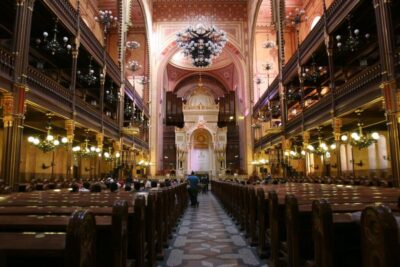
Jewish Heritage Guided Tour with Synagogue Ticket
Read our review →
German tour in the Budapest city centre & the Jewish quarter
Read our review →
Past and Present of Budapest Jewish District Tour
Read our review →
Budapest Dohany Synagogue & Hungarian Jewish Museum & free extras
Read our review →
Jewish History Guided Walking Tour with Historian
Read our review →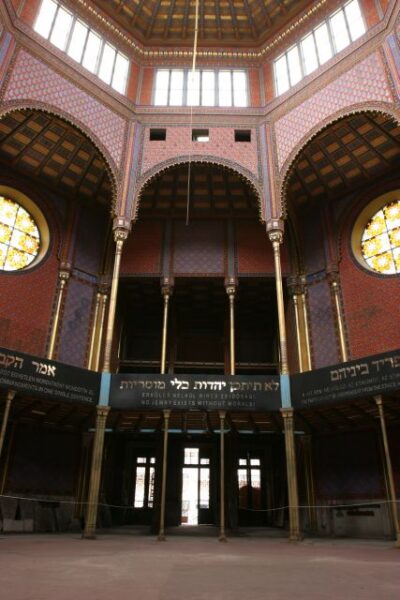
Browse the lists this tour appears in