
Reviewed · JEWISH HERITAGE
Budapest: Jewish Heritage Walking Tour with Historian Guide
What makes this tour stand out is the way it connects Budapest street corners to people, choices, and survival. You move through the old Jewish District and pair architecture (two historic synagogues) with direct Holocaust-era remembrance, including the Carl Lutz Memorial and the Memory Wall. It is history you can see, not just read.
I especially like the pairing of a true field expert historian guide with real locations. The route focuses on what the sites meant in their time, and your guide also brings in the smaller, less obvious street stories as you walk. That makes the city feel like it has chapters.
One consideration: the Kazinczy Street Synagogue is temporarily closed for reconstruction, so you will only visit it from the outside. If you are hoping for the inside experience at Kazinczy, plan mentally for a best-possible workaround.
Key highlights to look forward to
- Small group, max 10 people, so you get more than a lecture
- Rumbach Street Synagogue entry plus guided storytelling on what you are seeing
- Ghetto Wall Memorial access with time spent on what the remnants mean
- Carl Lutz Memorial and the Memory Wall as the emotional center of the route
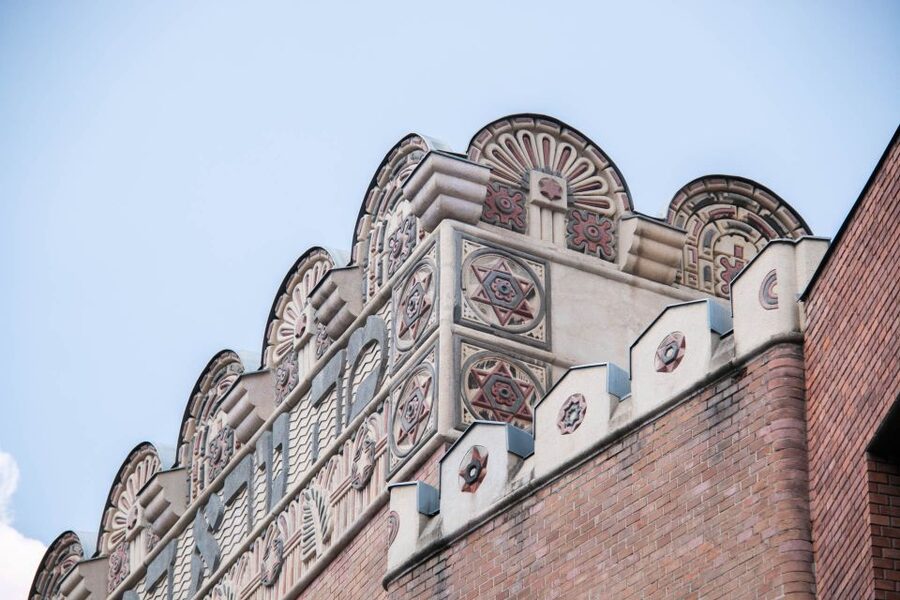
- Historic synagogue architecture used as a way to explain community life
- A walking route that includes Gozsdu Passage and less-known corners of the Jewish Quarter
Budapest Jewish Heritage on Foot, With a Historian in the Lead
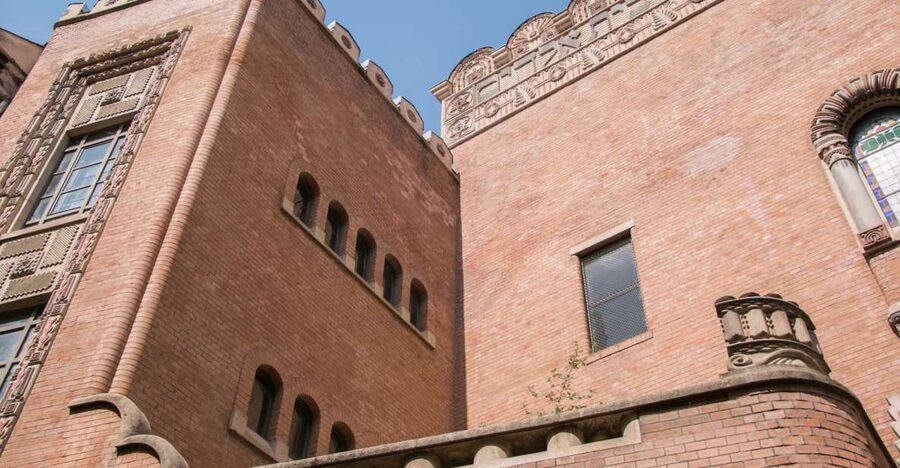
A lot of Budapest tours show you buildings. This one tries to show you why those buildings mattered. On a 2 hour walk, you do not have time to cover everything, so the organizer makes smart choices: you hit major landmarks and then you slow down just enough to understand the connections.
The historian format is the big advantage. You are not just collecting photos. You are building a timeline while walking, from the flourishing Jewish community on the Pest side into the tragedies of the 20th century and the people who helped others survive. That change of pace, from cultural life to remembrance, is one of the most effective ways to understand the city.
And yes, you will see beautiful synagogues. But the better payoff is that you learn how the streets, names, and layouts relate to real community life and later destruction.
Meet at Deák Square, Then Start Where the Route Makes Sense
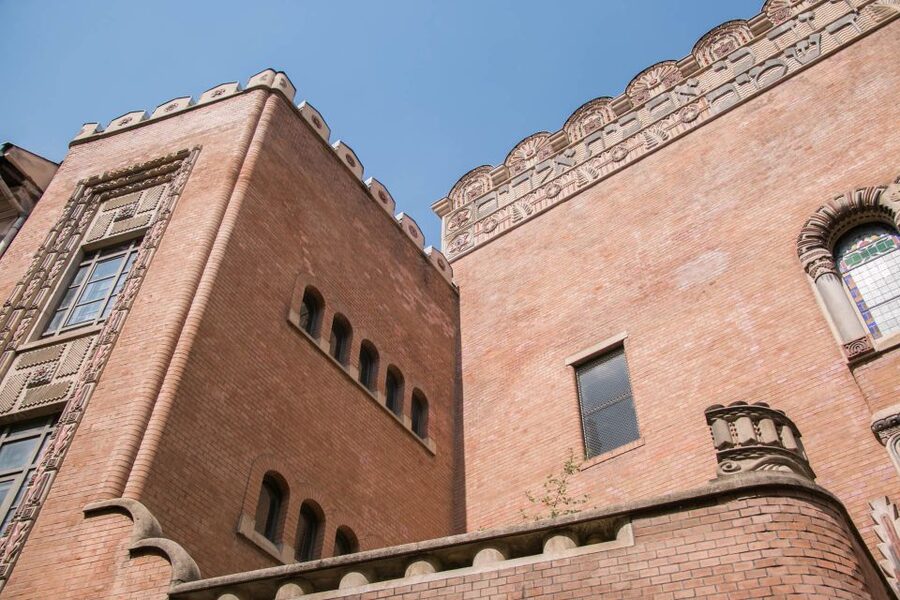
You meet at the entrance of the Deák téri evangélikus templom right at Deák Square, near the M2 metro entrance. That is a practical setup. You start in a central spot, and it keeps the walk focused instead of spending your limited time figuring out transit.
This matters because a short tour lives or dies by flow. With only 2 hours, every stop needs a purpose. Starting at Deák Square also helps you feel grounded quickly. You are already in the part of the city where you can connect this Jewish heritage walk to the larger Budapest map.
If you are the type who likes to get your bearings fast, this meeting point choice is a win. You can arrive, meet your small group, and get rolling without stress.
More of Jewish Budapest:
- Budapest: Jewish Heritage Guided Tour with Synagogue Ticket
★ 4.8 · 533 reviews - Walking Tour Budapest incl. the Shoes on the Danube Bank
★ 5.0 · 387 reviews - German tour in the Budapest city centre & the Jewish quarter
★ 5.0 · 359 reviews
Rumbach Street Synagogue: Entry Ticket and a Guided Look That Actually Explains What You See
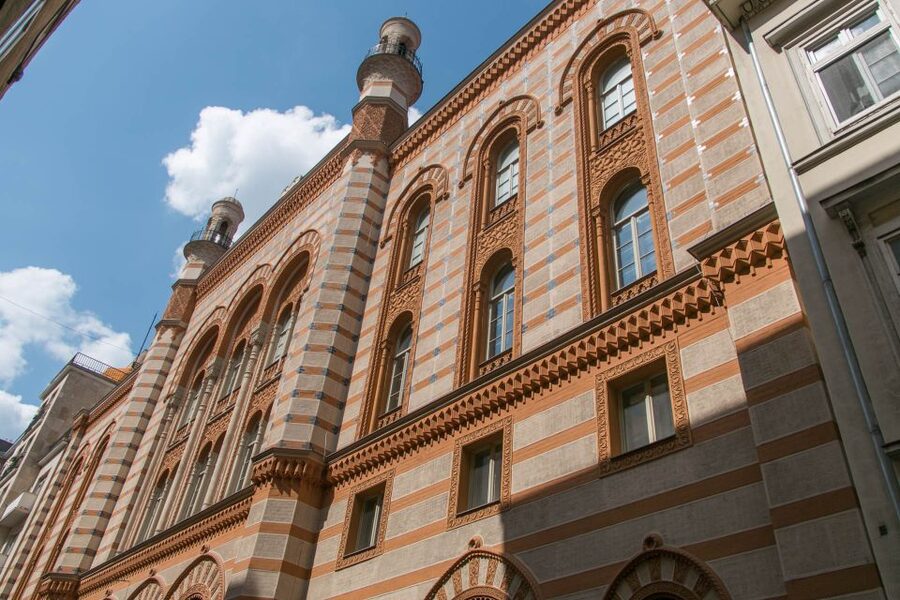
The first big anchor stop is the Rumbach Street Synagogue. You get a photo stop, guided touring, and an entry ticket, so you are not stuck looking from the sidewalk.
Here is what I like about this choice for you as a visitor: synagogues are not just worship spaces. They are also statements of community confidence, artistic taste, and identity. When you pair architectural details with historian context, you start noticing elements you would otherwise gloss over.
Expect your guide to connect what you are seeing to the broader story of Jewish life in Budapest and Hungary. You also get a reminder that the Jewish District was not only about hardship. For many years, it was a major center of culture, commerce, and everyday community rhythms.
Also, because this stop includes entry, it balances out the later closure at Kazinczy. In practical terms, you still get inside access on one of the two synagogue highlights.
Gozsdu Passage and the Jewish Quarter Streets, Where Stories Live in the Side Lanes
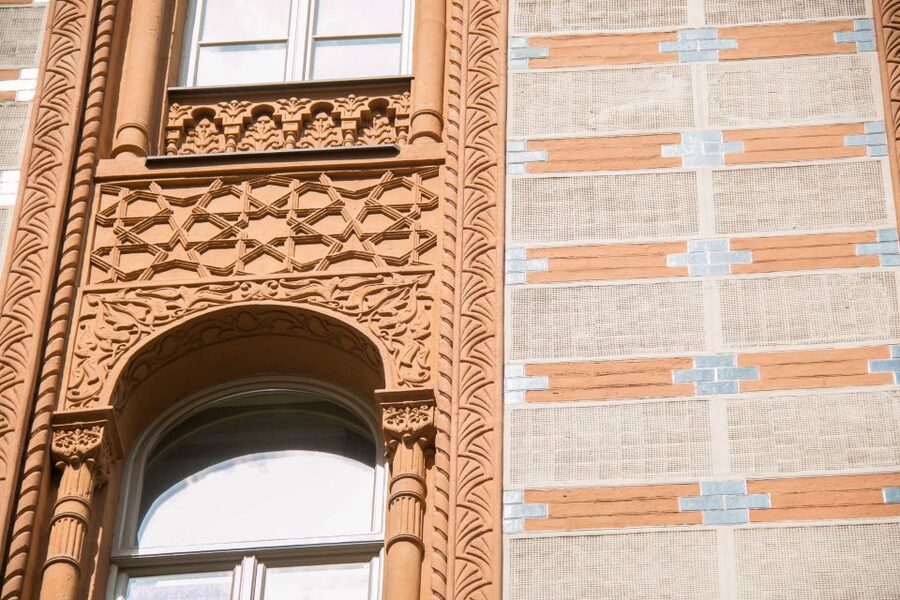
After Rumbach, the tour turns into walking through the Jewish Quarter area, with stops and guided segments that focus on streets and their meanings. You pass through the Gozsdu Passage area (including Gozsdu Udvar for a photo stop), then you keep going through the neighborhood on foot.
This is where the historian guide earns their fee. Street level history is easy to misunderstand if you only treat it like scenery. But when your guide explains how people lived there and who became famous for specific reasons, the neighborhood becomes a set of clues.
A useful detail to listen for: you will learn where two other synagogues once stood in the district, and that they were demolished by the 1930s. That kind of information changes the way you look at what is there now. You stop thinking of the area as a finished picture and start seeing it as a changing landscape.
And Gozsdu Passage is a good example of how the route avoids a museum-only vibe. You are out in the city, and the stories are tied to real places you can revisit later on your own.
From a Ghetto Wall Remnant to the Carl Lutz Memorial, What Remembrance Is For
The emotional core of the tour comes when you transition to Holocaust-era sites. The included stops focus on physical reminders and specific stories, not vague generalities.
You will visit a remnant of the ghetto wall (included as part of the Ghetto Wall Memorial experience) and then you move to the Carl Lutz Memorial and a Memory Wall.
Why this is valuable, practically, is that you get multiple angles on the same tragedy. A wall remnant helps you imagine what confinement looked like. The memorials add context and human focus, especially on rescue and the people who made survival possible. Your guide is also set up to share stories of miraculous survivals and “miracle-making” people who helped others survive. That human thread matters because it prevents the subject from becoming only statistics.
If you are visiting Budapest for a limited time, I recommend you treat this part as the heart of your day. It is the segment that gives the rest of the tour meaning. Without it, synagogues could feel like impressive buildings. With it, you understand that they are linked to community life, displacement, resistance, and survival.
More history walks in Budapest:
- Budapest: Historic Cruise with Welcome Drink
★ 4.7 · 6,512 reviews - Budapest Historical Sightseeing – Free Walking Tour
★ 5.0 · 1,302 reviews - Buda Castle District Dark History, Legends and Vampire Night Tour
★ 4.5 · 1,240 reviews - BloodThirsty Hungary: Walking tour & Dark Historical Stories
★ 4.9 · 633 reviews
Memory Wall and Survival Stories, Where the Guide’s Historian Style Really Shows
This tour is guided in English and designed for a small group of up to 10. In practice, that format helps your guide manage a sensitive topic with clarity and pacing.
You will spend time at the Memory Wall, and your guide will connect personal stories to the larger historical picture. The included emphasis on “miraculous survivings” and helpers who made survival possible is not fluff. It changes how you process what you are seeing. Instead of only thinking about loss, you also learn about agency, courage, and risk.
That balanced approach is exactly what I look for when a tour covers difficult subject matter. You can leave feeling informed and grounded, not overwhelmed or numb.
Kazinczy Street Synagogue Outside Only, and Why This Still Works
The second synagogue highlight is the Kazinczy Street Synagogue. Here is the trade-off you should know up front: it is temporarily closed for restoration, so your tour includes outside viewing only.
Is that disappointing? It can be, especially if you were counting on an interior visit. But there is still a reason this stop exists in the route.
First, you get to see where the synagogue sits in the neighborhood and what it communicates visually at street level. Second, your guide can still frame it historically, including what the synagogue represented in the district’s earlier life. And third, because the tour includes entry at Rumbach, you still get at least one inside synagogue experience.
If Kazinczy’s exterior viewing is not enough for you, consider pairing this walk with a self-guided plan for later, when restoration is complete. But as part of a tight 2 hour program, the organizer chose a route that keeps the major lessons on track.
Price and Timing: Is $62 for 2 Hours Good Value?
At $62 per person for a 2 hour walking tour, the value is really about concentration. You are paying for: a historian guide, a small group size, and paid entry where the tour includes it.
From what is included, your money goes to:
- the field expert historian guide
- entry for Rumbach Street Synagogue
- entry for the Ghetto Wall Memorial
- synagogue viewing stops and guided segments
- access to key memorial stops tied to the Holocaust story
If you tried to do this on your own, you would still need to solve the hardest part: knowing what to look for and how to connect each place to the broader historical arc. That is what you are buying here, and in my view, that is where the $62 becomes less about “tour time” and more about “guided meaning.”
The short duration also helps. Two hours is enough to cover the core route without turning into fatigue. It is ideal if you want a serious cultural and historical component without consuming a whole morning or afternoon.
Who This Tour Fits Best (And Who Might Want a Different Style)
This tour fits best if you want history with a clear structure and you like learning from an expert while you walk.
It is also a strong match for:
- first-time visitors to Budapest who want the Jewish Quarter story in a practical, concentrated route
- travelers who prefer a guided approach over random sightseeing
- people who want both architecture and remembrance, not just one or the other
- anyone who appreciates small group dynamics (up to 10 people)
You might consider a different option if your top priority is synagogue interiors only. Since Kazinczy is temporarily closed, you only get outside viewing there, even though the tour still includes key historical context and the rest of the itinerary.
What to Do Before You Go, So You Get More Than Photos
Here are a few practical moves that help you on a tour like this.
Arrive on time at Deák Square. The meeting point is specific, at the entrance of the Deák téri evangélikus templom near the M2 metro entrance. With a short 2 hour schedule, late arrivals can squeeze the last stops.
Wear comfortable shoes. This is a walking tour through the Jewish Quarter and synagogues, with guided sections between stops.
Go in ready to ask questions. With a group limited to 10 and a historian guide, you are better positioned to clarify dates, names, and connections. That turns the walk into a conversation, not a one-way presentation.
And when the tour shifts to the Holocaust remembrance sites, keep an open mind about how the guide frames survival and rescue. The route is designed to do more than inform you. It aims to help you understand what these monuments are for.
Should You Book This Jewish Heritage Walking Tour?
I would book this tour if you want a focused, respectful, and well-paced way to understand Jewish heritage in Budapest, especially if you value a historian guide and included entry at major sites.
The strongest reasons to say yes are simple:
- You get inside access at Rumbach Street Synagogue plus guided interpretation.
- You get Ghetto Wall Memorial access and meaningful stops at Carl Lutz Memorial and the Memory Wall.
- The small group size and historian approach make the experience feel structured and personal.
The main reason to hesitate is also simple:
- Kazinczy Street Synagogue is outside only due to restoration.
If you can accept that trade-off, this is a smart, value-based way to spend 2 hours in Budapest while learning the story behind the streets.
FAQ
Where is the meeting point for the tour?
You meet right at the entrance of the Lutheran Church at Deák Square (Deák téri evangélikus templom), not far from the M2 metro entrance.
How long is the tour?
The tour lasts 2 hours.
What is the price per person?
The price is $62 per person.
Is this tour in English?
Yes, the live tour guide speaks English.
How big is the group?
The group is small, limited to 10 participants.
Which synagogue sites are included?
The tour includes visiting the Rumbach Street Synagogue and Kazinczy Street Synagogue outside only because it is temporarily closed for restoration.
Is entry included for the synagogue visits?
Entry ticket is included for the Rumbach Street Synagogue. Entry for the Kazinczy Street Synagogue is not included because it is temporarily closed.
Do you visit Holocaust memorial sites on this tour?
Yes. You visit the Carl Lutz Memorial and the Memory Wall, and you also include entry for the Ghetto Wall Memorial.
What is included in the ticket price?
Included are: the field expert historian guide, entry to Rumbach Street Synagogue, entry to the Ghetto Wall Memorial, and visiting Kazinczy Street Synagogue outside only.
What is not included?
Not included are entry to Kazinczy Street Synagogue (since it is closed), food and drinks, and hotel pickup and drop-off.
Newest reviews from Budapest
- Private Tour Around Budapest★ 5.0 · 10 reviews
- Born Under The Red Star – Communist tour with Coffee in a Retro Bar★ 5.0 · 10 reviews
- Live virtual walking tour in the Buda Castle quarter★ 5.0 · 10 reviews
- Taste Budapest – Fat Boy Foodies Walk★ 4.5 · 10 reviews
- Wine & Food Tasting Cruise on the Danube★ 3.5 · 10 reviews
- Private Transfer from Budapest to Prague with 2 hours for sightseeing★ 4.5 · 10 reviews
- The Real Saw | Escape Room by PÁNiQ SZOBA★ 4.1 · 10 reviews
- City Park True Crime of Hungary and Night Walk Tour in Budapest★ 5.0 · 10 reviews
Jewish Heritage, compared.
Jewish Heritage Guided Tour with Synagogue Ticket
Read our review →
German tour in the Budapest city centre & the Jewish quarter
Read our review →
Past and Present of Budapest Jewish District Tour
Read our review →
Budapest Dohany Synagogue & Hungarian Jewish Museum & free extras
Read our review →
Jewish History Guided Walking Tour with Historian
Read our review →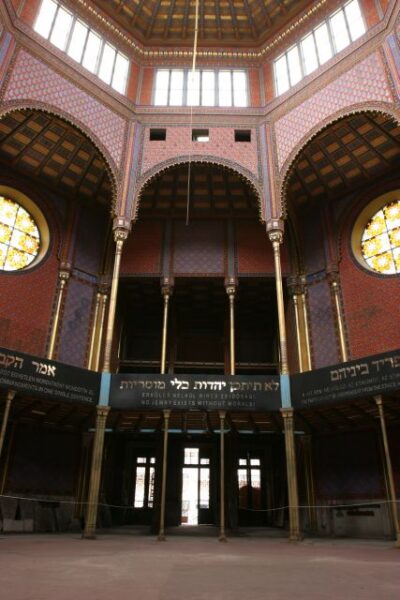
Browse the lists this tour appears in